Left vs right waves in surfing
 Fin Selector: your fins in 1 minute
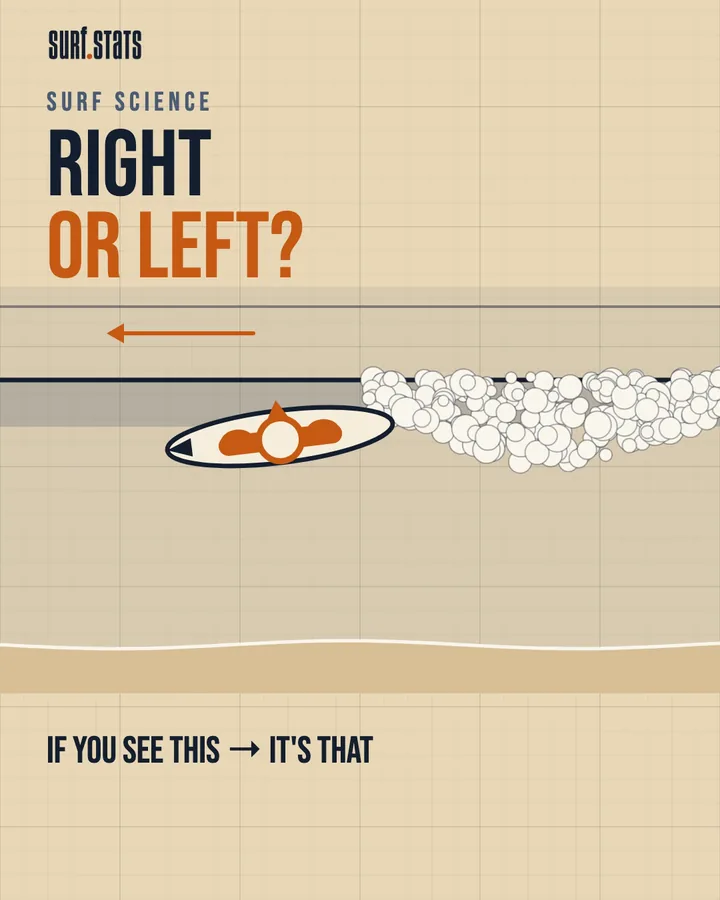
A right breaks to the surfer's right as they ride in, facing the beach; a left breaks to their left. From the sand it looks reversed, so a surfer heading to your left is on a right.
Someone in the lineup says "it's a right" and you nod, but which right? Yours, sitting there? The surfer's? The people watching from the sand? Left vs right waves in surfing is mostly a question of point of view, and once you know whose right it is, telling them apart gets easy.
Below are five things you'll see or hear, and what each one means. They come from our right or left reel, and each answer rests on at least two independent sources: the Encyclopedia of Surfing, surf magazines in English and Portuguese, a coastal engineer, and surf education material from local councils.
1. "It's a right." Right of who?
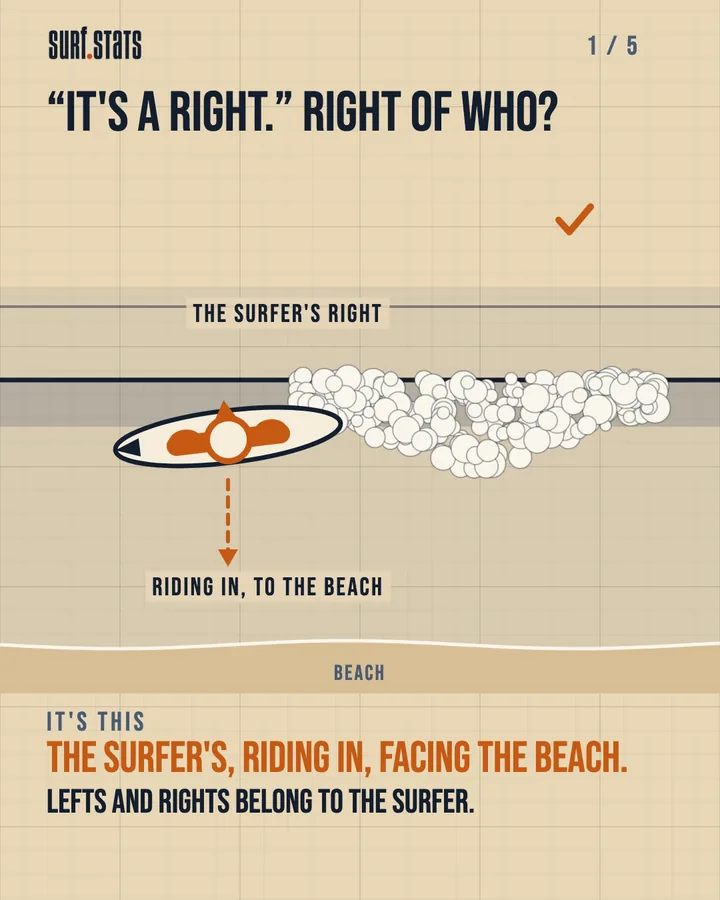
The short version: the surfer's right, riding in, facing the beach.
A right is a wave that breaks to the right of the surfer riding it, as they head toward the shore. A left breaks to their left. That's the whole definition. Brazilian surfers use the same convention: direita and esquerda are named from the surfer's point of view too.
So lefts and rights belong to the surfer. When you hear a wave named, picture yourself standing on it, looking at the beach.
2. On the sand, and the surfer's going to your left?
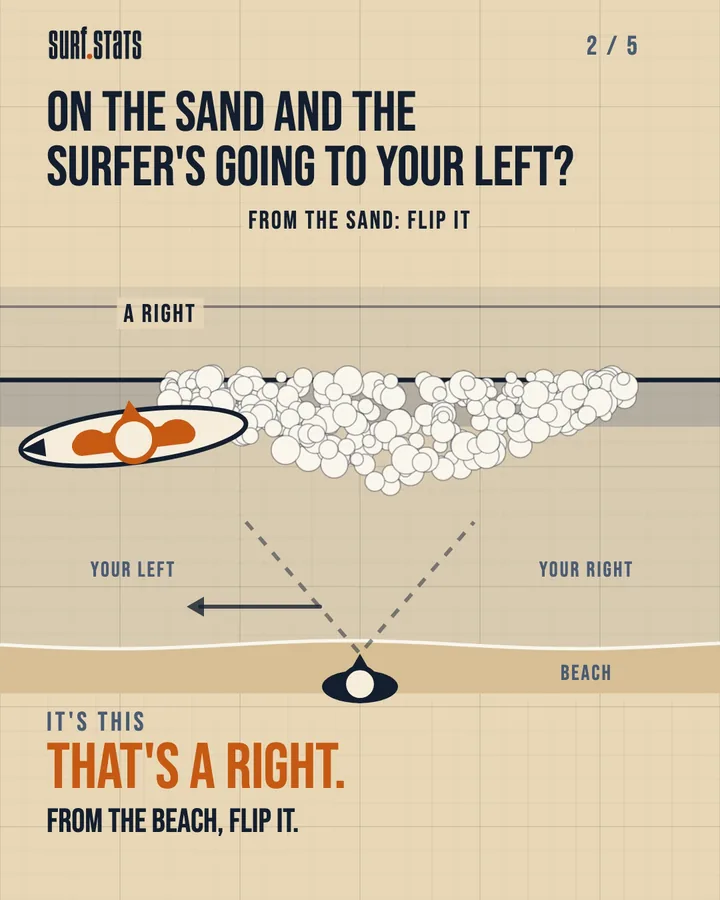
The short version: that's a right. From the beach, flip it.
When you stand on the sand you're facing the sea, the opposite way from the surfer. So everything is mirrored:
- A surfer on a right travels from your right to your left.
- A surfer on a left travels from your left to your right.
The mirror is easy to get backwards. If you're describing a wave from the beach, say so, or just name it the surfer's way.
3. Paddling for it, whitewater over your left shoulder?
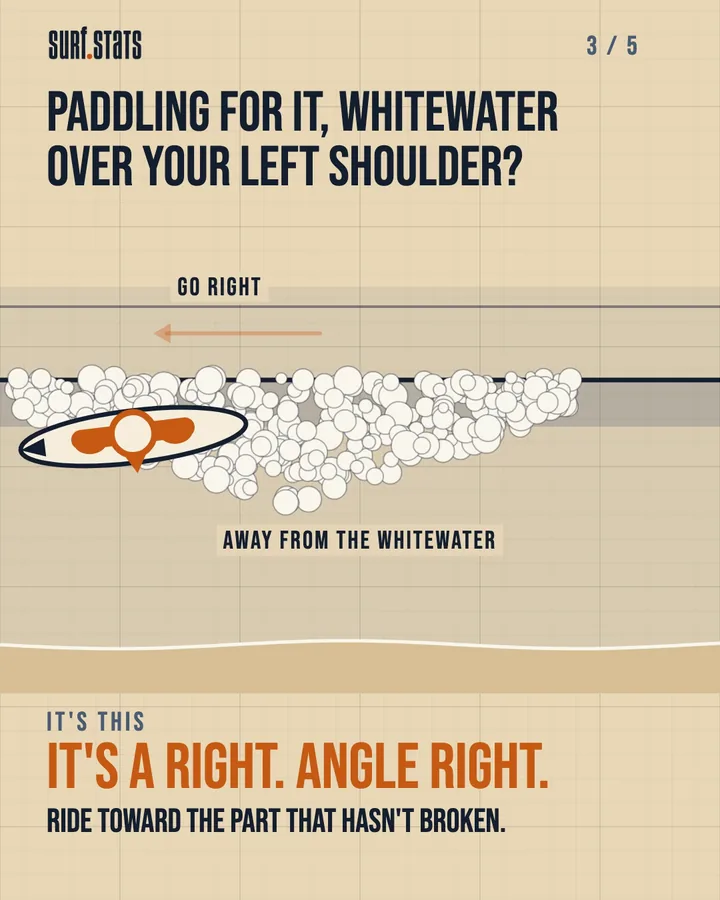
The short version: it's a right. Angle right, toward the part that hasn't broken.
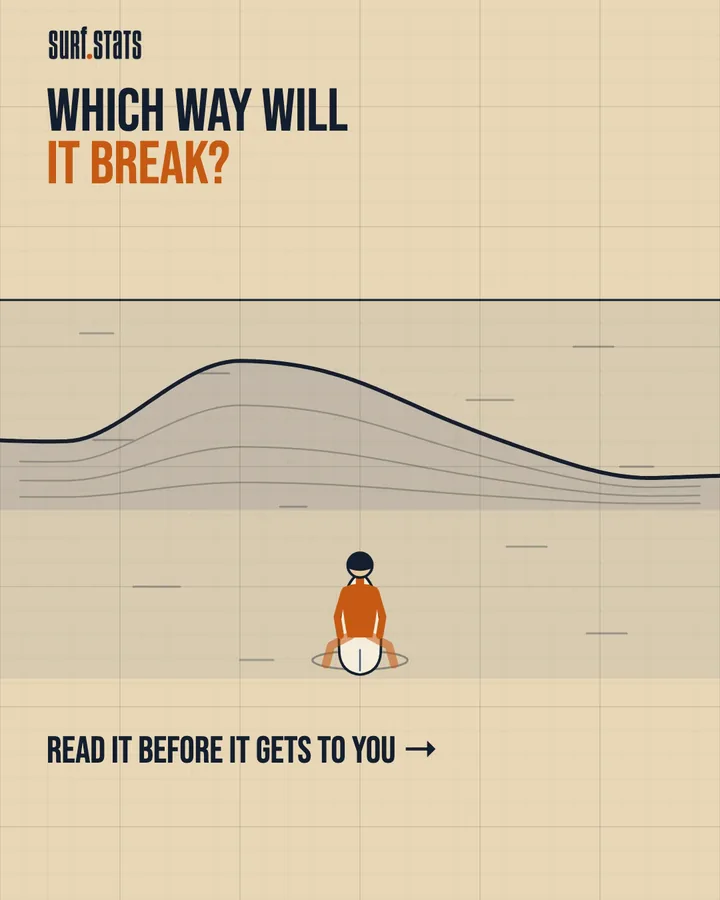
A wave breaks first at its peak, its highest point, and then peels away from there toward the part that hasn't broken yet, the shoulder. You ride toward the shoulder, away from the whitewater, so the breaking part ends up behind you.
This works when you've turned and are paddling in, facing the beach:
- Whitewater (or the peak) over your left shoulder: it's a right. Angle right.
- Whitewater over your right shoulder: it's a left. Angle left.
And call it out loud, "going right!" or "going left!", so a surfer on the other side of the peak knows. For how to spot the peak before you turn, read how to read waves from your board.
4. Opens both ways, or folds all at once?
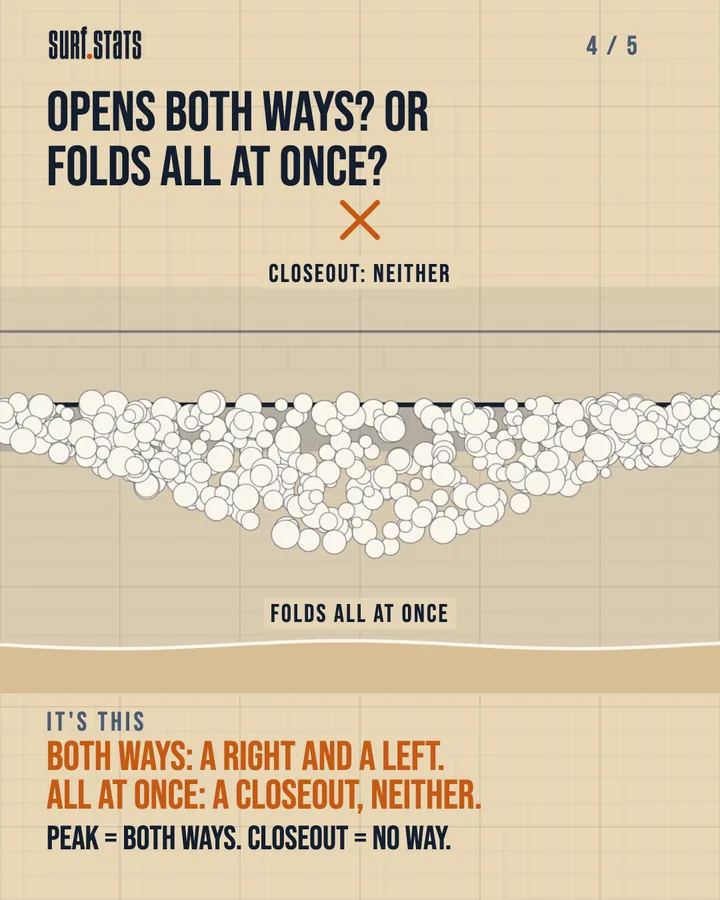
The short version: both ways is a right and a left. All at once is a closeout, neither.
Some waves peak in the middle and peel in both directions. That's an A-frame, or a peak: a right on one side and a left on the other, so one surfer can go each way.
A closeout breaks all along the wave at once, with no shoulder. There is nowhere to ride toward, so it's not a right or a left. Not every wave that looks like a closeout is one, though: FOAM magazine notes that some turn out to have a shoulder.
5. Some waves you face, some your back's to?
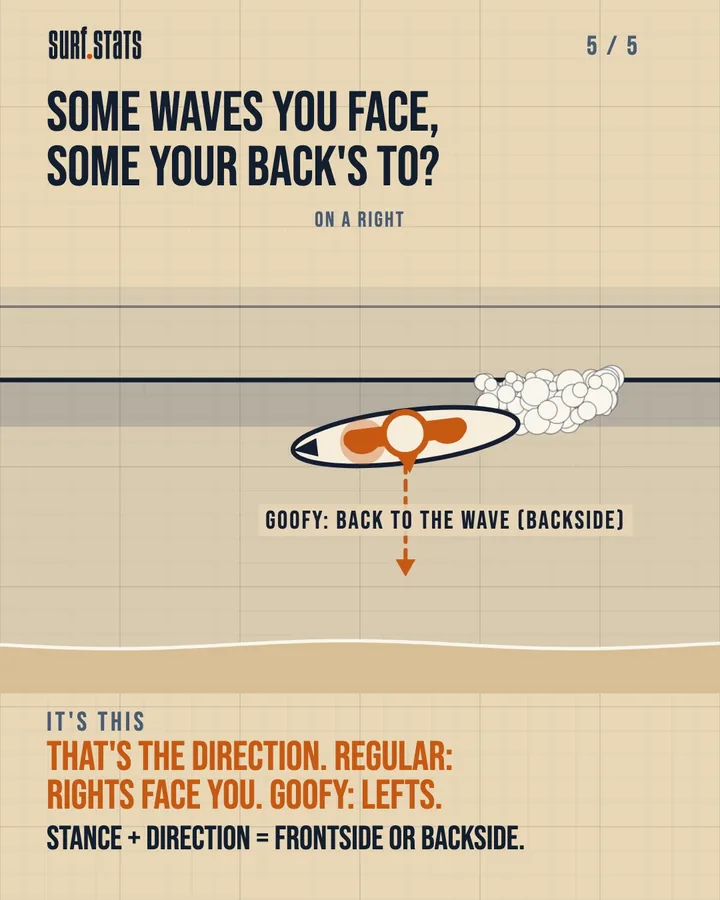
The short version: that's the direction. Regular: rights face you. Goofy: lefts do.
Your stance and the wave's direction decide whether you surf facing the wave (frontside) or with your back to it (backside):
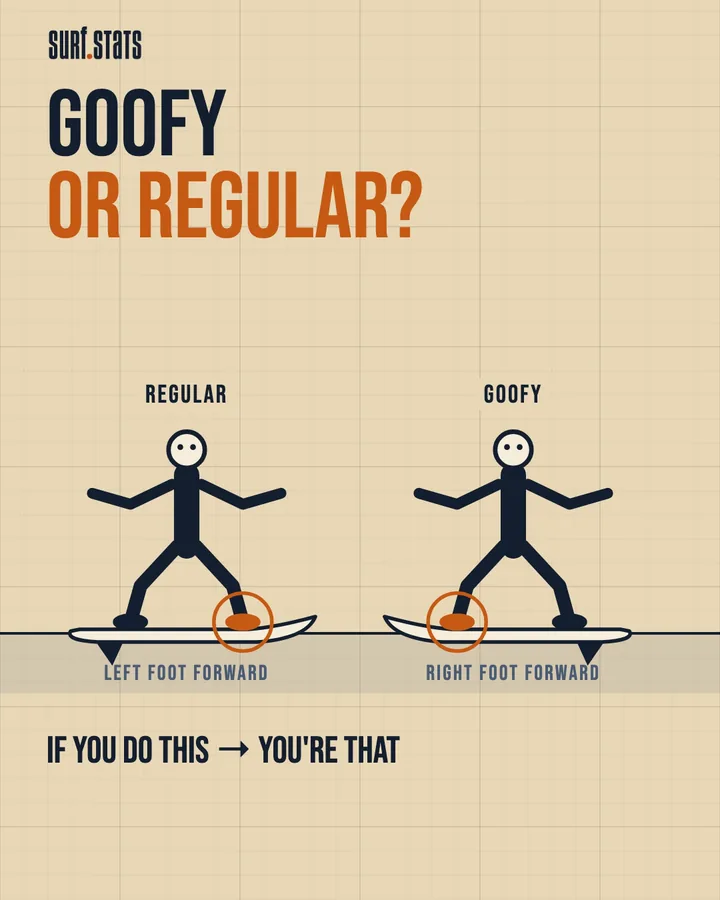
- Regular (left foot forward): frontside on a right, backside on a left.
- Goofy (right foot forward): frontside on a left, backside on a right.
The Encyclopedia of Surfing says surfers are generally more comfortable riding frontside, and the WSL calls backside the harder of the two, especially in heavy waves. Not sure which foot goes forward? Try these quick tests for goofy or regular.
Pipeline's left, or J-Bay's right?
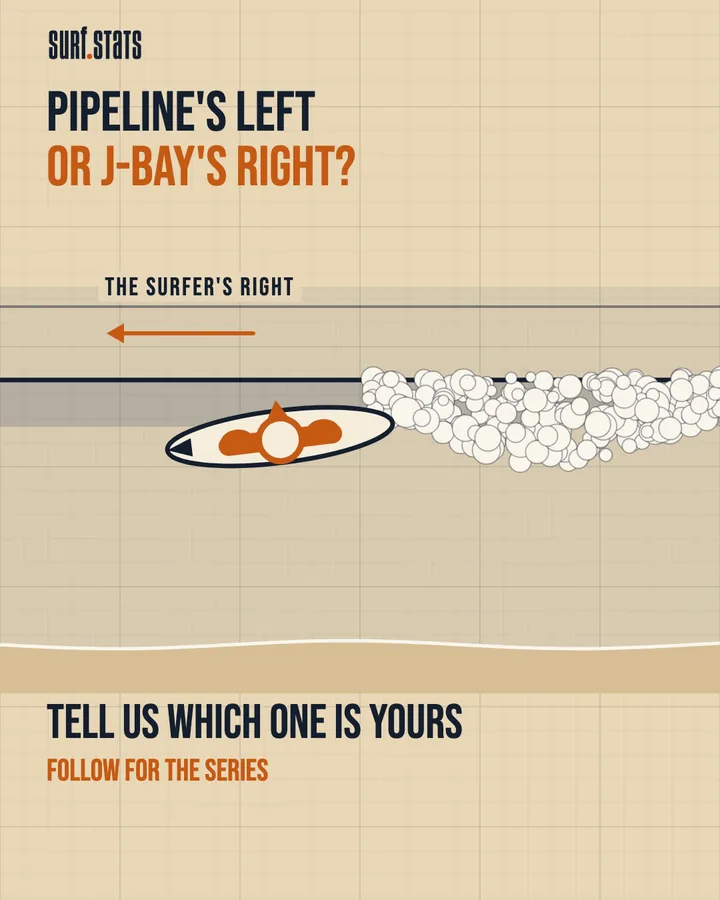
Famous waves are named the same way, from the surfer's seat:
- Lefts: Pipeline in Hawaii (its right-hand side is called Backdoor), Teahupo'o in Tahiti, Cloudbreak in Fiji.
- Rights: Jeffreys Bay in South Africa, Malibu in California.
Which one is yours? Tell us in the comments on the reel.
Quick checklist
- A right breaks to the surfer's right, riding in, facing the beach. A left, to their left.
- From the sand, flip it: a surfer going to your left is on a right.
- Paddling in, whitewater over your left shoulder: it's a right. Angle away from the whitewater.
- Breaks both ways: an A-frame. Breaks all at once: a closeout, neither.
- Regular faces the wave on rights, goofy on lefts.