How to read waves from your board
 Fin Selector: your fins in 1 minute
Find the highest point of the wave: it breaks there first, then runs toward the end where the top drops, the shoulder. Go that way. High in the middle and lower on both sides, it can go both ways. The same height end to end, it will probably close out.
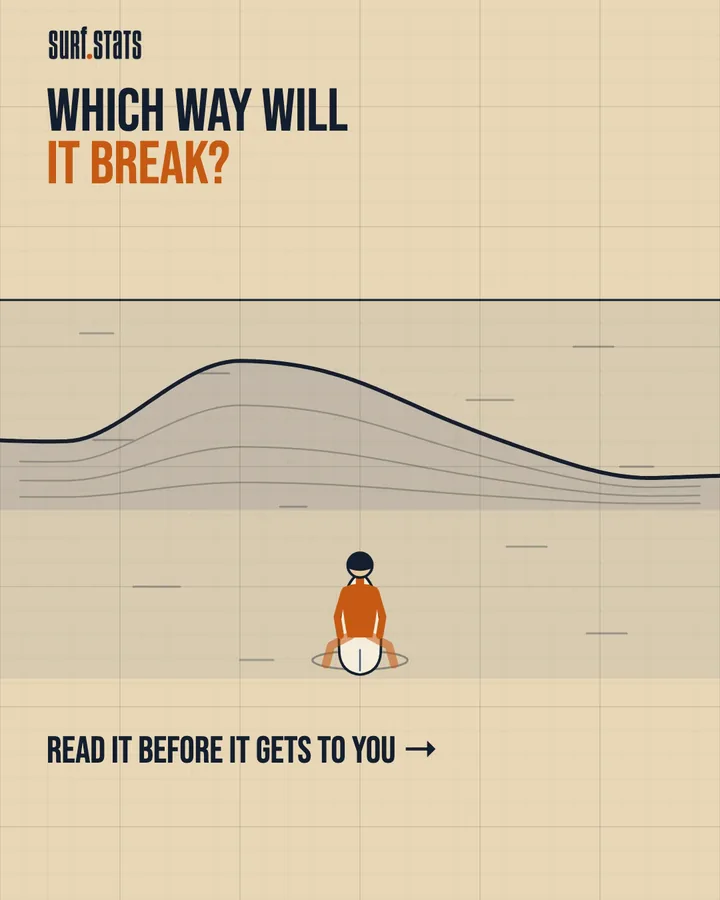
You see a wave coming, turn, paddle hard, and it breaks right on top of you. Or you go one way and the ride goes the other. Learning how to read waves from your board fixes both, and it's simpler than it looks: you're reading the top of the wave against the horizon, then moving.
Below are five common wave-reading problems and the fix for each, in the order you use them out there: spot it, read its top, then paddle. They come from our which way will it break reel, and each of the five tips is backed by at least two independent sources: surf magazines, a surf encyclopedia and surf coaches.
1. Only see the wave when it's on top of you?
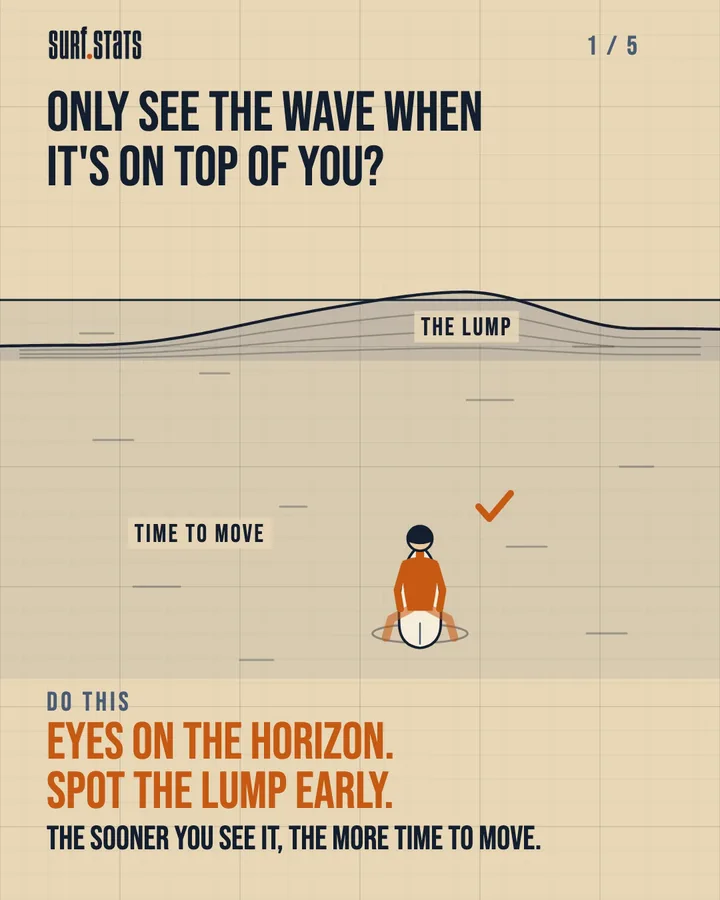
Try this: eyes on the horizon. Spot the lump early.
Waves don't appear out of nowhere. Far out, a wave starts as a lump of water, and it turns into a breaking wave as it gets closer to shore. If you're not looking out, you only notice it when it's already on you.
So while you wait, keep looking out to sea, at the horizon. The sooner you see the lump, the more time you have to read it and move.
2. Turned, went the wrong way, and it broke on you?
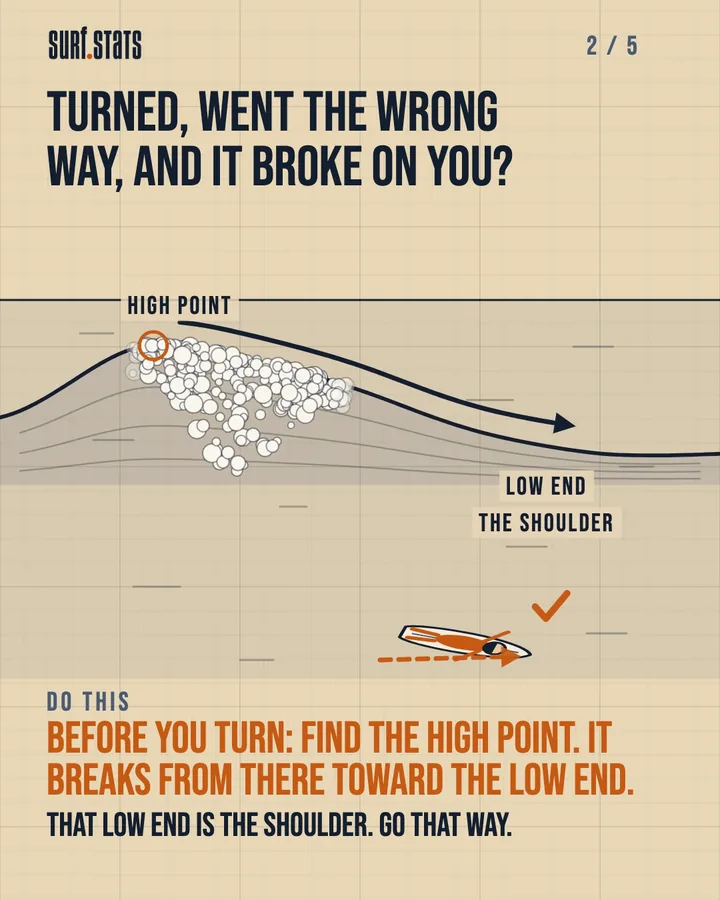
Try this: before you turn, find the high point. It breaks from there toward the low end.
This is the core of reading which way a wave will break. Look at the top of the wave against the horizon:
- The high point is the peak. The highest point of the wave is usually the first part to break.
- From there it runs toward the low end. The break travels along the top toward the end that drops away, the part that hasn't broken yet.
- That low end is the shoulder. It's the part that lets you ride across the face, and it's the way you go.
So your ride runs away from the breaking part, toward the unbroken one. Go the other way and the breaking part catches you.
It's a reading, not a promise. "Usually" is the honest word here, which is why you keep looking (card 5).
3. High in the middle, lower on both sides?
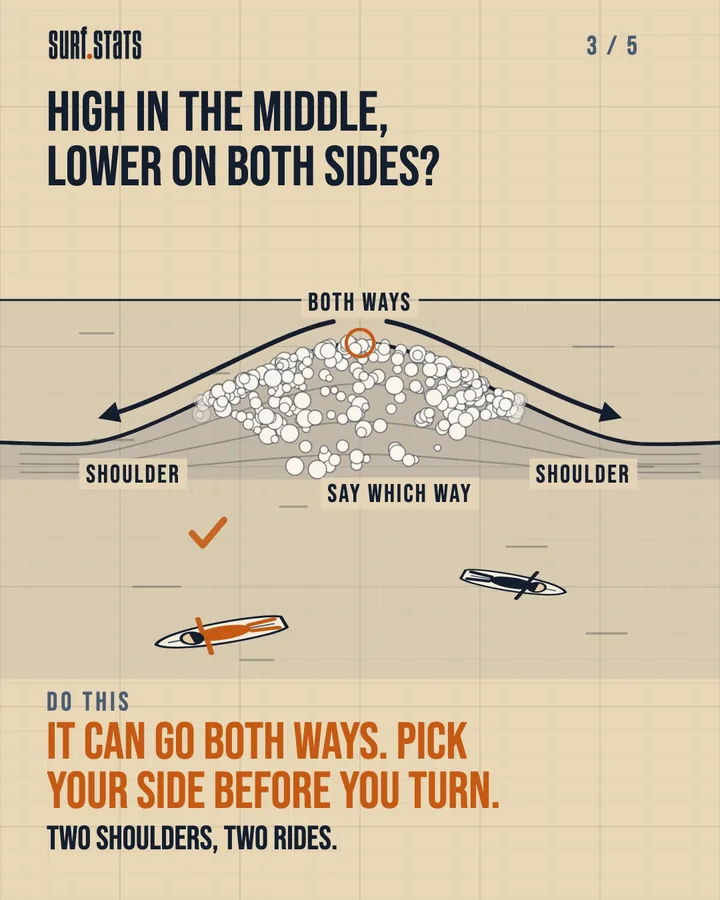
Try this: it can go both ways. Pick your side before you turn.
A wave with its high point in the middle and the top dropping away on both sides is an A-frame. It breaks from the middle toward both ends, so it has two shoulders and two rides. One surfer can ride each direction.
Decide which way you're going while you're still facing it, not after you've turned. And if someone is on the other side of the peak, say which way you're going, so nobody gets confused. Our surfing etiquette guide covers who has the wave.
4. Top the same height end to end?
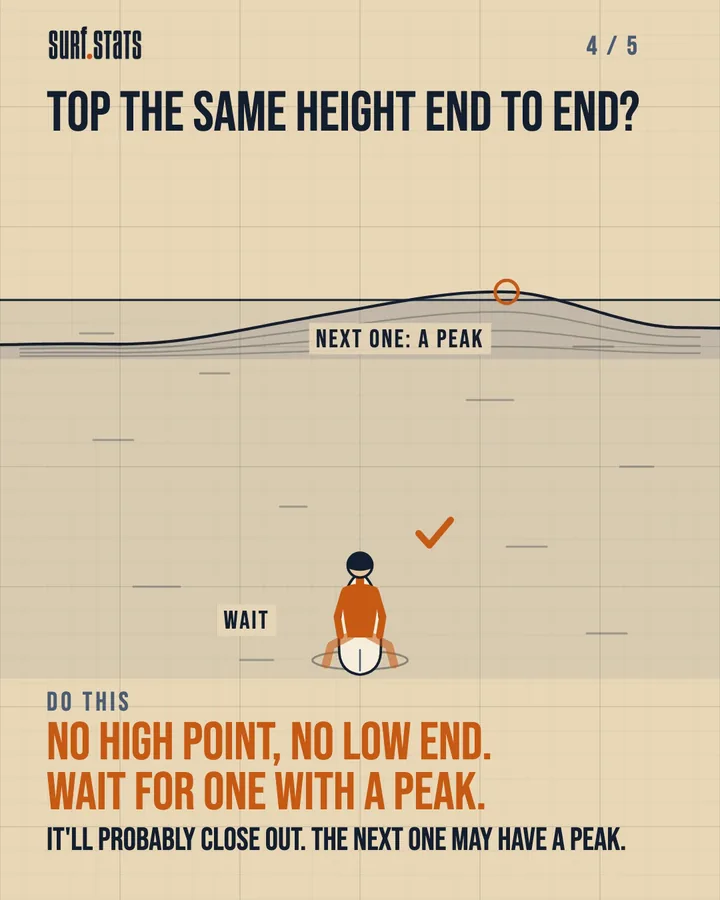
Try this: no high point, no low end. Wait for one with a peak.
If the top of the wave runs level with the horizon, with no high point and nothing dropping away, it has nowhere to break toward. It will probably close out: break all along its length at once. There's no shoulder to ride across, only straight toward the beach.
So let it go by and wait for the next one with a peak. It's a reading, not a promise, but a wave with a peak gives you a way to go.
One exception, per the Encyclopedia of Surfing: gently breaking closeouts are where beginners learn. If you're brand new and just practising your pop-up on those, that's fine.
5. Peak off to one side, and nobody closer?
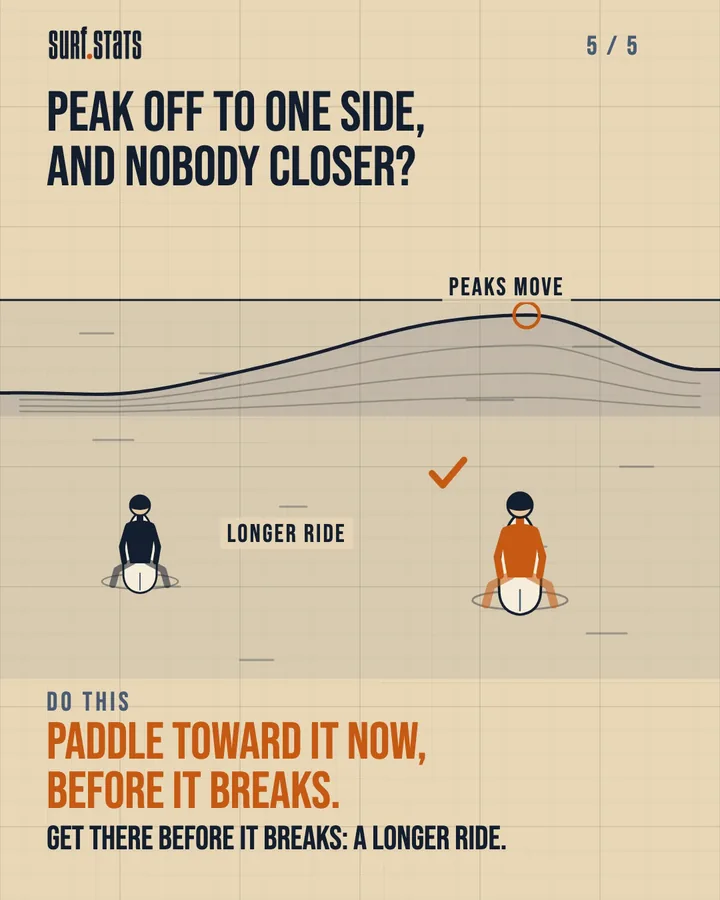
Try this: paddle toward it now, before it breaks.
You've read the wave and the peak isn't in front of you. Don't wait for it to come to you. Paddle toward the peak while it's still building. If you get there before it breaks, you get a longer ride.
Keep an eye on it as you go: peaks move.
Two things to keep in mind:
- Somebody closer? If someone is nearer the peak than you, they have priority. It's their wave.
- "Toward", not "on". The Inertia calls the peak the best and the hardest place to take off. Beginner guides suggest starting on the edges of the main peak, not right on it. Our guide on where to sit in the lineup helps you find your spot.
Find the high point. Go the way the top drops.
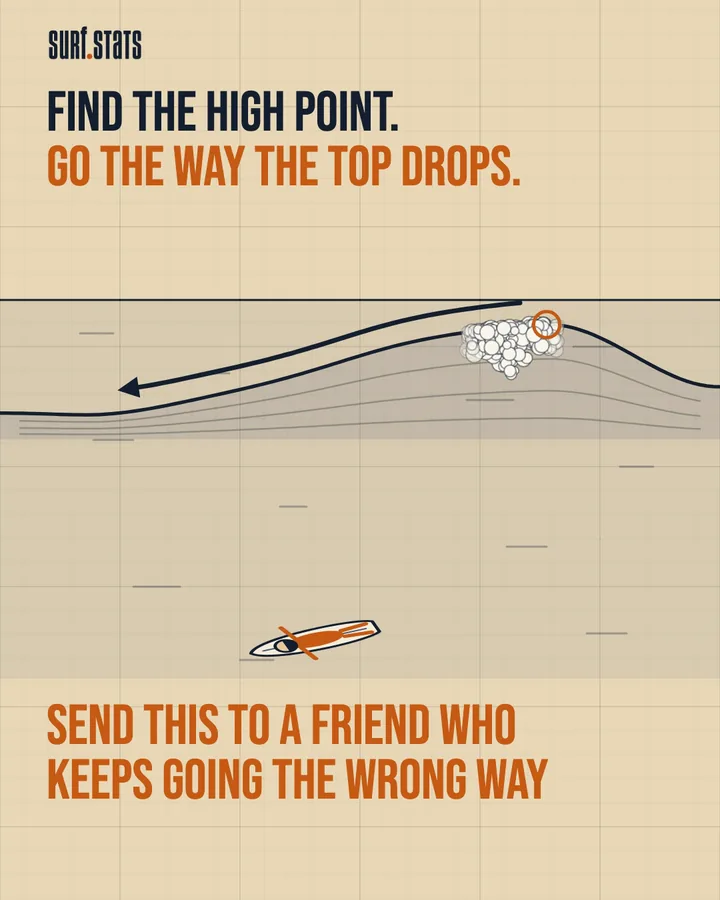
That's the whole read in two steps. Send this to a friend who keeps going the wrong way.
Quick checklist
- Eyes on the horizon. Spot the lump early.
- Find the high point: it breaks there first.
- It runs toward the low end, the shoulder. Go that way.
- High in the middle, lower on both sides: pick your side before you turn.
- Same height end to end: probably a closeout. Wait for one with a peak.
- Peak off to one side and nobody closer: paddle toward it before it breaks.