How to pop up on a surfboard
 Fin Selector: your fins in 1 minute
Keep paddling until you feel the wave push you, then pop up. Hands by your chest, arms pushed straight, feet up under you with the front foot between your hands, eyes up, and land low with your knees bent.
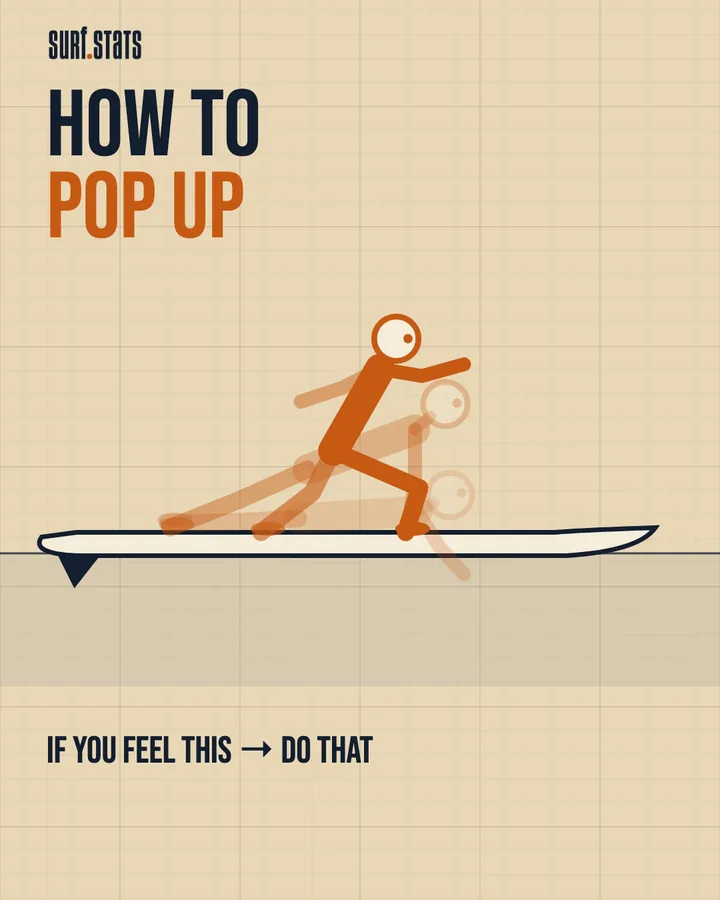
The pop-up is the move from lying on your board to standing on it. When it goes wrong, it's usually something you can feel: you went too early, your feet had no room, you climbed up on your knees, you looked down, or you stood up and fell straight off. Each one has a simple fix.
Below are those five pop-up problems, and the fix for each. They come from our how to pop up reel, and every tip is backed by at least two independent sources: surf magazines and surf coaches. This post starts the moment the wave has you. Getting into the wave is covered in how to paddle a surfboard.
1. Popping up before the wave has you?
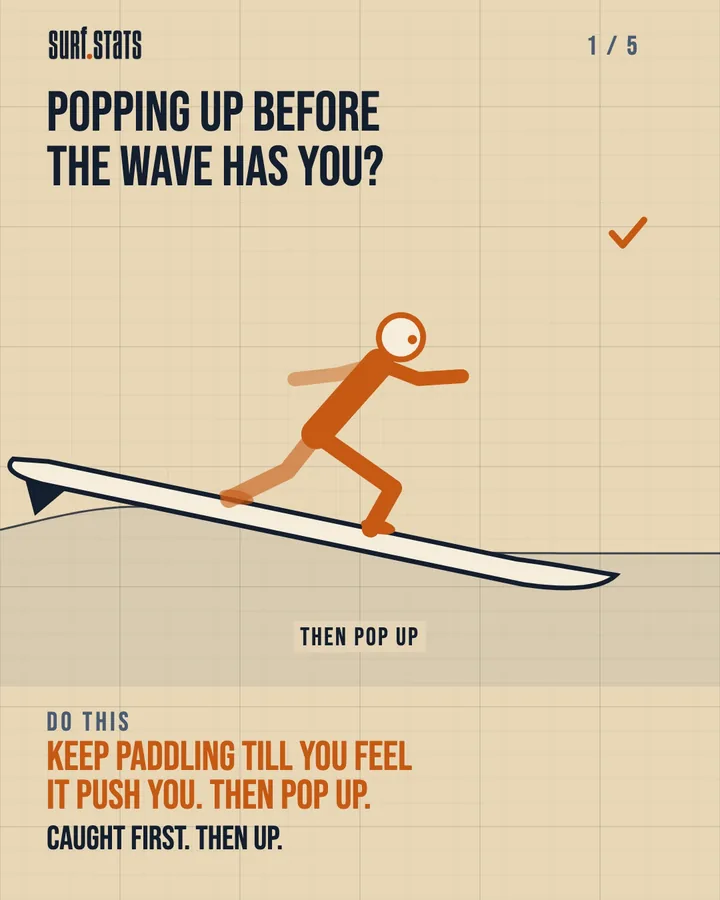
Try this: keep paddling till you feel it push you. Then pop up.
Stand too early and the wave rolls on without you. You're left standing up without a wave.
So don't stop paddling to wait. Keep paddling until you feel the wave start to push the board along. That push is your signal: then go, without waiting any longer.
Caught first. Then up.
2. No room to get your feet under you?
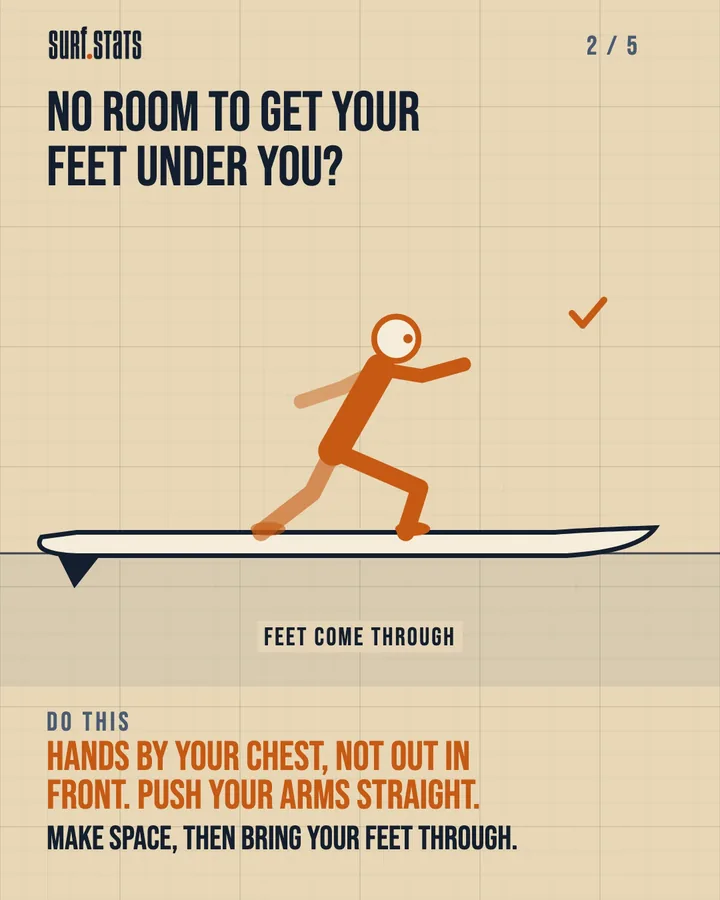
Try this: hands by your chest, not out in front. Push your arms straight.
Hands out in front leave no room to bring your feet through. Put your hands by your chest, under your shoulders, as if you were starting a push-up.
Then push until your arms are straight. If your arms are still bent, you've left no space between your chest and the board. That's the space your feet need.
Coaches disagree on whether your hands should be flat on the deck or gripping the rails. They agree on where: by your chest, not out in front.
3. Going up on your knees first?
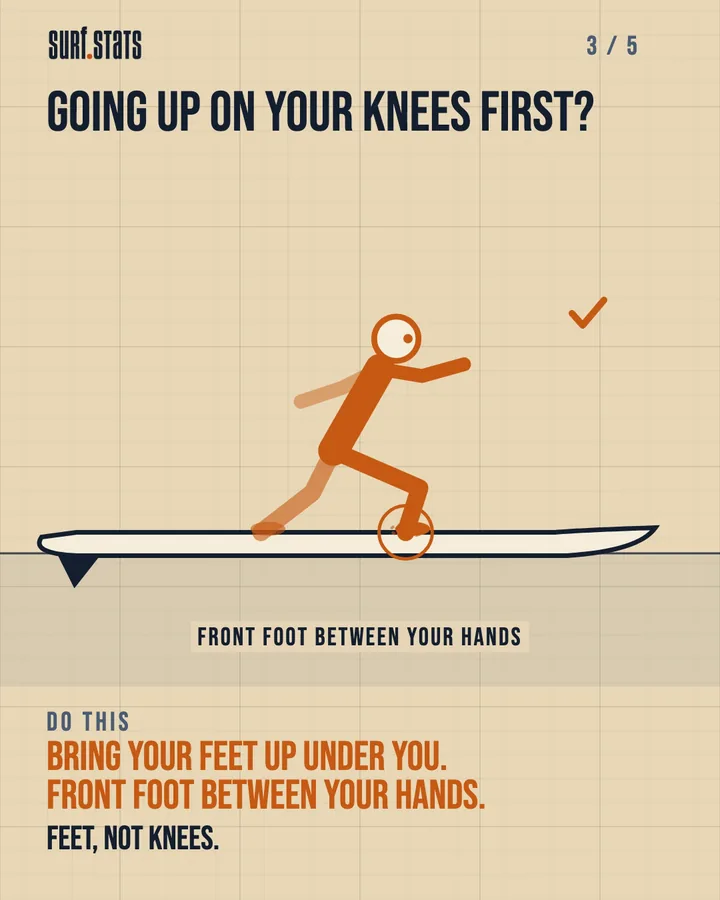
Try this: bring your feet up under you. Front foot between your hands.
Going up on your knees and then standing adds steps, and it's a habit that's hard to drop. From the push-up, bring your feet up under you. Your front foot lands between your hands, on the centre line of the board.
On a big board in small, soft waves, a slower pop-up still gets you up. Just don't let the knee step stick: it costs you on steeper waves. The finished pop-up is one fluid motion.
Coaches also disagree on which foot should move first, so we don't tell you. Feet, not knees, is the part they agree on.
4. Looking down at your feet?
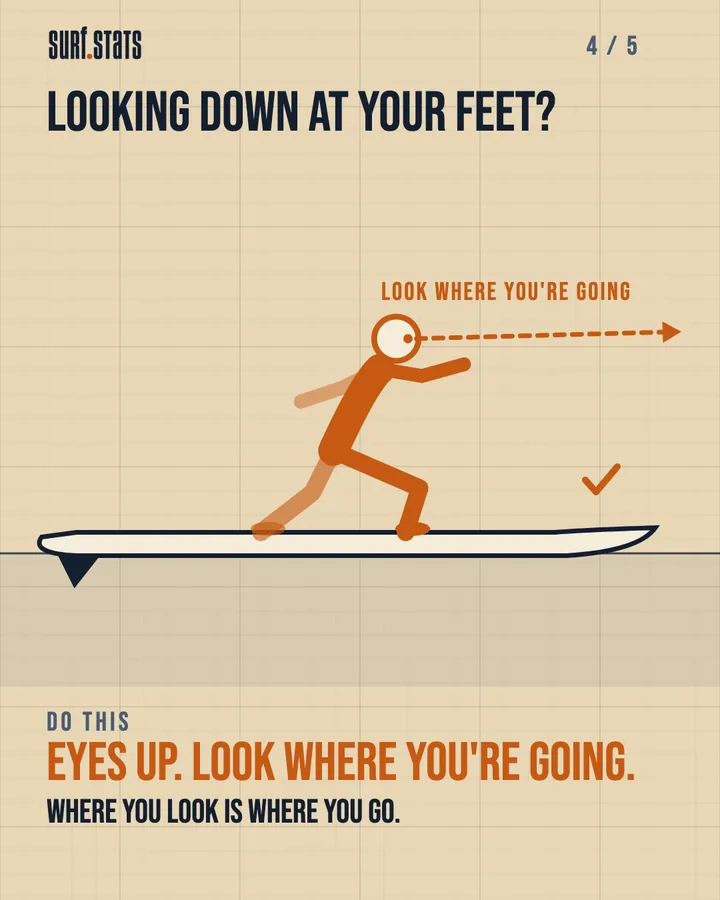
Try this: eyes up. Look where you're going.
Looking down at your feet during the pop-up is one of the most common beginner mistakes. It leaves you hunched over and makes it harder to keep your balance.
Keep your head up and look ahead, toward where you want to go. Where you look is where you go.
5. Stand up, then fall right off?
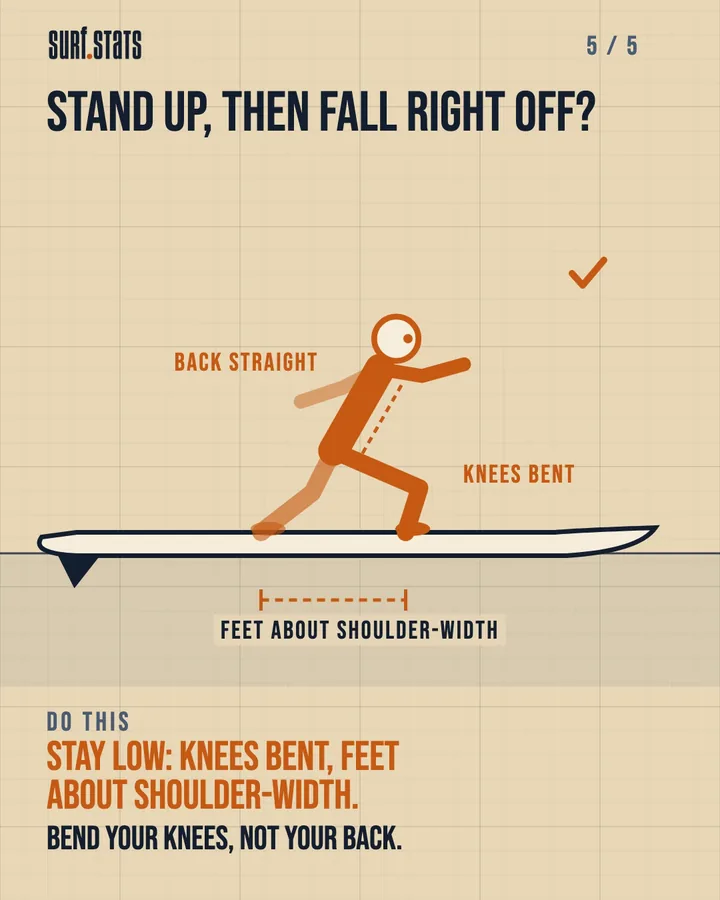
Try this: stay low. Knees bent, feet about shoulder-width.
Falling off the moment you stand up is a common beginner frustration. Often it comes from standing up tall with straight legs right after you land. With your knees locked, it gets very hard to keep your balance.
Don't stand up tall. Stay low:
- Knees bent.
- Feet about shoulder-width apart. Coaches put it a little either side of shoulder-width, so take it as a guide.
- Back straight, leaning forward from the hips.
Bend your knees, not your back. Rounding your back instead of bending your knees throws your balance off.
Practise it on the sand first
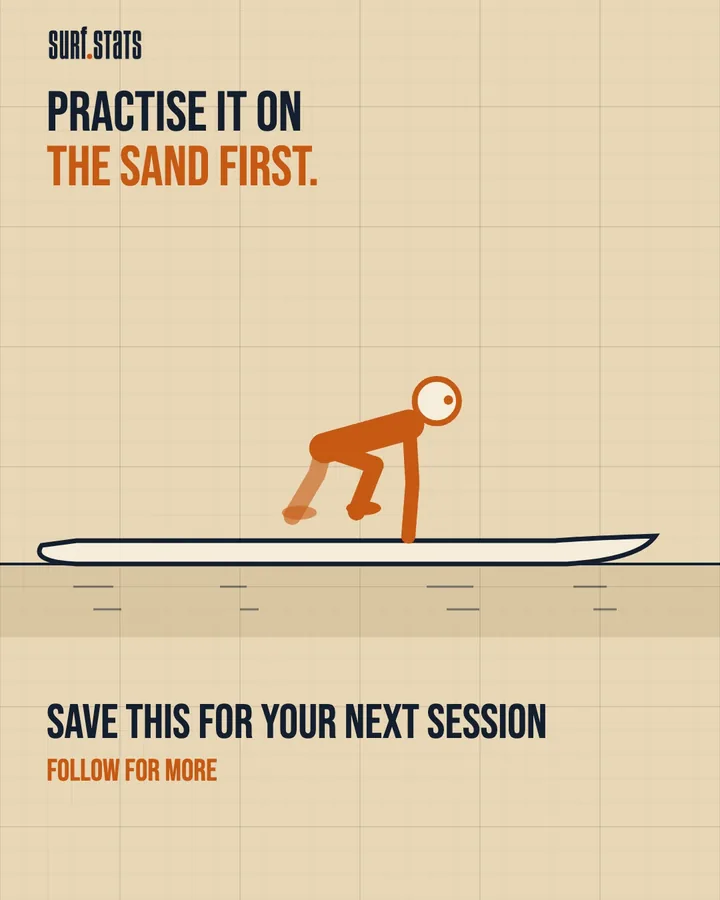
Practise your pop-up on the beach before you try it in the water. Lie on your board on the sand and run through it: hands by your chest, push your arms straight, feet up under you, eyes up, land low. Repeat it until it feels like one motion. Save this for your next session.
Where you lie on the board before all of this matters too: see where to lie on a surfboard.
Quick checklist
- Keep paddling until you feel the wave push you. Then pop up.
- Hands by your chest, under your shoulders, not out in front.
- Push your arms straight to make space for your feet.
- Feet, not knees. Front foot between your hands.
- Eyes up. Look where you're going.
- Land low: knees bent, feet about shoulder-width, back straight.
- Practise it on the sand first.