
How to paddle a surfboard
 Fin Selector: your fins in 1 minute
Reach long and pull all the way back to your hip, fingertips in first with the forearm following, straight back along the rail. Stay relaxed with a steady rhythm, and for a wave, start early and keep paddling until it carries you.
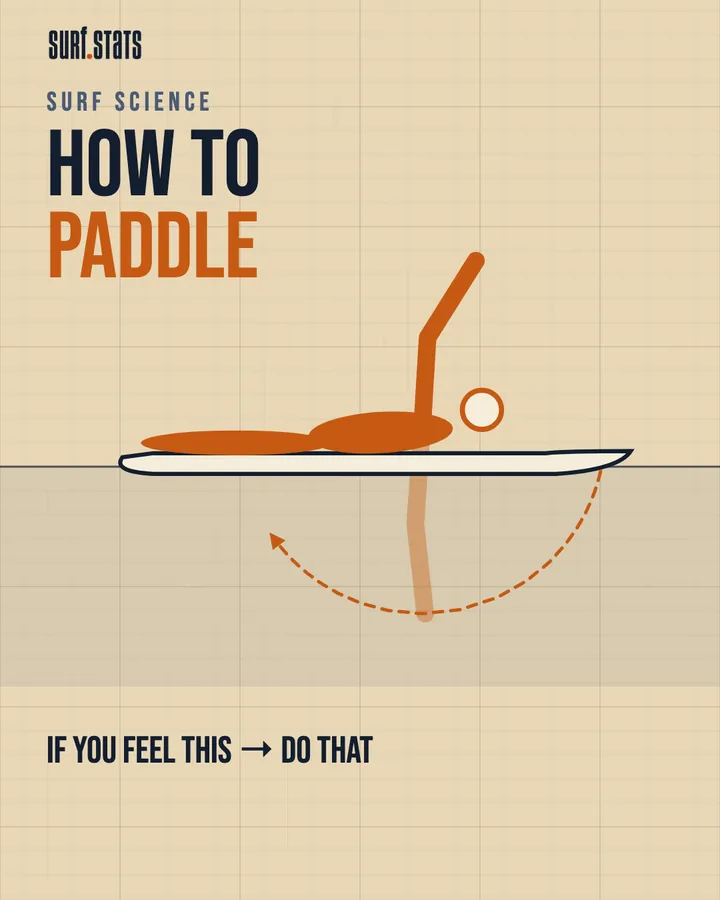
You paddle way more than you ride, so how you paddle matters every time you go out. The good news: the fixes are simple, and coaches mostly agree on them. Long strokes, the whole forearm in the water, a straight pull, a relaxed body and a steady rhythm.
Below are five common paddling problems, and the fix for each. They come from our how to paddle reel, and every tip is backed by at least two independent sources: surf coaches, surf magazines and the lifesaving bodies that teach board paddling. Where you lie on the board is its own topic, covered in where to lie on a surfboard. This one is about the stroke.
1. Short, quick strokes and going nowhere?
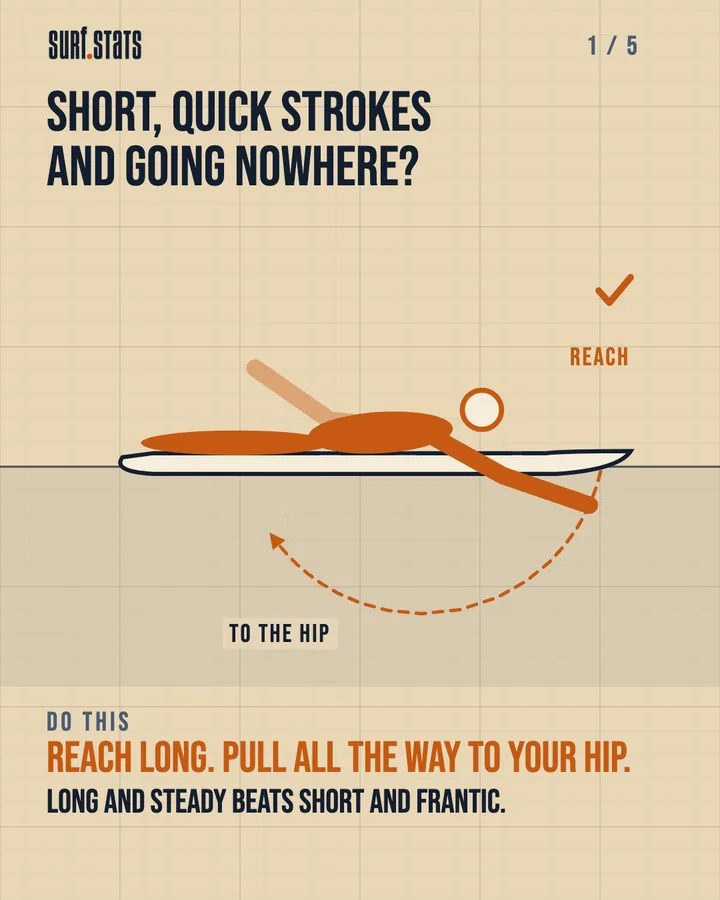
Do this: reach long. Pull all the way to your hip.
Short, quick strokes feel busy but don't move you much. Instead:
- Reach long, catching the water as far in front of you as you can.
- Pull all the way back to your hip, along the side of the board.
Coaches keep coming back to the same idea: quality strokes, not quick, choppy ones. Frantic paddling won't take you anywhere. Long and steady beats short and frantic.
2. Only your hand in the water? Slapping and splashing?
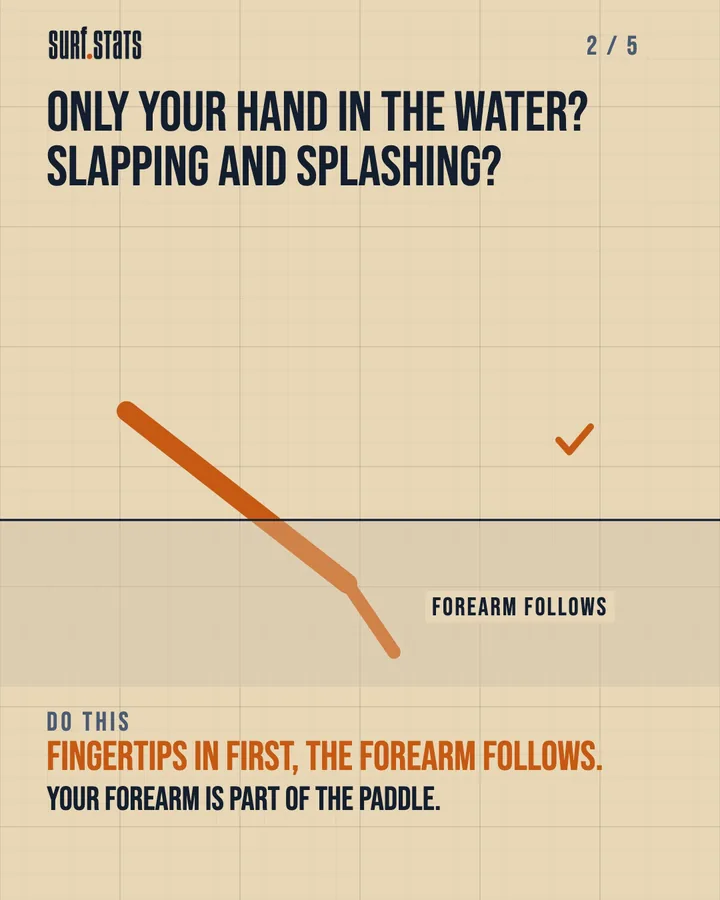
Do this: fingertips in first, the forearm follows.
If only your hand goes in, you're barely pushing water. Your paddle isn't just your hand. It's your hand and your forearm together.
So put your fingertips in first and let the forearm follow them in, smoothly. You don't need to slap the water or splash. Keep the hand relaxed.
Your forearm is part of the paddle. Two things coaches still argue about: whether to cup your hand or keep the fingers slightly spread, and how deep to pull. What they agree on is a relaxed hand and a forearm that goes into the water, not just the hand.
3. Arms swinging out wide like oars?
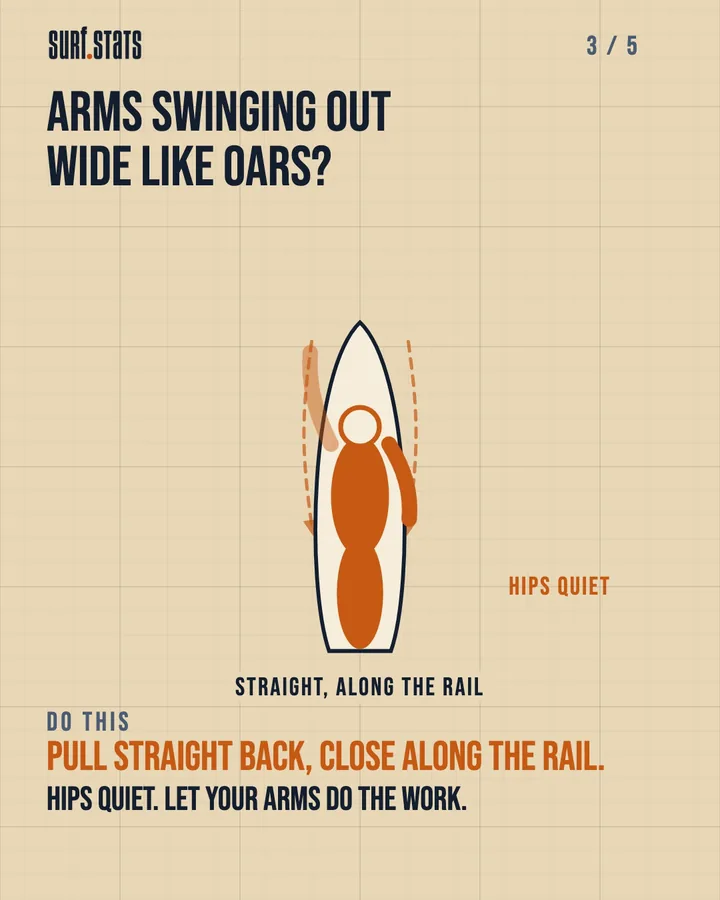
Do this: pull straight back, close along the rail.
Arms swinging out wide waste the stroke. A lot of surfers paddle with the arm held out to the side, like a sculling oar. Pull in a straight line back to the hip instead, with your arms close to the rails.
Hips quiet. Let your arms do the work. Keep your hips quiet: if they move too much, the board wobbles.
4. Gassed before you reach the lineup?
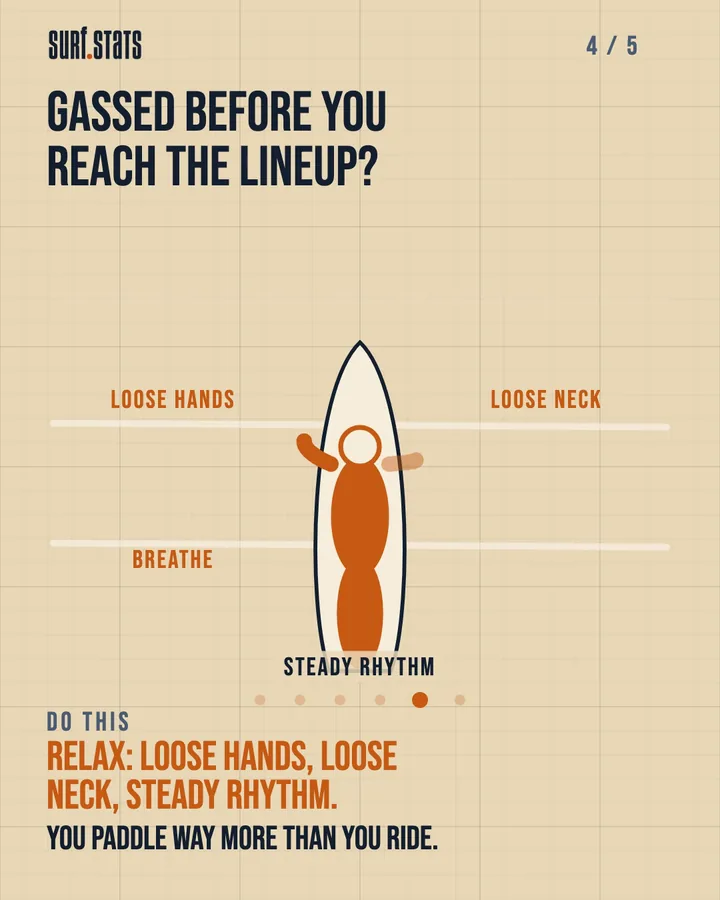
Do this: relax. Loose hands, loose neck, steady rhythm.
Relax. Loose hands, loose neck, a steady rhythm, and breathe with the stroke. The idea is to get the most out of each stroke for the least effort, not to fight the water.
That's why coaches talk about rhythm and cadence, not frantic strokes. Frantic, tense paddling burns energy you'll want later. Keep your head and neck relaxed, not tensed, and let each stroke follow the last at an even pace.
You paddle way more than you ride. Paddling out, getting back into position, chasing waves: it all adds up, so how you spend your energy on it matters.
5. Wave keeps rolling under you?
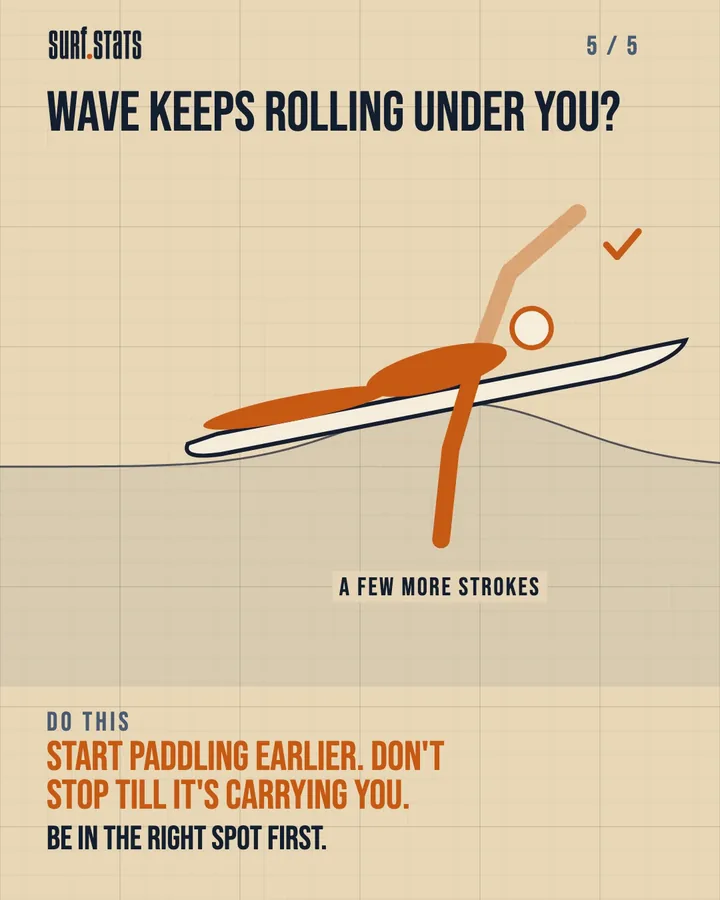
Do this: start paddling earlier. Don't stop till it's carrying you.
Be in the right spot first. Then start paddling earlier, and don't stop until the wave is carrying you. Feel it lift? A few more strokes. Coaches agree on that last part: keep going a couple of strokes past the moment you feel the wave pick you up.
Be in the right spot first. Coaches put position first, then commit: start early and keep paddling.
You paddle way more than you ride
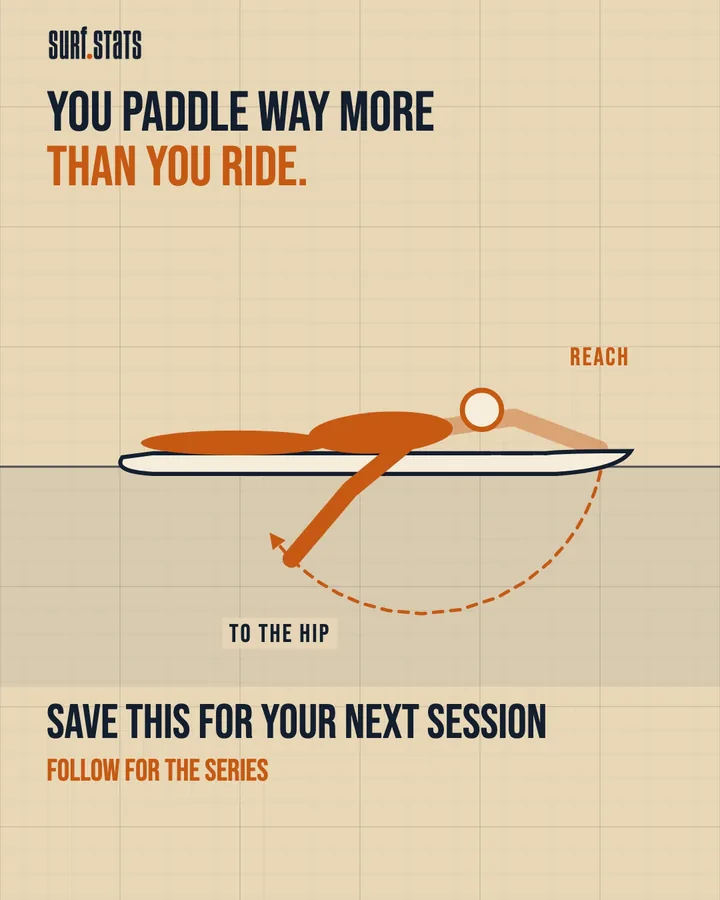
This one is measured. In time-motion studies of competitive surfers, about half the time in the water is paddling and under 5% is riding waves. Those are heats and a training session of competitive surfers, not beginners, so we won't give you a number for your session. The direction is the point: you paddle way more than you ride. Save this for your next session.
Quick checklist
- Reach long, pull all the way to your hip.
- Fingertips in first, the forearm follows. No slapping.
- Pull straight back, close along the rail.
- Hips quiet. Let your arms do the work.
- Relax: loose hands, loose neck, steady rhythm, breathe with the stroke.
- For a wave: right spot first, start early, keep paddling until it carries you.