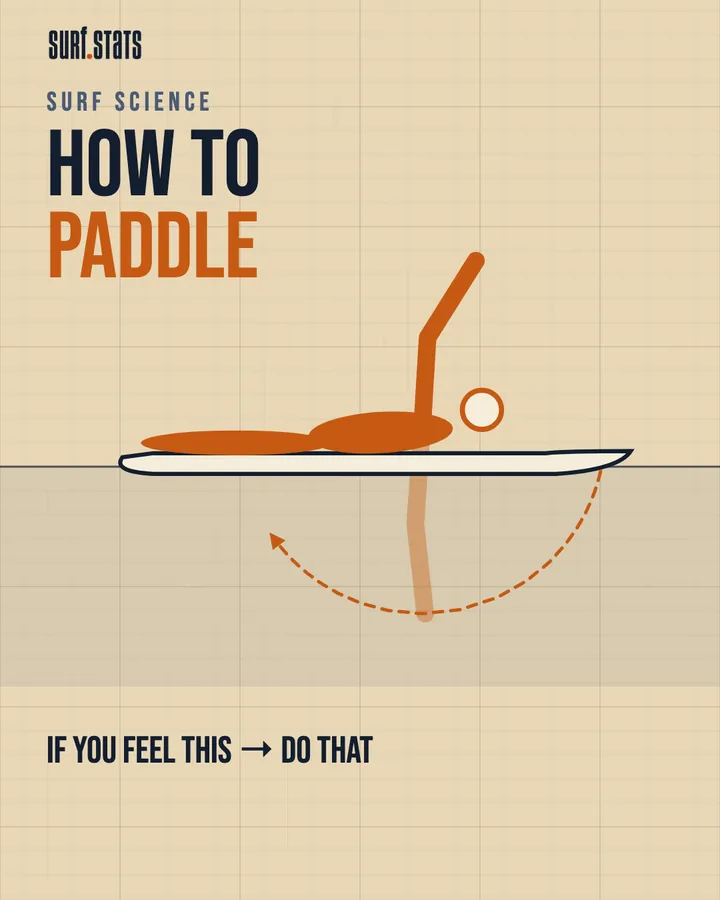

Where to lie on a surfboard
 Fin Selector: your fins in 1 minute
Lie where the board runs flat and glides. If the nose rides up and the tail sinks, slide forward; if water keeps washing over the nose, slide back a little; keep your spine over the stringer and your legs together, feet just out of the water.
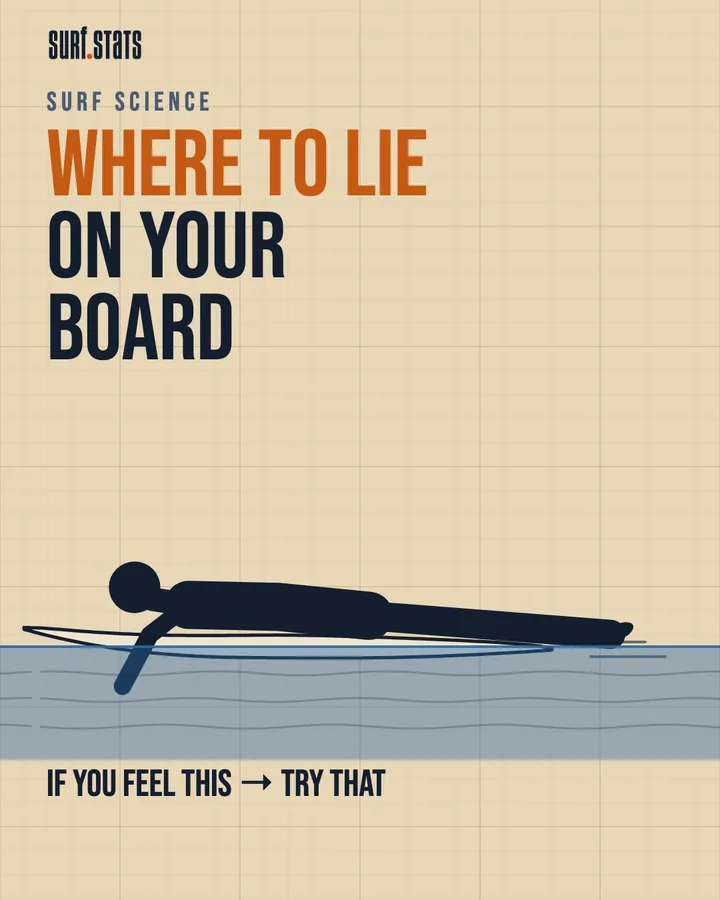
Where you lie on your surfboard decides how well it paddles. Lie in the right spot and the board runs flat and glides forward with little effort. Lie in the wrong one and it pushes water, tips onto a rail or drags behind you, and you work hard to go nowhere.
There is no single right spot to memorise from a chart: it changes with every board. So instead of a number, use what you feel. Below are four common problems and the fix for each. They come from our where to lie on your board reel. No study has tested where to lie, so this is coaching consensus, and every tip is backed by at least two independent sources: surf schools, coaches and surf magazines.
1. Nose up, tail sinking?
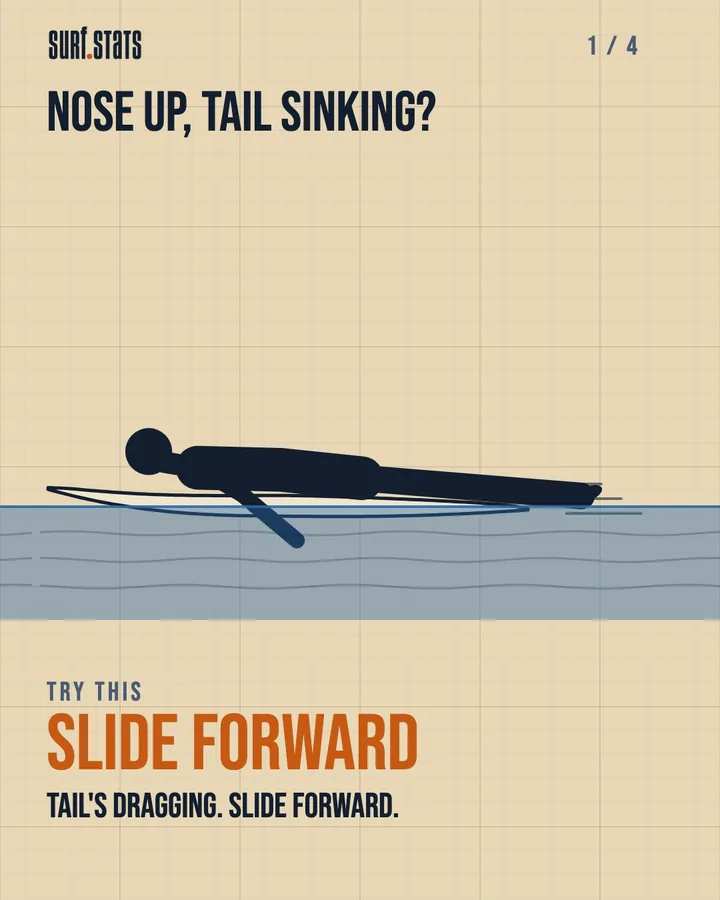
Try this: slide forward.
If the nose rides high and the tail sinks, you're too far back. The tail is dragging. Instead of gliding, the board pushes water, and that drag slows you down: you work hard but move slowly.
It's one of the most common beginner mistakes. Slide forward until the tail comes up and the board levels out.
2. Water keeps washing over the nose?
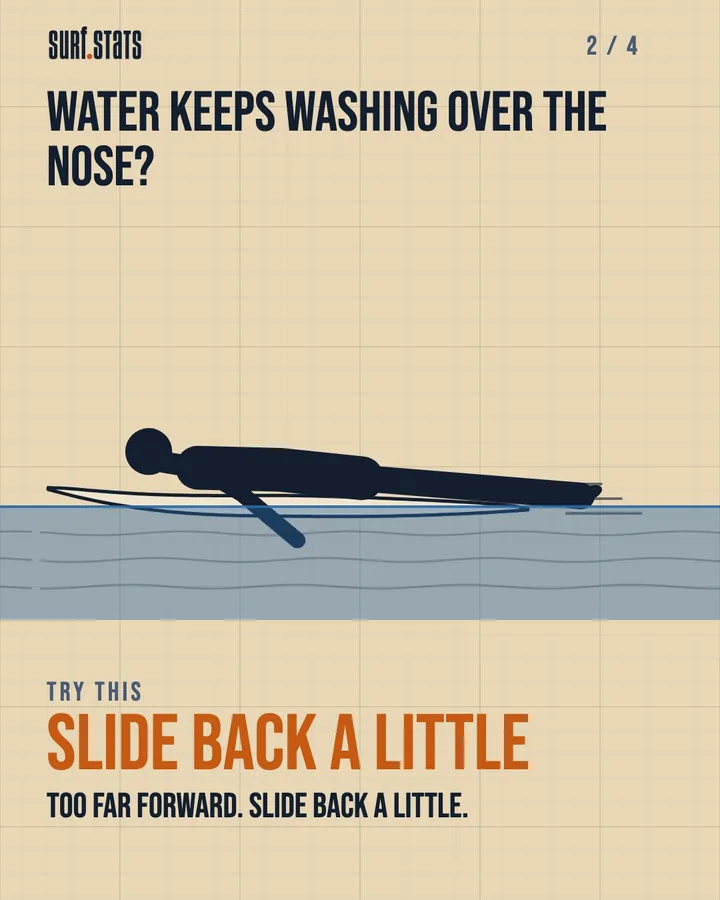
Try this: slide back a little.
If water keeps washing over the nose as you paddle, you're too far forward. Slide back a little, just until the board runs flat and glides.
Two words in there matter:
- Keeps. A splash over the nose from chop or whitewater isn't a position problem. Water washing over the nose stroke after stroke is.
- A little. Don't overcorrect. Many coaches want you as far forward as you can go without the nose dipping, so move back only as far as you need to.
3. Board leaning to one side?
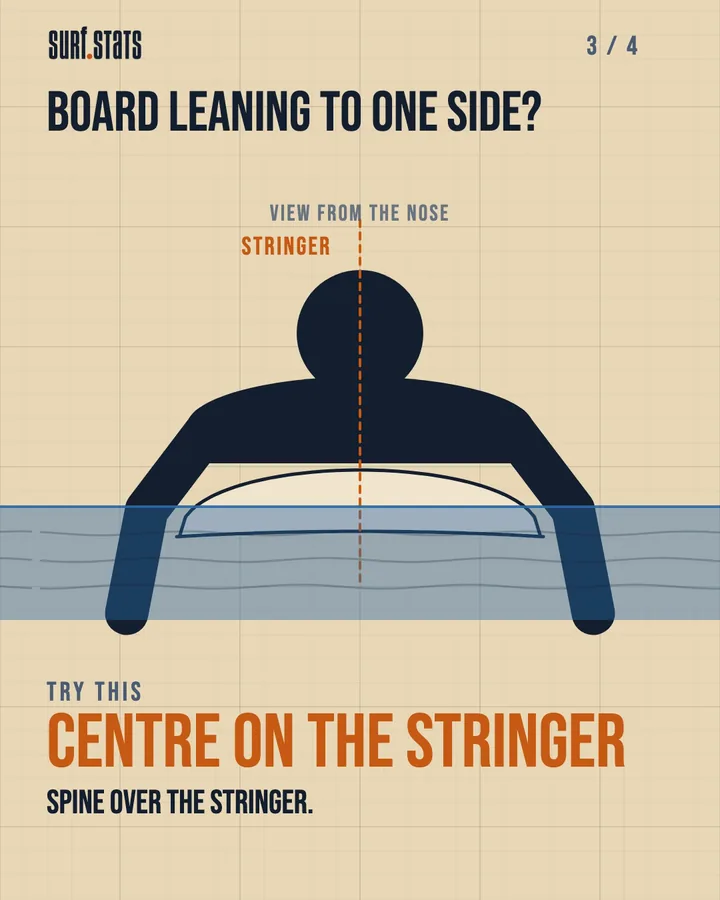
Try this: centre on the stringer.
If the board keeps leaning onto one rail, you're off-centre. Even lying slightly off the centre line makes the board list to one side. Line your spine up with the stringer, the line down the middle of the board. If your board has no visible stringer, find the middle and stay on it.
A slight roll with each stroke is normal. Coaches describe good paddlers rolling the board a bit from rail to rail as they paddle. The problem is a board that leans to one side and stays there, not one that rocks gently with your arms.
4. Feet dragging in the water?
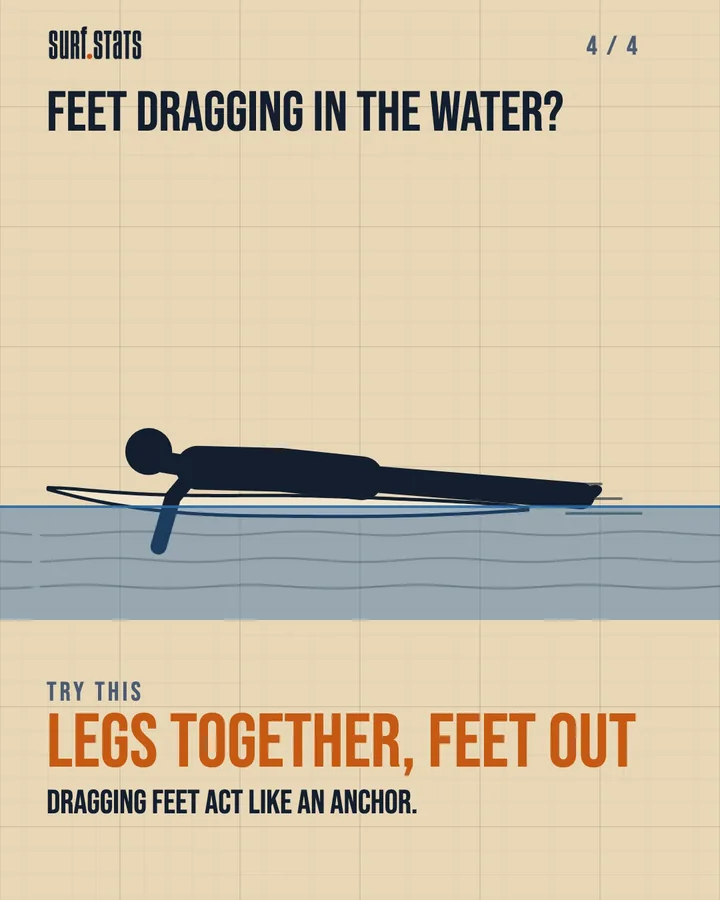
Try this: legs together, feet out.
Dragging feet act like an anchor. Feet and legs trailing in the water add drag every stroke. Keep your legs together and your feet just out of the water.
Just out is enough. The sources ask for feet slightly lifted, not knees bent with your feet up in the air. On a shortboard your feet will often sit at or just past the tail, and that's fine as long as they stay out of the water.
Flat and gliding? Remember that spot
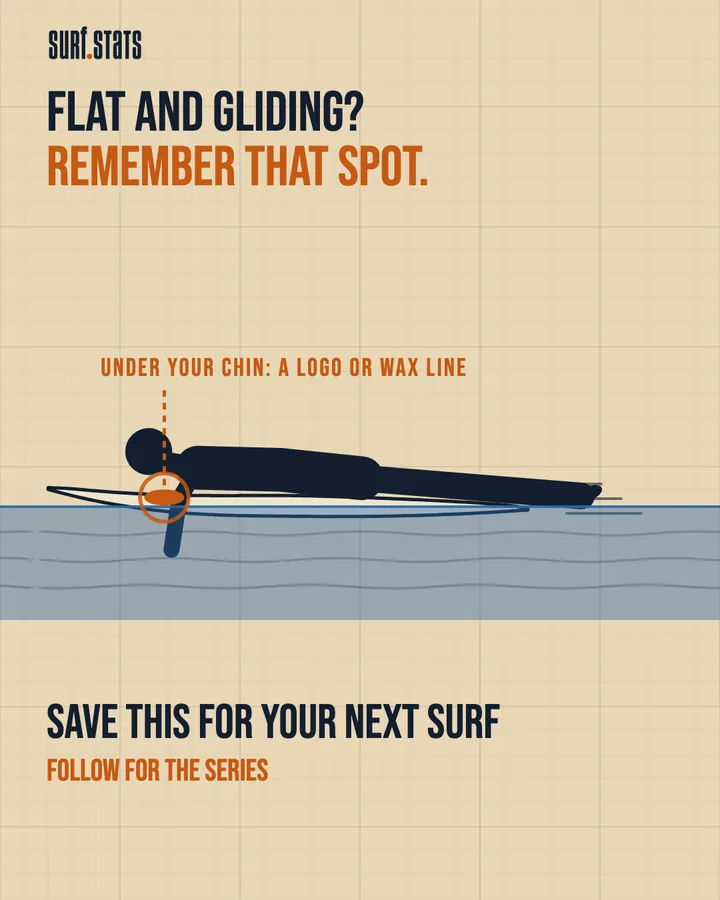
Once the board sits flat and glides, note where your chin is. A logo or a wax line under it helps. Then start from there every time you paddle that board.
Treat it as a starting point, not a fixed rule. The balance point is different on every board, so a new board means finding the glide again. Conditions can shift it a little too. For the stroke itself, read how to paddle a surfboard next, and if you keep missing waves even in the right spot, see how to choose a surfboard.
Quick checklist
- Board flat, nose just clear, gliding.
- Nose up, tail sinking: slide forward.
- Water keeps washing over the nose: slide back a little.
- Spine over the stringer. A slight roll with each stroke is fine.
- Legs together, feet just out of the water.
- Found the glide? Note where your chin is and start there on that board.