
How to wax a surfboard
 Fin Selector: your fins in 1 minute
Grip comes from little bumps, not a thick layer. Build them with a hard base coat and a softer top coat matched to your water, comb them when they flatten, and strip everything when the wax turns dark and slick.
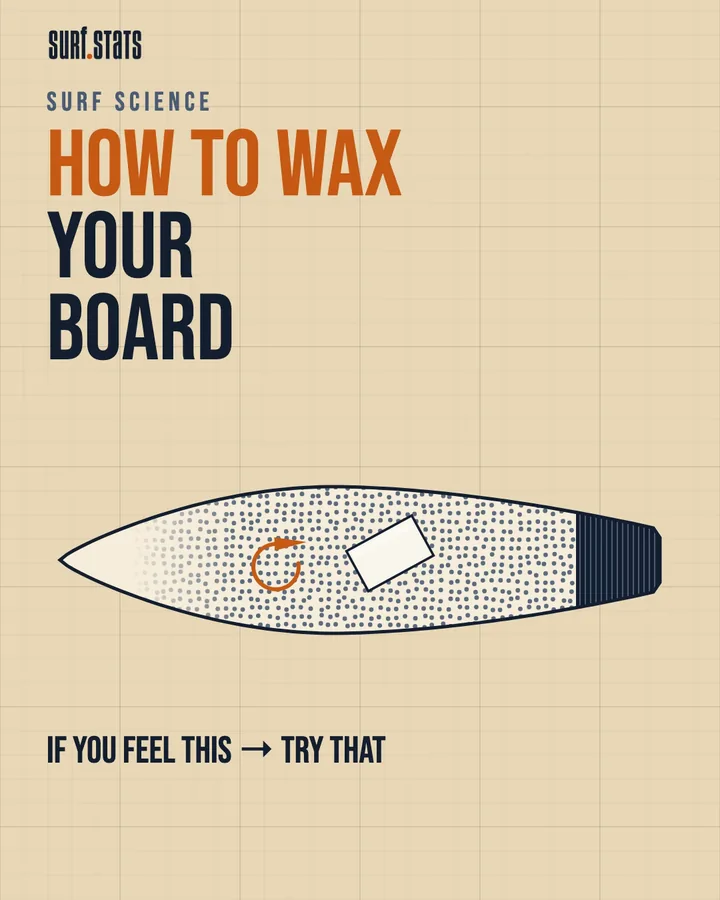
Surf wax has one job: give your chest and feet something to grip. It does that with small raised bumps, not with a smooth coat, so every wax problem comes down to the bumps. Either they never formed, they're the wrong hardness for the water, they wore flat, or they're buried under old dirty wax.
Below are five common wax problems, and the fix for each. They come from our how to wax your board reel, and every tip is backed by at least two independent sources: wax makers, board makers, surf schools and surf magazines.
1. Wax won't form bumps?
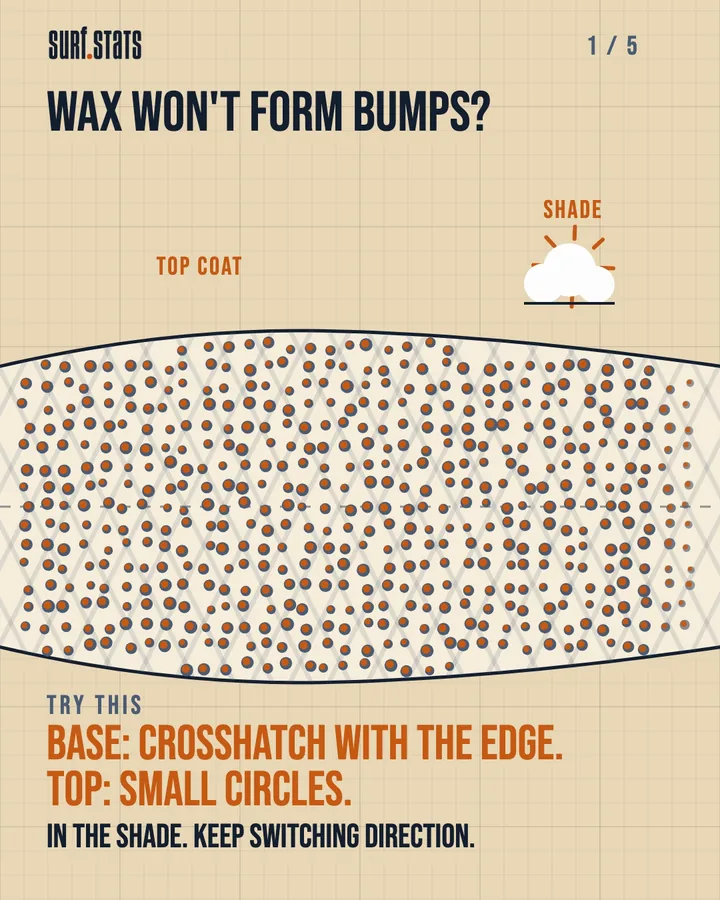
Try this: base coat crosshatched with the edge of the bar, top coat in small circles.
Grip comes from little bumps, not a smooth layer. A common way to build them:
- Work in the shade. Direct sun makes wax smear instead of forming bumps.
- For the base coat, use the edge or corner of the bar, not the flat side.
- Lay the base coat in a crosshatch: diagonal lines one way, then the other.
- Rub the top coat on in small circles, rail to rail.
Other patterns work too; just keep changing direction. If you only ever wax in one direction, the bumps never come up. A new board takes longer to build up than one that already has a base on it.
2. Wax too hard? Or too soft?
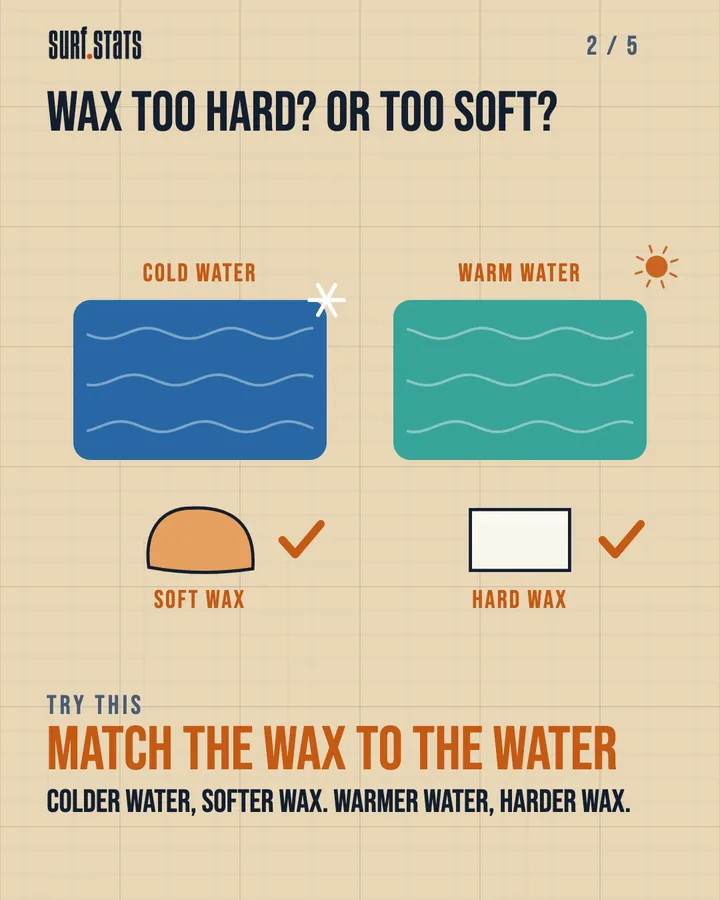
Try this: match the wax to the water.
Wax grades are about hardness. Cold water makes wax harder and less sticky, and warm water softens it. So cold-water wax is the soft one, and warm and tropical waxes are harder.
Use the wrong grade and you'll feel it: cold wax in warm water melts into a slippery mess, and tropical wax in cold water stays hard with very little grip. Check the label for your water. Every brand prints its own temperature range, and the brands don't draw the lines in quite the same place, so go by the bar you're holding.
3. Bumps worn flat?
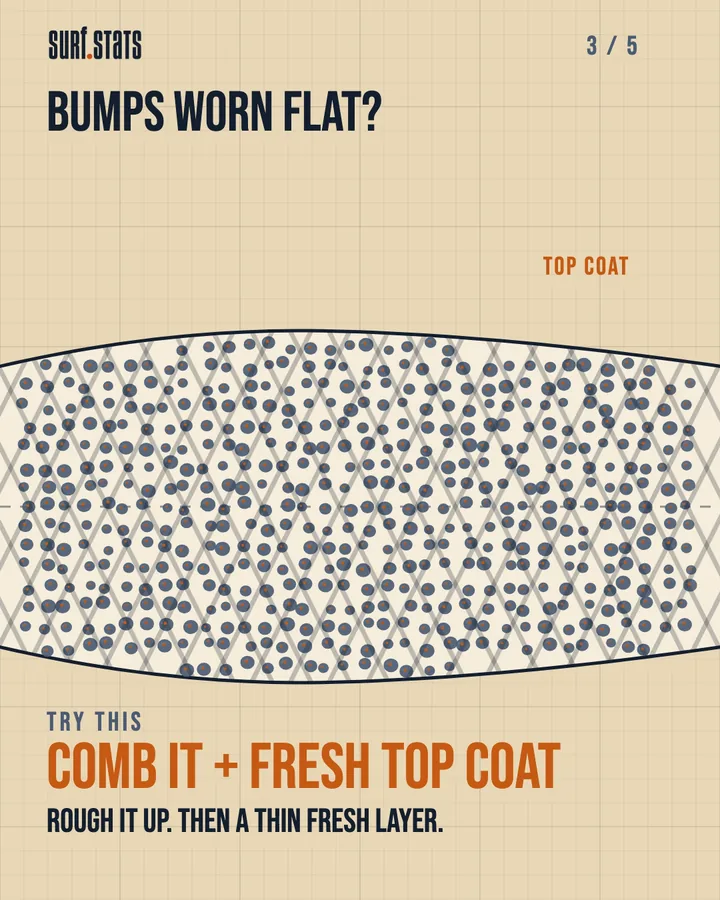
Try this: comb it, then add a fresh top coat.
Wax flattens out as you surf, and when the bumps go smooth, the grip goes with them. Before you paddle out, rough up the old bumps with the teeth of a wax comb, scratching diagonally across the deck. Then rub on a thin fresh layer of top coat.
More wax isn't always more grip. Too much wax turns slippery rather than tacky, so keep the new layer light.
4. Wax dark, dirty and slick?
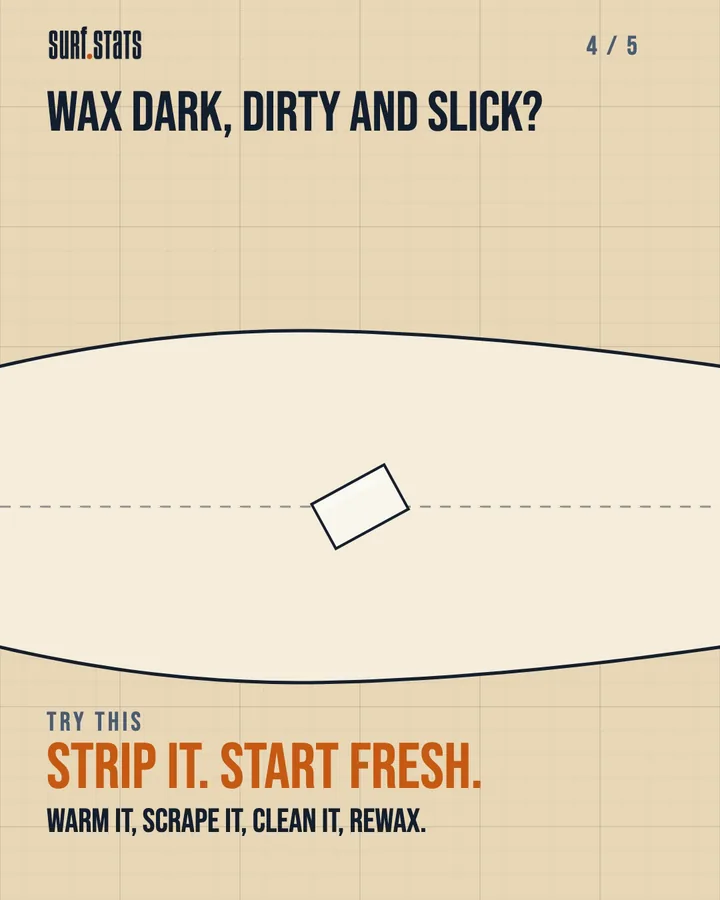
Try this: strip it and start fresh.
Old wax picks up dirt and goes slick, and a fresh top coat won't fix it: never put new wax over an old, dirty layer. To strip it:
- Let the sun soften the wax for a few minutes (or use a hair dryer on low heat).
- Scrape it off with a plastic wax comb or scraper. Never a metal tool.
- Wipe off what's left with a wax remover.
- Start again with a base coat.
Keep the sun time short. Warming the wax for a few minutes is how it comes off; leaving the board baking is how boards get damaged (see below).
5. Top coat rubbing off fast?
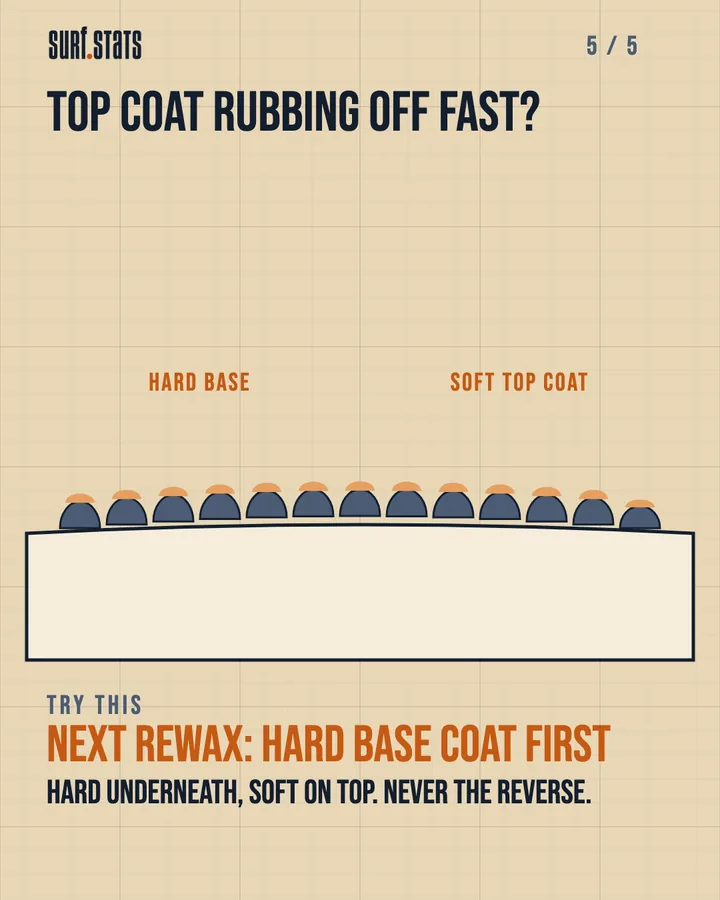
Try this: next time you rewax, lay a hard base coat first.
A base coat is a harder wax. It builds the bumps and holds the softer, stickier top coat in place, so the top coat doesn't rub away under your feet. It helps especially under soft, cold-water waxes.
The rule is hard underneath, soft on top. Never the reverse. Your top coat should always be softer than your base coat. And since a base coat goes on a clean deck, lay it the next time you strip the board and start fresh.
Where does the wax go?
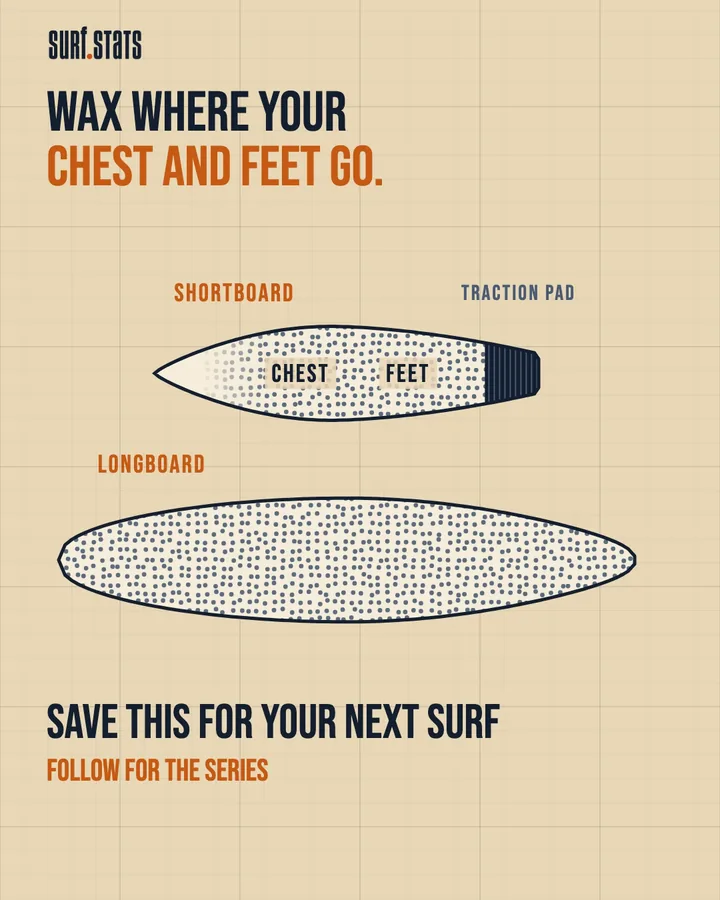
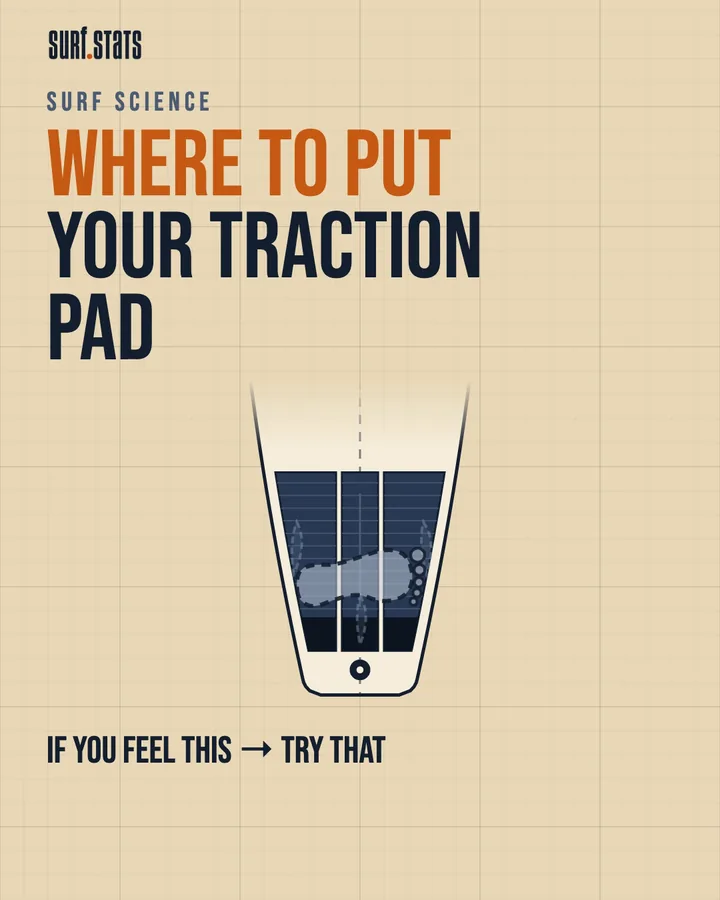
Wax wherever your chest and feet touch the board: under your chest for paddling and where your feet land when you stand. Longboards get the whole deck. Many shortboards run a traction pad on the tail and wax the rest; if you're setting one up, read where to put your traction pad.
Quick checklist
- Bumps, not a thick layer.
- Shade, base coat with the edge of the bar, keep changing direction.
- Colder water, softer wax. Warmer water, harder wax.
- Comb it and add a thin top coat when the bumps go flat.
- Dark, dirty and slick: strip it and start again.
- Hard underneath, soft on top.