
How to choose a surfboard
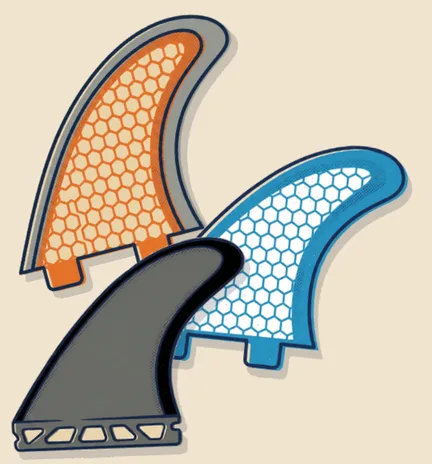 Fin Selector: your fins in 1 minute
Start from what you feel in the water. Missing waves points to more volume, stalling in small soft waves to a wider tail, big surf to a narrower tail, nose-diving on steep drops to more nose rocker, and wide turns to more tail rocker.
Choosing a surfboard gets easier when you start from what goes wrong in the water, not from a spec sheet. Can't catch waves? Bogging down in small surf? Losing control when it gets bigger? Each of those feelings points to one part of the board you can look for next time.
Below are five common problems and the board change that helps with each. They come from our how to choose your board reel. There is almost no lab research on how board shape feels, so this is shaper and coaching consensus, and every tip is backed by at least two independent sources: shapers, board makers, coaches and surf magazines.
One thing to keep in mind before you start: no part of a board works alone, and every change trades something away. Each fix below says what you gain and what it costs.
1. Can't catch enough waves?
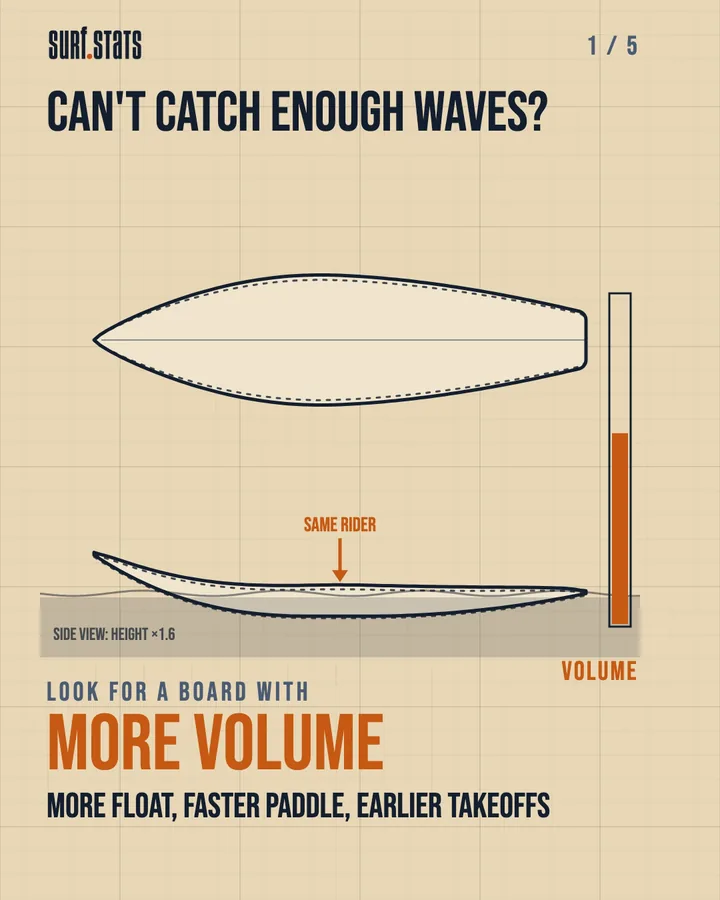
Try this: look for a board with more volume.
More volume means more float, a faster paddle and earlier takeoffs. A board with more foam keeps you higher on top of the water, so you paddle faster. And the faster you paddle, the more waves you can catch. Less volume works the other way: slower paddling, later takeoffs.
Two things to know:
- Volume is relative to you. "More" means more for your weight and your level, not a number someone else rides.
- It costs some turning. A higher-volume board is harder to turn and less responsive than a smaller one.
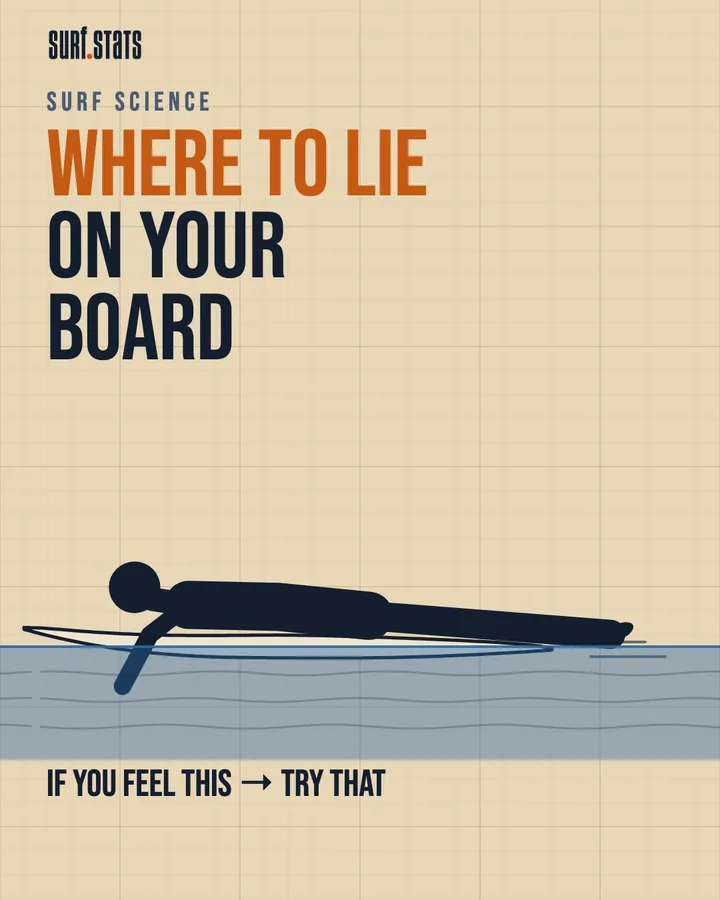
Your position on the board matters too. If you lie too far back, even a big board pushes water. See where to lie on a surfboard.
2. Stalling in small, soft waves?
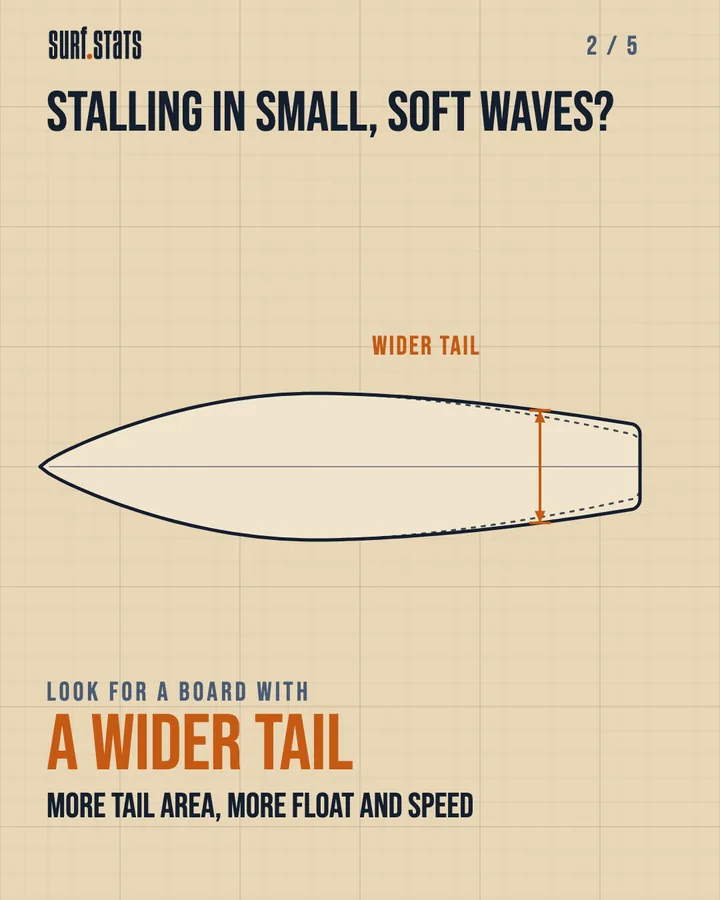
Try this: look for a board with a wider tail.
A wider tail means more tail area, and with it more float and speed. A shaper's reason for a wider tail is to help generate speed in smaller, softer waves, and surf magazines agree it adds float, speed and stability.
The catch: a wider tail holds less in big surf. That's the next problem.
3. Hard to control in bigger surf?
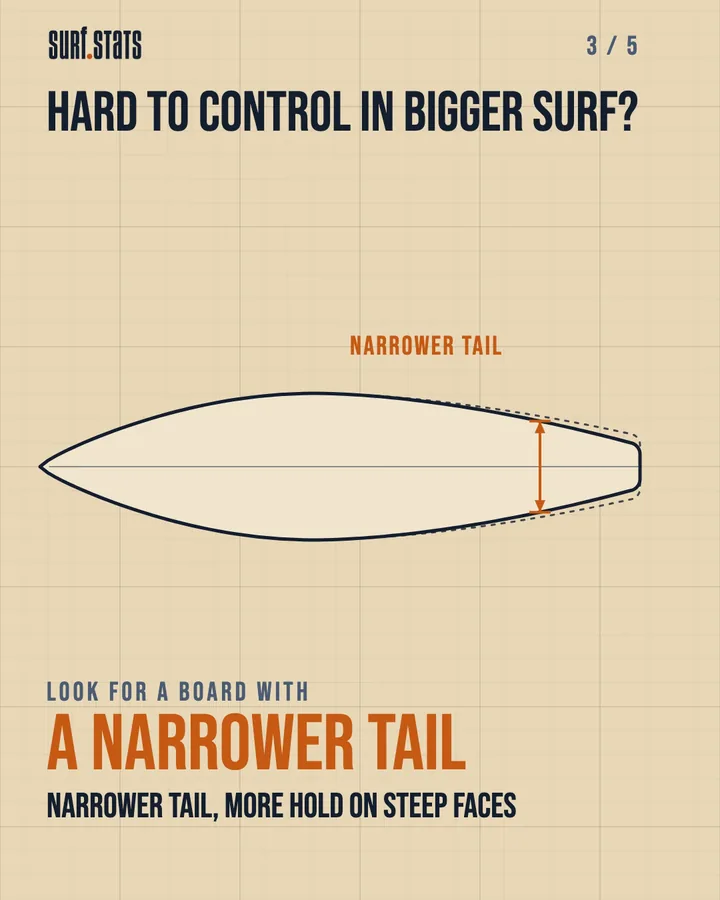
Try this: look for a board with a narrower tail.
A narrower tail gives you more hold on steep faces. Shapers draw narrower tails for steeper, more powerful waves because they give the rider more control, and step-up boards for bigger surf get a narrower tail for the same reason.
Problems 2 and 3 are the two ends of one dial: tail width. Wider for small, soft waves. Narrower for big, steep ones. The word is narrower, not narrow. This is about a little less width at the tail, not a knife-thin pin.
4. Nose-diving on steep drops?
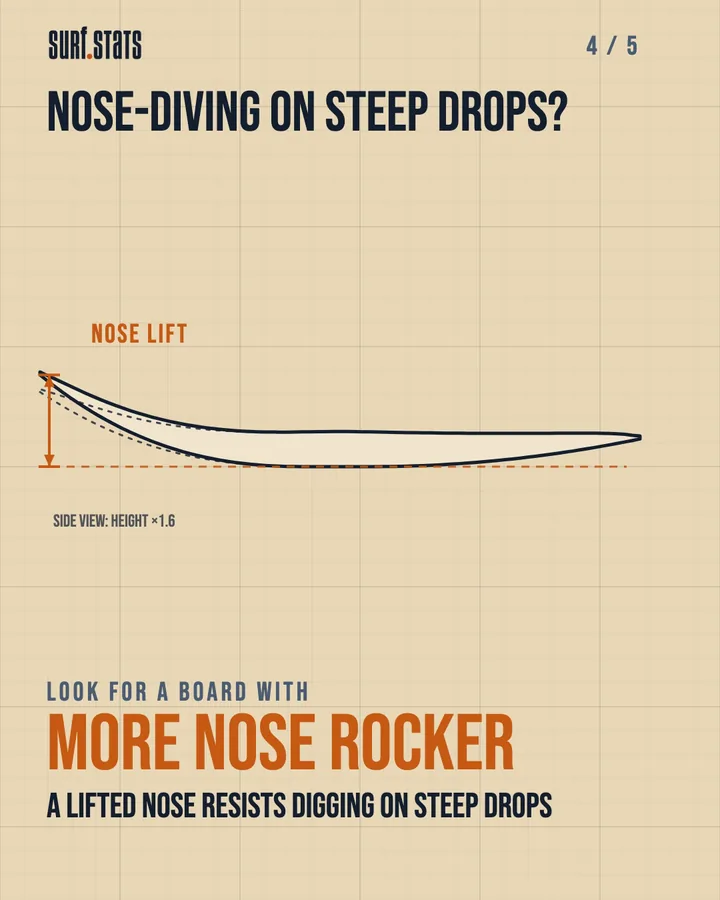
Try this: look for a board with more nose rocker.
Rocker is the curve of the board from nose to tail when you look at it from the side. Nose rocker is how much the front end lifts. A lifted nose resists digging on steep drops. That's what nose rocker is there for: to keep the board from digging into the wave.
Two warnings:
- Keep the word "steep". This is advice for steep, hollow drops. One shaper calls more nose rocker a bad idea for small, high-tide beach breaks, so don't apply it to every wave.
- It costs paddling. More nose rocker paddles slower than a flatter nose.
Nose-diving is also often a technique problem, so look at how you surf before you blame the board.
5. Turns feel too wide?
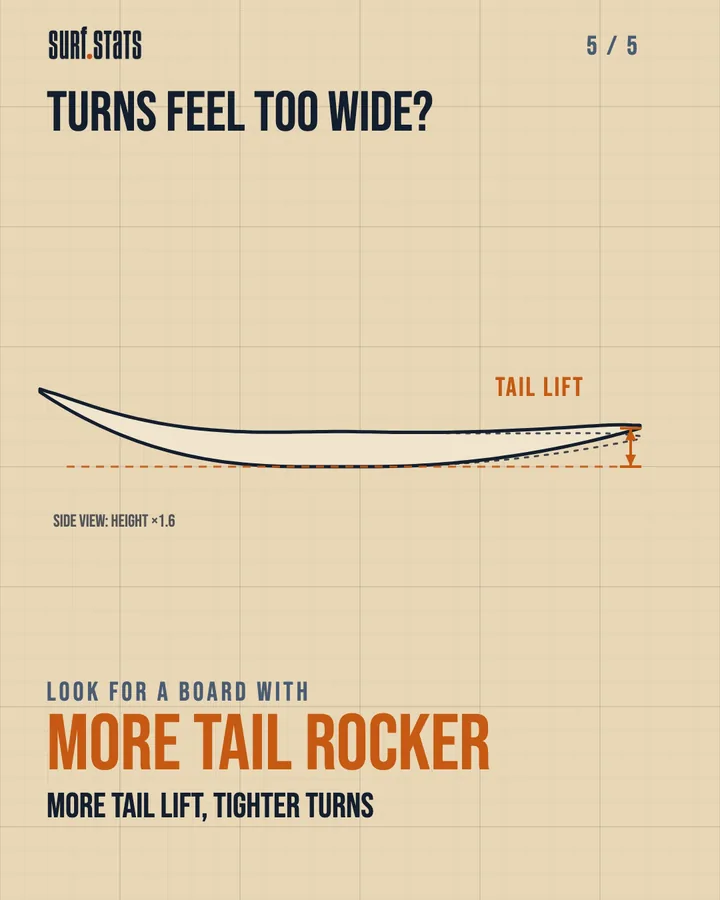
Try this: look for a board with more tail rocker.
More tail lift, tighter turns. Shapers add tail rocker for snappier turns, and a curvier rocker lets a board turn tightly with little effort.
The cost is speed. More tail rocker makes a board looser but slower, so it gives up some drive out of turns.
Fins change how a board turns and holds too. If your turns feel off, read how to choose surfboard fins before you blame the board.
Every change costs something
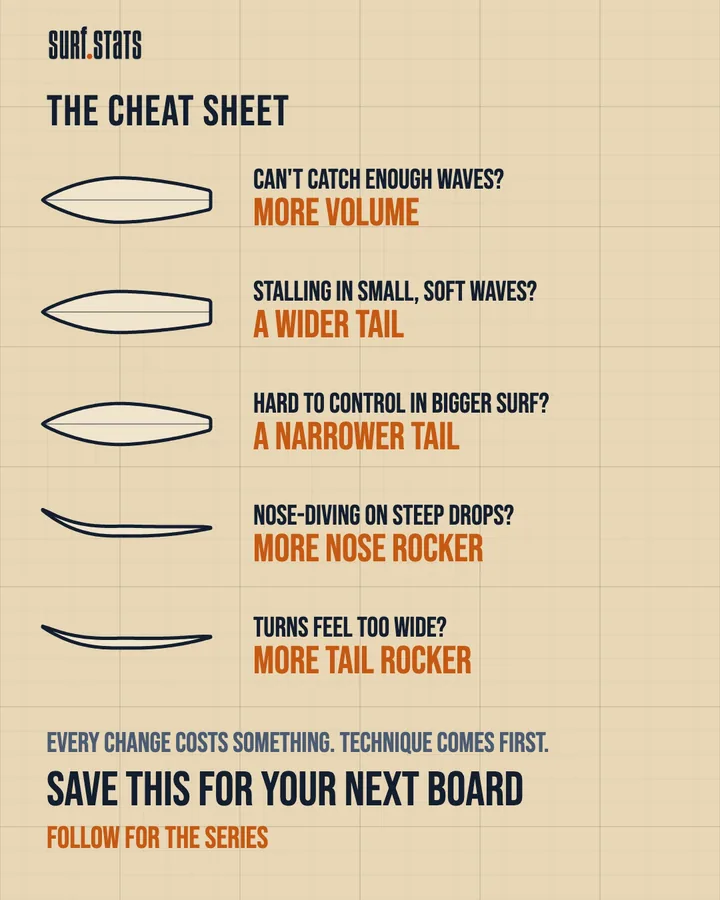
Every fix above trades something away: more volume is harder to turn, a wider tail holds less in big surf, more nose rocker paddles slower, and more tail rocker gives up drive. That's why technique comes first and the board fine-tunes it. When you're ordering or buying your next board, talk it through with your shaper.
Quick checklist
- Can't catch enough waves: more volume, for your weight and level.
- Stalling in small, soft waves: a wider tail.
- Hard to control in bigger surf: a narrower tail.
- Nose-diving on steep drops: more nose rocker.
- Turns feel too wide: more tail rocker.
- Every change costs something. Technique comes first.