
How to choose surfboard fins
Start from what you feel. Tail sliding out: more depth. Board stiff and locked in: less depth. No speed off the bottom turn: a longer base. Can't snap tight turns: less rake. Turns short and twitchy: more rake.
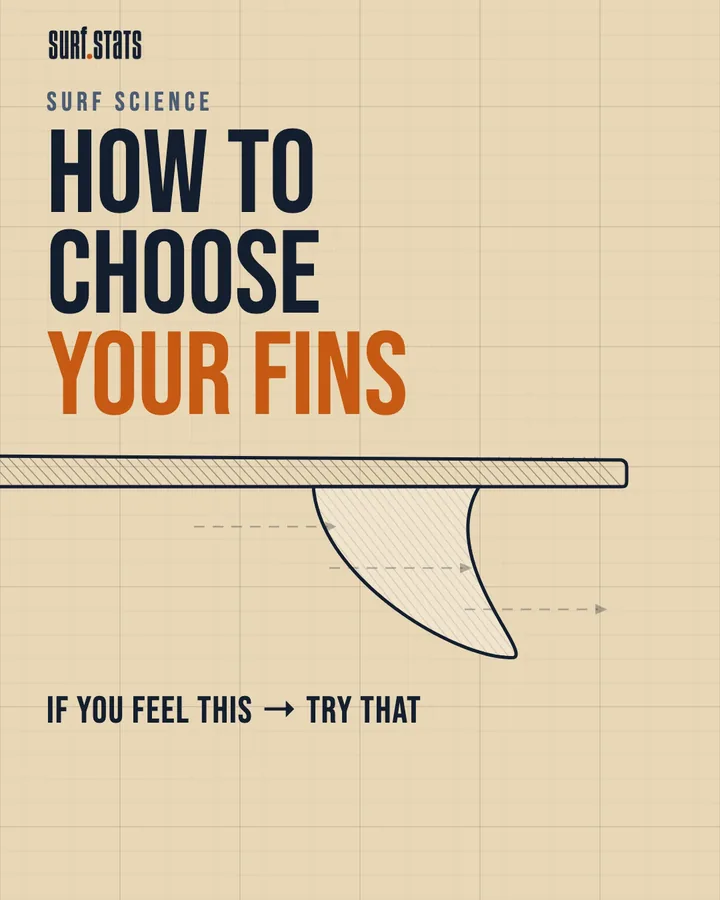
Choosing surfboard fins gets easier when you stop reading product names and start from what you feel in the water. This guide uses three features printed on fin spec sheets: depth, base and rake. Fin makers agree on which way each one moves the feel of your board.
Below are five common fin problems and the feature that fixes each, from our how to choose your fins reel. Every tip is backed by at least two independent sources: fin makers, surf press and fin research. Think of it as "if you feel this, try that". Fins tune a board; they don't replace a better board or better technique.
1. Tail sliding out in turns?
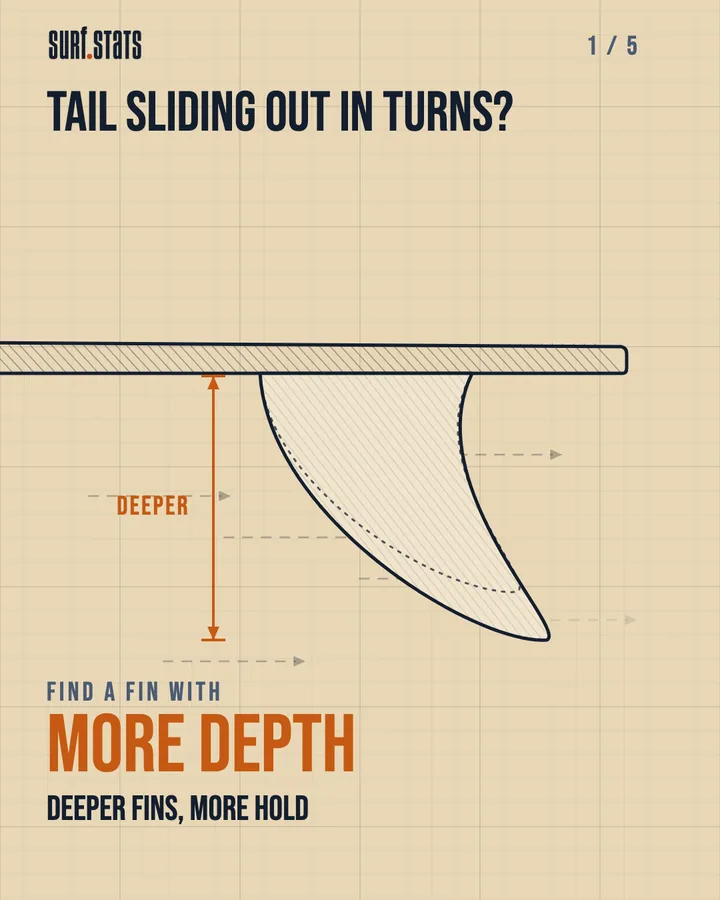
Find a fin with more depth: deeper fins, more hold.
Depth is how far the fin reaches down from the board. FCS and Carve magazine put it the same way: the greater the depth, the more hold. Hold is the grip that keeps your tail from sliding sideways when you push on it, so a tail that slides out in turns is asking for more of it.
The research points the same way. In a computer simulation of three-fin setups, the deepest fin made the most sideways force, the force you push against, and the study reads more force as more hold. FCS sizes its fin sets by rider weight, so when you go deeper, check the size that matches your weight.
2. Board feels stiff and locked in?
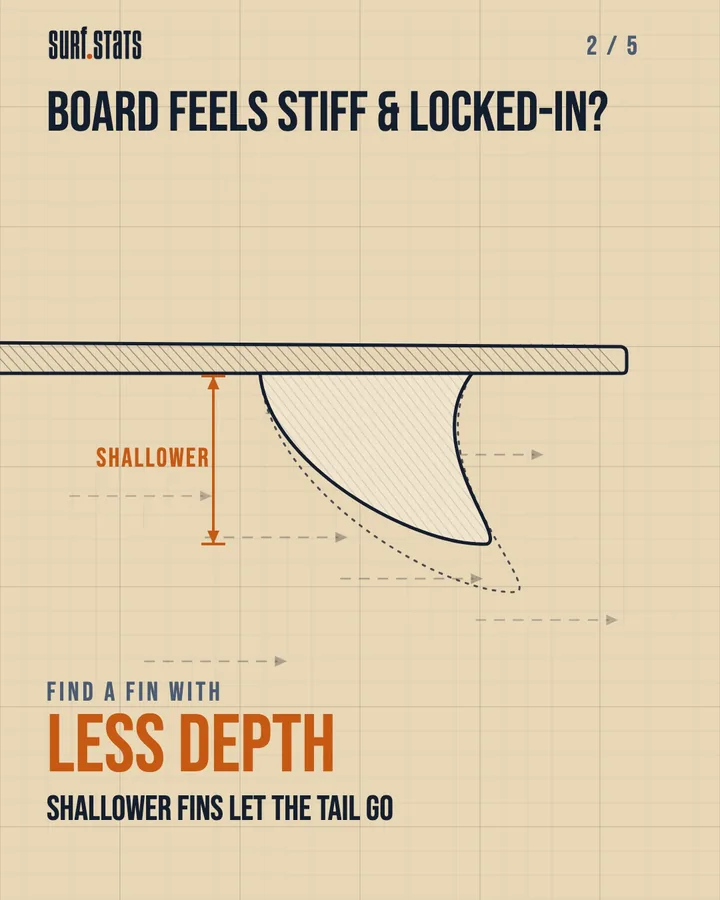
Find a fin with less depth: shallower fins let the tail go.
This is card 1 in reverse. FCS puts it simply: the shorter the depth, the more a board will slide and release. True Ames describes a large fin area as something that locks the tail in place, which is exactly that stiff, locked-in feeling. A shallower fin lets the tail break free more easily.
Less depth is one fix for a stiff board, not the only one. And you'll hear that flexier fins loosen a board up. Fin makers disagree on what flex actually does, and we found no study that tests what flex does on a surf fin, so we can't point you to flex as a fix.
3. No speed off the bottom turn?
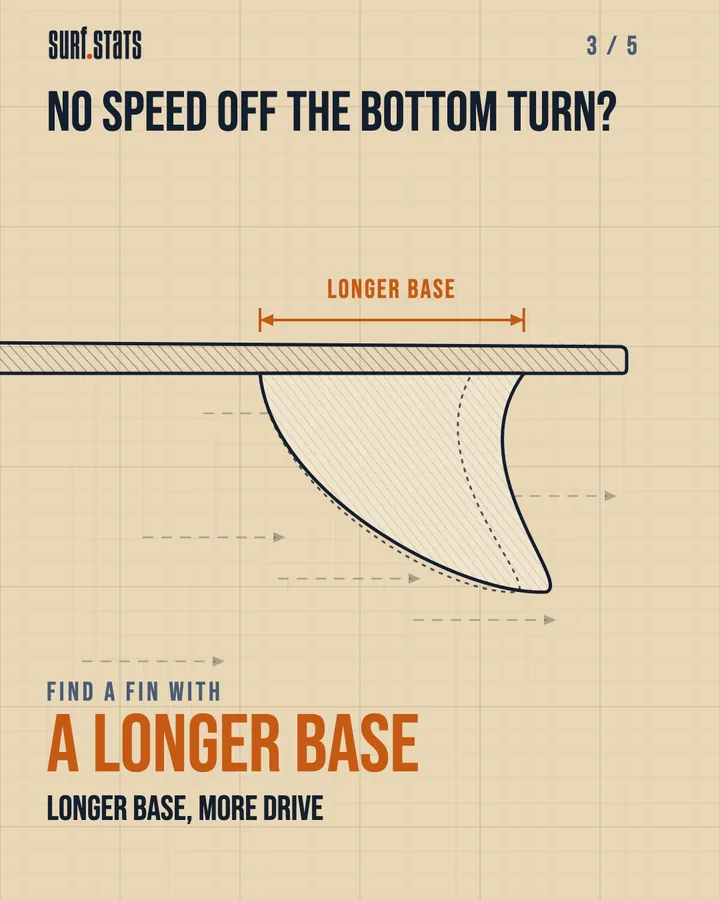
Find a fin with a longer base: longer base, more drive.
The base is the length of the fin where it meets the board. FCS, Carve and Haydenshapes all tie a longer base to more drive, and FCS and Carve add acceleration. Drive is what you feel as speed coming out of the bottom turn.
A fin doesn't push you forward on its own. Drive is the same sideways force that gives you hold, which you push against through the turn. If you want to know where that force comes from, read how surfboard fins work. Speed off the bottom is also a technique thing, so check how you load the rail too.
4. Can't snap tight turns?
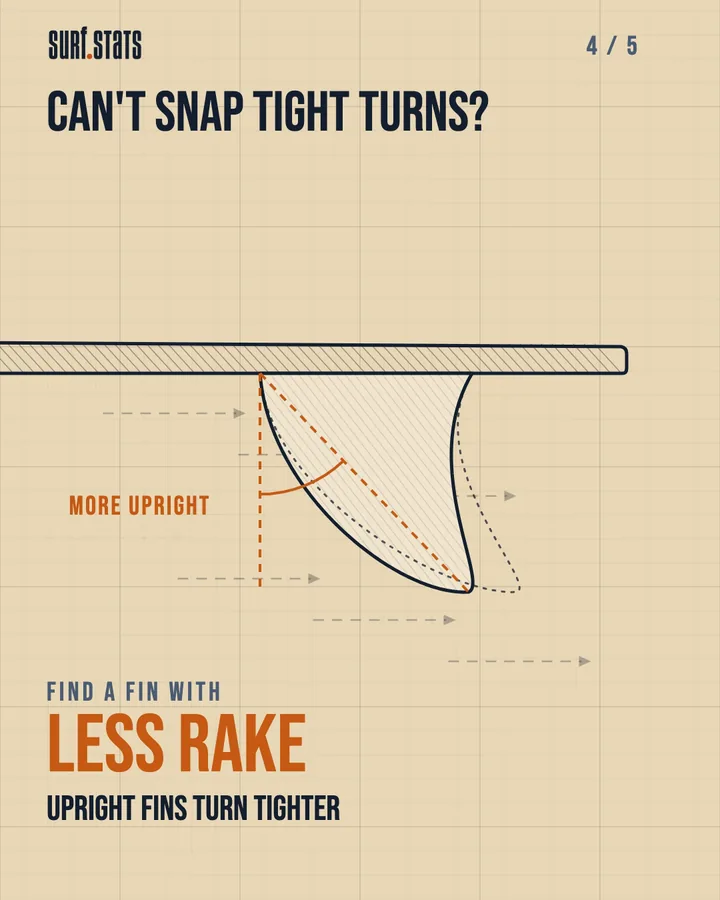
Find a fin with less rake: upright fins turn tighter.
Rake is how far the fin's tip sweeps back behind its base. A more upright fin, with less rake, turns in a tighter arc. FCS, Futures, True Ames, Haydenshapes and Carve magazine all say so. Haydenshapes ties upright fins to quick, snappy turns, which is almost word for word the problem on this card.
Fins that are simply too big can also stop a board from snapping, so less rake is one fix, not the only one.
5. Turns feel short and twitchy?
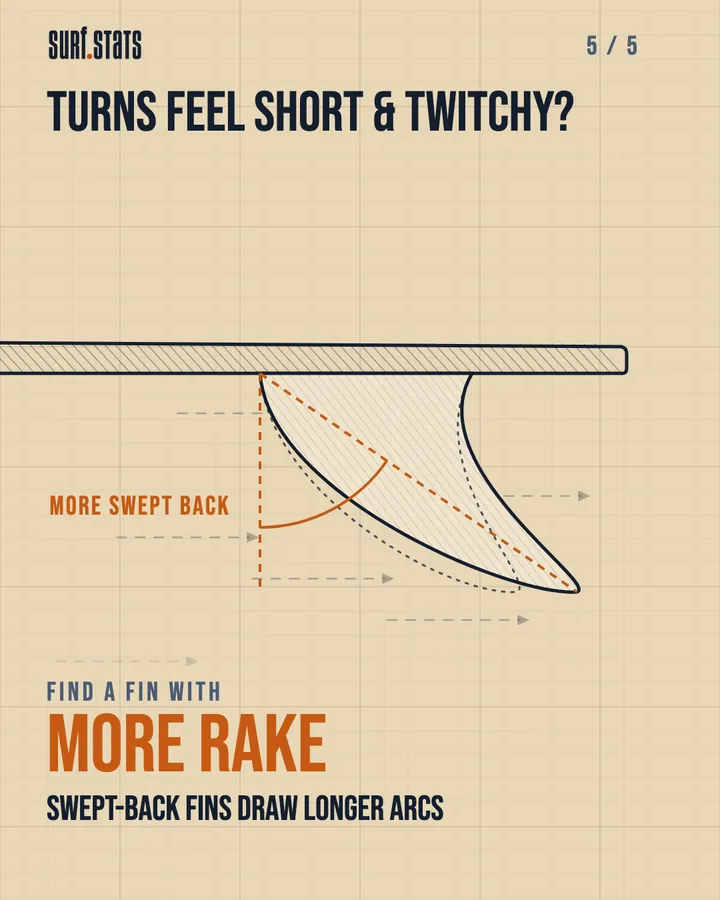
Find a fin with more rake: swept-back fins draw longer arcs.
This is the other end of the same dial as card 4. More rake gives a longer turning arc and, in True Ames' words, more stability. Futures and Haydenshapes link swept-back fins to long, drawn-out turns.
There's a trade. The lead author of the fin study above sums it up this way: more rake gives you more hold, but it feels slower, because it adds drag.
Cards 4 and 5 are one setting, not two. In the drawings, the depth and the base stay the same and only the tip moves forward or back.
The cheat sheet
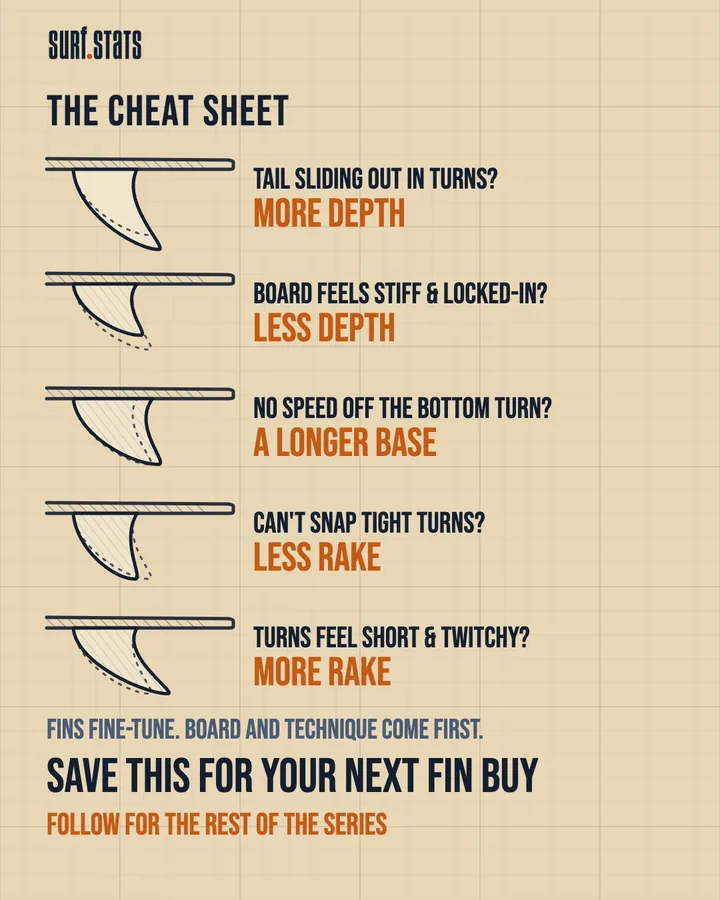
Save this for your next fin buy. And remember the line at the bottom: fins fine-tune. Board and technique come first. If your board is wrong for you, start with how to choose a surfboard.
One more thing before you shop. Brands don't all print the same words. "Base" is the same at FCS and Futures, but depth is called "height" on Futures, and rake is called "sweep" on FCS.
Quick checklist
- Tail sliding out in turns: more depth.
- Board stiff and locked in: less depth.
- No speed off the bottom turn: a longer base.
- Can't snap tight turns: less rake.
- Turns short and twitchy: more rake.
- Depth is "height" on Futures. Rake is "sweep" on FCS.