
How surfboard fins actually work
Your board points slightly off its path, so water hits the fin at an angle and pushes sideways on it. That one push is your hold, and in a turn it is your drive. Push the angle too far and the water lets go: spin-out.
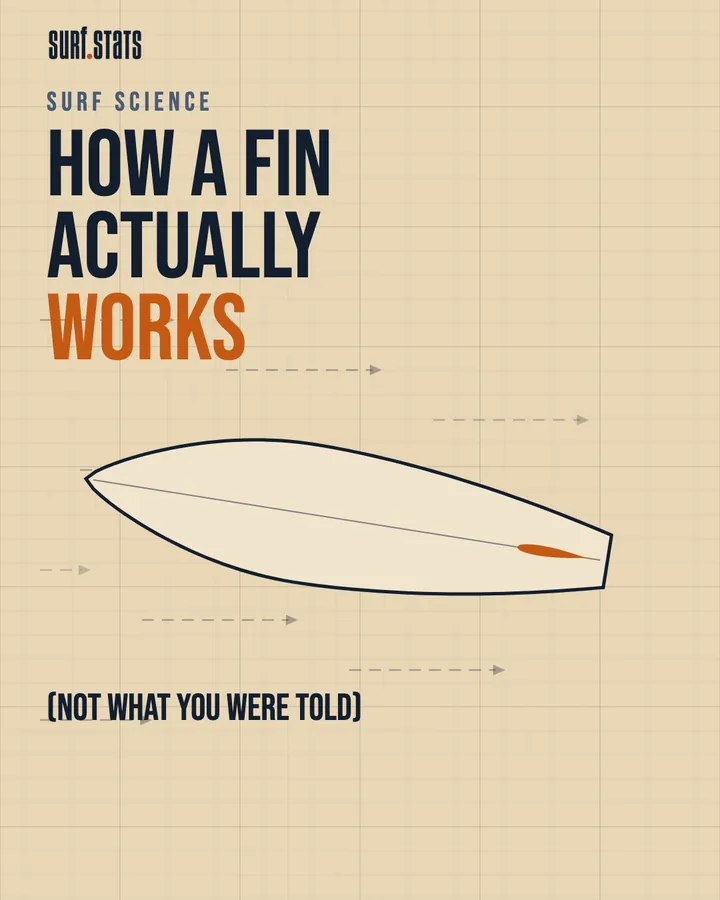
On its own, a surfboard fin doesn't push you forward, and it doesn't work by magic. It works because water hits it at a small angle and pushes sideways on it. Everything you feel from your fins, the hold, the drive and the odd spin-out, comes from that one push.
Below is how surfboard fins work in five steps, from our how a fin actually works reel. Every point is backed by at least two independent sources: fluid-dynamics papers, NASA's aerodynamics pages, fin patents and fin makers. The last step is a myth you may well have been taught.
1. Why does water hit the fin at an angle?
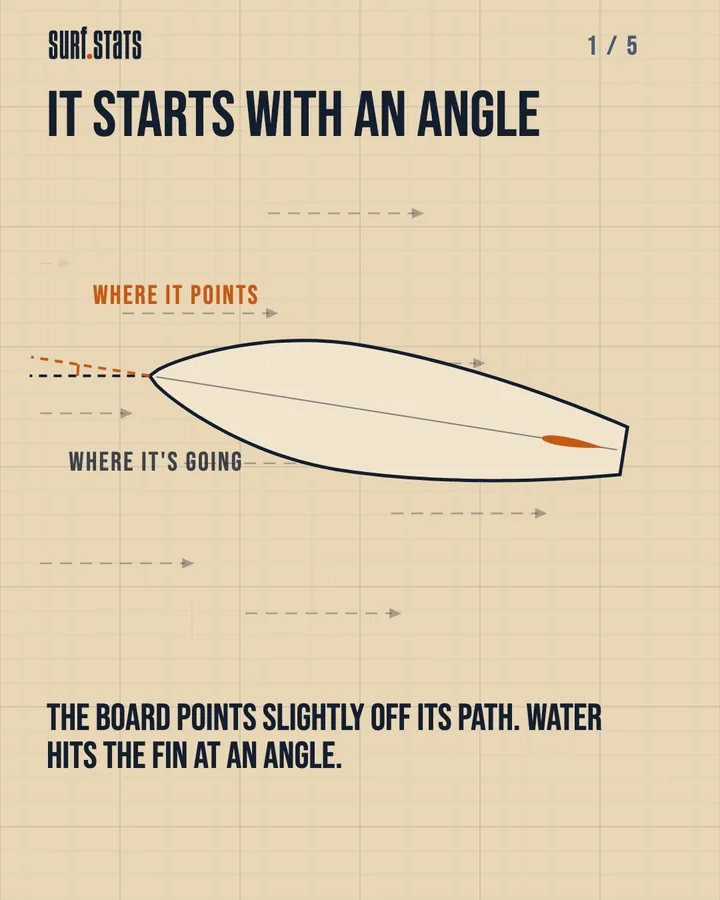
The short version: the board points slightly off its path, so water hits the fin at an angle.
Where your board points and where it's actually going are not quite the same line. The gap between them is small, but it means the water meets the fin from slightly off to one side, not straight on.
That angle is what makes a fin work. A fin with the same shape on both sides, like a centre fin, makes no sideways push at all when the water comes at it dead straight. It only starts to work once the water hits it at an angle.
How big is that angle when you're just trimming down the line? We found no study that measures it in real surfing, so we won't give you a number. It is small.
2. Where does hold come from?
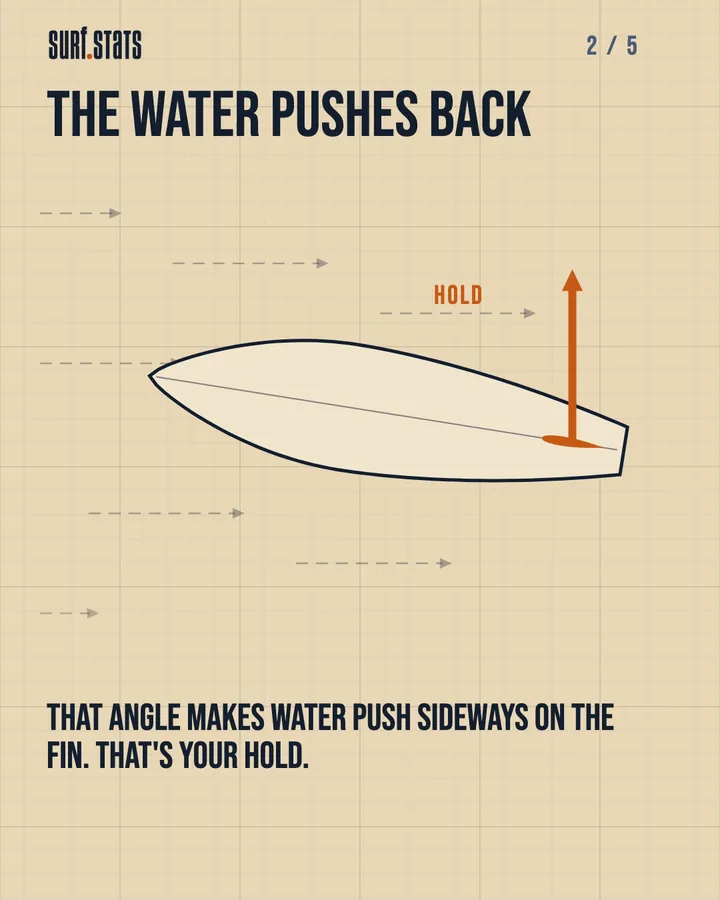
The short version: that angle makes the water push sideways on the fin. That's your hold.
When water hits the fin at an angle, it pushes on the fin sideways, against the way the tail would otherwise slip. Engineers call this side force lift. Surfers call it hold. Researchers who put pressure sensors on a fin and rode it on a real river wave measured that push on the fin's surface.
A bit more angle gives a bit more push, up to a point (step 4 is that point). And the fins are not the only thing holding you in: your rails and the bottom of the board hold too. The fins hold the tail.
3. What is drive, then?
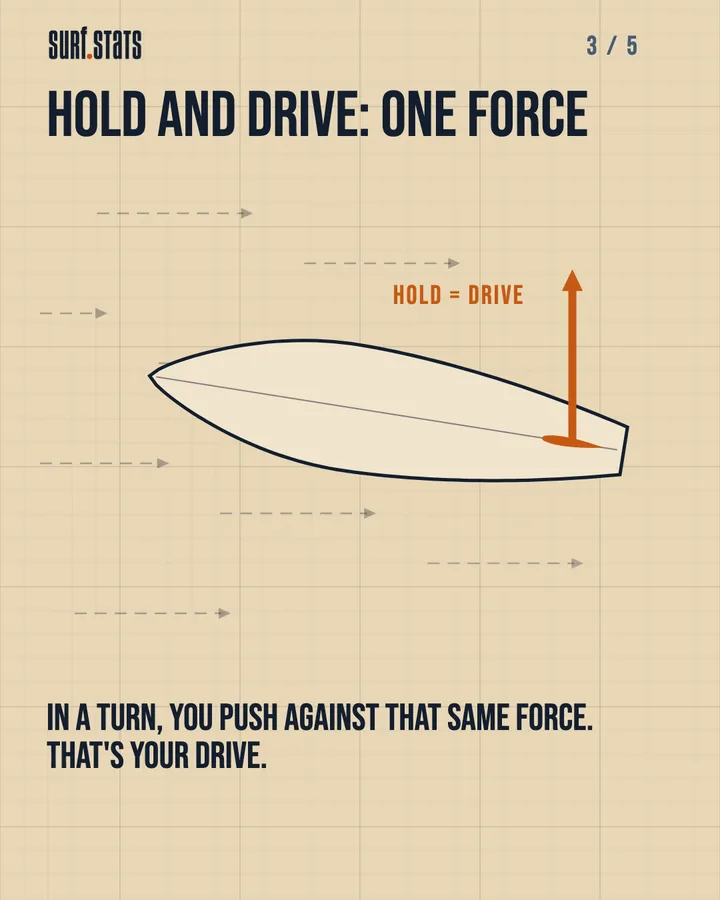
The short version: in a turn, you push against that same force. That's your drive.
Hold and drive are not two different things the fin does. They are two names for one force. When you load the board through a turn, you are pushing against that sideways push from the water, and that is the feeling surfers call drive.
On its own, a fin doesn't push you forward. The fin gives you something to push against, so you can turn the speed you already have into a new direction. Drive is a feel word, not something engineers measure, but a fin maker (Futures) and fin researchers both tie it to the same force as hold.
4. What causes a spin-out?
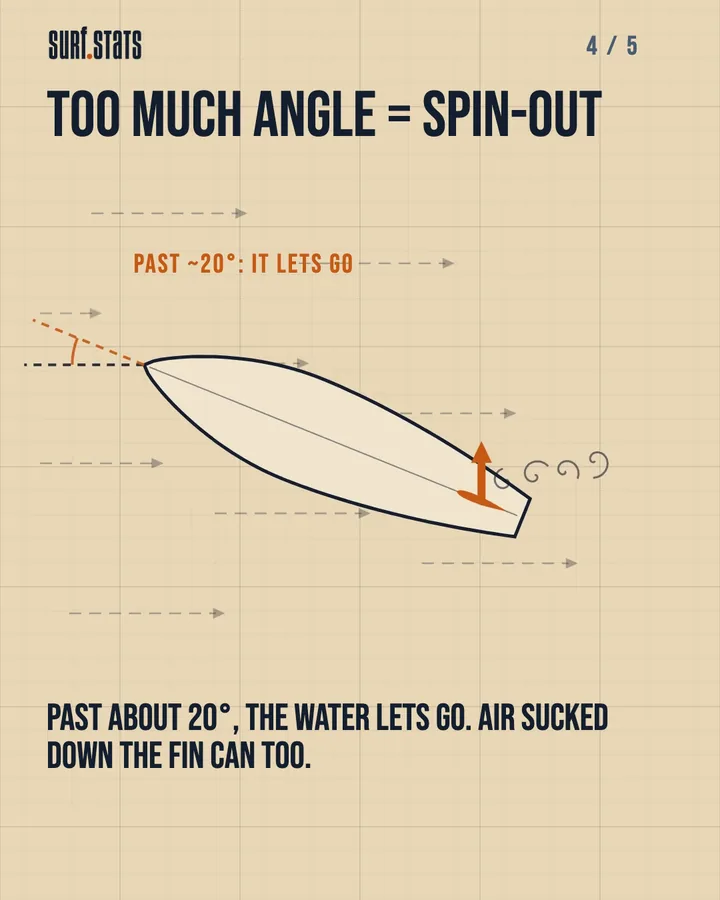
The short version: past about 20°, the water lets go. Air sucked down the fin can do it too.
More angle gives more push, but only up to a point. Push the angle too far and the water can't follow the fin's surface any more. It breaks away into swirls, the sideways push drops, and the tail lets go. That's a spin-out. Engineers call the water breaking away a stall.
Treat "about 20°" as a ballpark. It comes from computer simulations of particular fins at a fixed speed. Real turns vary.
There is a second way to spin out. When the fin gets close to the surface or briefly comes out of the water, which often happens in turns, air from the surface gets sucked down along the low-pressure side of the fin. The water detaches the same way, and the tail goes.
5. Does water have to meet up at the back of the fin?
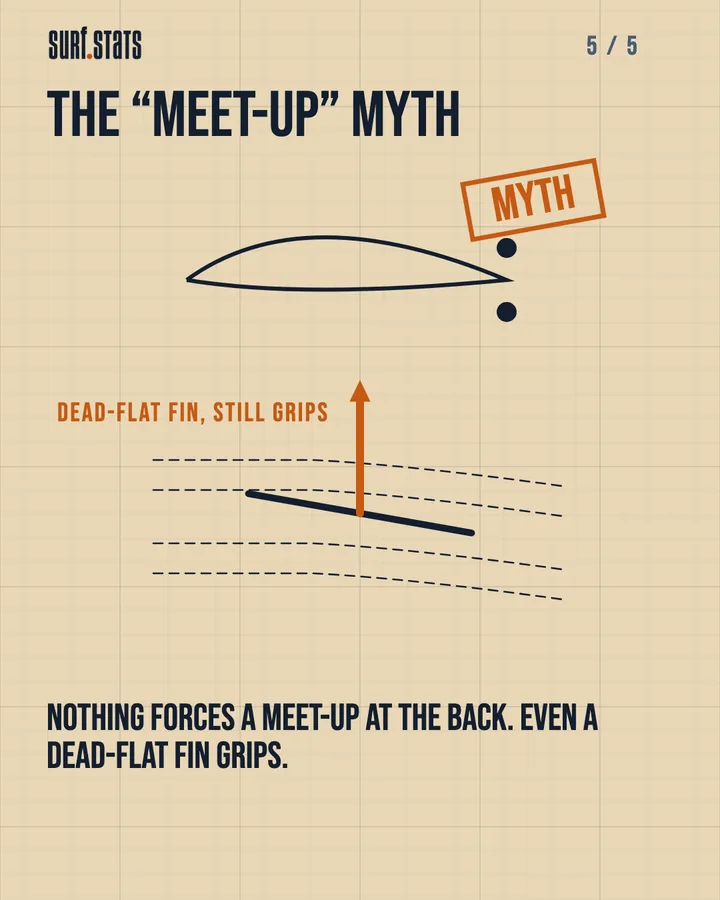
The short version: nothing forces a meet-up at the back. Even a dead-flat fin grips.
You may have been told that water going over the curved side of a fin has further to travel, so it has to speed up to meet the water from the other side at the back. That "meet-up" is the myth. NASA calls it a non-physical assumption, and aerodynamicists call it plain wrong.
Here's the part that trips people up. The water on the low-pressure side really is faster. In fact it reaches the back first, so it doesn't wait for anything. The myth is only wrong about why it's faster.
What actually matters is that the fin turns the water. A dead-flat fin, with no curve on either side, still grips once it's at an angle to the flow. That doesn't mean shape is useless: a curved foil adds lift, and side fins are foiled. A flat fin grips too. It doesn't grip just as well.
Next: how to choose your fins
Once you know where hold and drive come from, the next question is which fin gives you more of each. That's the next episode: how to choose your fins.
Quick checklist
- The board points slightly off its path, so water hits the fin at an angle.
- That angle makes the water push sideways on the fin. That push is your hold.
- In a turn, you push against the same force. That's your drive.
- On its own, a fin doesn't push you forward.
- Too much angle, past about 20°, and the water lets go: spin-out. Air sucked down the fin can do it too.
- Nothing forces water to meet up at the back. Even a dead-flat fin grips.