
How to spot and escape a rip current
 Fin Selector: your fins in 1 minute
A rip often looks like a calm, dark gap between breaking waves; swim where the lifeguards are. If one pulls you out and you can stand, walk out sideways; if you can't, don't swim against it: float and raise an arm.
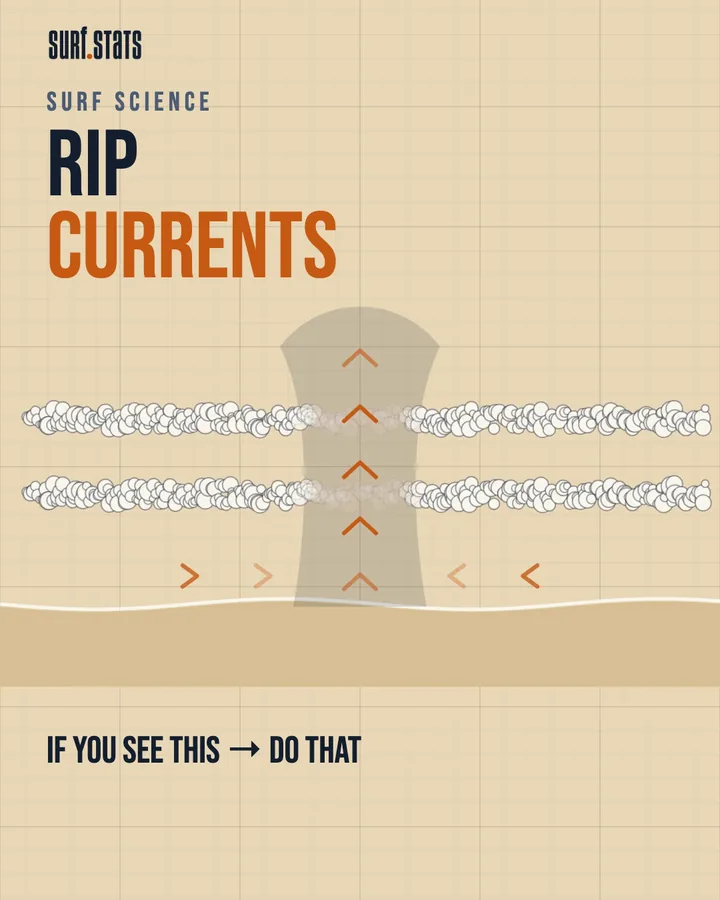
A rip current is water rushing back out to sea through the surf. Rips are behind most surf rescues, and any beach with breaking waves can have one. The danger is not that a rip drags you down. It pulls you away from the beach, and people get into trouble when they panic and wear themselves out swimming against it.
Below are six situations you can meet at the beach, and what to do in each. They come from our rip currents reel, and every line is backed by at least two independent sources: national lifesaving bodies, government agencies and rip current research.
1. Calm, dark gap between the waves?
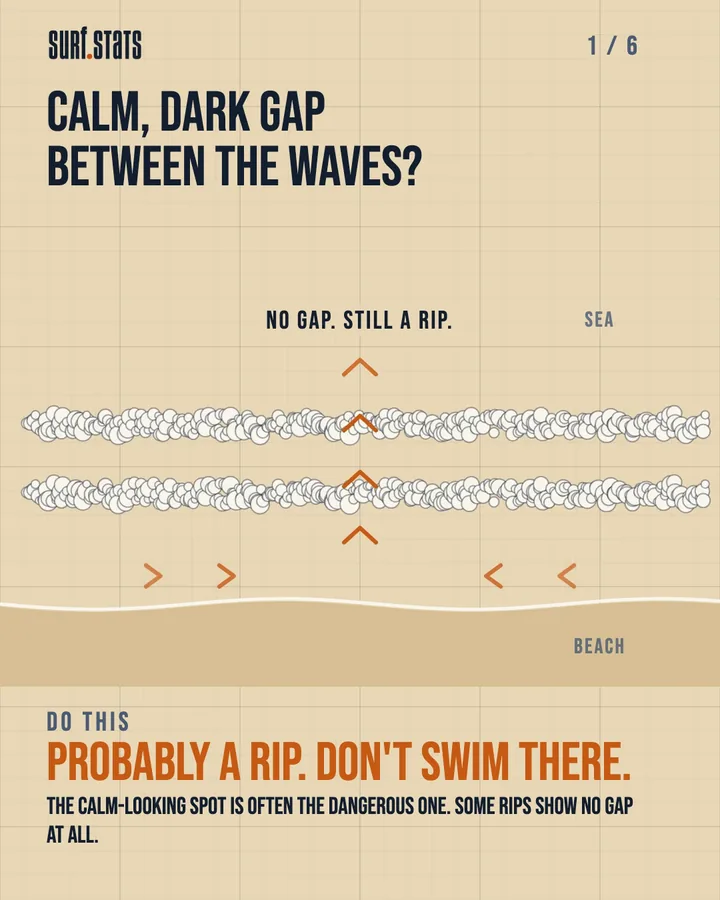
Do this: it's probably a rip. Don't swim there.
That calm, dark gap between the breaking waves looks like the safe spot. It's usually the rip. Rips often sit in deeper channels between sandbars, where fewer waves break, so the water there looks darker and calmer than the whitewater on either side. That calm look is the trap: lifesaving bodies in several countries warn that people take it for the safest place to swim.
Some rips show no gap at all. Flash rips can form quickly and disappear again, with no dark channel to give them away. So the gap is the classic sign, not a guarantee. If you see one, stay out of it. If you don't, that doesn't mean there's no rip.
2. Just arrived at the beach?
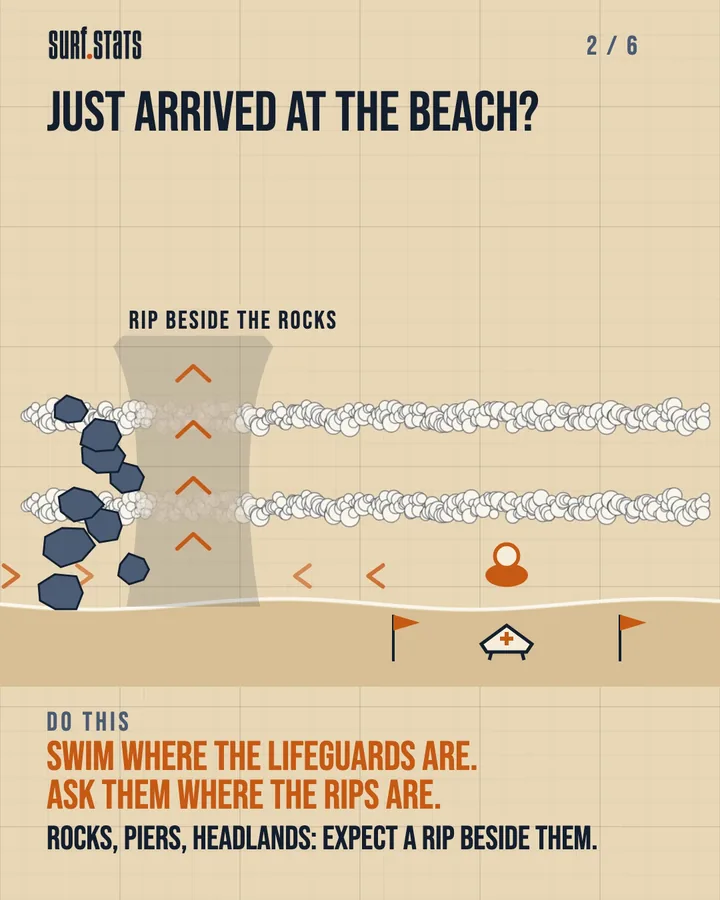
Do this: swim where the lifeguards are. Ask them where the rips are.
Swim where the lifeguards are, between their flags, and ask them where the rips are today. Every lifesaving body we checked starts its prevention advice here.
Rocks, piers, headlands: expect a rip beside them. Rips like to sit next to hard structures, natural or man-made. Keep that in mind when you pick your spot.
3. Being pulled out?
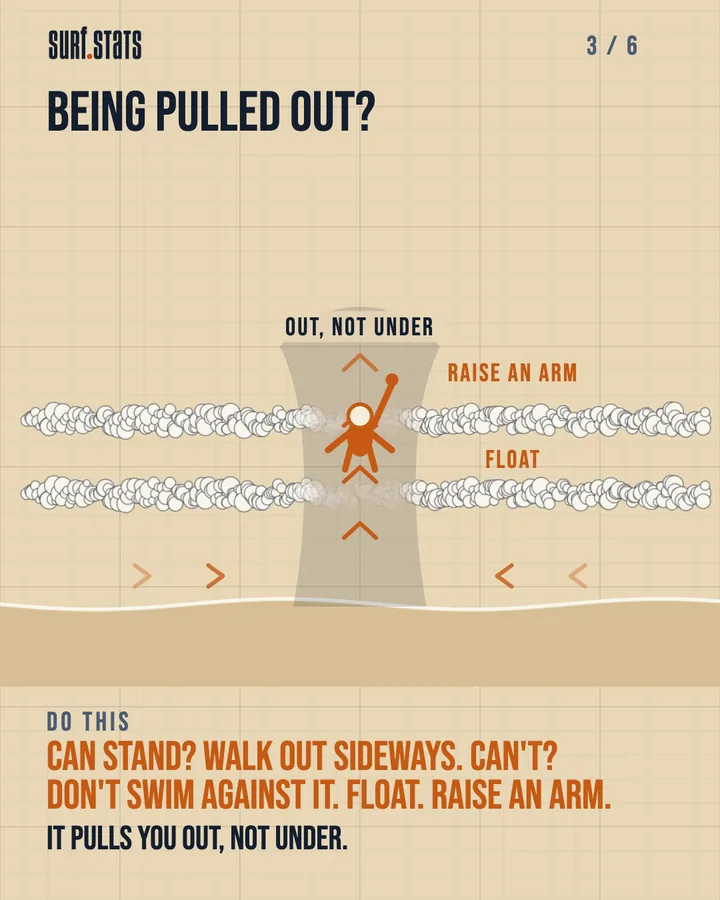
Do this: can stand? Walk out sideways. Can't? Don't swim against it. Float. Raise an arm.
If you're caught and can still stand, walk out sideways. Don't try to swim. If you can't stand:
- Don't swim against it. Swimming straight back against a rip only tires you out and leads to panic.
- Float on your back. Floating saves your energy and keeps you up while help comes.
- Raise an arm. It gets the attention of the lifeguards.
It pulls you out, not under. Rips don't pull people under the water. That's a myth. The danger is getting exhausted, so staying calm matters.
4. Confident swimmer?
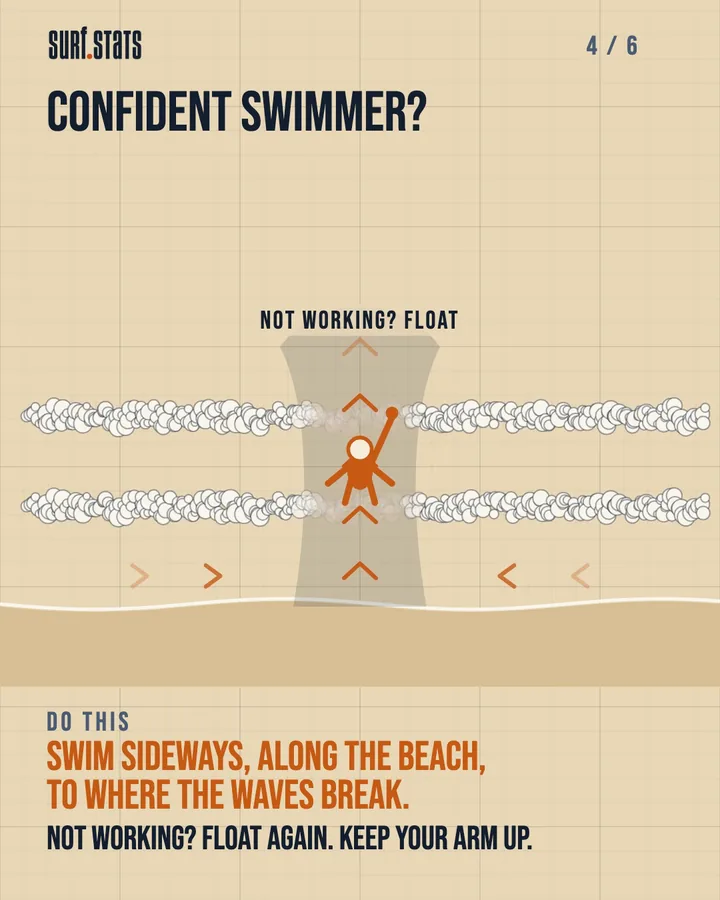
Do this: swim sideways, along the beach, to where the waves break.
If you're a confident swimmer, swim sideways, along the beach, until you're out of the rip and back where the waves break. Lifesaving advice keeps this for people who feel they can safely swim. If you're not sure you can, don't try it: float and raise an arm.
Not working? Float again. Keep your arm up. No single escape works every time. Field research found that both floating and swimming sideways sometimes fail, and lifesaving bodies say that if one response isn't working, switch to another.
5. See surfers paddling out in the calm gap?
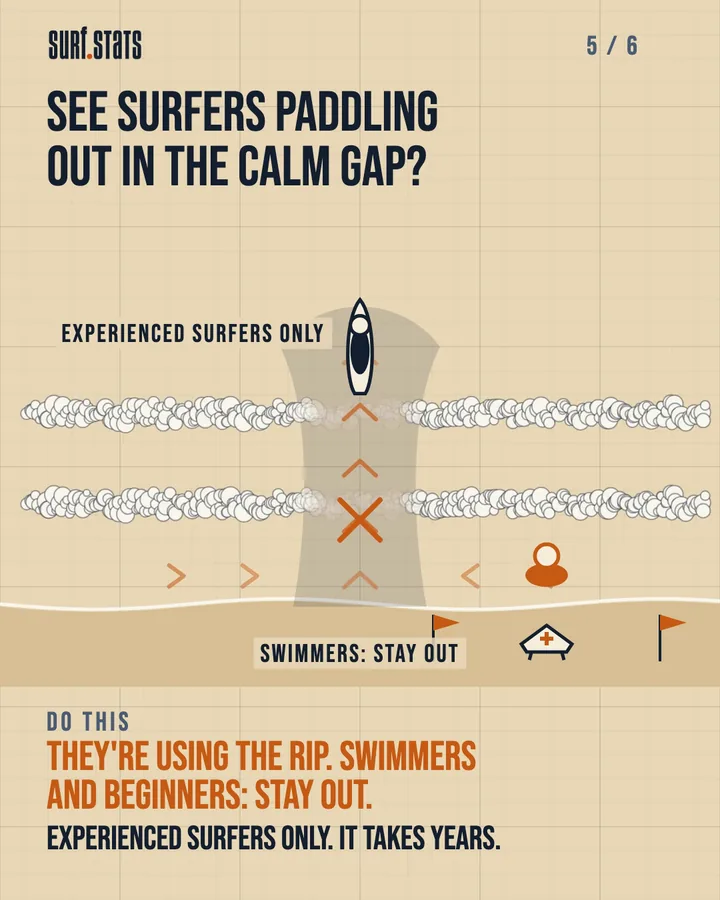
Do this: they're using the rip. Swimmers and beginners: stay out.
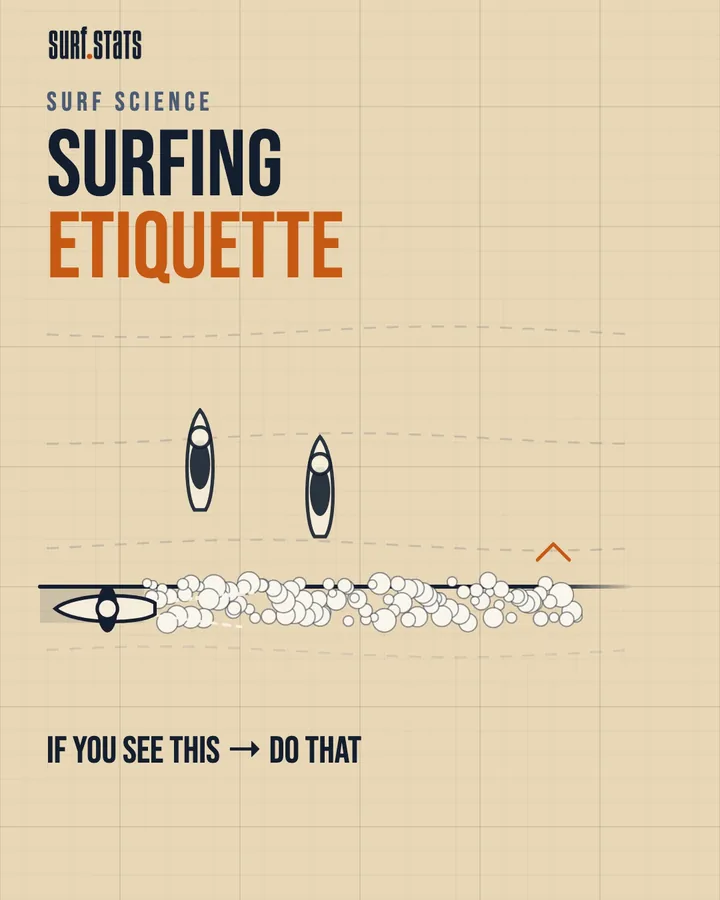
Surfers often paddle out through the rip on purpose, because it carries them out past the breaking waves. That's experienced surfers, with years in the water. The sources that describe the practice limit it to them and warn that swimmers get fooled by the calmer-looking water.
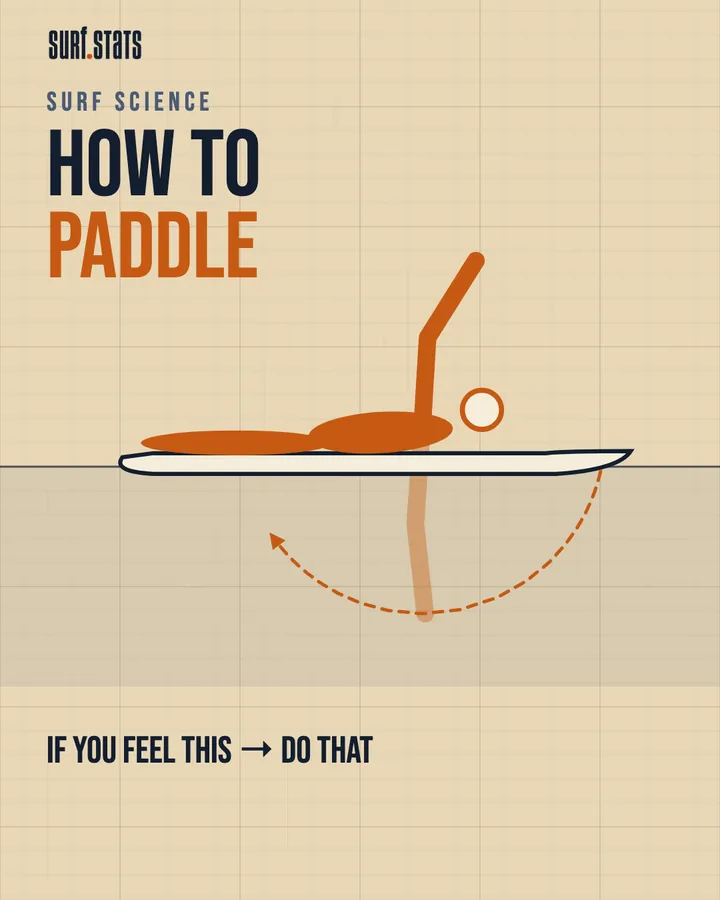
Experienced surfers only. It takes years. So treat surfers paddling out through a calm patch as one more sign of where the rip is, not as an invitation. Learning to surf? Our guide on how to paddle a surfboard covers the basics.
6. Someone else caught?
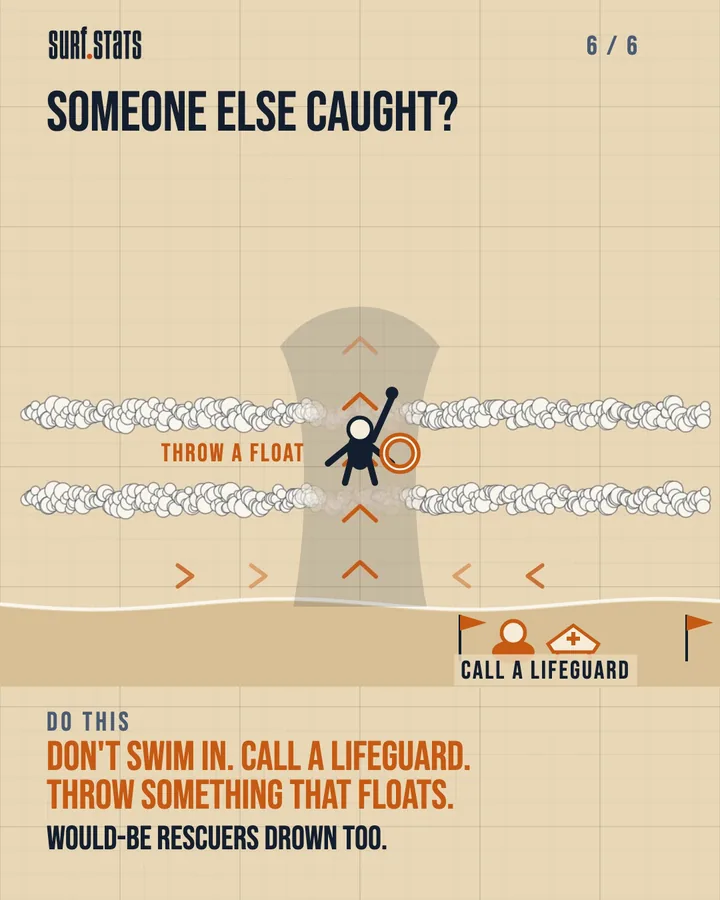
Do this: don't swim in. Call a lifeguard. Throw something that floats.
Don't swim in after them. Call a lifeguard or the local emergency number, and throw them something that floats.
Would-be rescuers drown too. Lifesaving bodies in the US, Brazil and elsewhere all say it plainly: many people drown while trying to save someone else from a rip.
Rips are behind most surf rescues
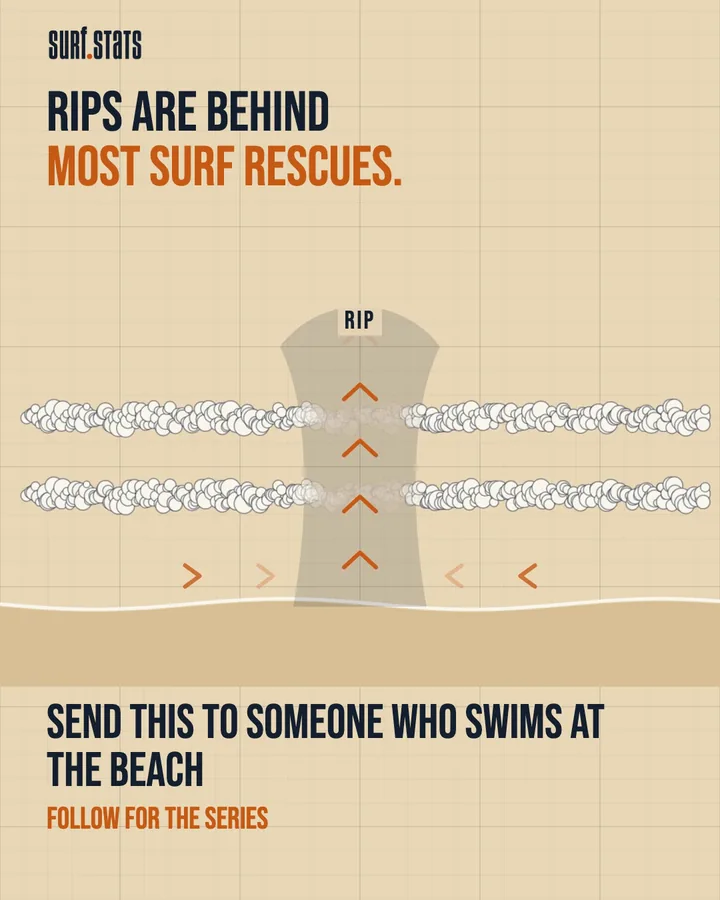
Lifesaving bodies and rip researchers in the US, the UK and Ireland, Australia and British Columbia all report that rips are behind most of the rescues on their surf beaches. Send this to someone who swims at the beach.
Quick checklist
- Calm, dark gap between the waves: probably a rip. Don't swim there.
- No gap doesn't mean no rip.
- Swim where the lifeguards are, and ask them where the rips are.
- Expect a rip beside rocks, piers and headlands.
- Caught and can stand: walk out sideways.
- Caught and can't stand: don't swim against it. Float, raise an arm.
- Confident swimmer: swim sideways along the beach to where the waves break.
- Someone else caught: don't swim in. Call a lifeguard, throw something that floats.