Where to sit in the lineup
 Fin Selector: your fins in 1 minute
Once you're in a good spot, line up two things on land, one behind the other, and add a mark off to your side. Where the two lines cross is your spot. Check those marks often: drift moves you without you noticing, and the tide moves the spot.
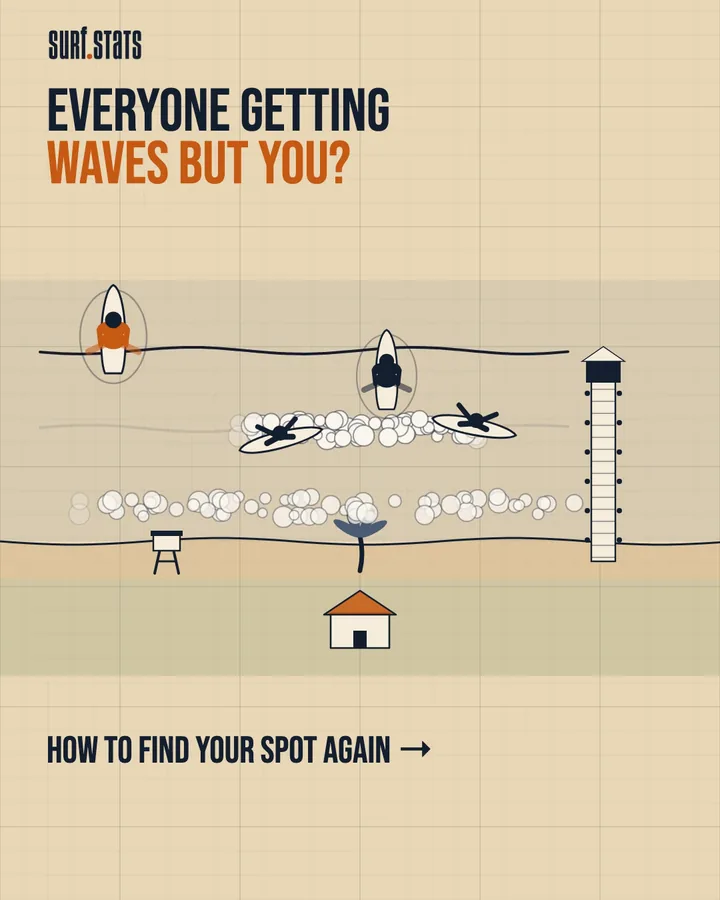
Everyone around you is getting waves and you're not. It might be where you sit. Knowing where to sit in the lineup is one part; finding that spot again is the other. You find a good spot, catch a wave, paddle back out, and the spot is gone.
Surfers solve this with marks on land. Below are five common lineup problems and the fix for each. They come from our where to sit reel, and every tip is checked against independent sources: surf magazines, a surf encyclopedia, coaches and an ocean science center.
1. Lost your spot after a wave?
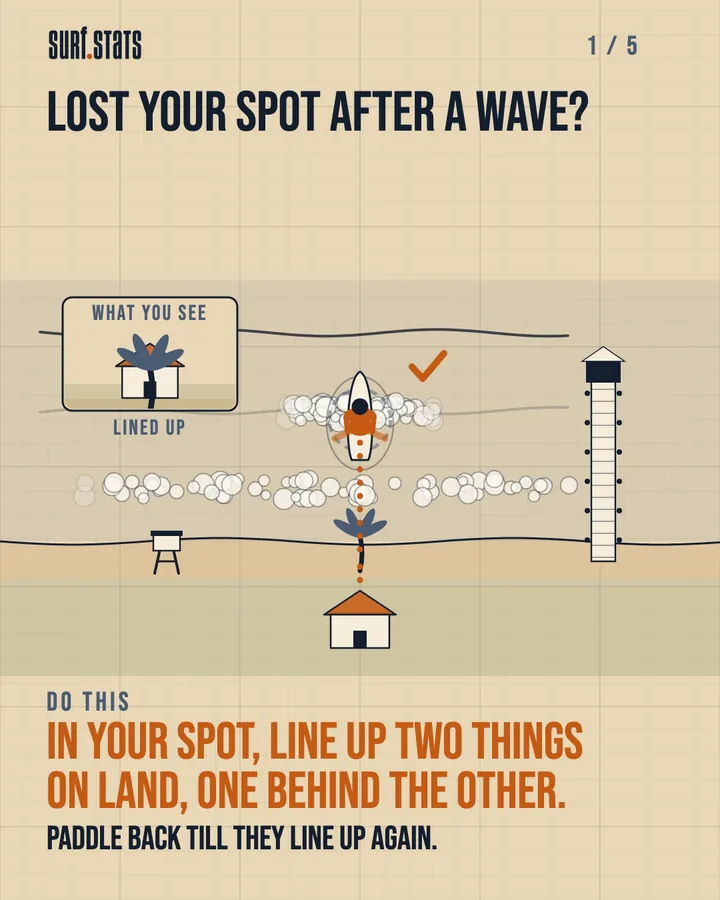
Try this: in your spot, line up two things on land, one behind the other.
The order matters. Pick the pair while you're sitting in the spot, not after you've lost it. Lining up any two things won't put you back somewhere good; it only gives back the spot you chose.
- Turn and face the beach.
- Find two things, one directly in front of the other. A tree in front of a house works. So do a lifeguard tower, a chimney, a cliff or a building.
- Remember how they look from there.
After your wave, paddle back out until the two line up again. That puts you back in the same place along the beach, left and right. It doesn't tell you how far out you are. That's the next card.
2. Lined up, but can't tell how far out you are?
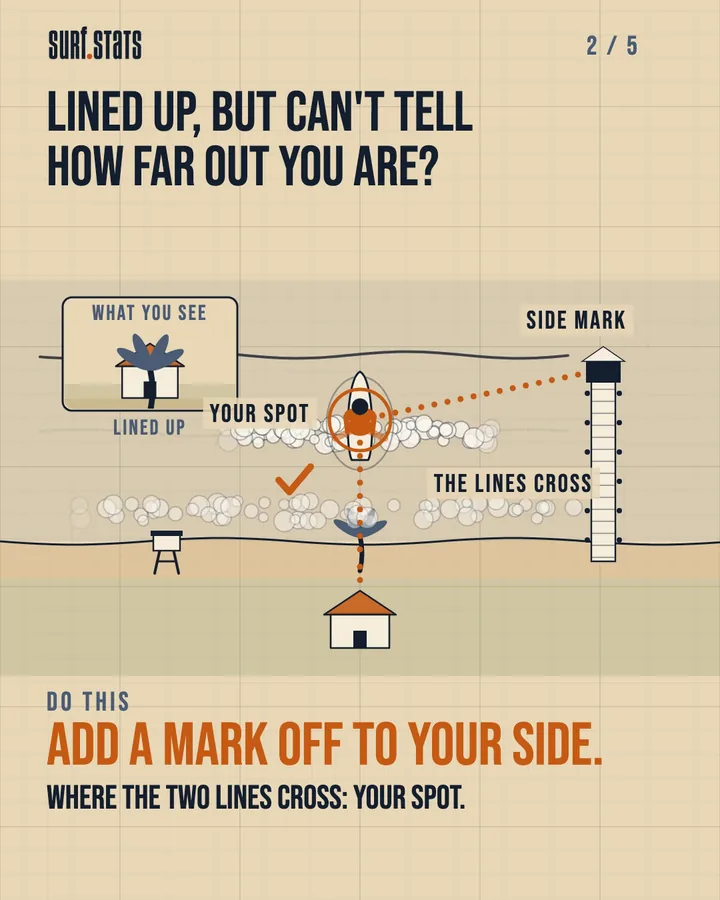
Try this: add a mark off to your side.
Your pair on the beach gives you one line. You can slide in and out along it and the pair still looks lined up. So look to either side and find a second mark, like a pier. Note where it sits against whatever is behind it.
Where the two lines cross, that's your spot. It's the same idea navigators use to fix a position: one sight line puts you somewhere on a line, two crossing lines put you on a point.
This is a step more experienced surfers use. If the pair is all you can manage today, start with the pair.
3. Suddenly the waves miss you?
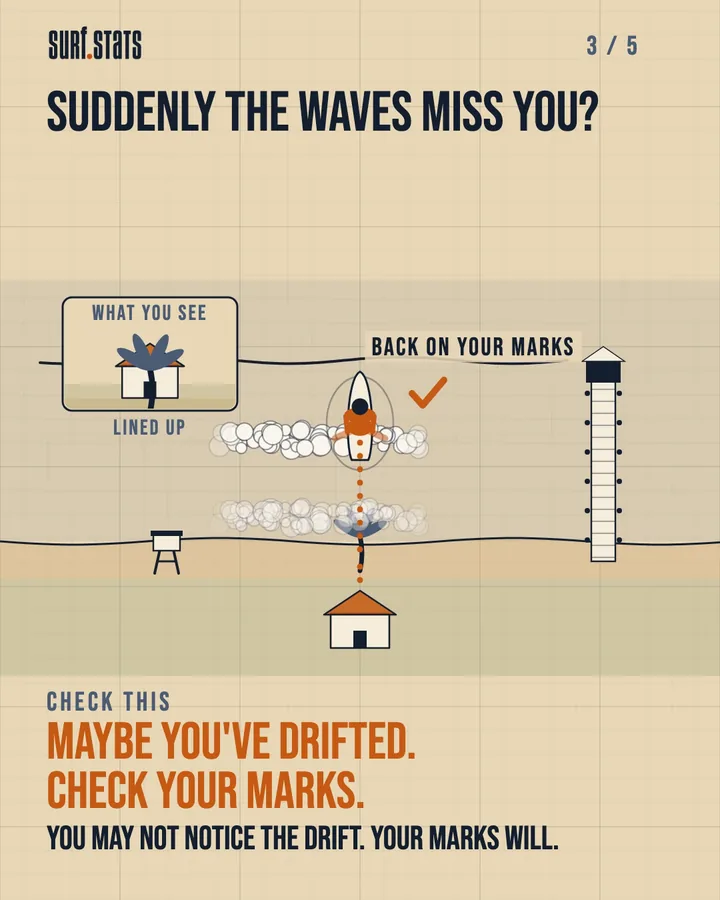
Try this: maybe you've drifted. Check your marks.
You were in the spot, waves were coming to you, and now they break in front of you or pass under you. A current may have moved you. Currents often run along the beach, and they can carry you off your spot without you noticing. You may not notice the drift. Your marks will: the back object slides out from behind the front one.
It might not be drift. The tide changes and peaks move, so check your marks first and then decide.
If you have drifted, which way matters:
- Drifted along the beach? Paddle back to your marks.
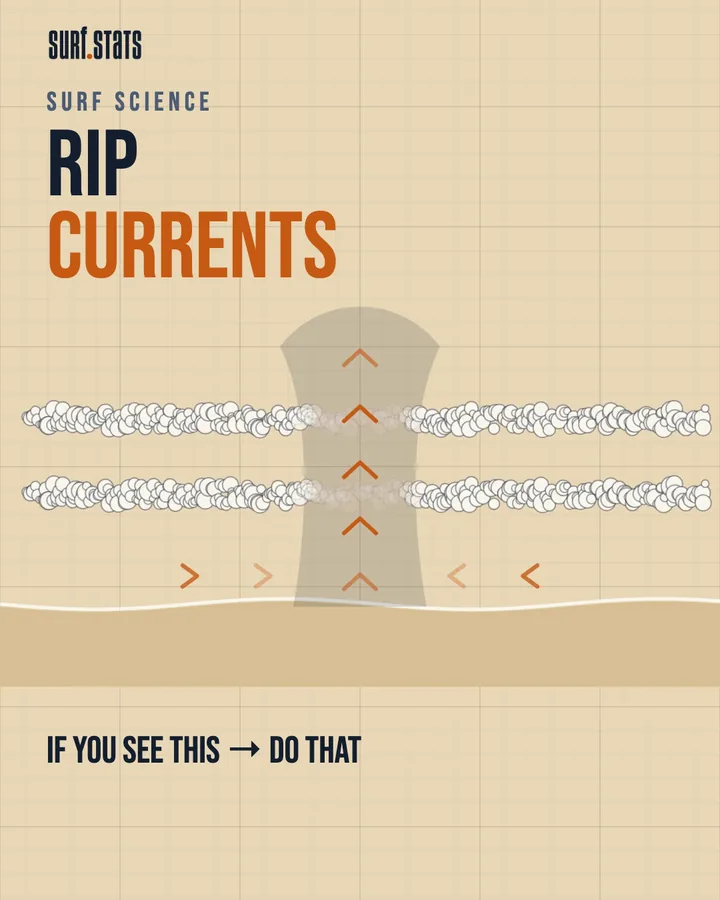
- Pulled out fast? That's a rip. Paddle along the beach, out of it. Don't paddle straight back against it.
For more on rips, read how to spot and escape a rip current.
4. Sets breaking on your head?
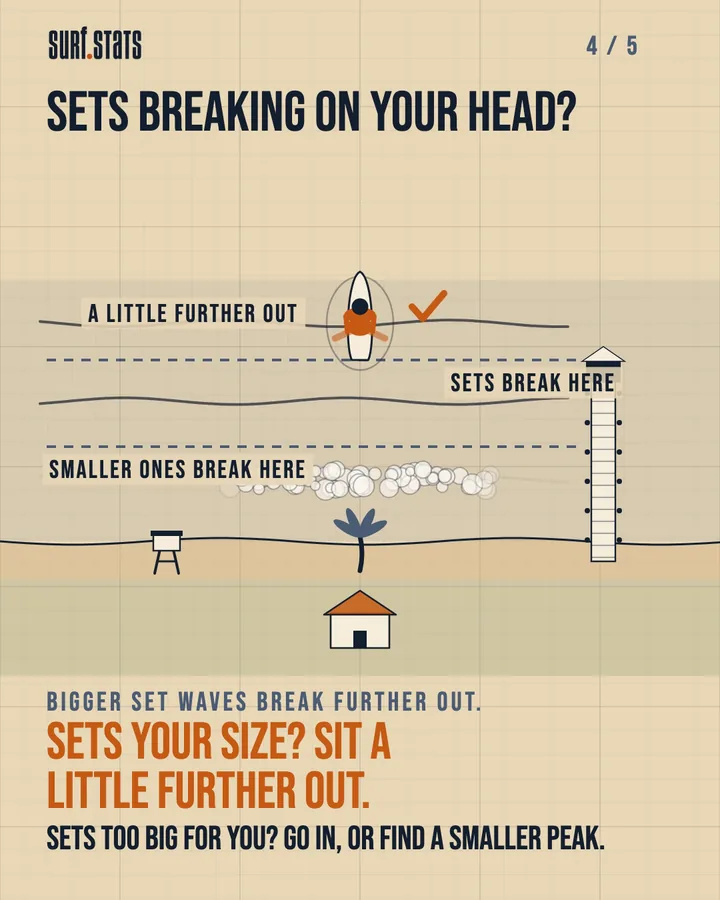
Try this: sets your size? Sit a little further out.
Bigger set waves break further out. Bigger waves break in deeper water, and the water gets deeper the further you go from shore. So when a set comes, it breaks before it reaches the spot where the smaller waves break. Sit inside, and they land on you.
If the sets are a size you're comfortable with, sit a little further out. Read the sets from the beach before you paddle out, and look at how big the bigger ones are.
5. Found where the good ones break?
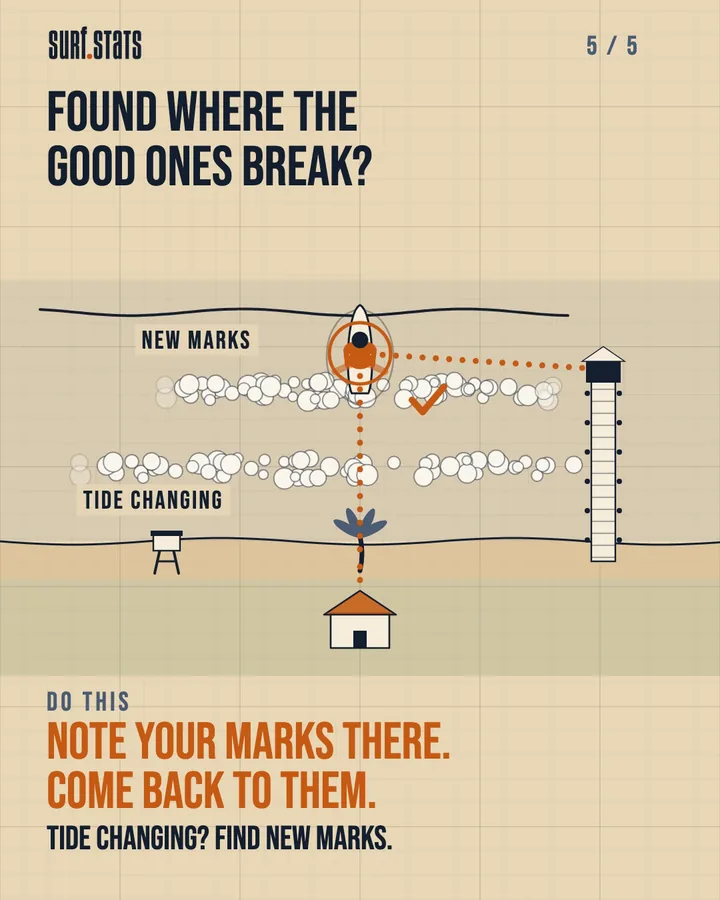
Try this: note your marks there. Come back to them.
When you find the spot where the best waves keep breaking, take your marks right there: the pair on the beach and the mark at your side. Then you can return to that spot again and again instead of guessing.
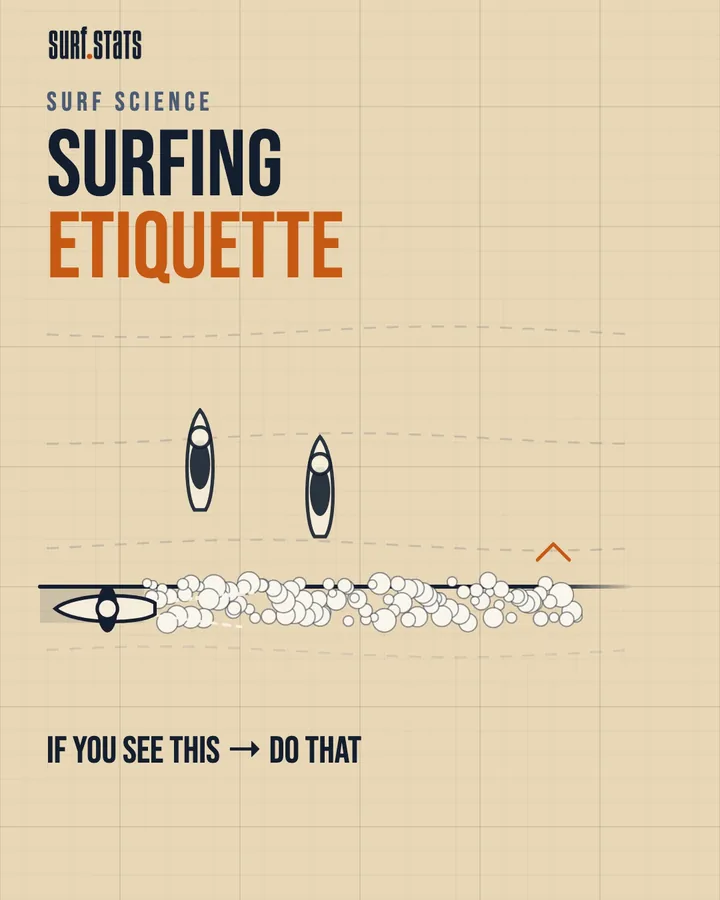
Coming back doesn't mean jumping the queue. Paddle back out wide, away from where people are riding, and wait your turn. Our surfing etiquette guide covers who has the wave.
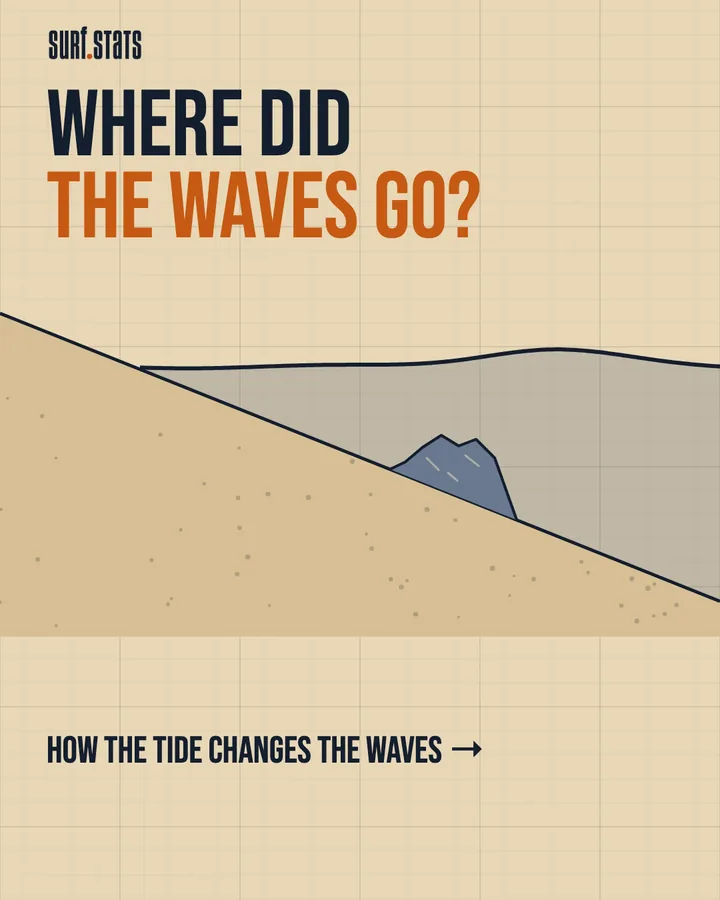
Tide changing? Find new marks. The tide and shifting sandbars move where the waves break, especially at beach breaks. When the spot moves, your old marks point to the wrong place.
Line up your marks. Check them often.
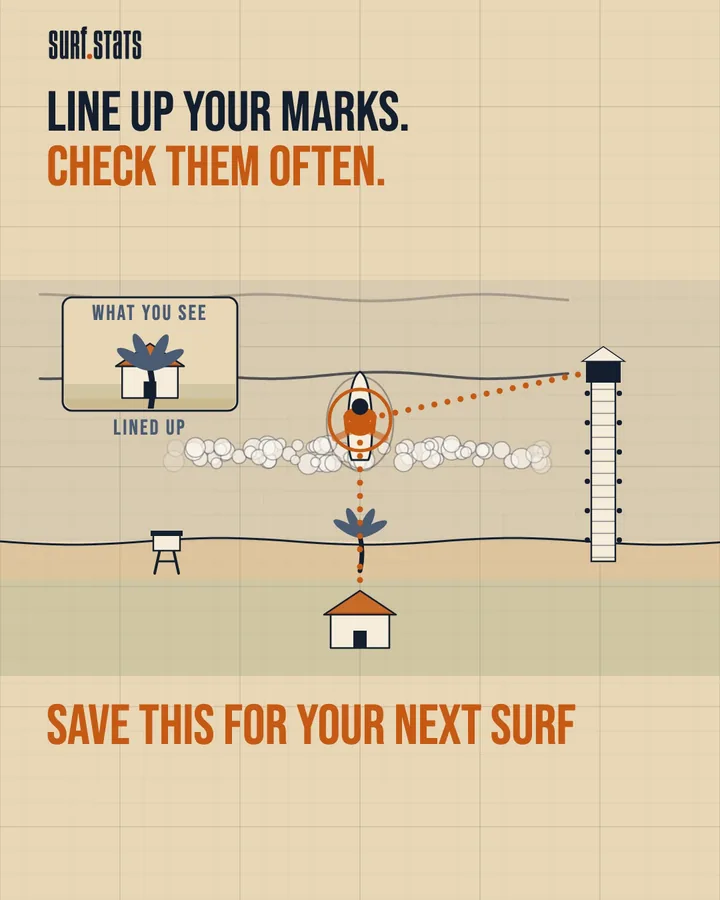
Marks only help if you look at them. Check them between waves, not only after a ride, so a drift you didn't feel shows up on your marks.
Quick checklist
- In your spot, line up two things on land, one behind the other.
- Add a mark off to your side for how far out you are.
- Waves suddenly missing you? Check your marks. You may have drifted.
- Drifted along the beach: paddle back. Pulled out fast: rip, paddle along the beach.
- Sets your size: sit a little further out. Too big: go in or find a smaller peak.
- Found the good ones? Note your marks there. New tide, new marks.