Best tide for surfing
 Fin Selector: your fins in 1 minute
There is no single best tide for surfing: each spot reacts in its own way. Low tide means shallower water and often harder waves, high tide means deeper water and often softer ones, so check the tide and ask a local.
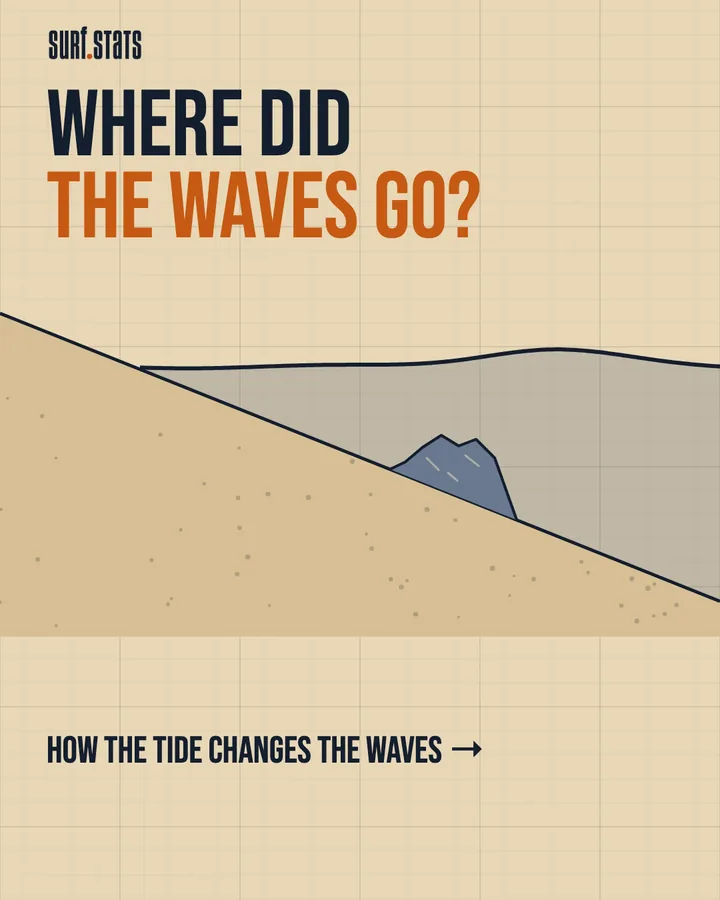
You surfed a spot this morning. You come back a few hours later, and the waves are gone, or they look like a different spot. It might be the tide.
The tide changes how deep the water is over the sand or reef where the waves break, and the depth changes how they break. That is why there is no single best tide for surfing: each spot reacts in its own way. What you can learn is how to read the signs.
Below are five things you can see at the beach and the tide that could be behind each one. They come from our how the tide changes the waves reel, and every line is backed by at least two independent sources: ocean and weather agencies, a lifesaving body, surf forecasters and surf magazines.
1. More sand than this morning?
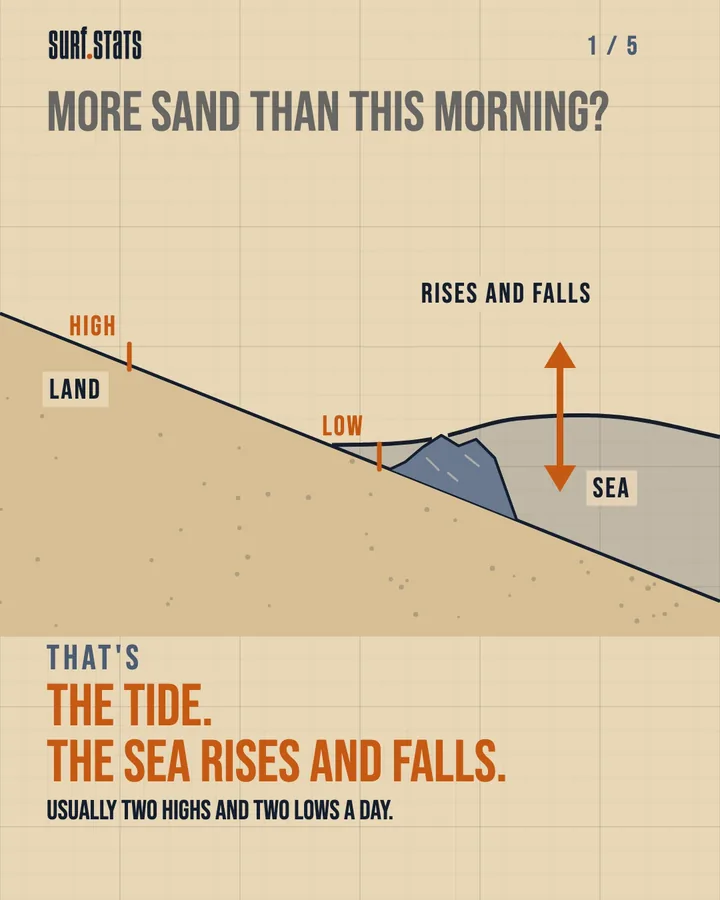
The short version: that's the tide. The sea rises and falls, usually two highs and two lows a day.
The tide is the regular rise and fall of the sea, pulled by the moon and the sun. When it falls, more beach shows. When it rises, the water covers it again.
- Most places get two high tides and two low tides each day. Some coasts get only one high and one low.
- The water doesn't move at a steady rate. It moves more slowly near high and low, and faster in the middle.
- Around full moon and new moon the gap between high and low is bigger (spring tides; the name has nothing to do with the season). Around half moon it is smaller (neap tides).
2. Waves steep, hollow or closing out?
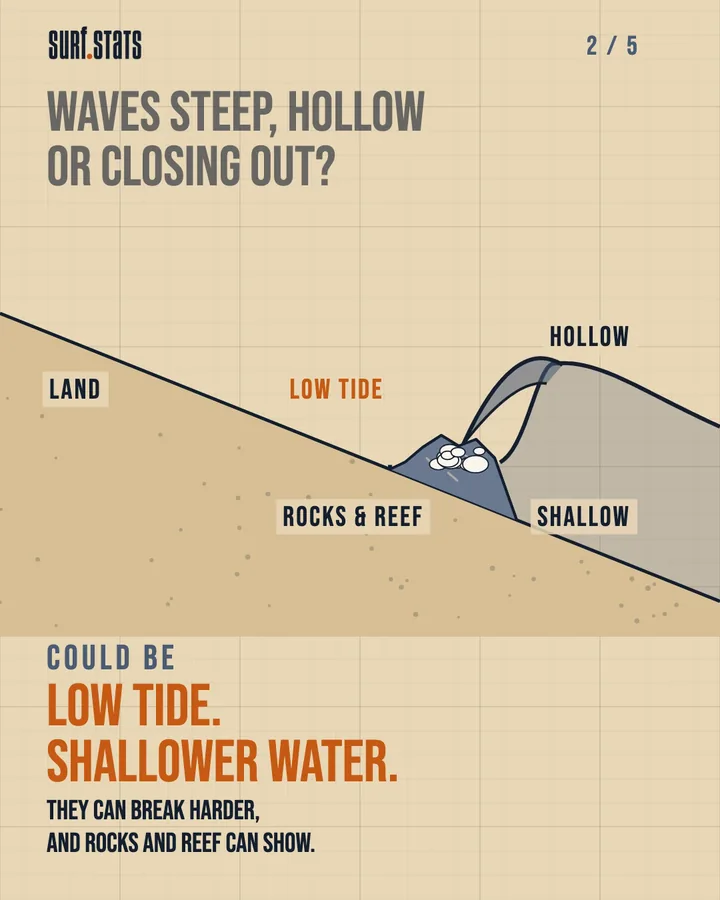
The short version: could be low tide. Shallower water. They can break harder, and rocks and reef can show.
At low tide there is less water over the sand or reef. Waves tend to be steeper, and low tide can make fast, hollow, plunging waves. At some beach breaks, a very low tide brings a lot more closeouts.
Rocks and reef that stay covered at high tide can be exposed at low tide.
Why "could be" and not "that's it"? Because high water can close out too. At some beaches the waves dump harder on the shore as the tide rises. So a closeout is a sign to check the tide, not proof of which tide it is.
3. Slow, mushy waves?
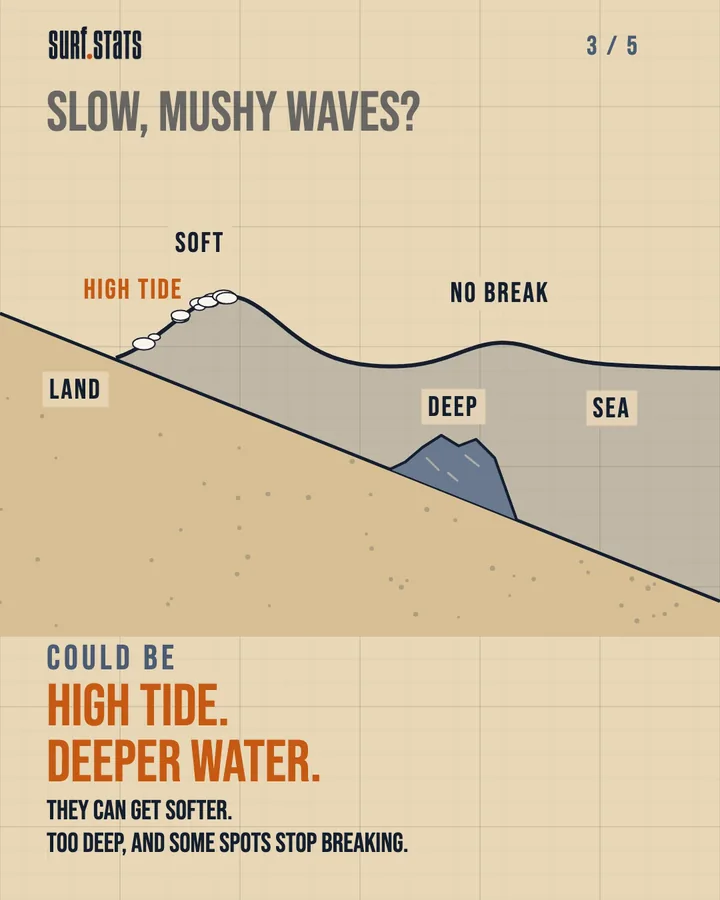
The short version: could be high tide. Deeper water. They can get softer. Too deep, and some spots stop breaking.
High tide often makes slow, mushy, spilling waves. With more water over the bank, the waves don't get as steep as they break.
Go too deep and some spots switch off: the swell rolls over the bank and doesn't break until it reaches the beach. Some reefs only start working once the water drops off them. That's how a spot can look flat a few hours after it was good.
4. Waves getting better as the water rises?
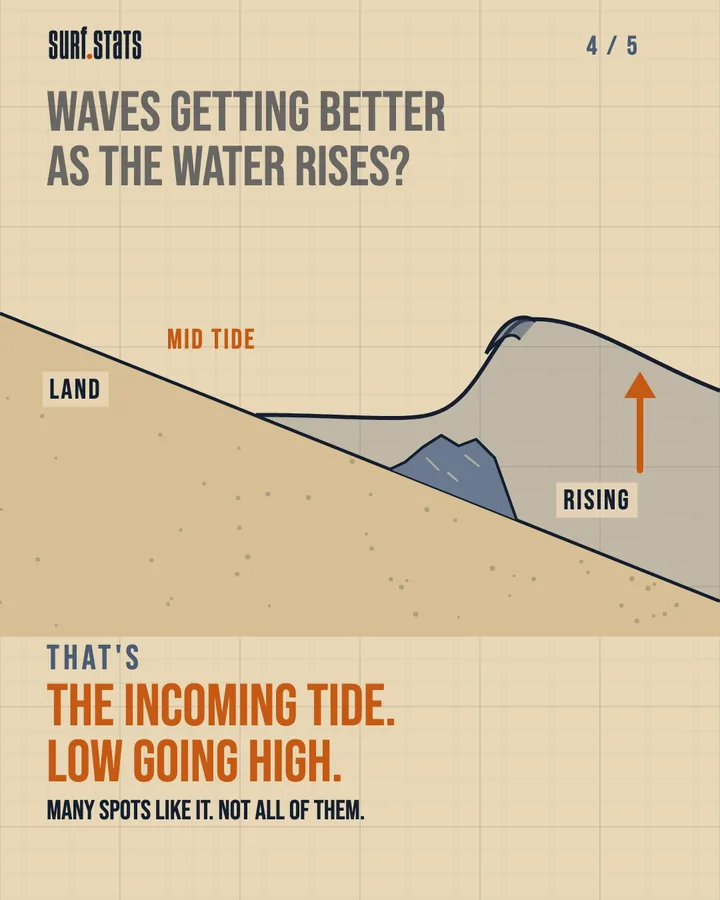
The short version: that's the incoming tide, low going high. Many spots like it. Not all of them.
Surf forecasters and surf magazines agree that many spots work best on the incoming tide, from low toward high. Some banks only work on the push through mid tide.
Not all of them, though. Other spots stop breaking as the tide floods in. Which way your spot goes is something you learn there.
5. Same spot, different waves?
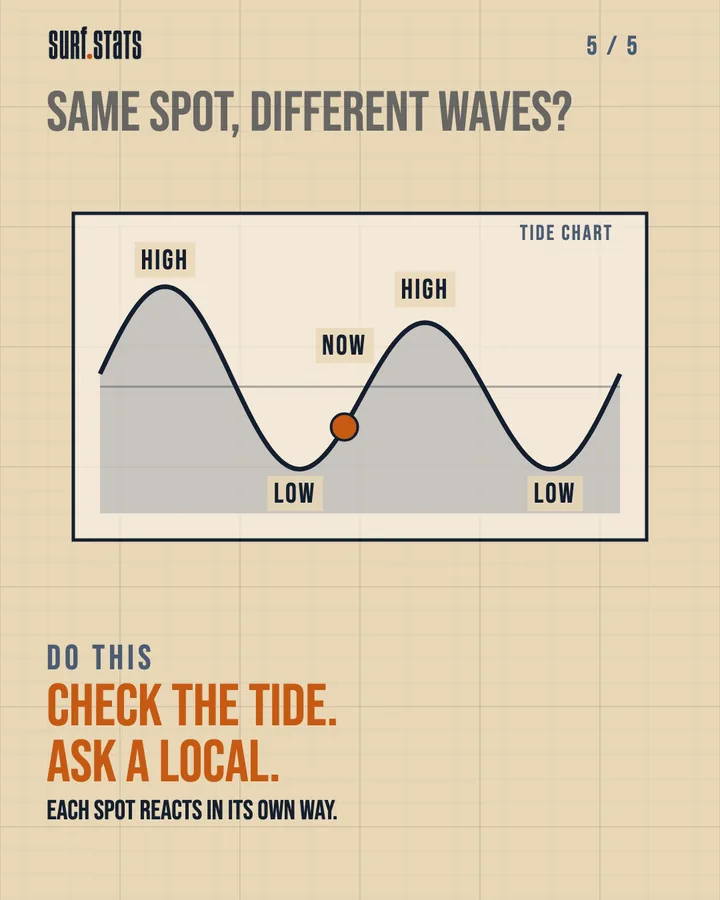
Do this: check the tide before you go, and ask a local. Each spot reacts in its own way.
Every break has the tides it likes, mostly because of the shape of the bottom under it. At some breaks the tide changes a lot; at others it barely matters.
- Check the tide every day. Keep a tide chart handy: your surf forecast or a local tide table shows when high and low are.
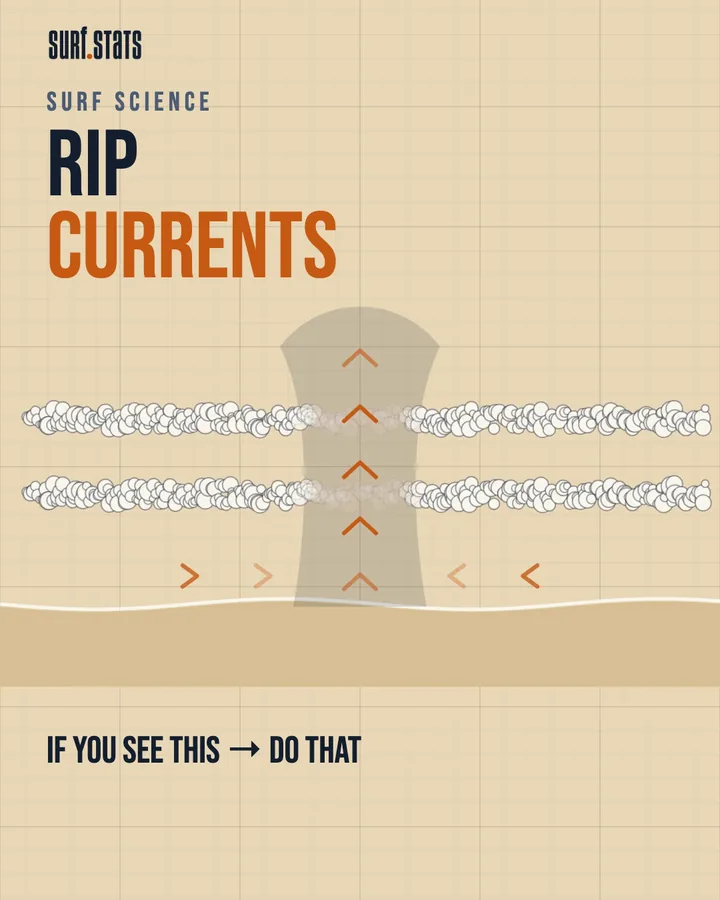
- Ask someone who knows the spot. A local surfer, the surf shop or the lifeguard. While you're asking, ask about rips too, and read how to spot a rip current.
- Watch and learn your home break. Surf it at different tides and you'll learn its patterns.
New to the spot? Surf etiquette covers how to fit into the lineup.
So what's the best tide for surfing?
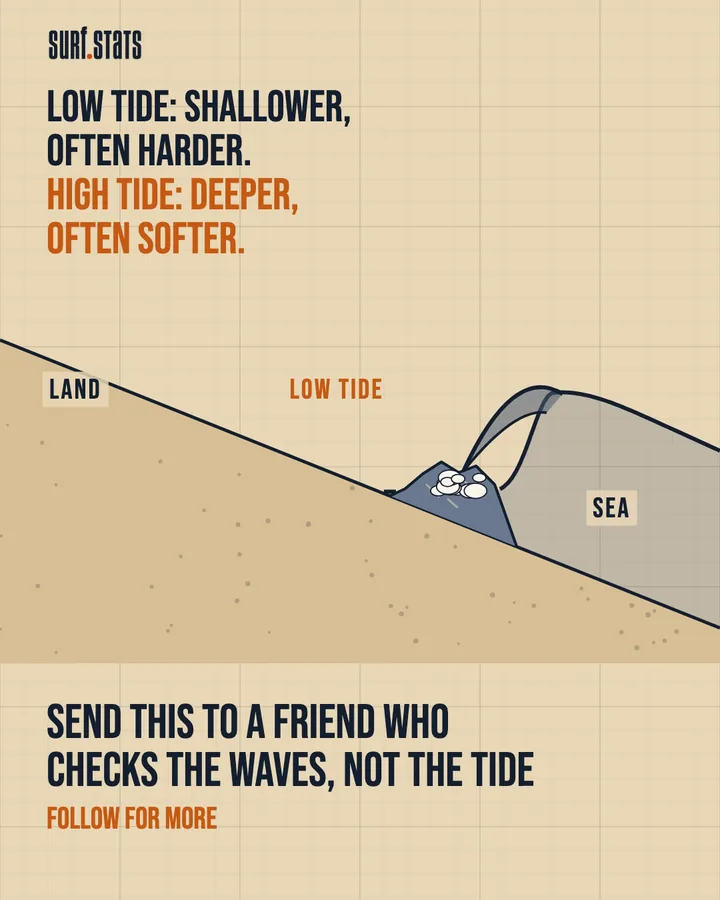
The one that suits your spot. The tide changes the depth, and the depth changes the wave. As a general tendency:
- Low tide: shallower, often harder.
- High tide: deeper, often softer.
Then the spot has the last word.
Quick checklist
- Tide out, more sand: the sea rises and falls, usually two highs and two lows a day.
- Steep, hollow, closing out: could be low tide. Watch for rocks and reef.
- Slow and mushy, or no waves at all: could be high tide.
- Getting better as the water rises: the incoming tide, which many spots like.
- Check the tide before you go, and ask a local.