How to read a surf forecast
 Fin Selector: your fins in 1 minute
Read the whole row, not just the height. The height is usually the swell out at sea, direction is where it comes from, a long period can break heavier than it looks, and wind and tide change through the day, so check the hour you'll surf.
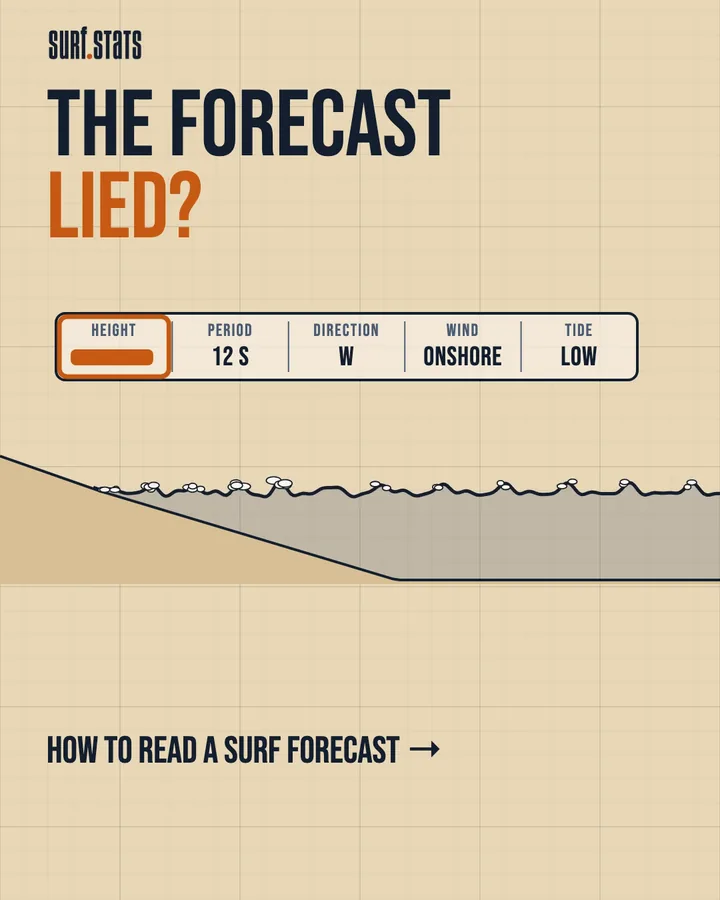
The forecast lied? Probably not. A surf forecast is a computer model's best estimate, not a measurement, and it gives you a whole row of numbers: height, period, direction, wind and tide. Read only the height and you'll get surprised. The answer was usually in a column you skipped.
Below are five common surprises, and the column behind each one. They come from our how to read a surf forecast reel, and every point is backed by at least two independent sources: national weather services, surf forecasters, a university and surf magazines. The numbers in the drawings are examples, not a real forecast.
1. Waves not the size the forecast said?
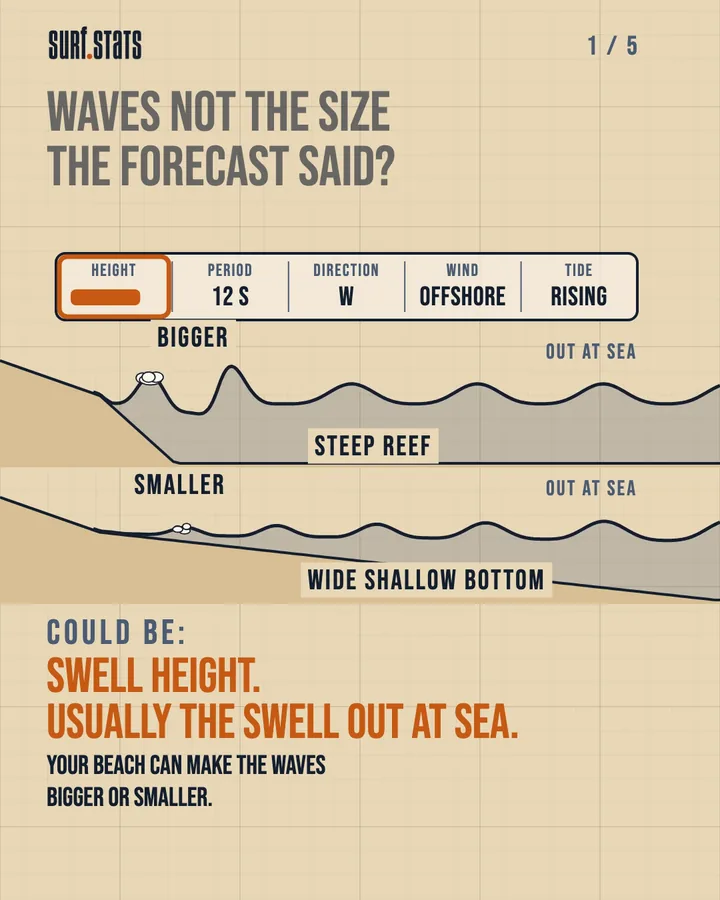
The short version: could be the swell height. That's usually the swell out at sea.
The height on a surf forecast is usually the swell in deep water offshore, not the wave breaking in front of you. It's also a statistic: the average of the top third of the waves. So the sets can be bigger than the number.
Then your beach gets a say. The shape of the bottom can make the waves bigger or smaller. A steep reef can stand the swell up taller, and a wide, shallow bottom can shrink it. That's why the same forecast can look different at two different spots.
Height isn't the only suspect, though. Direction and period change the size too, which is what the next two sections are about.
2. Big swell on the forecast, small or flat at your beach?
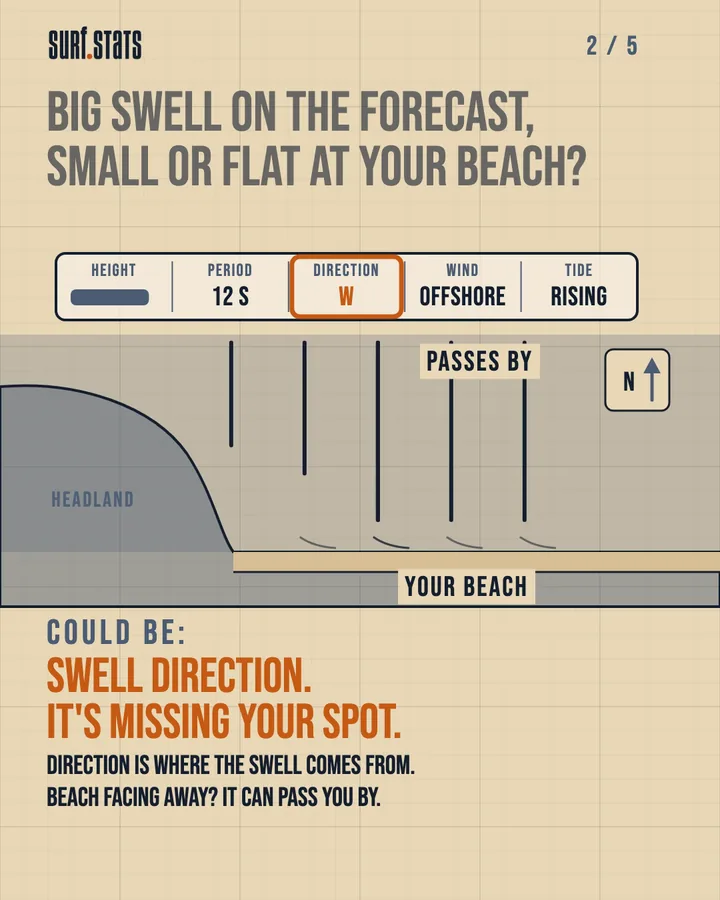
The short version: could be the swell direction. It's missing your spot.
On a surf forecast, swell direction is where the swell comes from, not where it's going. Now match that against the way your beach faces.
- If your beach faces the swell, it gets it head on.
- If your beach faces away, the swell can pass you by.
- Headlands and islands can block it and throw a shadow over the beach behind them.
- Some swell can still bend into a bay, but it arrives smaller.
So a big number with the wrong direction can mean small waves, or none, at your spot, while a beach that faces the swell gets it.
3. Small on the forecast, heavy in the water?
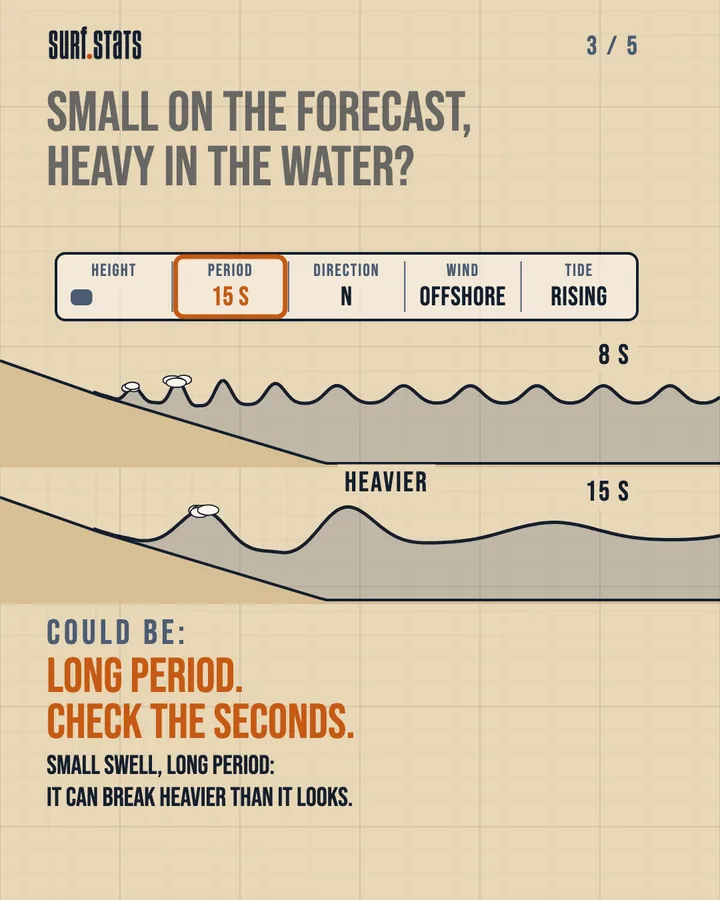
The short version: could be a long period. Check the seconds.
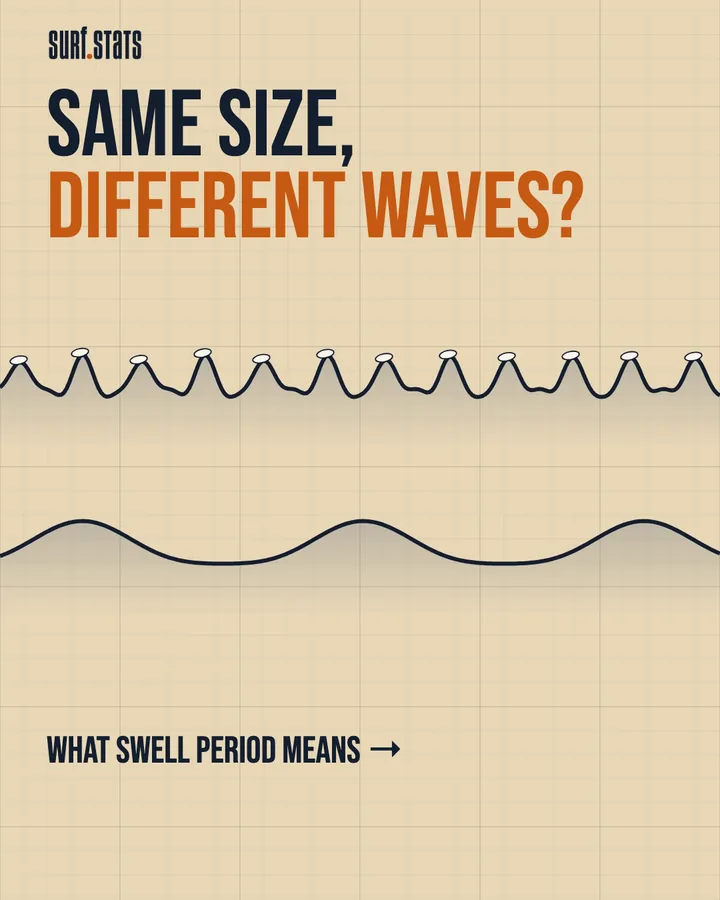
Period is the column in seconds. A small swell with a long period can break heavier than it looks on the forecast. Small height, long period: don't judge it by the height alone.
Period is a whole topic of its own; our swell period post goes deeper (see the related posts below). For reading a forecast, the habit is simple: when the height looks small, glance at the seconds before you decide it's nothing.
4. Good swell, messy waves?
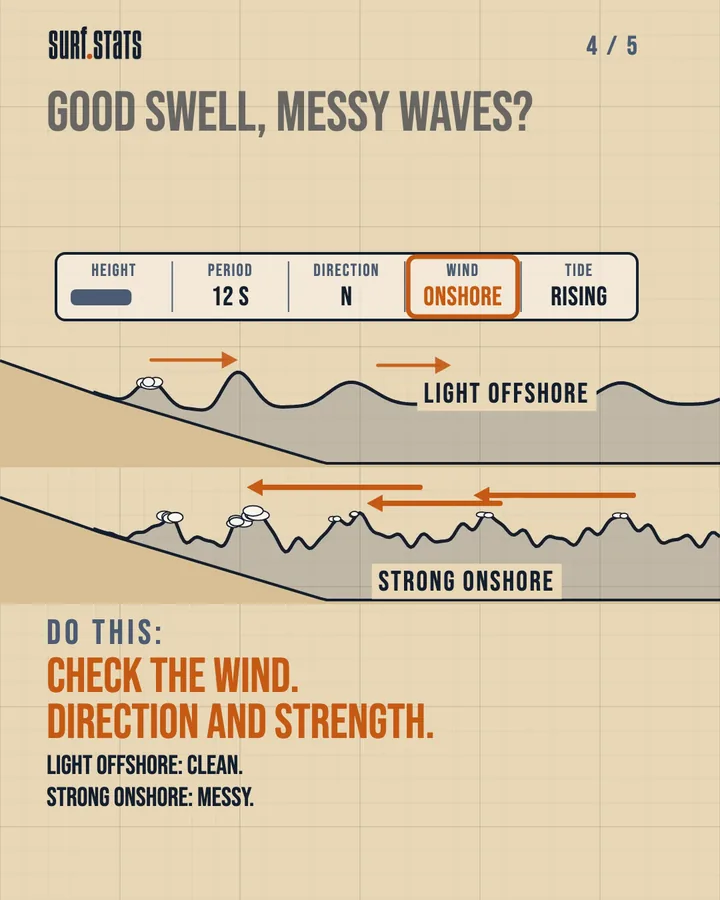
Try this: check the wind. Direction and strength.
A good swell on the forecast can still come in messy, and the wind is often the reason. Check two things:
- Direction for your beach. Offshore blows from the land out to sea and smooths the faces. Onshore blows from the sea toward the land and chops them up. The same wind can be offshore at one beach and onshore at another, so read it against the way your spot faces.
- Strength. Light offshore, under about 10 knots, is the classic. Strong onshore is the one to skip.
Check the gusts too. The wind number on a forecast is an average, and gusts can blow well above it.
5. Good forecast, bad session?
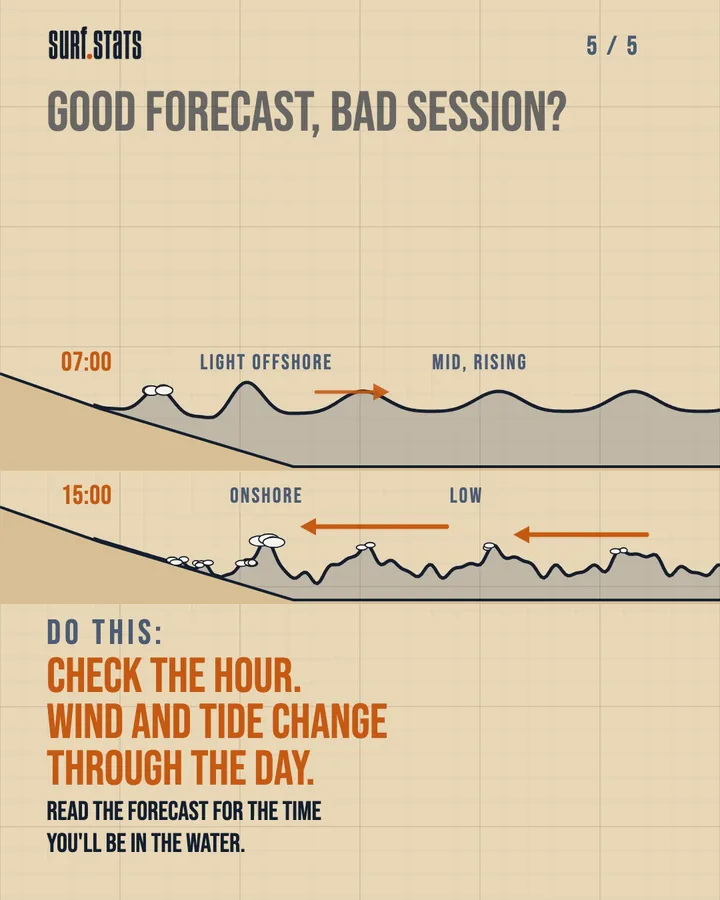
Try this: check the hour. Wind and tide change through the day.
A forecast is a set of rows by time, and the morning row and the afternoon row can look very different. Wind direction and strength can change during the day. On many coasts a sea breeze, which is onshore, builds later in the day, especially in summer.
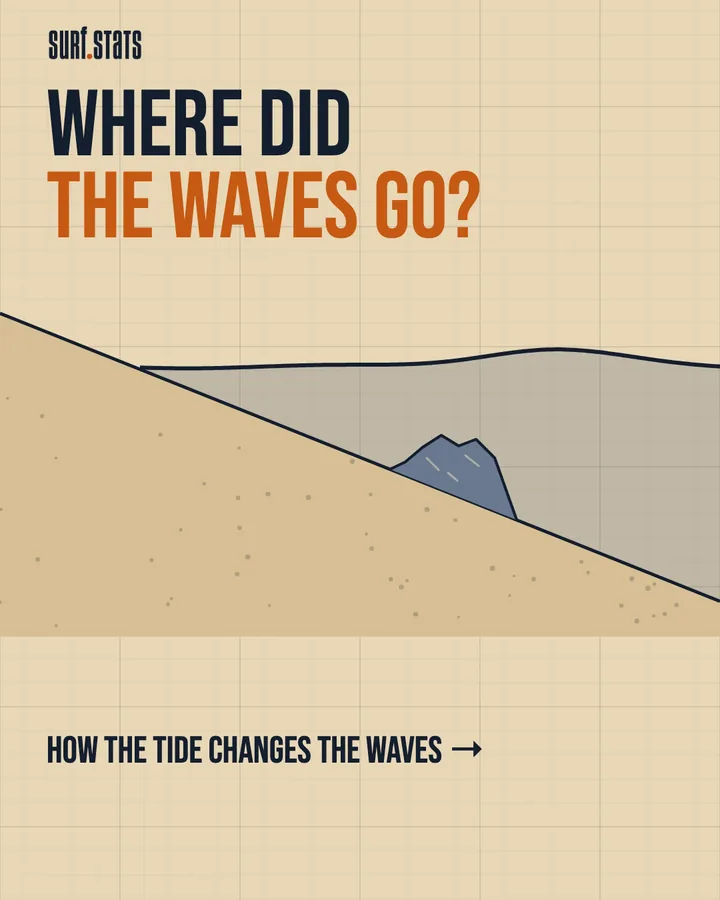
The tide moves too, and each spot has the tides it likes. So a good forecast for the day can still give you a bad session if you paddle out at the wrong hour. Read the forecast for the time you'll be in the water, not the day's best row.
Read the whole row
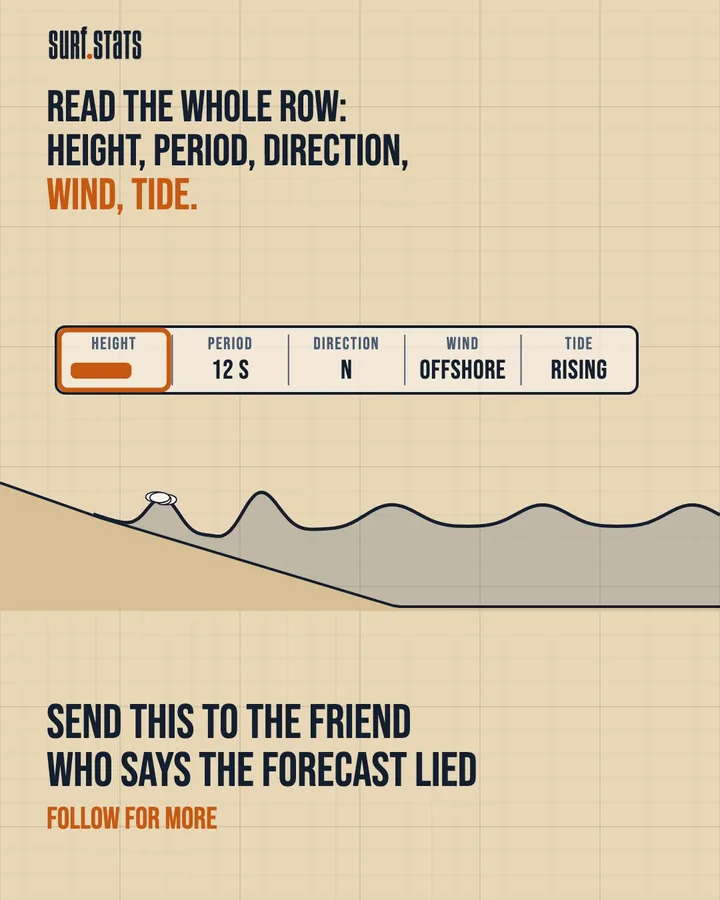
Make it a habit to read every column: height, period, direction, wind, tide. When the session doesn't match the forecast, go back to the row and find the column you skipped.
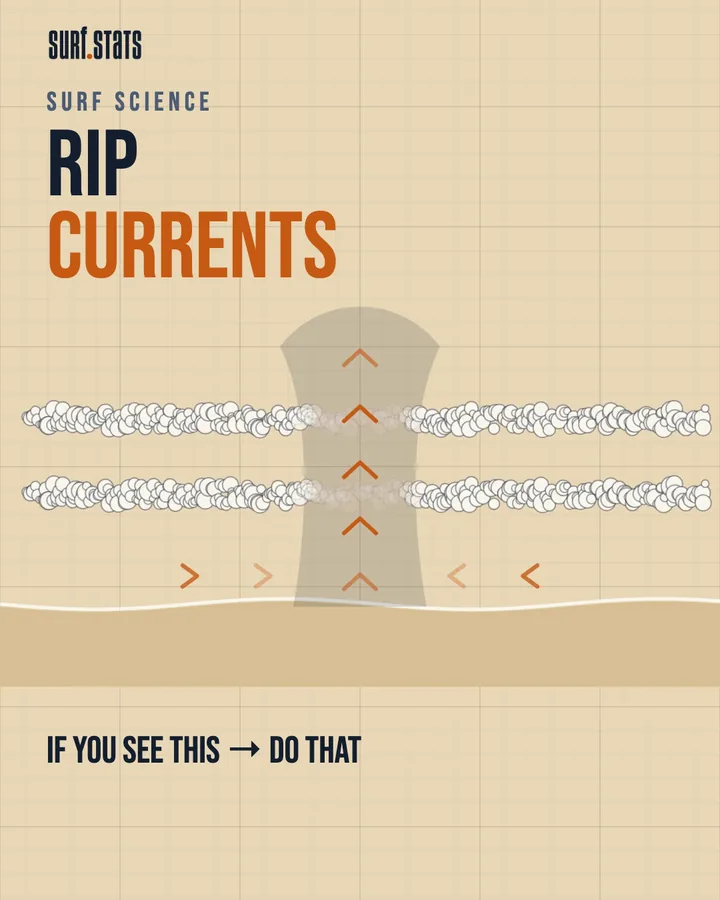
And when in doubt, ask a local. Locals know how your spot reacts to each swell, wind and tide. Before you paddle out, it also helps to know how to spot a rip current.
Quick checklist
- The height is usually the swell out at sea. Sets can be bigger, and your beach can make it bigger or smaller.
- Direction is where the swell comes from. Beach facing away? It can pass you by.
- Small height, long period: it can break heavier than it looks.
- Light offshore: clean. Strong onshore: messy. Check the gusts.
- Read the forecast for the hour you'll surf.
- When in doubt, ask a local.
Send this to the friend who says the forecast lied.