What is swell period?
 Fin Selector: your fins in 1 minute
Swell period is the time, in seconds, between two waves passing the same spot. At the same height, a longer period carries more power and can break bigger, so read the height and the period together.
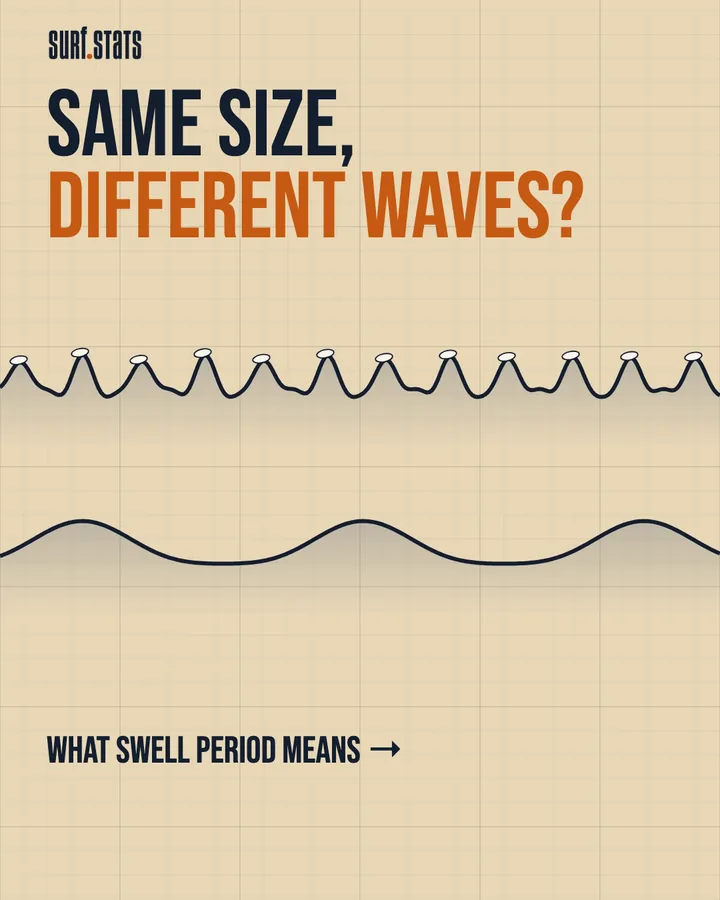
Two days on the forecast, same wave height. One day the sea is choppy and weak. The other day the sets come in clean and heavy. A big part of the difference is the other number on the forecast: the swell period. Height is not the whole story.
Below is what swell period means, what short and long period look like in the water, and how to read it next to the height. It comes from our swell period reel, and every point is backed by at least two independent sources: national weather services, surf forecasters and surf magazines.
1. What's that number in seconds?
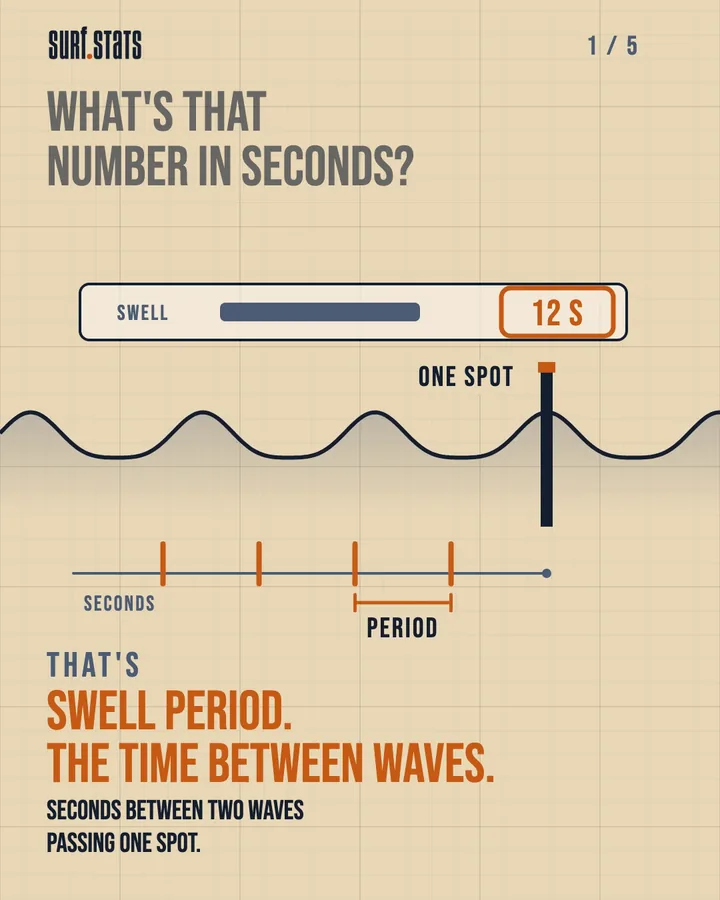
The short version: that's the swell period, the time between waves.
Swell period is the number of seconds between two wave crests passing one spot. Picture a post standing in the water and count the seconds from one crest going past it to the next. That count is the period.
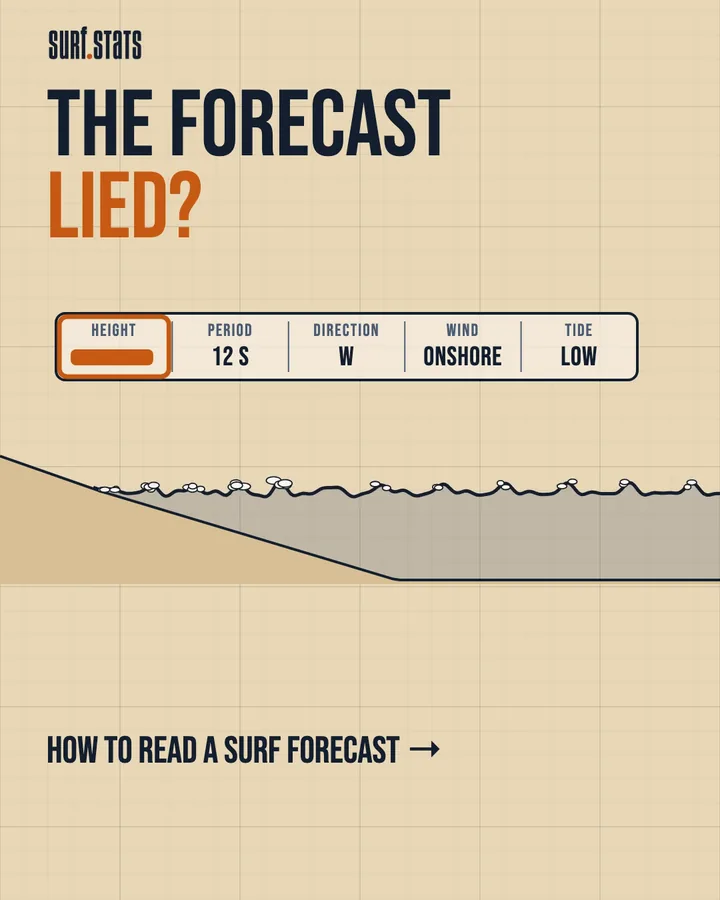
Surf forecasts print it in seconds, next to the wave height. So in a forecast row with a height and something like "12 s", the height tells you how tall the swell is and the seconds tell you how far apart in time the waves are.
2. Waves close together and choppy?
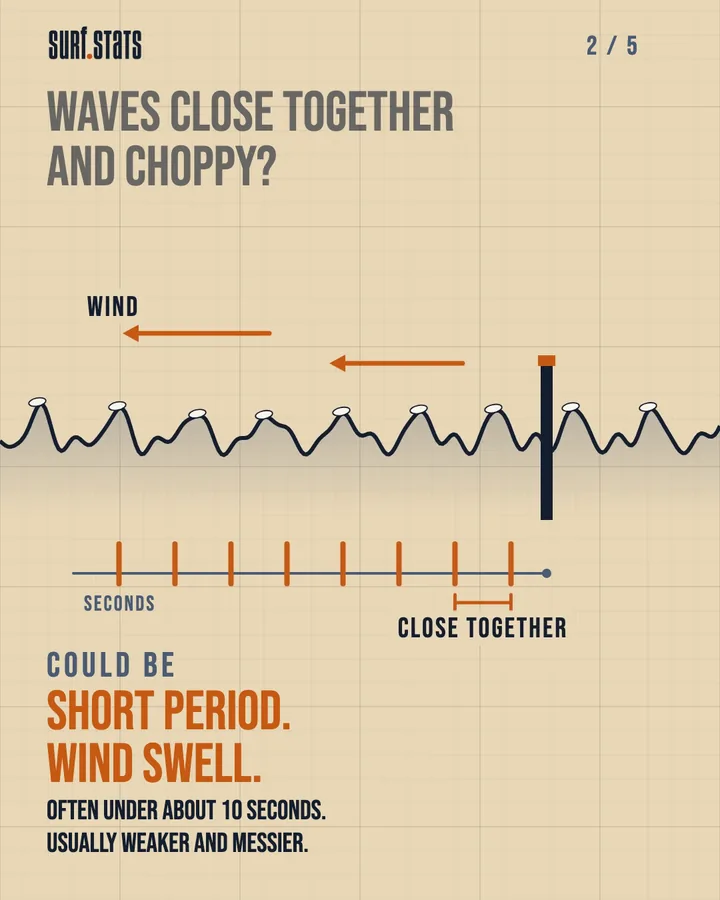
The short version: could be short period. Wind swell.
Wind swell is made by local or nearby wind. The waves come close together, and the period is often under about 10 seconds. These waves are usually weaker and messier: crests that look broken up and disorganised rather than clean lines.
Notice the "could be". Choppy water can also come from onshore wind blowing on any swell, so a messy sea doesn't prove a short period on its own. The forecast number tells you which one you have.
3. Long gaps, then big sets?
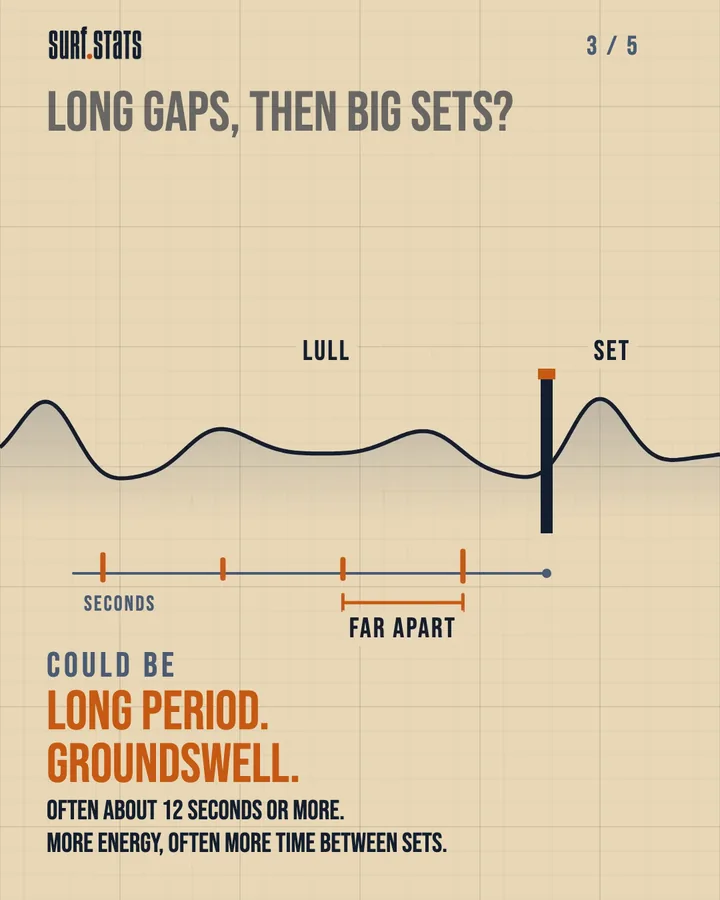
The short version: could be long period. Groundswell.
Groundswell is swell that comes from storms far away. Its period is often about 12 seconds or more. It carries more energy, and there is often more time between sets.
Sources don't agree on one exact cut-off between wind swell and groundswell; each draws the line in a slightly different place. That's why we say "often under about 10" and "often about 12 or more", and leave the gap in between unnamed. Don't treat any single number as an official border.
One thing the sets don't change: the period is still crest to crest, not the time between one set and the next.
4. Same height on the forecast?
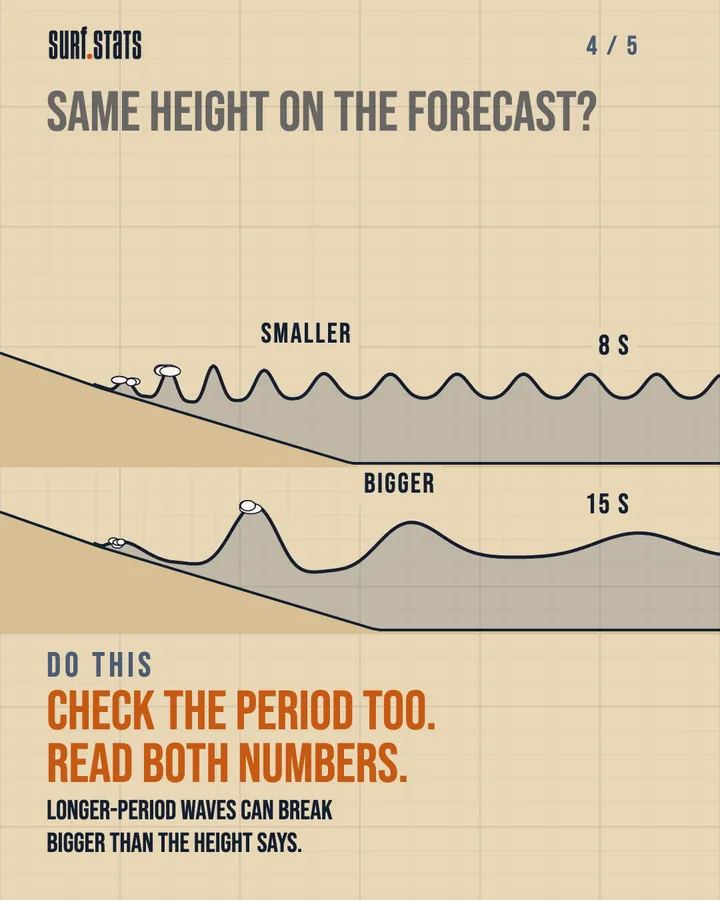
Try this: check the period too. Read both numbers.
Two swells can show the same height on the forecast and break very differently. Longer-period waves can break bigger than the height says. As a long-period swell reaches shallow water near the beach, it can grow more than a short-period swell of the same height.
How much bigger depends on the seabed, so "can" is the honest word here. But the habit is simple: don't stop at the height. Look at the seconds next to it.
5. Long period on the forecast?
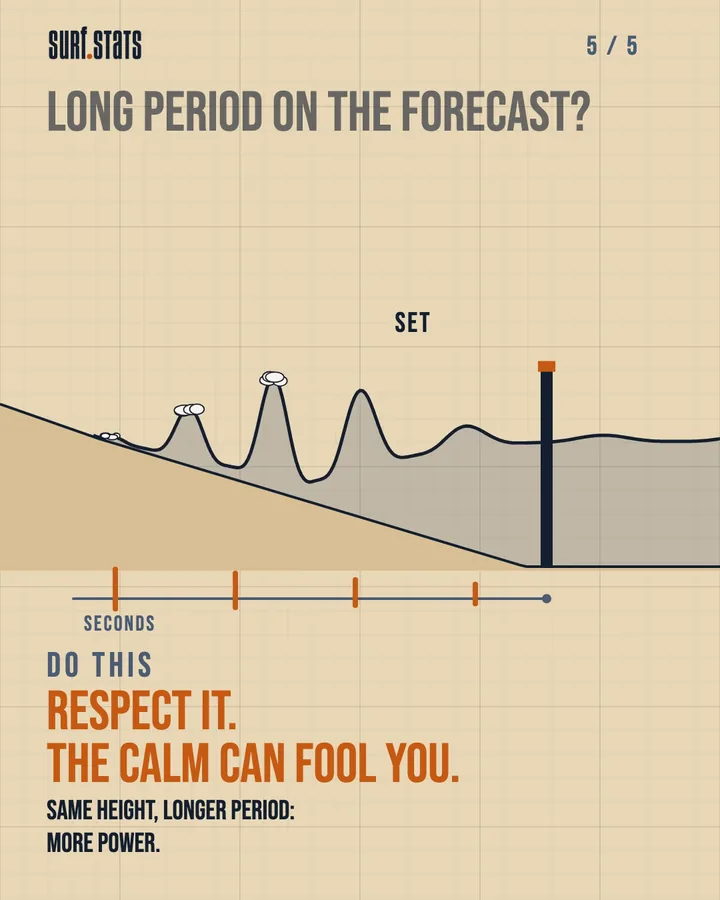
Try this: respect it. The calm can fool you.
With long-period swell, the sea can look calm for a while before the next set arrives. That calm is what catches people out. Then a set shows up with more power than the quiet minutes suggested.
At the same height, a longer period means more power. So when the forecast shows a long period, give it more respect than the height alone suggests. The quiet minutes between sets are not the whole picture.
Longer isn't automatically better, either. Long-period swell can close out some beach breaks. Which period works best depends on your spot.
Same height? The quick rule
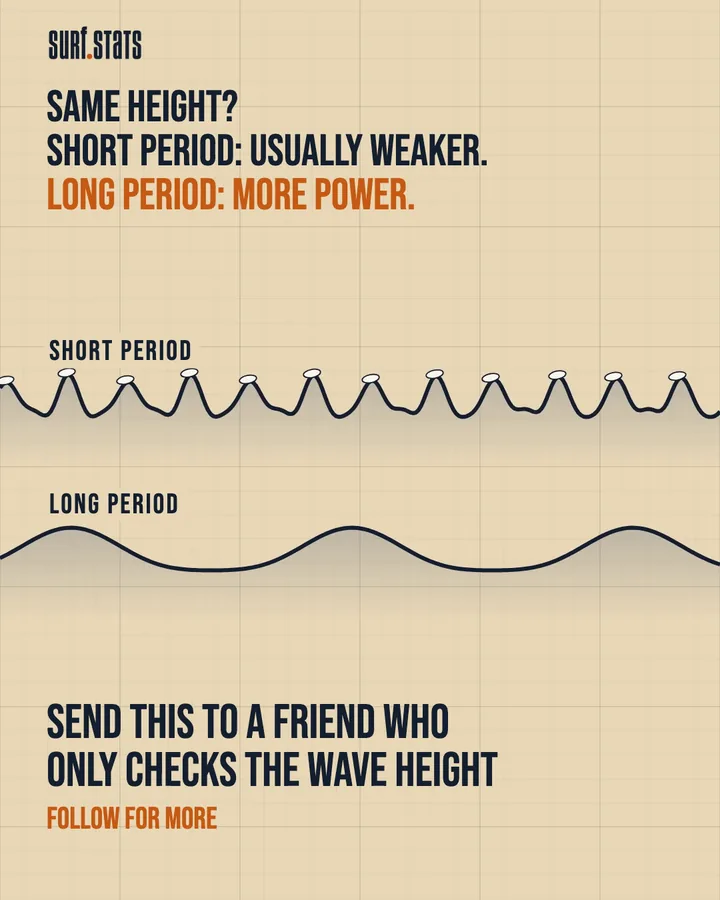
At the same height: short period, usually weaker. Long period, more power.
That's the line to remember. Then learn your own spot: over time, notice which periods it likes. If you're still choosing what to ride, our guide on how to choose a surfboard covers the board side. And before any session, know how to spot and escape a rip current.
Quick checklist
- Swell period = seconds between two waves passing one spot.
- Short period (often under about 10 s): wind swell, close together, usually weaker and messier.
- Long period (often about 12 s or more): groundswell from far away, more energy, often longer gaps between sets.
- Same height, longer period: more power, and it can break bigger.
- Read the height and the period together.
- Long period: respect it. The calm between sets can fool you.