Do you need surf lessons, or can you learn alone?
 Fin Selector: your fins in 1 minute
Both routes can work. Learning only from videos risks bad habits, so a few lessons with a qualified coach can get you started faster; a friend who surfs well and a big foam board can work too, if they stay close. After a few lessons, you don't need one every time: go practise.
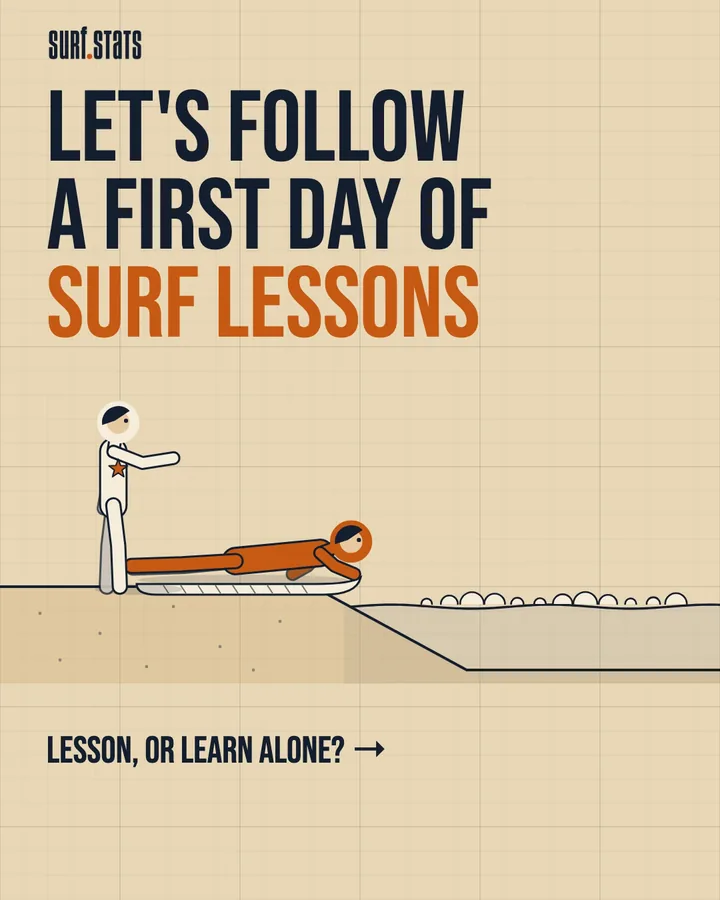
Do you need surf lessons, or can you learn to surf alone? There isn't one answer for everyone. Surfer Today notes that a lot of surfers learned all by themselves. What changes the answer is where you are right now: watching videos at home, about to book, paddling out with a friend, or a few lessons in.
Below are four situations and what to do in each. They come from our lesson or learn alone reel, and each of the four tips is backed by at least two independent sources: surf magazines, a lifesaving charity, a city council and surf instructors quoted in the surf press. Where a line below rests on one source, we name it.
1. Teaching yourself from videos?
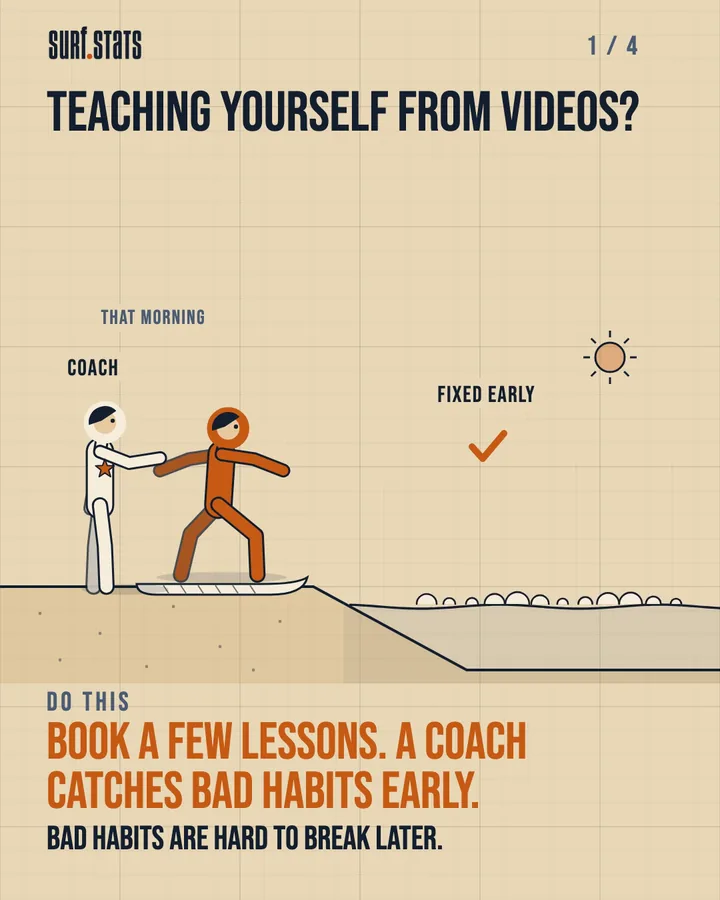
Try this: book a few lessons. A coach catches bad habits early.
Windy.app's learn-to-surf guide warns that teaching yourself from videos, reading and friends can leave you with bad habits you'll need to unlearn as you progress. An instructor quoted by Surfline is blunter: he says a lot of videos are confusing or just wrong, and they can teach you some really bad habits.
Sunset's beginner guide says nothing is worse than picking up bad habits and locking them in early, and that a good teacher helps with everything from the pop-up to paddling. Bad habits are hard to break later.
Videos aren't useless. Matador says you can start from videos and articles if lessons aren't an option; you'll just progress faster with a little help at the start. Surfer Today makes the same point: you may learn faster if you book a few lessons.
2. Booking a lesson?
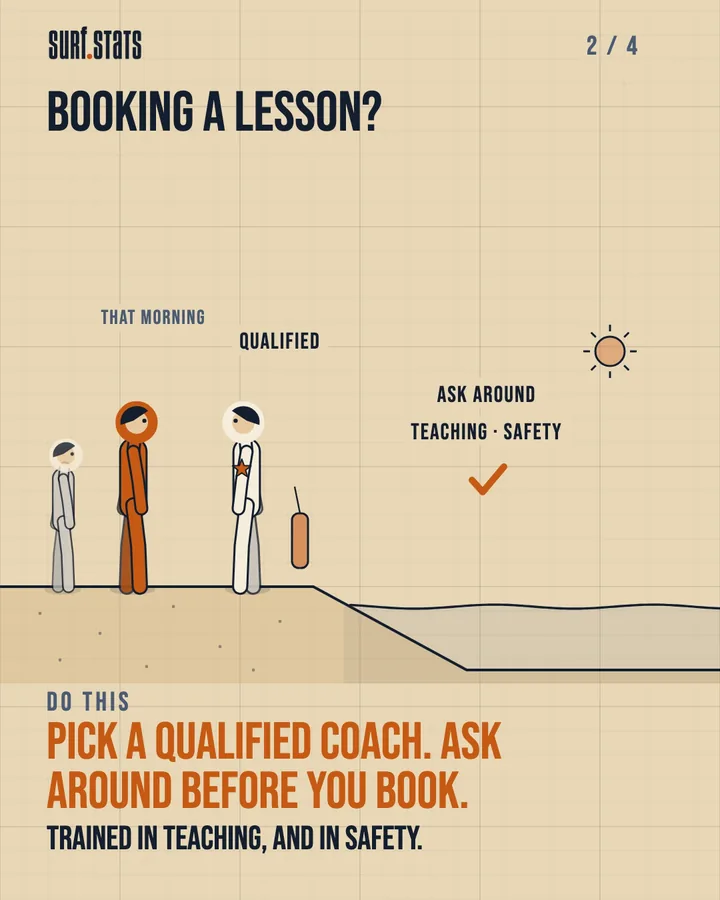
Try this: pick a qualified coach, and ask around before you book.
Carve says learning with a properly qualified instructor spares you a lot of frustration. The RNLI, the UK's lifesaving charity, advises getting advice from an accredited training centre or a recognised school before you start. The City of Gold Coast in Australia encourages beginners to take lessons with a licensed surf school, and Brazil's Waves magazine lists learning with trained professionals among its rules for beginners.
Qualified means trained in teaching, and in safety. In its advice on surf schools, Carve says the most important thing is to learn about safety in the water. Waves ties signing up at a surf school to surfing safely.
To find the right person, ask around first. The Inertia's beginner tips say to look the teacher up before you book: you want experience and good reviews. One instructor quoted by Surfline suggests starting with the lifeguards: they know which instructors are good.
3. Got a friend who surfs well?
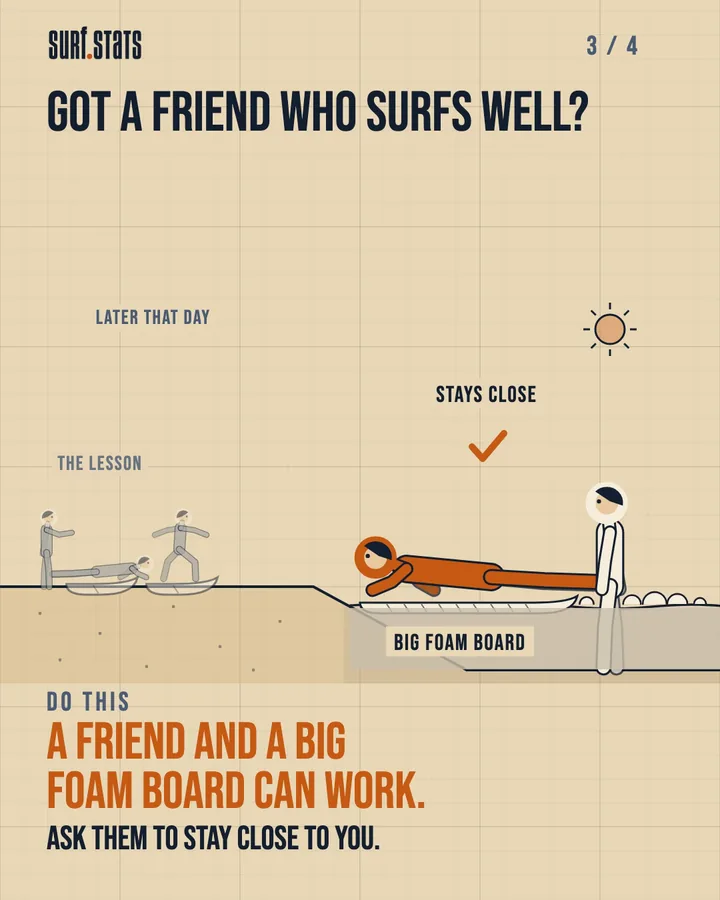
Try this: a friend and a big foam board can work. Ask them to stay close to you.
A lesson isn't the only way in. The Inertia's beginner tips give two routes: an experienced friend who teaches you, or a surf camp. Surfer Today says tips from friends could be extremely helpful too, though it adds that you may learn faster with lessons. So the friend route can work, with two conditions.
- Your friend stays close. Carve says it's always safer to surf with a mate or two, and Surfer Today tells beginners to invite friends rather than surf alone. The risk is a friend who paddles off after their own waves. The Inertia ran a whole piece by a surfer who tried to teach his partner; her line about him was that he disappears on a wave and she doesn't see him for a while.
- You're on a big foam board. The City of Gold Coast encourages beginners to use soft-top boards, The Inertia calls them good entry boards, and Surfline says they're a stable, safe and fun way for beginners to learn the basics. Bethany Hamilton adds that if you aren't taking a lesson, picking a big board and small, mellow waves is your job. More on that board in the beginner mistakes guide.
4. Had a few lessons already?
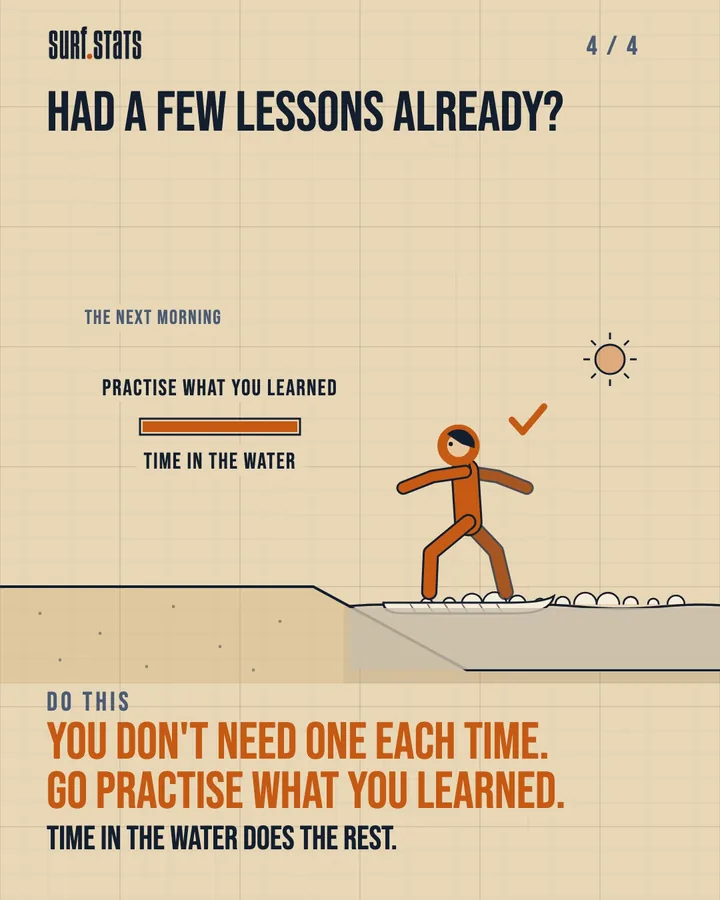
Try this: you don't need one each time. Go practise what you learned.
Lessons give you the foundation; they don't have to be forever. Matador says you don't need to keep taking lessons every time you want to try something new. Windy.app says that once you have the basics down, practising is the most effective way to get better.
Time in the water does the rest. Sunset puts time in the water above everything else, and Windy.app says that the more you practise, the quicker you get better. When you go practise, how to catch a wave is a good next read.
So which one?
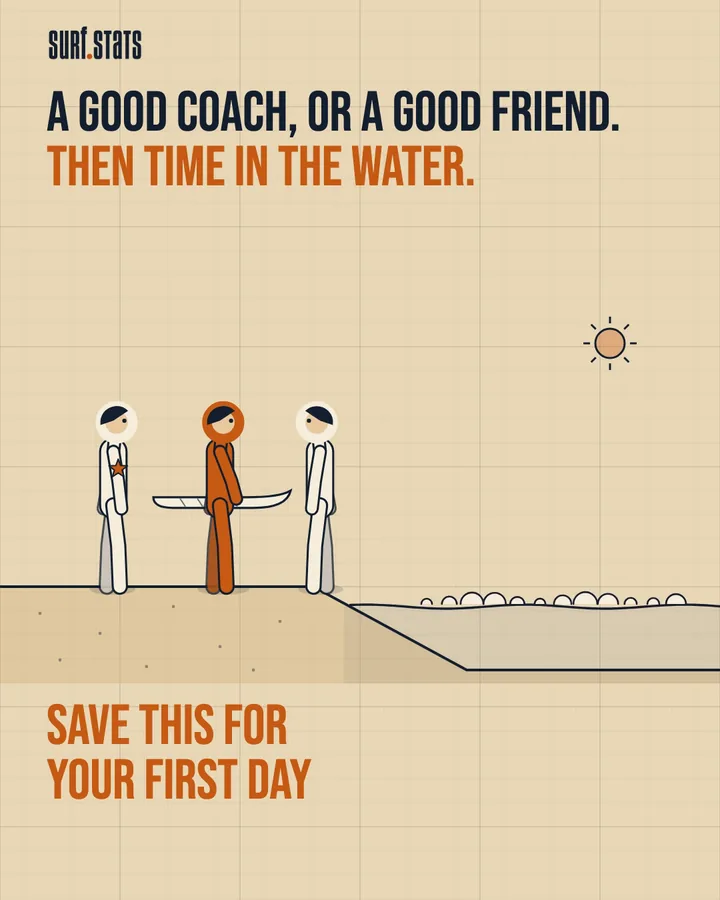
A good coach, or a good friend who stays close. Then time in the water. The sources say a few lessons can get you going faster; a friend who surfs well and a big foam board can work too, if they stay close.
Quick checklist
- Learning only from videos? Book a few lessons so a coach catches bad habits early.
- Booking? Pick a qualified coach, trained in teaching and in safety. Ask around first.
- Learning with a friend? Big foam board, and ask them to stay close.
- A few lessons in? You don't need one each time. Go practise.
- Then time in the water does the rest.