How to catch your first wave
 Fin Selector: your fins in 1 minute
Point your tail straight at the wave and start paddling before it reaches you. Glance back without stopping your arms, lie with the nose just above the water, and when the wave lifts you, take a few more strokes until the board speeds up. Then pop up.
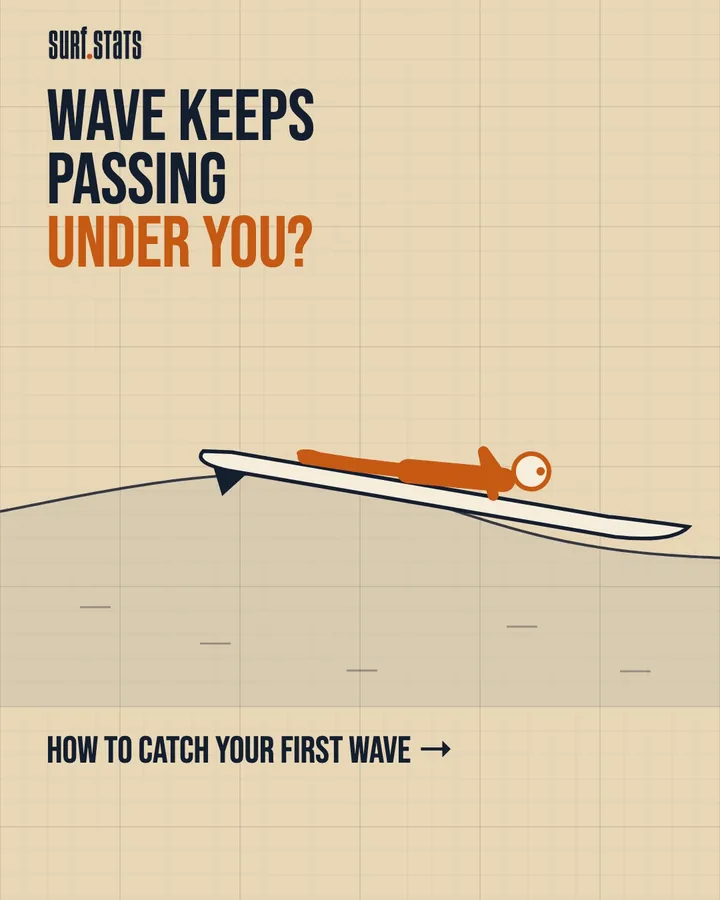
You see the wave coming, you paddle, you feel it lift the board, and then it rolls on toward the beach without you. The fixes are about the few seconds before and as the wave reaches you: how you line up, when you start, where you lie and when you stop.
Below are five common mistakes when you try to catch a wave surfing, and the fix for each, in the order they happen in one attempt. They come from our how to catch your first wave reel. We checked them against surf magazines, coaching guides and a marine charity's beginner tips, at least two independent sources for each fix.
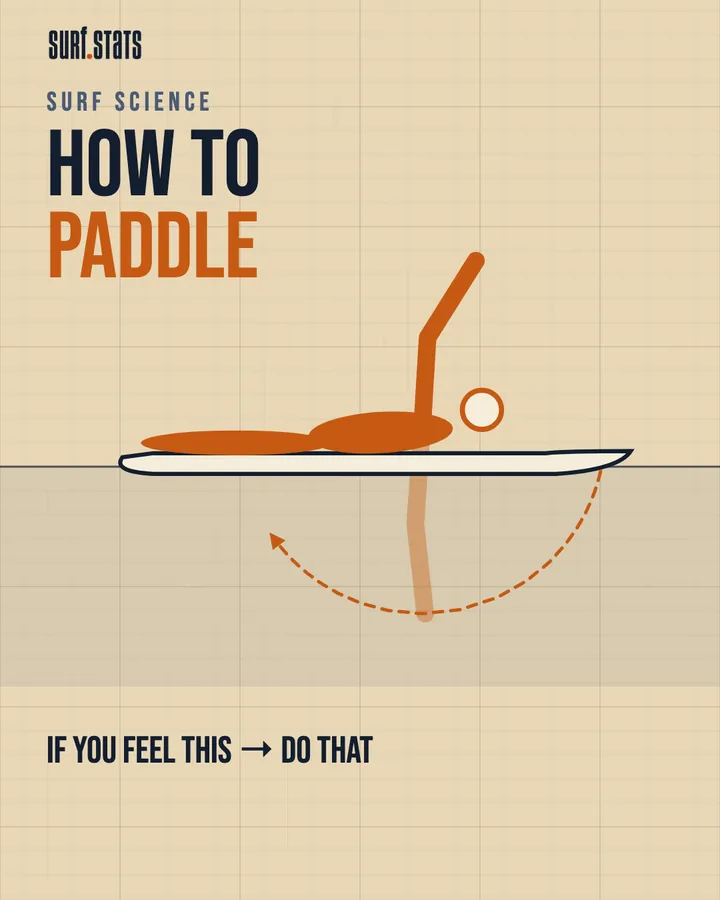
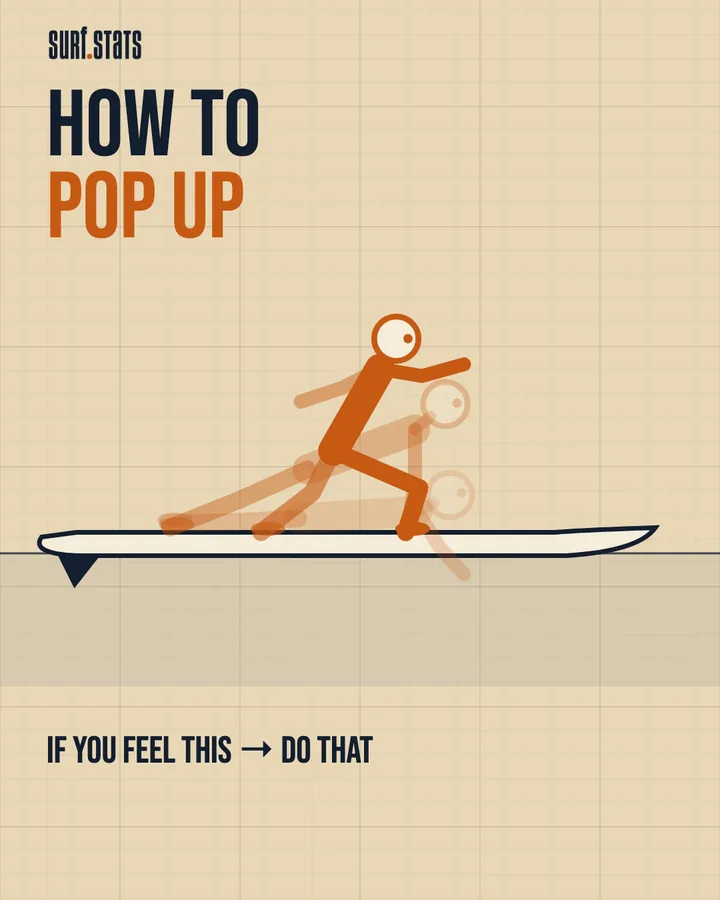
This post covers the catch itself. For the stroke, read how to paddle a surfboard. For what happens once the wave has you, read how to pop up.
1. Board at an angle to the wave?
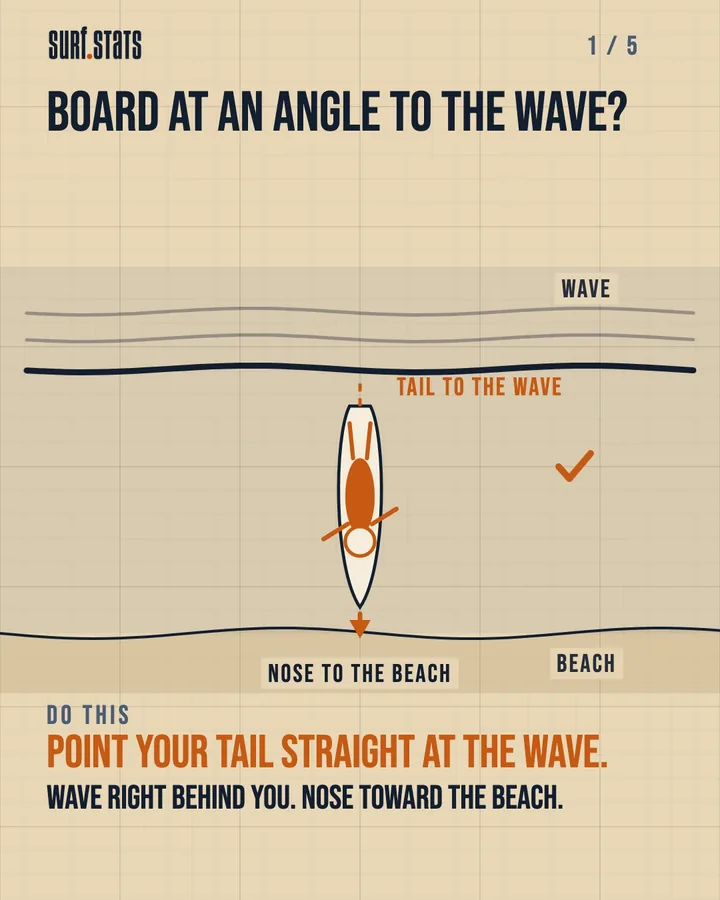
Try this: point your tail straight at the wave. Wave right behind you, nose toward the beach.
For your first waves, paddle in straight. Turn around so the nose faces the shore and the tail points at the wave behind you.
Line up with the wave, not just the sand. Outside's beginner guide, with steps from a surf coach, points out that the swell doesn't always come in parallel to the beach, which is why you look back and line up with the wave. On a small first wave, that usually puts your nose toward the beach too.
Angling the take-off to go left or right is a later skill. Surfer Today and Barefoot Surf both save it for after you can catch waves going straight.
2. Waiting for the wave to reach you?
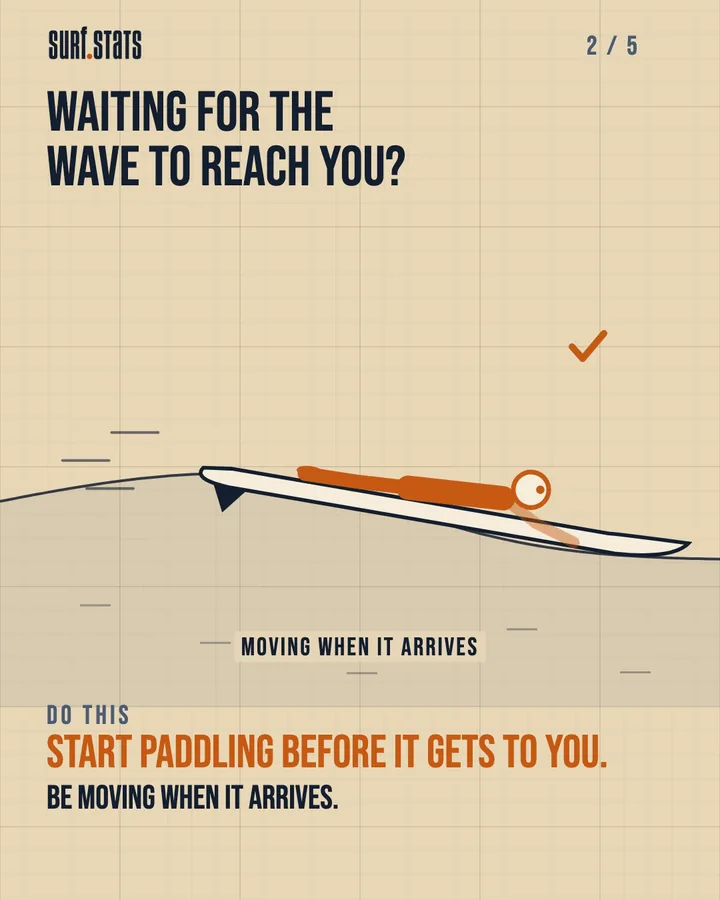
Try this: start paddling before it gets to you. Be moving when it arrives.
If you lie still and wait, the wave hits you and keeps going toward the beach. To catch it, the board needs to be moving, close to the wave's speed, when the wave gets there. So start paddling while it's still behind you, and let it find you already moving.
Don't leave it to the last second. Save Our Seas warns against going for a wave at the last minute.
3. Wave breaks on you by surprise?
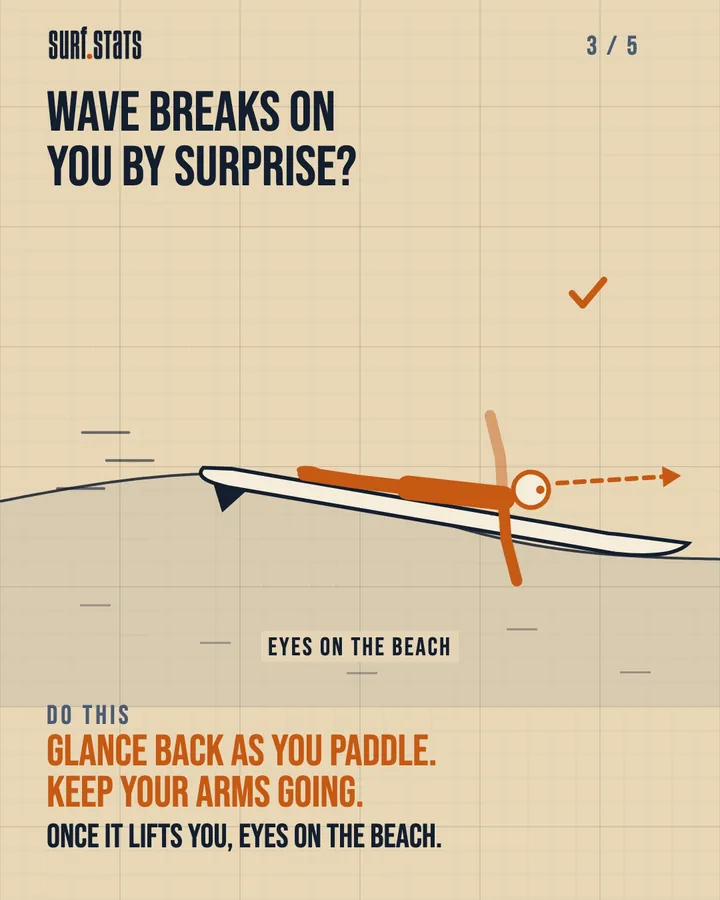
Try this: glance back as you paddle. Keep your arms going. Once it lifts you, eyes on the beach.
You can't time a wave you can't see. Look back over your shoulder to check where the wave is, but keep paddling while you do it. Barefoot Surf calls looking behind you the only way to know whether you need to paddle more, and describes beginners who skip it, mistime their paddling and get the wave breaking over them.
Keep it quick. A short look, arms still moving, then face forward again. Once the wave lifts you, your eyes go to the beach, where you're headed. That's also where they need to be when you pop up.
4. Nose sticking up as you paddle?
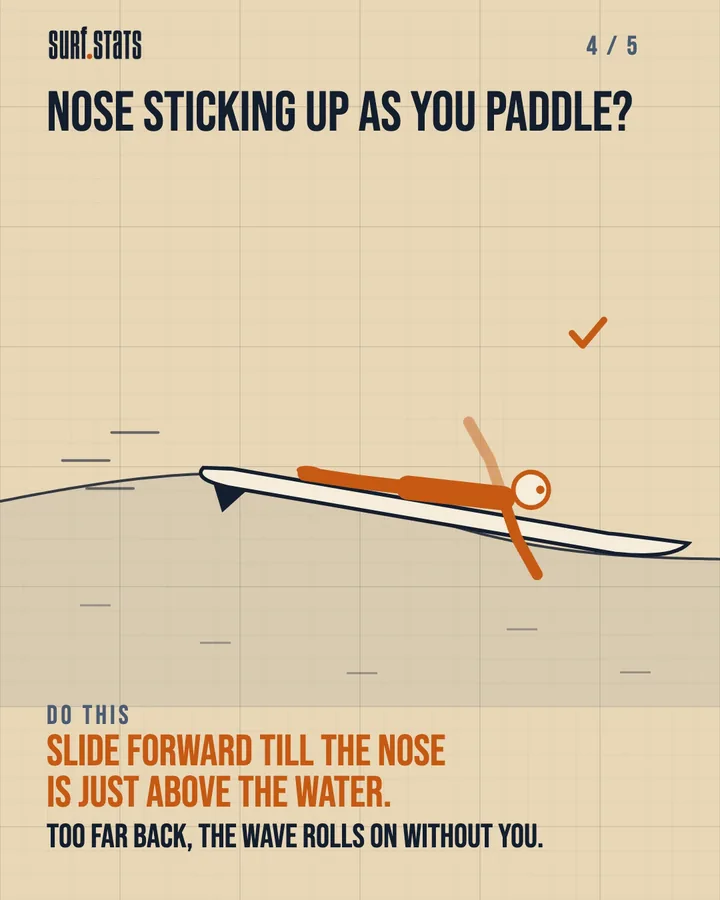
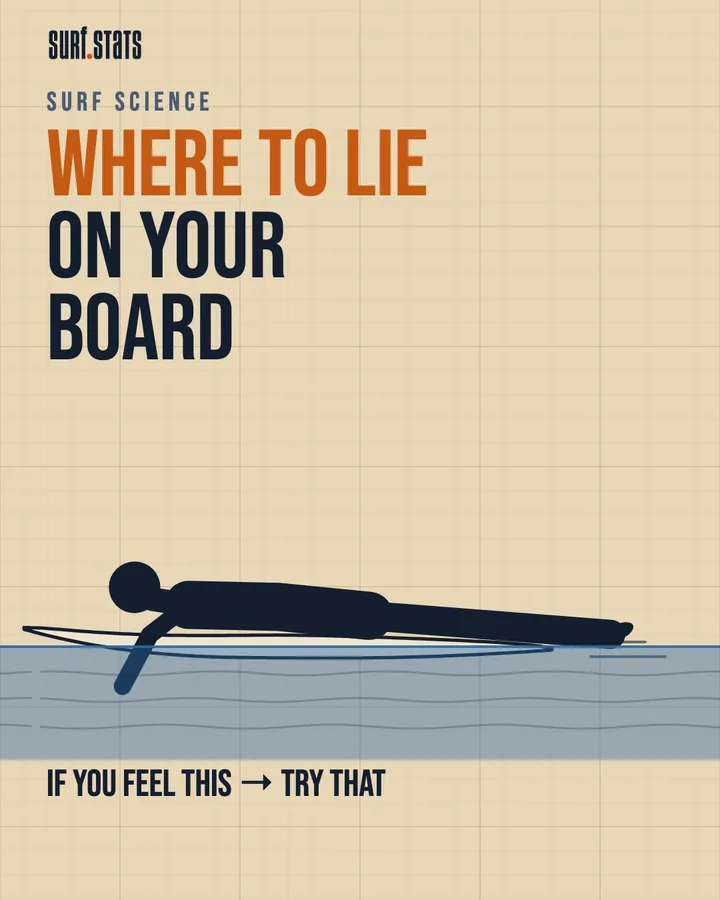
Try this: slide forward till the nose is just above the water. Too far back, the wave rolls on without you.
Lying too far back makes the wave pass you by: four of the sources we checked say so. Slide forward until the nose sits just above the surface, not under it.
Set this before you start paddling for the wave, not as it arrives. Go too far forward and the nose digs in, which is the opposite mistake. We cover both in where to lie on a surfboard.
5. Stopping when you feel it lift you?
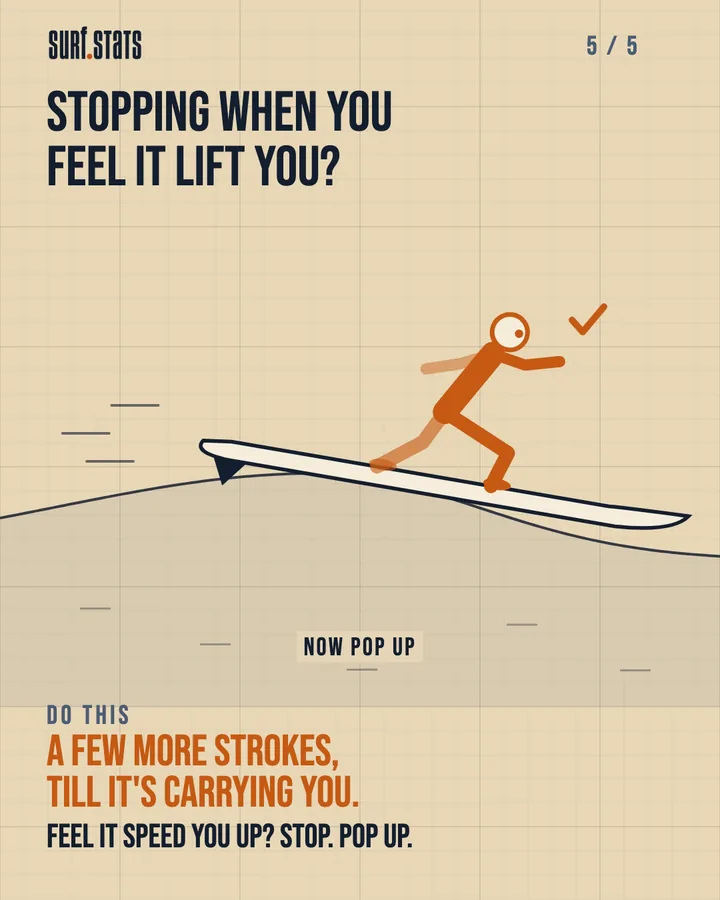
Try this: a few more strokes, till it's carrying you. Feel it speed you up? Stop. Pop up.
Lifted isn't caught. Surfer Today warns that beginners often think the wave has them before it really does. When you feel the tail rise, don't stop: take a few more strokes.
Those strokes have an end. The signal is speed: the moment you feel the board accelerate and the wave carrying you, stop paddling and pop up. Barefoot Surf names the opposite as a common mistake too: keeping on paddling down the face of the wave. And Surfer Today's paddling guide keeps the extra stroke for small waves, not large surf.
Start early. Stop at the speed-up.
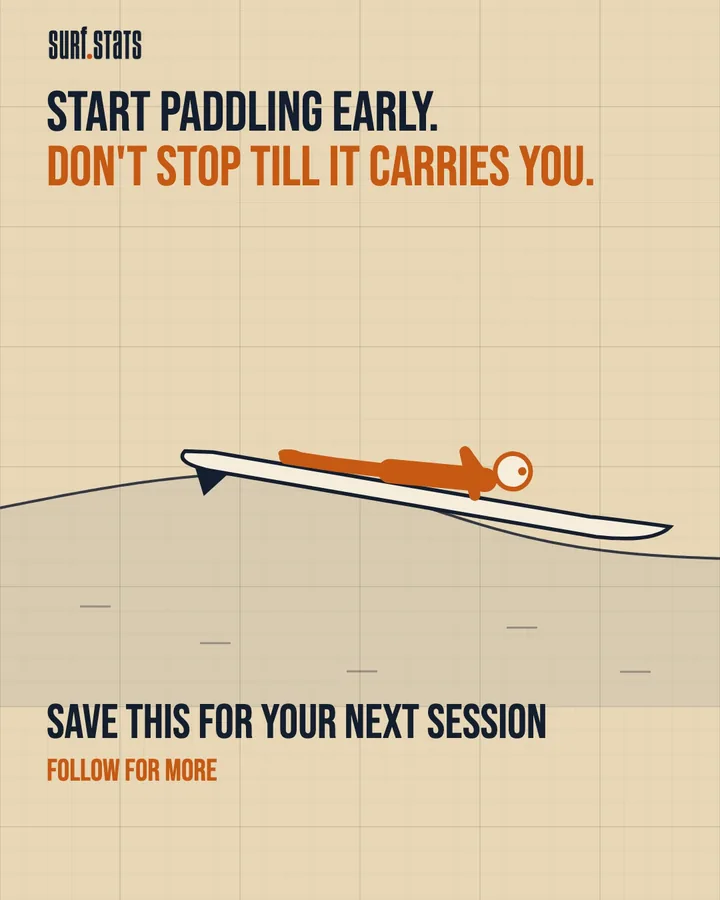
The whole catch in two lines: start paddling early, and don't stop till it carries you. Then pop up.
Start in the whitewater. Surfer Today and Surfline both have beginners catch broken waves first and move to unbroken waves later. These fixes apply to both.
Quick checklist
- Tail to the wave, nose toward the beach.
- Start paddling before the wave reaches you.
- Glance back, arms still going.
- Nose just above the water, set before you paddle.
- Feel the lift? A few more strokes.
- Feel the speed-up? Stop and pop up.
- Whitewater first, unbroken waves later.