Why do you feel so good after a surf?
 Fin Selector: your fins in 1 minute
Studies found that exercise can lift your mood right after, that time by the water is linked to better wellbeing, and surfers said surfing takes their mind off things for a while. Linked is not proven, and surf therapy evidence is still scarce. If you've felt low for a long time, talk to a doctor.
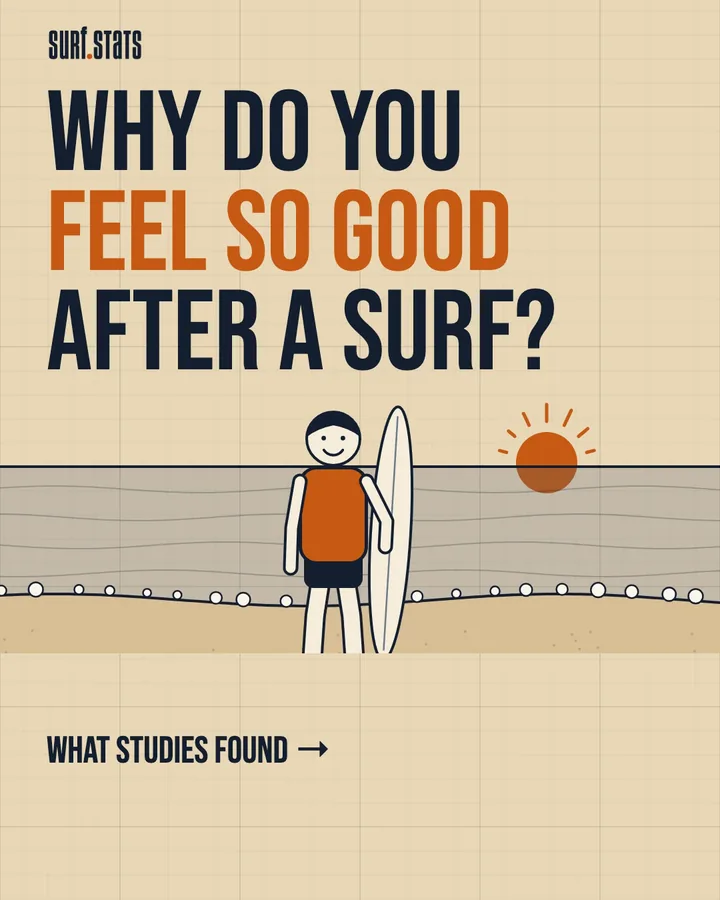
You paddle in with tired arms and a big smile. So why do you feel so good after a surf, and does surfing help your mental health at all? Researchers have looked at that feeling, and the honest answer comes with careful words.
Below are four cards from our feel good after a surf reel: three on what studies found, and one on what to do if you've been feeling low. Each card's main line rests on more than one independent source: reviews of exercise and of time by the water, studies of surfers, and two health bodies, the NHS in the UK and the US National Institute of Mental Health. When a detail comes from a single study, we name it.
This is general information, not medical advice and not a diagnosis.
1. Tired arms, but smiling anyway?
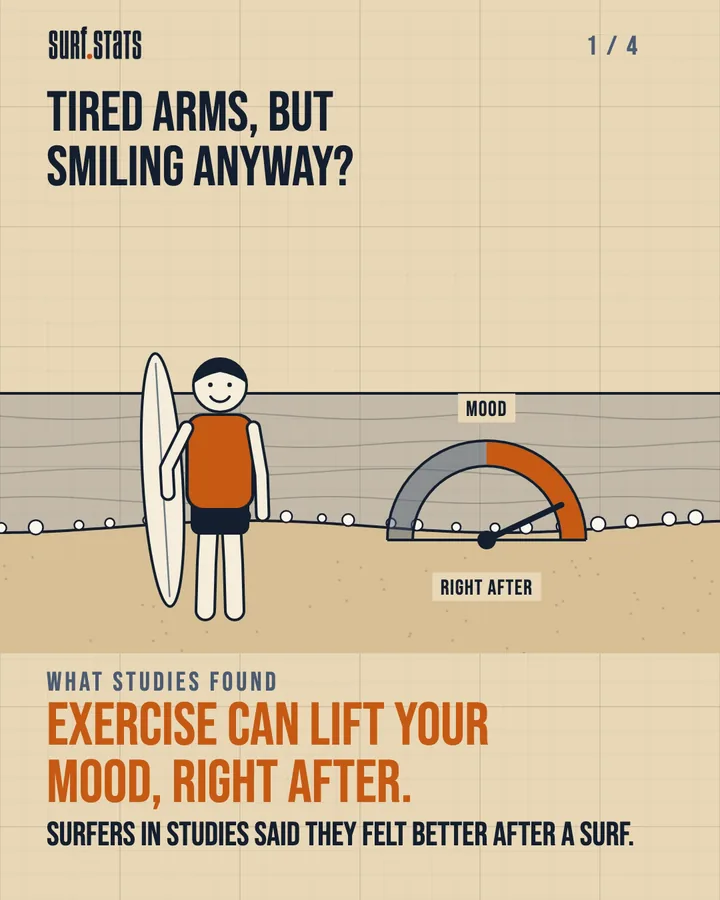
The short version: exercise can lift your mood, right after.
Surfing is exercise, and studies of exercise found that one session can lift your mood. A meta-analysis in Psychosomatic Medicine looked at single bouts of exercise and found that general mood improved from before to after. A review in Brain Plasticity lists a better mood among the effects of a single bout of physical activity.
And in studies, surfers said they felt better after a surf. In a surfing study in the International Journal of Exercise Science, positive feelings went up after a single surf session. In an interview study of recreational surfers in Italy, one described coming out of the water as feeling like a reset.
Keep the word "can". Results varied a lot between the exercise studies, and the surf session study had no comparison group, so it can't show that surfing caused the change. This card credits exercise, with surfing as one kind of it. And since surfing is exercise, start it the same way: here's how to warm up before you paddle out.
2. Feel better just being by the sea?
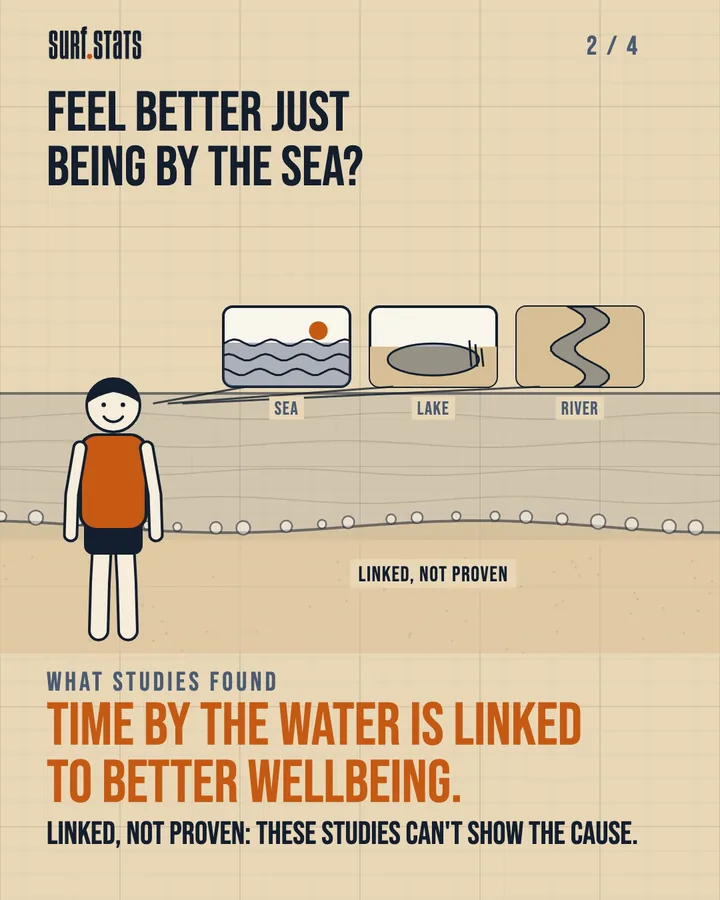
The short version: time by the water is linked to better wellbeing. Linked, not proven.
Studies link time by the water to better wellbeing. Researchers call places like the sea, lakes and rivers "blue space".
- A systematic review of studies on outdoor blue spaces found a positive link between more exposure to them and mental health and wellbeing.
- A review by the UK Environment Agency found that people report feeling happier near water, and linked blue space to a better mood and a sense of restoration.
"Time by the water" means going there. In an international survey in Scientific Reports, visits to the coast and to inland water were linked to better wellbeing, while the link with simply living near the coast mostly disappeared once those visits were taken into account.
But linked is not proven: these studies can't show the cause. The Environment Agency review found no quantitative evidence of a causal link, and the survey's authors say their results show associations, not causation.
3. Problems go away while you surf?
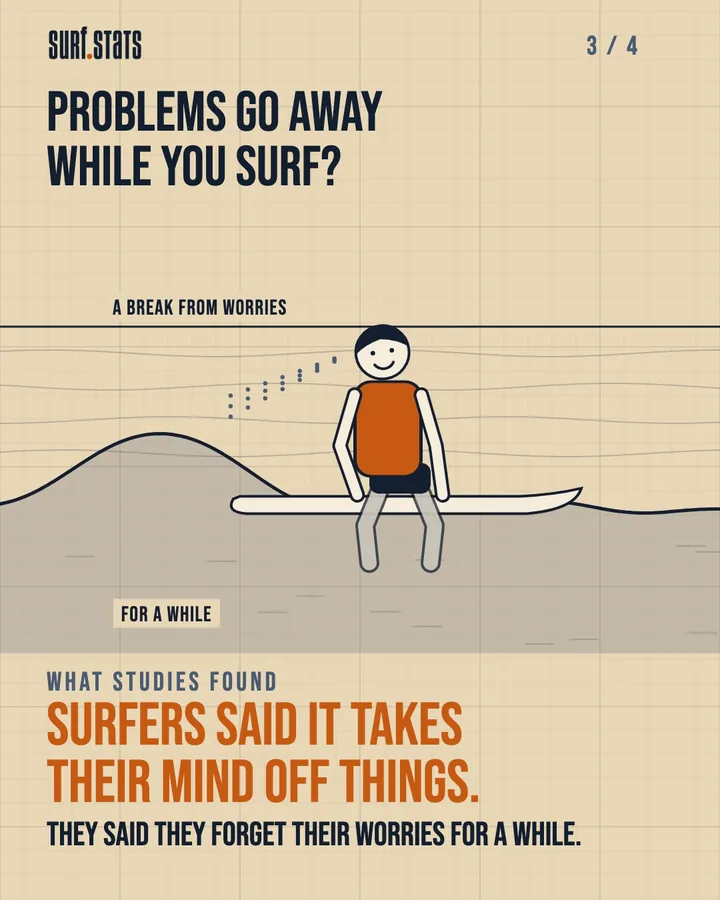
The short version: surfers said it takes their mind off things, for a while.
In studies, surfers said surfing takes their mind off things. They said they forget their worries for a while.
- In a UK study of young people in a surf therapy programme, they described the beach as an escape, and one said surfing was a break where he could forget about his worries.
- In the Italian interview study of adult recreational surfers, one said that in the water he doesn't think about anything, and another that he can take his mind off things for a moment.
These are interview studies: people describing their own experience. They tell you what surfers said, not what surfing does inside your head. And what they describe is a break for a while.
4. Feeling low for a long time?
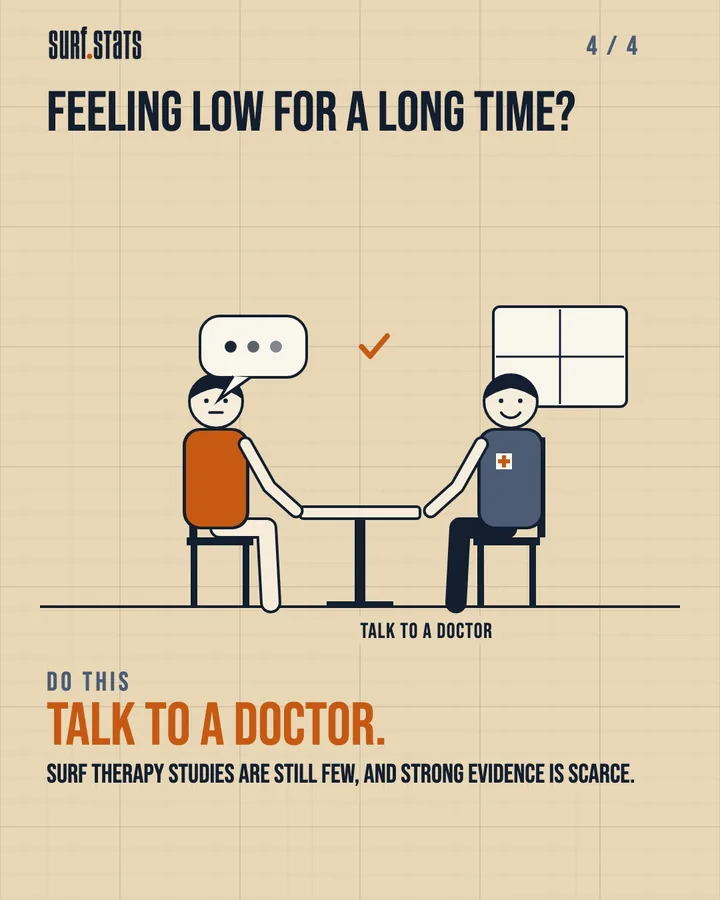
Do this: talk to a doctor.
If your mood has been low for a long time, or you're struggling to cope with it, talk to a doctor. That is the advice of the NHS and of the US National Institute of Mental Health: when low mood or signs of depression don't go away, see a GP or another health care provider.
Studies of surfing as a therapy are still few, and strong evidence is scarce.
- A systematic review of surf therapy for people with mental health conditions rated the certainty of the evidence very low and concluded that robust evidence is scarce.
- The UK surf therapy study says the surf therapy evidence base still has methodological limitations.
- A review of programmes run in blue spaces found that very few studies looked at the long-term effects.
This post can't tell you what's going on with your mood. A doctor can.
So, does surfing help your mental health?
What studies point to: exercise, water, and a break from your worries. Exercise can lift your mood right after a session. Time by the water is linked to better wellbeing, but that link isn't proven. And surfers in studies said surfing takes their mind off things for a while.
What the studies don't give you is strong evidence for surfing as a therapy. Those studies are still few. So the honest answer is: surfers in studies said they felt better after a surf, and if you've been feeling low for a long time, the step to take is a talk with a doctor.
Got a friend who lives in the water? Send this to them.
Quick checklist
- Exercise can lift your mood, right after a session.
- Surfers in studies said they felt better after a surf.
- Time by the water is linked to better wellbeing. Linked, not proven.
- Surfers said surfing takes their mind off things, for a while.
- Surf therapy studies are still few, and strong evidence is scarce.
- Feeling low for a long time? Talk to a doctor.