First time surfing tips
 Fin Selector: your fins in 1 minute
Take a lesson, learn on a big foam board, and pick small waves over a sandy bottom with space around you. Go where lifeguards are on duty, bring a friend, and stay in the whitewater: the unbroken waves come later.
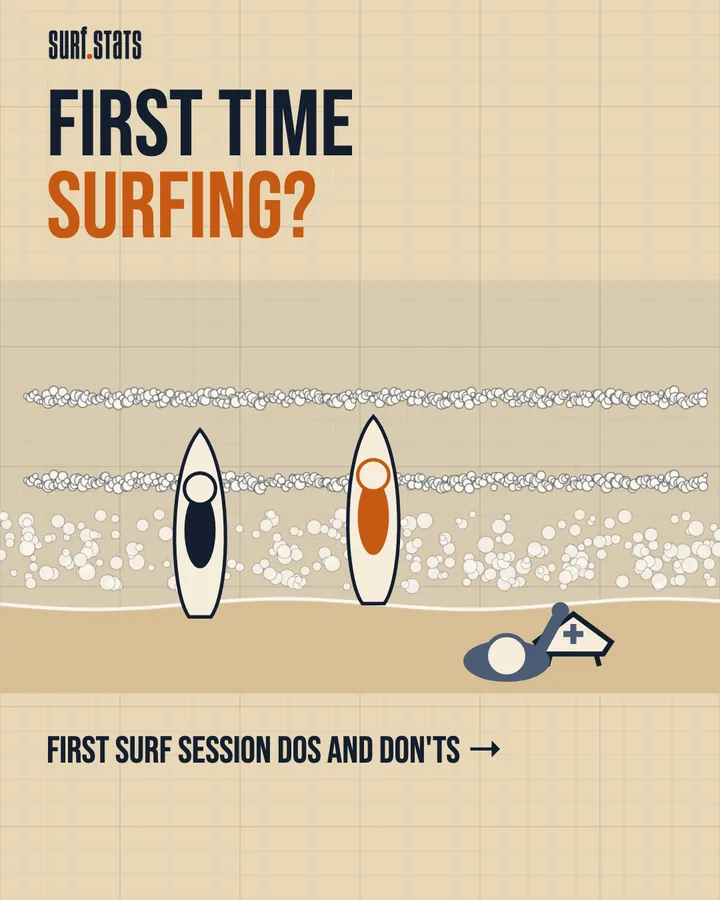
These five first time surfing tips aren't about standing up. They're about the choices you make before that: how you learn, which board you take, which beach you pick, who you go with, and how far out you go.
Each one is a don't and a do for your first session. They come from our first surf session reel, and each one rests on at least two independent sources: lifesaving bodies, lifeguards, local councils and surf media. It's what they agree on, not science. Once you're up and riding, the next step is fixing the habits in beginner surfing mistakes.
1. Thinking of grabbing a board and just going?
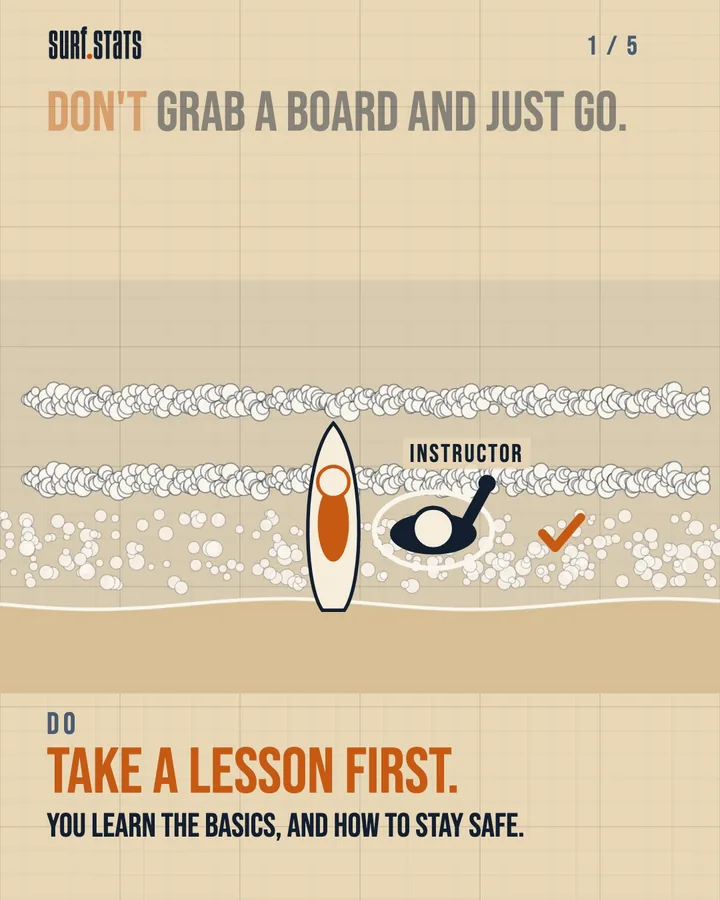
Don't grab a board and just go. Take a lesson first.
You learn the basics, and how to stay safe. The RNLI, the UK's lifeboat charity, tells anyone new to a watersport to get advice from a recognised school first. The City of Gold Coast in Australia encourages beginners to take lessons with a licensed surf school. Carve, a UK surf magazine, says beginners should spend their first days at a surf school.
Carve gives both reasons in one place: a qualified instructor teaches you the right technique, which spares you a lot of frustration, and it's vital to learn about safety in the water.
2. Starting on a shortboard?
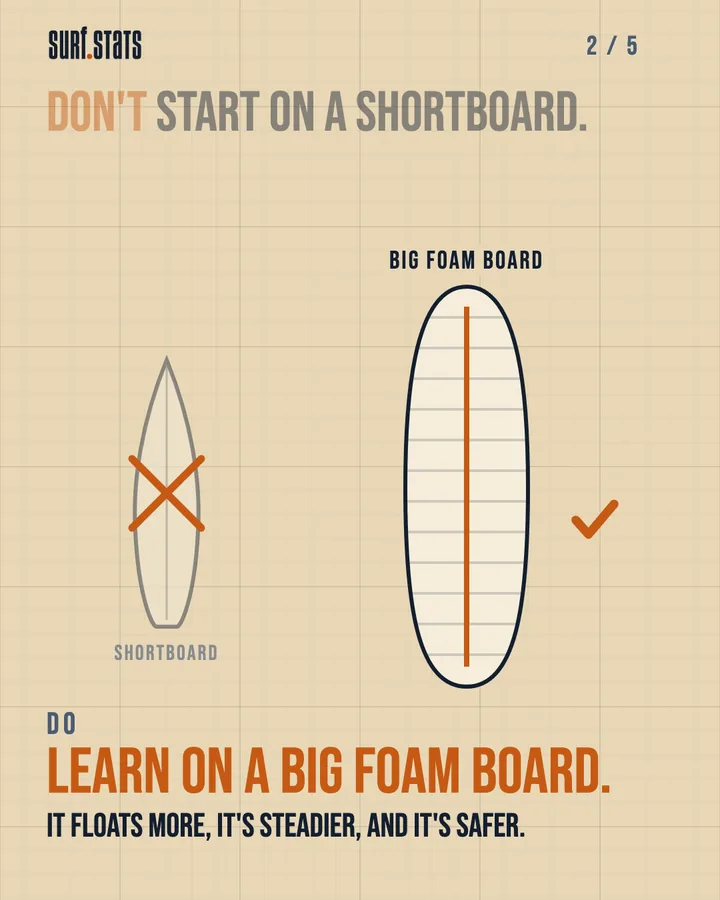
Don't start on a shortboard. Learn on a big foam board.
It floats more, it's steadier, and it's safer. That's the City of Gold Coast's reason for soft-top boards: buoyancy, stability and safety. Surfline says a modern shortboard is close to impossible to learn on, and The Inertia says it will take you far longer to learn on one.
What the big foam board gives you:
- Float. The RNLI says a thick, wide foam board is easier to float on, paddle and catch waves with.
- Stability. Surfer Today and Surfline both point beginners to a big, wide, steady board.
- Softer knocks. Surfline says soft tops are designed to cut the risk of injury when you fall.
The Inertia says that if you've had a surf lesson, you most likely rode a foam board. For when you're ready for your own board, see how to choose a surfboard.
3. Heading where the good surfers are?
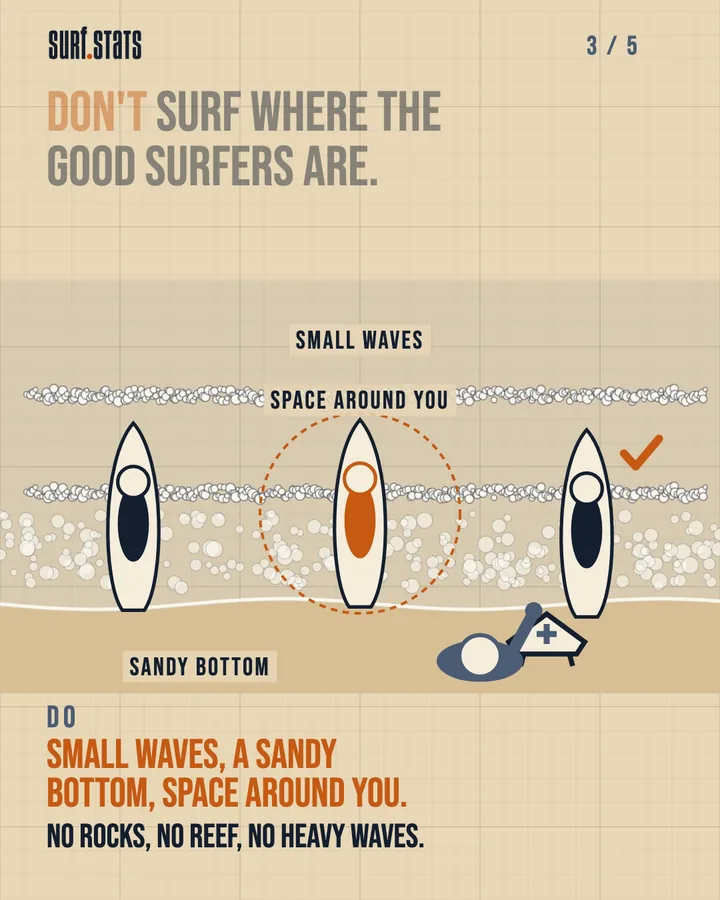
Don't surf where the good surfers are. Pick small waves, a sandy bottom, and space around you.
No rocks, no reef, no heavy waves. Each part has its own reason:
- Small waves. The RNLI says spilling waves suit beginner board riders, and that dumping waves and heavy shore break are dangerous for beginners. The City of Gold Coast and Surfer Today also send beginners to small waves.
- A sandy bottom. Surfline tells beginners to avoid reef breaks and says beach breaks, over sand, have fewer hazards like coral or rocks. Surf Life Saving New Zealand tells surfers to check for rocks before they paddle out.
- Space around you. Surfer Today says to steer clear of intermediate and advanced surfers. The Inertia says to stay near less experienced surfers, since the best waves draw the biggest crowds.
Space around you doesn't mean an empty beach. Carve says the lifeguard-supervised areas for beginner surfers can get crowded, and the RNLI says popular surf spots can be packed. What you want is room around you, away from the experienced surfers.
4. Going out on your own?
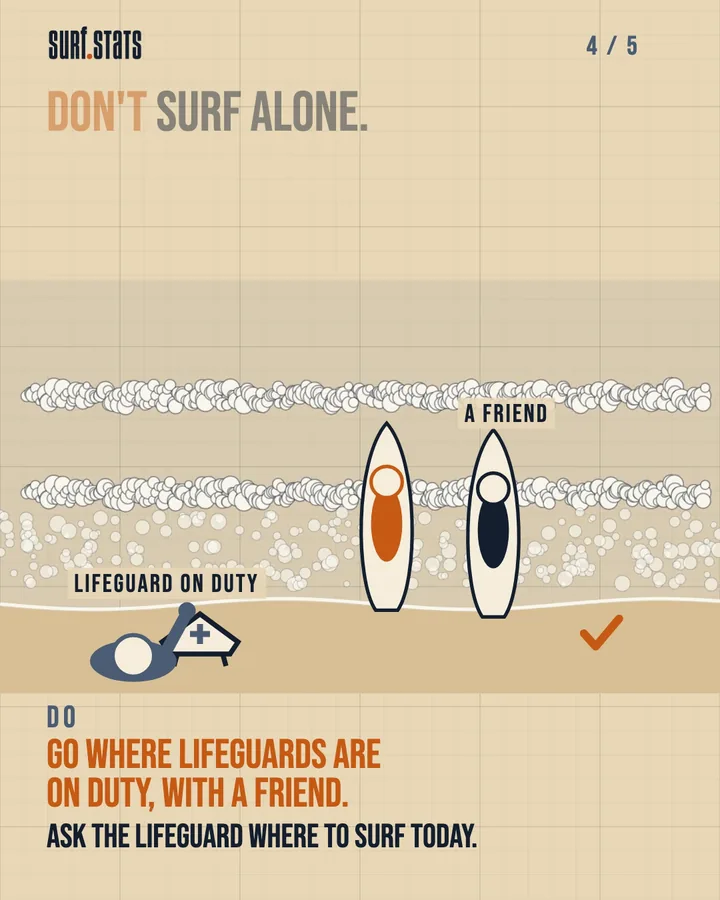
Don't surf alone. Go where lifeguards are on duty, and bring a friend.
Carve, Surfer Today and the RNLI all say to surf with a mate. Water Safety New Zealand says the same for every water activity: don't do it alone.
On lifeguards, the RNLI says that once you've had some training and want to practise, you should pick a beach with lifeguards every time. Carve points beginners to the areas lifeguards supervise for surfers. Check they're on duty: in the UK, for example, the MCA says RNLI lifeguards patrol in the summer months. An empty tower is not a lifeguard.
Ask the lifeguard where to surf today. The Del Mar Lifeguards in California say to check with them when you're unsure where to surf, and the RNLI says to follow its lifeguards' advice.
5. Paddling out past the breaking waves?
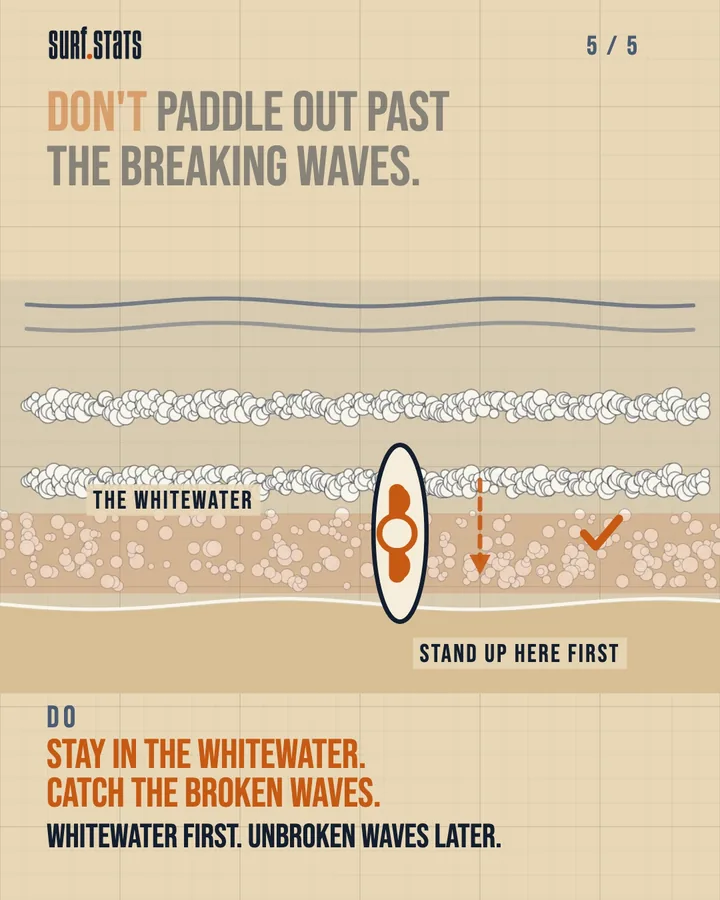
Don't paddle out past the breaking waves. Stay in the whitewater and catch the broken waves.
Stand up in the whitewater first. The unbroken waves come later. The RNLI tells beginners to start in the whitewater before moving on to deeper water and unbroken waves. Surfline calls whitewater a beginner's friend early on, and Surfer Today puts whitewater waves first and small unbroken waves after.
The City of Gold Coast says beginners can catch small unbroken waves too. For a first session, the RNLI's order holds: whitewater first.
Big board. Small waves. Stay in the whitewater.
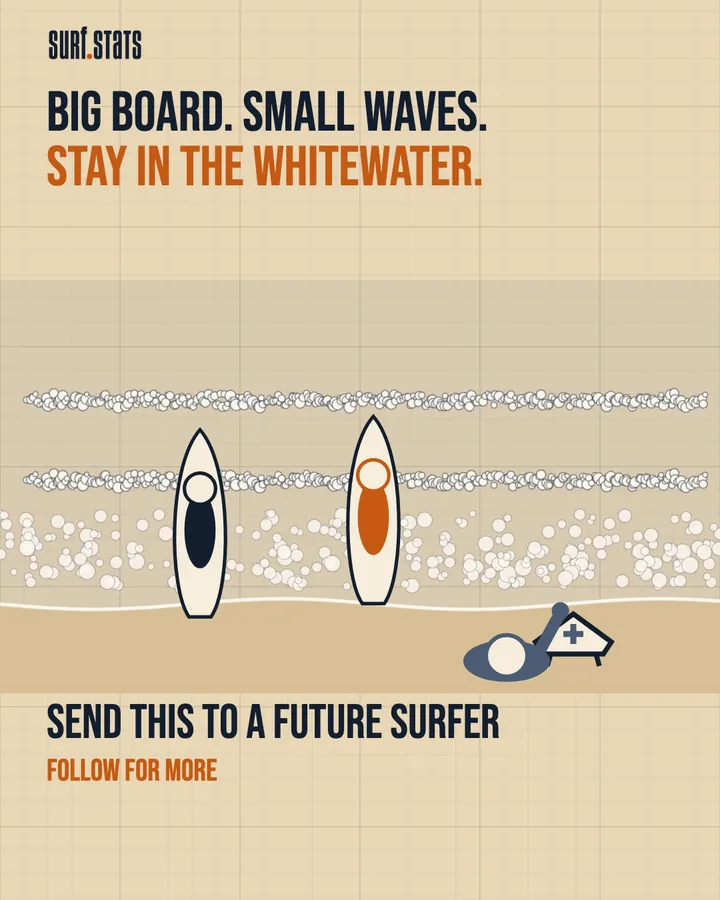
That's the whole first session in one line. Send this to a friend who wants to start.
Quick checklist
- Can you swim? If not, learn that first.
- Take a lesson first.
- Big foam board, not a shortboard.
- Small waves, a sandy bottom, space around you. No rocks, no reef, no heavy waves.
- Lifeguards on duty, a friend with you, and ask the lifeguard where to surf today.
- Stay in the whitewater. The unbroken waves come later.