Sun protection for surfers
 Fin Selector: your fins in 1 minute
Put on a water resistant sunscreen before you go outside, clouds or not, and reapply every two hours and each time you come in. Cover your nose, ears and neck, use an SPF balm on your lips, and on the sand wear UV sunglasses and a wide-brim hat.
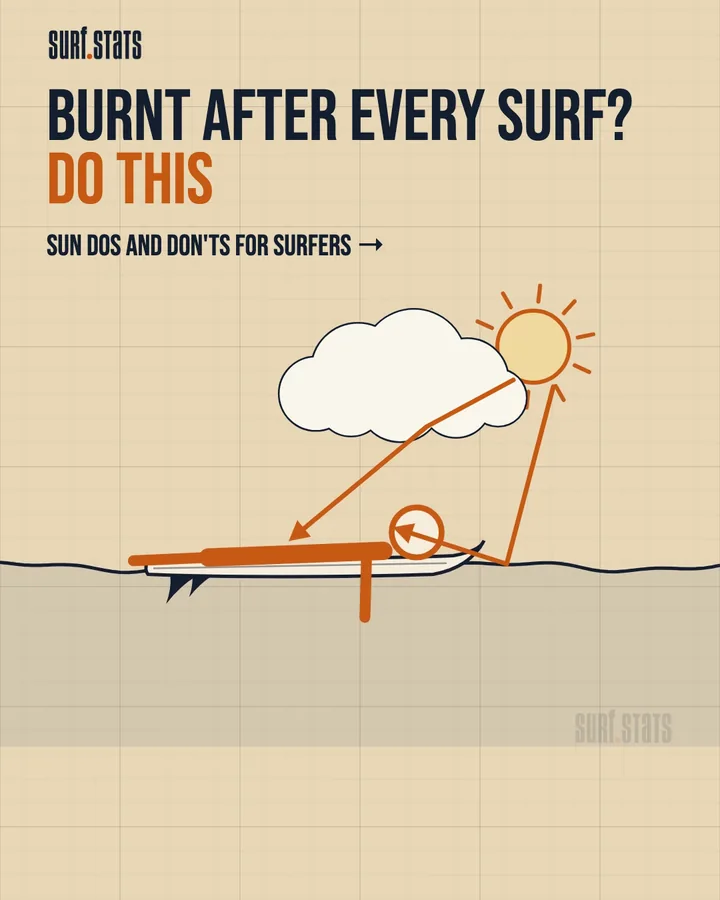
Burnt after every surf? A session means hours in the sun, with UV coming down from the sky and back up off the water, and sunscreen that washes off while you're in it. Sun protection for surfers comes down to a few habits: when you put sunscreen on, how often you put it back on, the spots you miss, and your eyes.
Below are five dos and don'ts from our sun and surf reel. Each of the five tips is one that at least two independent health sources agree on: health agencies, cancer charities, dermatology and eye-doctor bodies, and university researchers. Where a detail comes from a single source, we say which one.
1. Skipping sunscreen on a cloudy day?
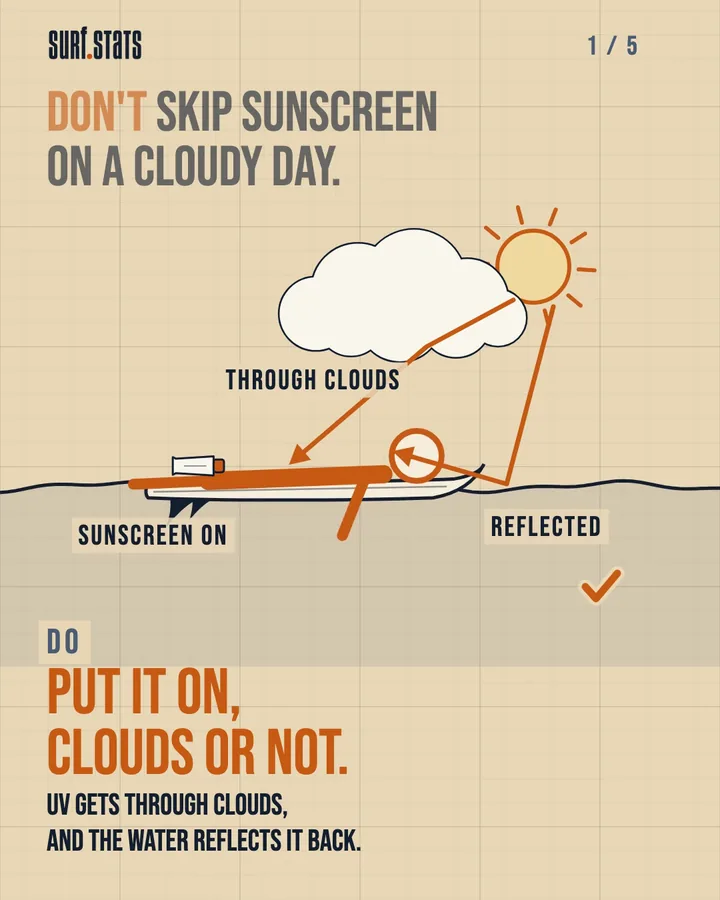
Try this: put it on, clouds or not.
UV gets through clouds. Health agencies and dermatologists agree on it: a grey sky doesn't mean you can skip sunscreen.
Out in the water it comes at you from two sides. The water reflects UV back at you, which adds to what comes down from the sky. Sand does the same on the beach.
And you may not notice you're burning. Cool water can hide that you're burning while you're out there.
2. Putting it on at the water's edge?
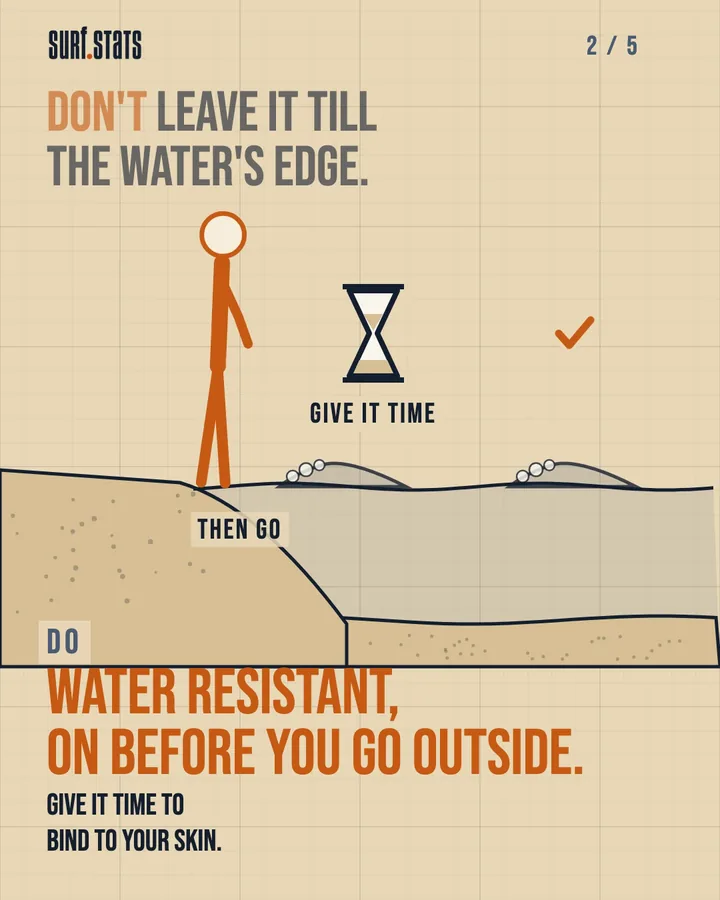
Try this: use a water resistant sunscreen, and put it on before you go outside.
Give it time to bind to your skin. Health bodies say to put sunscreen on before you go out in the sun, so it has that time. They give different numbers of minutes, so the reel gives none: just put it on before you head out, not as the last thing at the shoreline.
Pick one labelled water resistant. Health bodies recommend it whenever you'll be in the water or sweating, and a surf puts you in the water.
This don't is about timing. It's not a reason to skip sunscreen on a day you forgot: next time, put it on earlier.
3. One coat for the whole day?
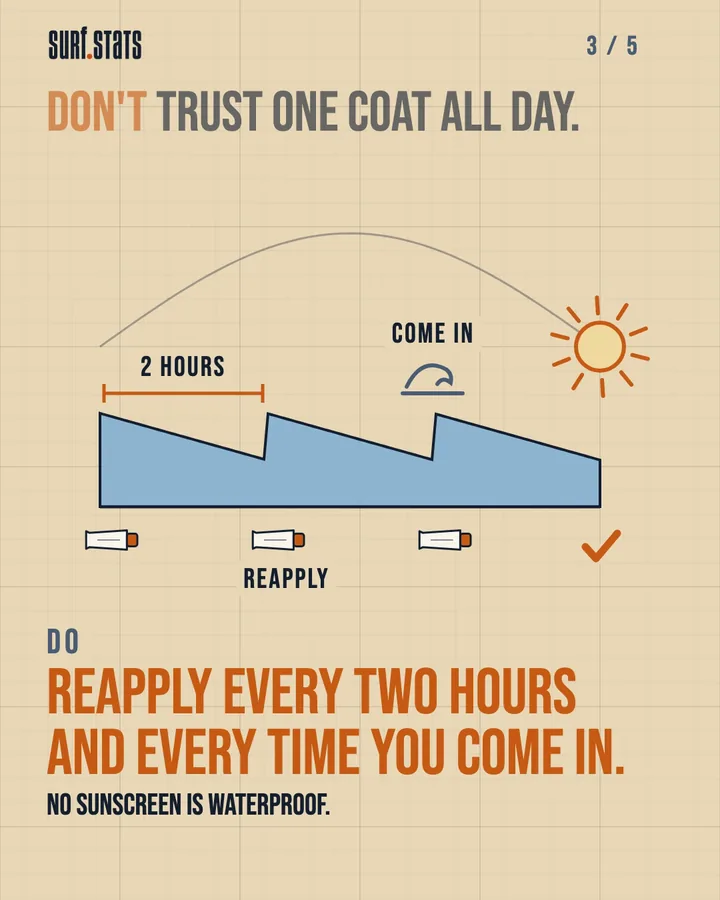
Try this: reapply every two hours, and every time you come in.
No sunscreen is waterproof. They all wash off in the end, and "water resistant" doesn't change that. Labels in different countries promise water resistance for different lengths of time, and health bodies still say to put more on straight after you've been in the water.
So the rule has two parts:
- Every two hours. Every health body in our sources that gives a number for this says two hours.
- Each time you come in. After a surf, and after you towel off, put on a fresh coat before you paddle back out.
4. Burnt nose, ears or neck?
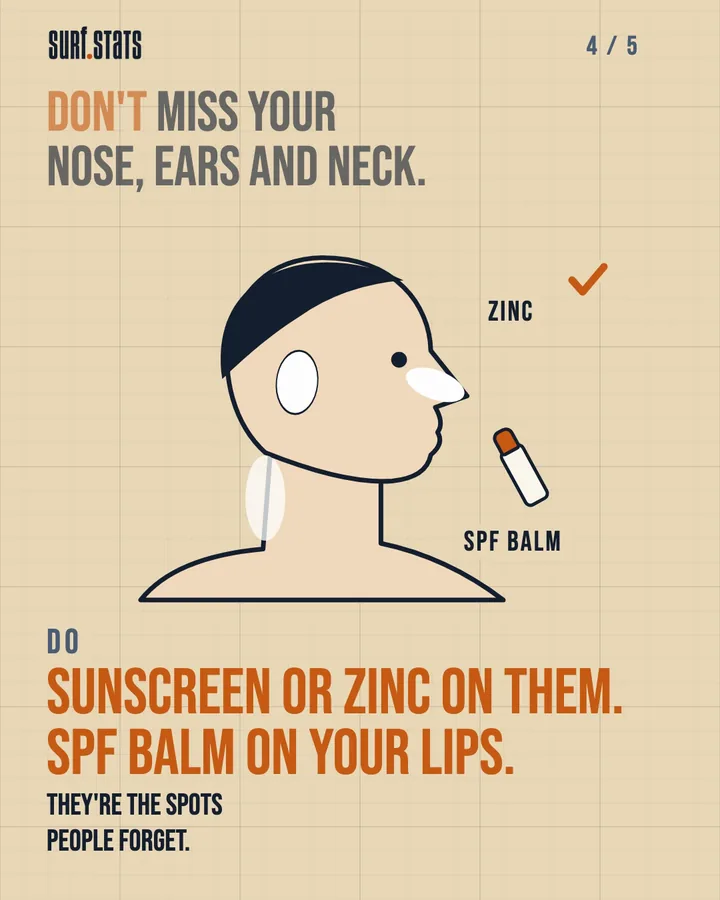
Try this: sunscreen or zinc on them, and an SPF balm on your lips.
Your nose, ears, the back of your neck and your lips are the spots people forget. Health and dermatology bodies list them by name.
- Nose, ears and neck: sunscreen, or a zinc sunscreen. If you use a zinc stick, pick one with SPF on the label.
- Lips: a lip balm with SPF.
When you lie on the board to paddle, the backs of your legs face the sun too. On the sand, so do the tops of your feet.
5. Squinting into the glare?
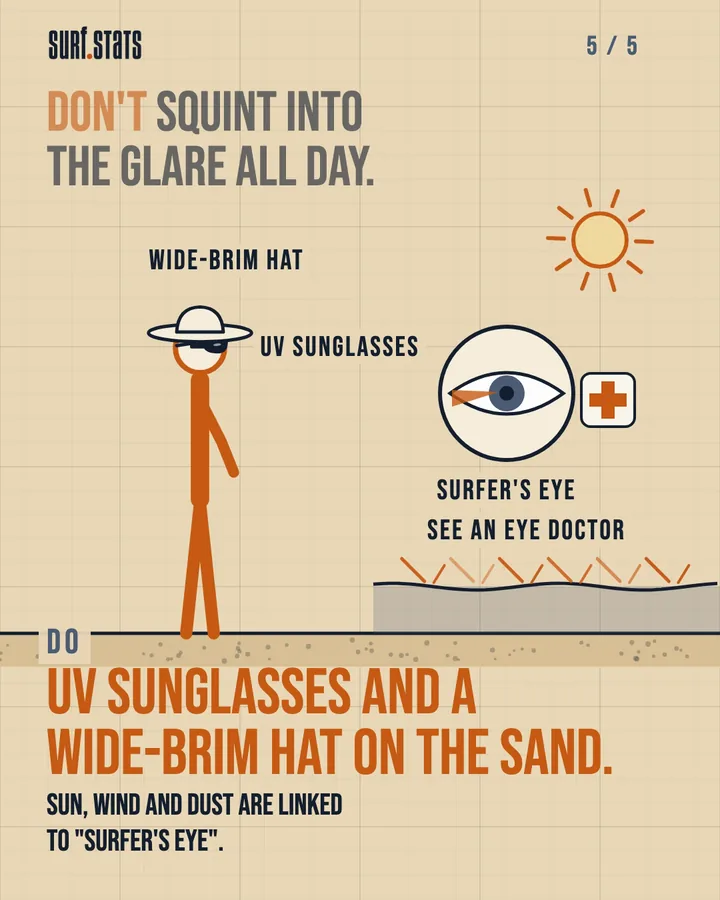
Try this: UV sunglasses and a wide-brim hat on the sand.
Your eyes take sun too, and sunlight reflected off water and sand is hard on them. Don't just squint through it: protect them.
Sun, wind and dust are linked to pterygium, known as "surfer's eye". It's a growth on the eye that can spread over part of the cornea. Doctors aren't sure of the exact cause, which is why it's "linked to", not "caused by".
- UV sunglasses, not just dark ones. The FDA warns that a dark tint doesn't mean UV protection.
- A wide-brim hat, not a cap. A cap won't cover your ears and neck.
A growth on your eye? See an eye doctor. An ophthalmologist can tell you what it is.
Sunscreen before. Reapply when you come in.
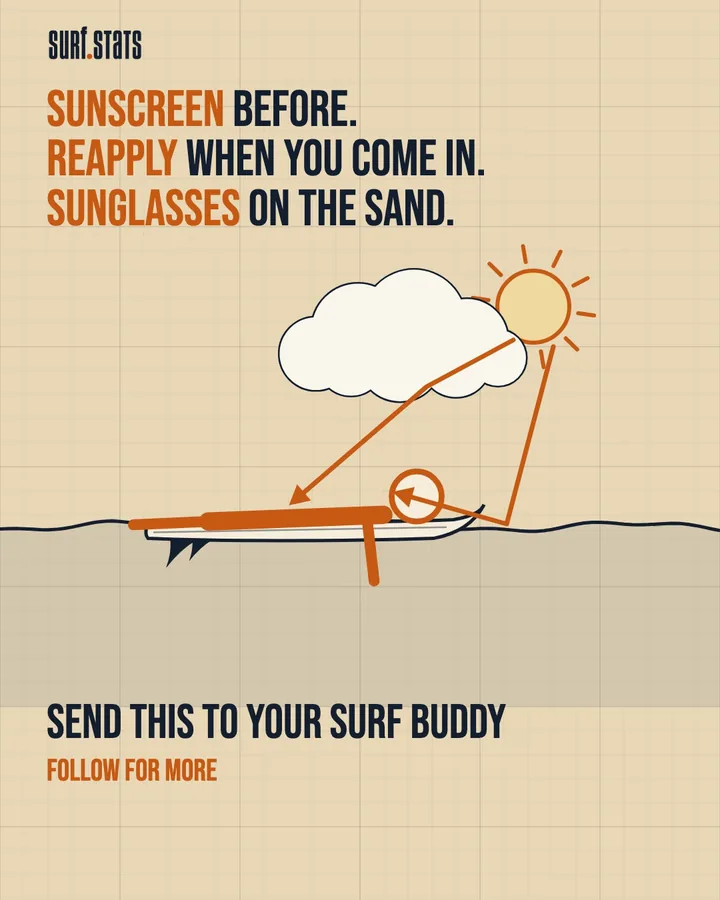
That's the reel in three lines: sunscreen before, reapply when you come in, sunglasses on the sand. Two more habits from the same health bodies:
- Cover up first, then put sunscreen on the skin you can't cover. If you're choosing what to wear in warm water, our guide on what wetsuit thickness you need covers it.
- Surf early or late when you can. UV is strongest around the middle of the day.
Know someone who comes in burnt every time? Send this to your surf buddy. And while you're looking after yourself, read up on surfer's ear, what years of cold water and wind can do to your ears.
Quick checklist
- Sunscreen on, clouds or not.
- Water resistant, on before you go outside.
- Reapply every two hours and each time you come in.
- Nose, ears, back of the neck: sunscreen or zinc. SPF balm on your lips.
- On the sand: UV sunglasses and a wide-brim hat, not a cap.
- A growth on your eye: see an eye doctor.