What is surfer's ear?
 Fin Selector: your fins in 1 minute
Surfer's ear is bone that grows slowly in your ear canal after years of cold water and wind, often with no signs. Earplugs made for water sports are the main way to prevent it, and once the bone is there, it won't go away on its own.
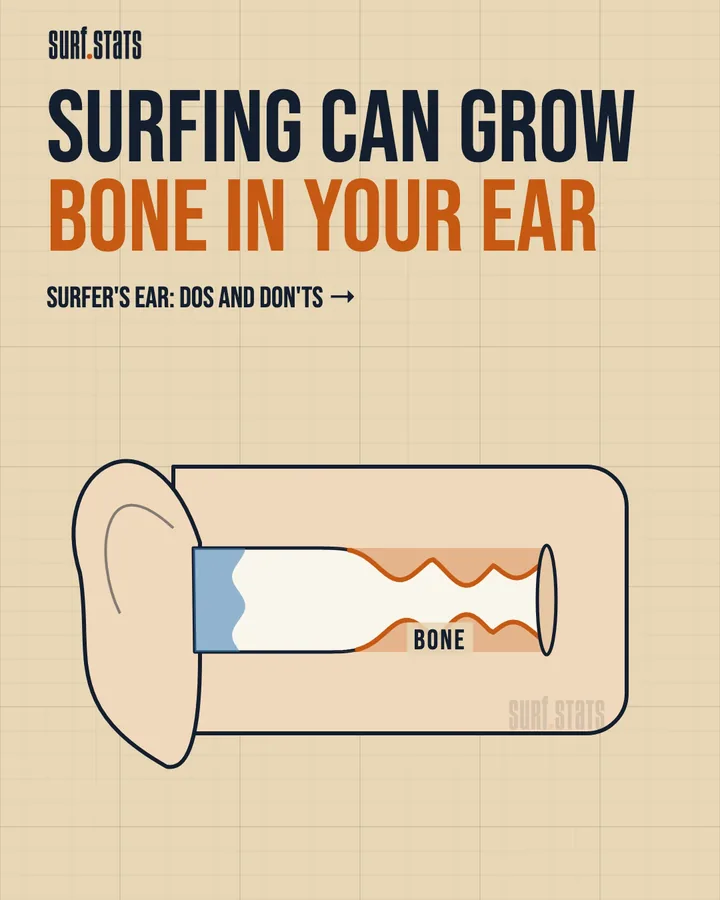
Surfer's ear is bone growing where it shouldn't: inside your ear canal. Doctors call it exostosis. Years of cold water and wind can make small, noncancerous lumps of bone grow from the walls of the canal and slowly make it narrower. It usually happens without you noticing. That's the real problem: by the time you feel something, the bone is already there, and it won't go away on its own.
The good news is that surfer's ear can be prevented. Below are five dos and don'ts from our surfer's ear reel. Every line is backed by at least two independent credible sources: national health services, hospitals, ear, nose and throat (ENT) doctors and medical journals.
1. Surfing cold water with bare ears?
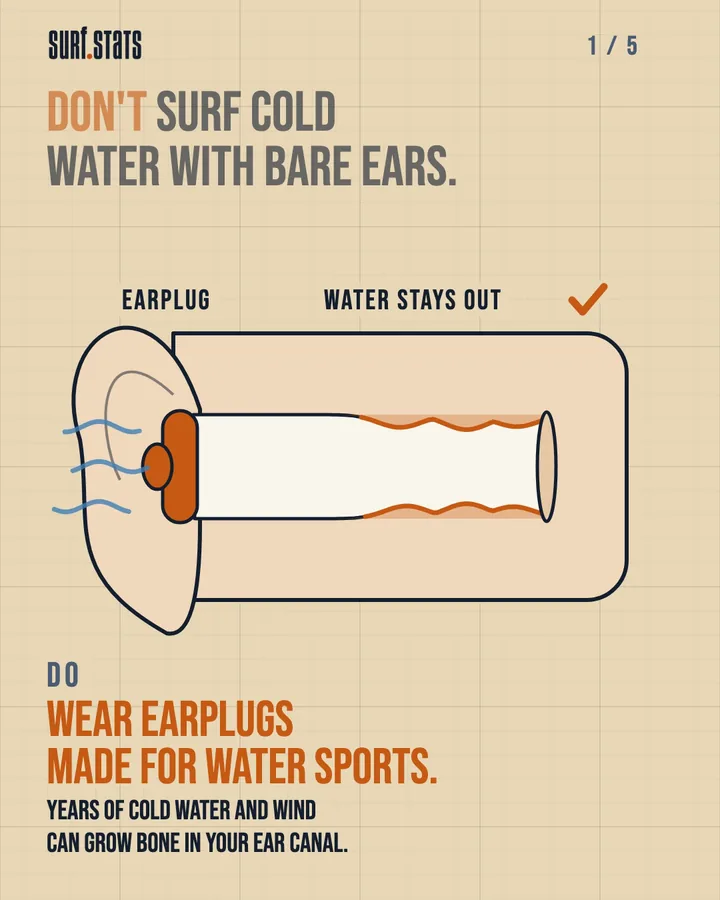
Try this: wear earplugs made for water sports.
Surfer's ear comes from spending a lot of time in cold water and wind. Studies link more time and more years of surfing to a higher risk, which is where the name comes from. Doctors don't fully know why the bone forms, so it's "can", not "will". But cold water is the known risk.
It grows slowly, often with no signs, so don't wait for a symptom before you protect your ears. Health services and ENT doctors agree that earplugs are the main way to prevent surfer's ear: they keep the cold water out of the canal. Pick plugs made for water sports.
2. Cold and windy out there?
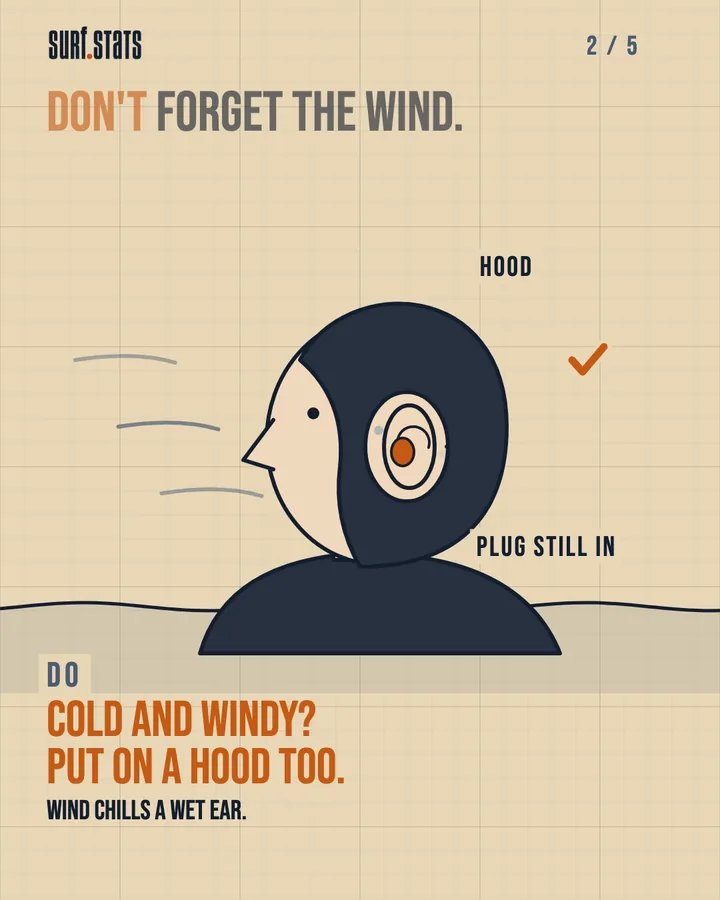
Try this: cold and windy? Put on a hood too.
Don't forget the wind. Health services name wind next to cold water as a cause of surfer's ear. Wind chills a wet ear, and researchers think that cooling of the wet ear canal plays a part.
On cold, windy days, a neoprene hood helps with the wind. But water can still get in under a hood, so the hood goes on top of your earplugs, not instead of them. Keep the plugs in.
3. Water that stays stuck in your ear?
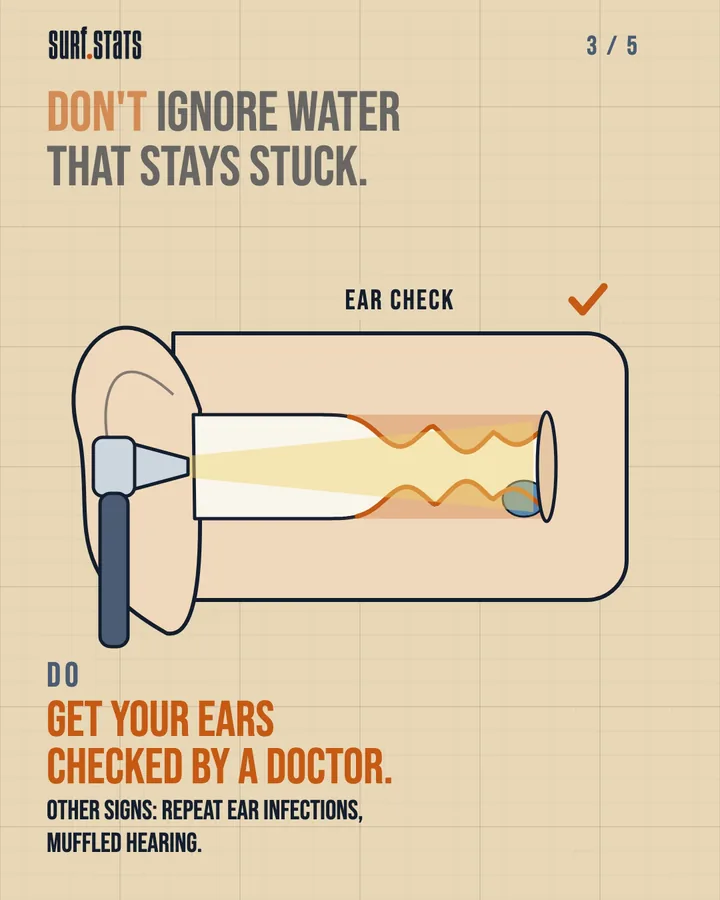
Try this: get your ears checked by a doctor.
As the bone grows, the canal gets narrower and water has a harder time draining out. Water that keeps getting trapped is one of the signs. Other signs:
- repeat ear infections
- muffled hearing
These signs alone don't tell you it's surfer's ear. A doctor can check with an ear exam. So if you notice any of them, don't ignore it: get your ears checked.
4. Reaching for a cotton swab?
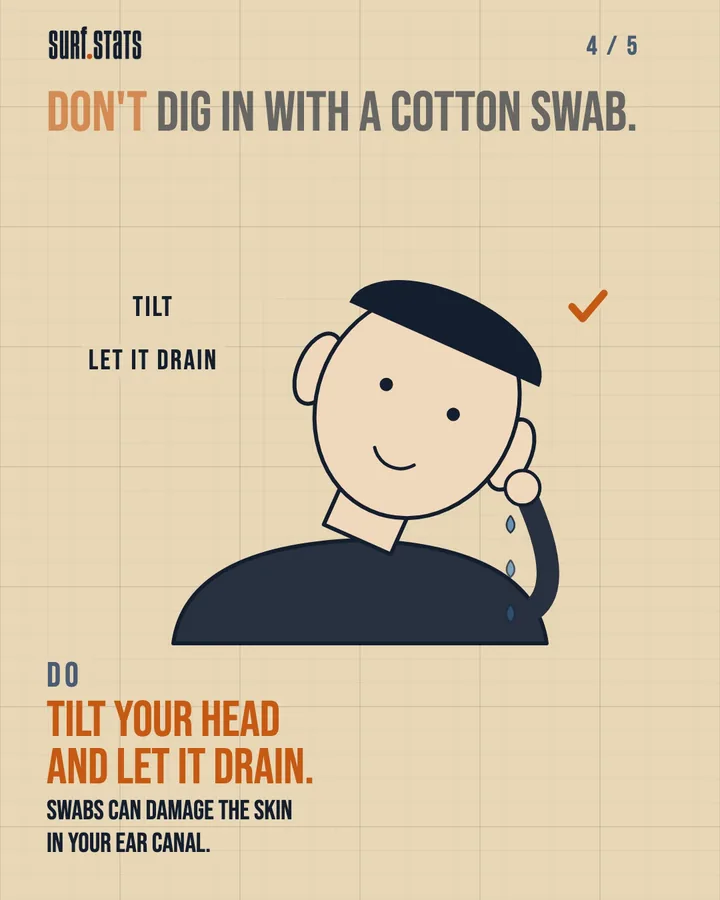
Try this: after a surf, tilt your head, tug your ear, and let it drain.
Don't dig in with a cotton swab. Swabs can damage the skin in your ear canal, and health bodies say not to put swabs or other objects in your ears.
Instead, tilt your head so one ear faces down, tug your ear, and let the water run out. Then do the other side.
To be clear, draining your ears is care for the water that gets trapped. It doesn't stop the bone from growing; that's the earplugs' job (point 1). And if the water won't drain, go back to point 3: get your ears checked.
5. Waiting for it to go away?
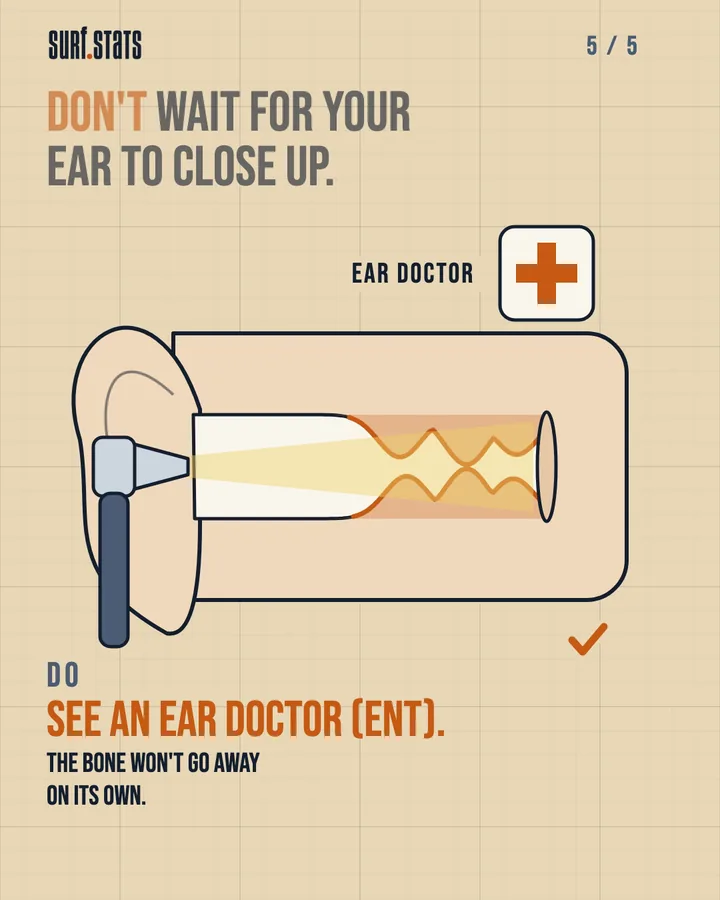
Try this: see an ear, nose and throat doctor (ENT).
Don't wait for your ear to close up. The bone won't go away on its own, and with more cold water and wind it can keep getting worse. If the lumps get very big, the ear canal can close over completely.
An ENT is the specialist for your ears. Earplugs can help keep it from getting worse. When it's bad, surgery can open the canal back up. Which option is right for you is a call for the doctor who examines your ears.
Plugs in. Ears checked.
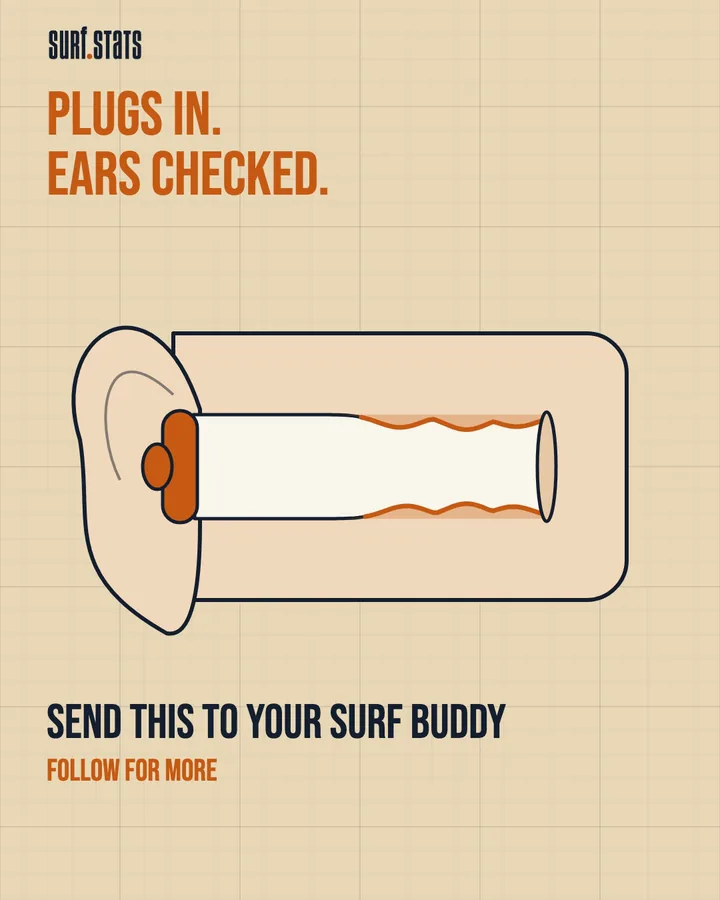
That's the whole reel in four words. Wear earplugs made for water sports when you surf cold water, and get your ears checked regularly, even before anything feels wrong.
Know someone who surfs cold water with bare ears? Send this to your surf buddy. And if you're passing on safety tips, our guide on how to spot and escape a rip current is another one worth sharing.
Quick checklist
- Cold water: earplugs made for water sports.
- Cold and windy: a hood too, with the plugs still in.
- Water that stays stuck, repeat ear infections, muffled hearing: see a doctor.
- No cotton swabs. After a surf, tilt your head and let it drain.
- The bone won't go away on its own. Don't wait: see an ENT.