What wetsuit thickness do I need?
 Fin Selector: your fins in 1 minute
It depends on your water temperature. From about 24°C (75°F) and warmer down to below 12°C (54°F), the suit goes from boardshorts and a rash vest to a 2 mm shorty, a 3/2, a 4/3 and a 5/4 with boots and gloves, and it should fit snug.
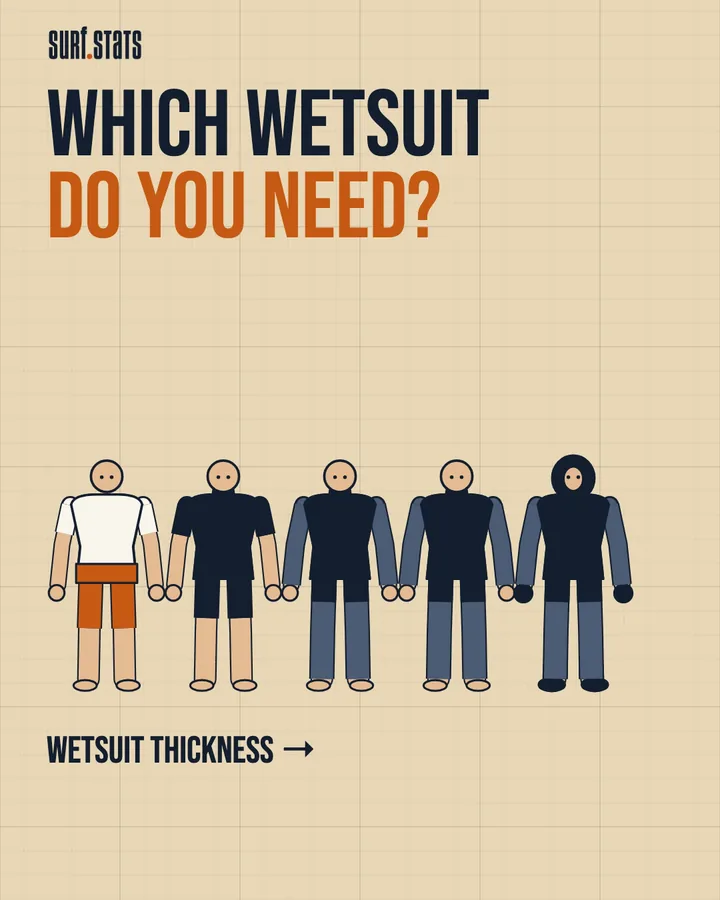
What wetsuit thickness do you need? It depends on your water temperature. Warmer water needs less neoprene, colder water needs more, and the rest is detail: what the two numbers on the suit mean, when to add boots, gloves and a hood, and how the suit should fit.
Below are six questions, five water temperatures and one fit problem, with the suit for each. They come from our which wetsuit do you need reel, and every band is backed by at least two independent sources: wetsuit makers' own charts, checked against surf media charts from Surfer Today, SURFER and Surfline.
1. Water about 24°C (75°F) or warmer?
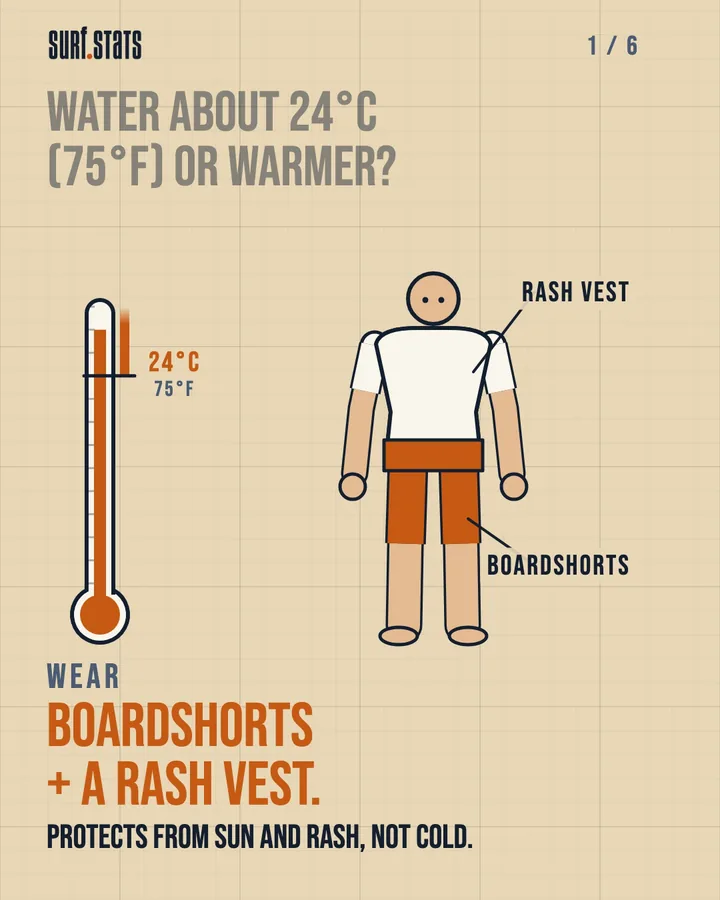
Try this: boardshorts, plus a rash vest.
In water this warm, charts like Rip Curl's and Quiksilver's list no wetsuit at all; a rash vest is the option. The rash vest is not there for warmth. It protects you from sun and from rash, not from cold.
2. About 18 to 24°C (64 to 75°F)?
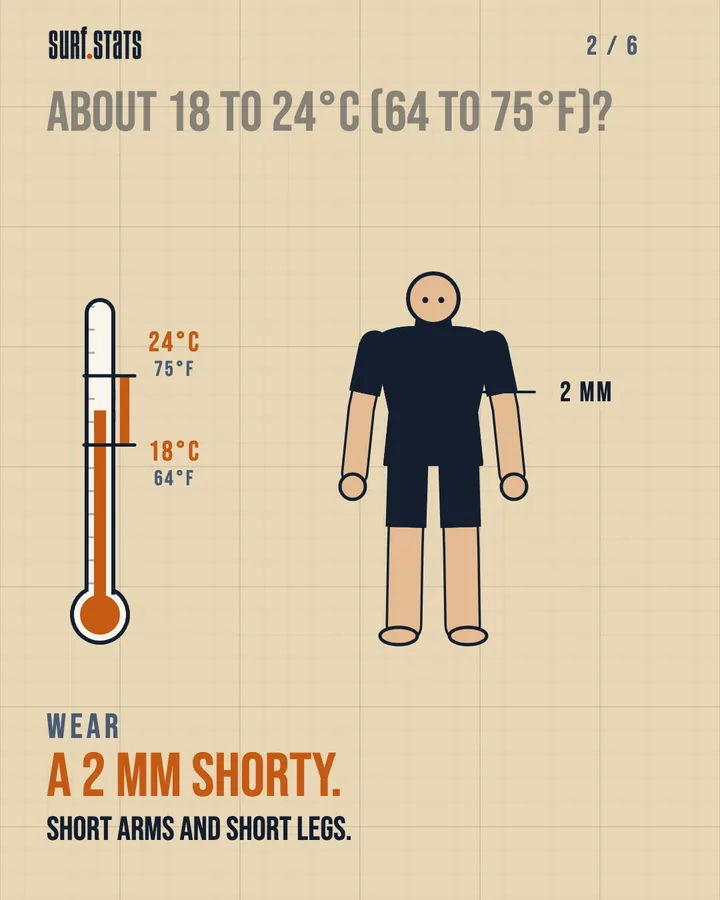
Try this: a 2 mm shorty. Short arms and short legs.
A shorty is a 2 mm suit that covers your torso, with short sleeves and legs cut above the knee. Some brands call it a spring suit, but that name covers different cuts (one maker uses it for short sleeves with long legs), so check that you're looking at short arms and short legs.
3. About 15 to 18°C (59 to 64°F)?
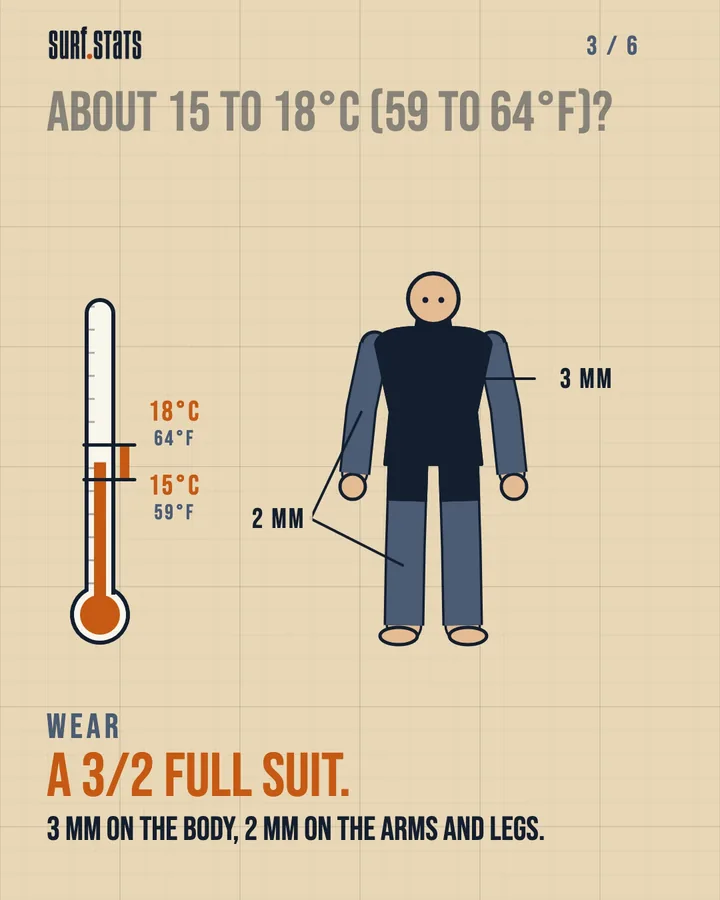
Try this: a 3/2 full suit. 3 mm on the body, 2 mm on the arms and legs.
This is where the two numbers on a wetsuit start to matter, so here is what they mean:
- The first number is the thickness of the torso in millimeters: chest, back and core.
- The second number is the thickness of the arms and legs.
A 3/2 has 3 mm on the body and 2 mm on the limbs. It covers you to the wrists and ankles, and leaves your hands, feet and head bare.
4. About 12 to 15°C (54 to 59°F)?
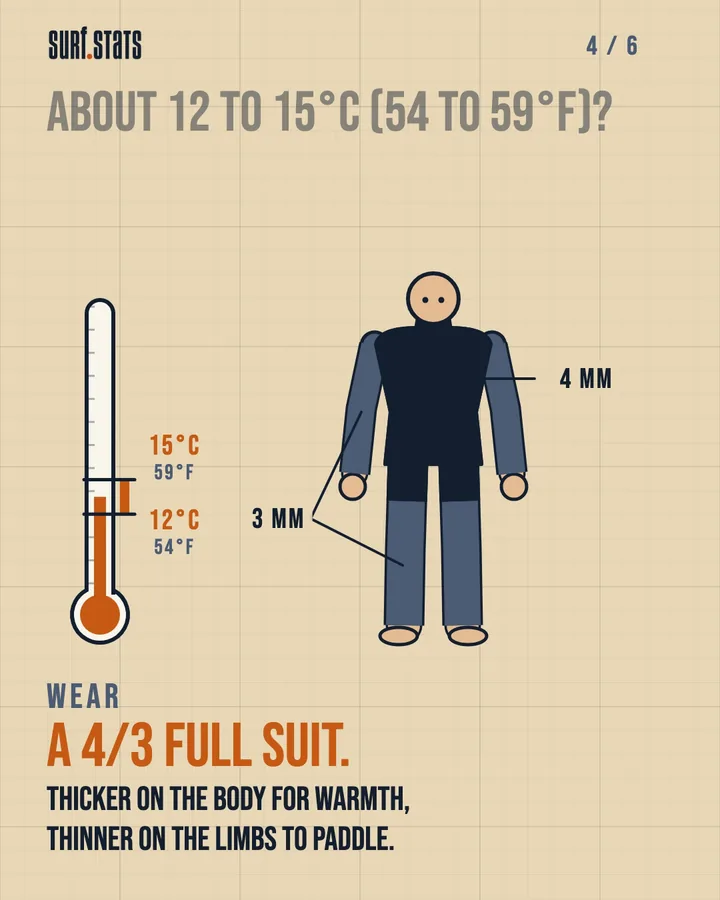
Try this: a 4/3 full suit. Thicker on the body for warmth, thinner on the limbs to paddle.
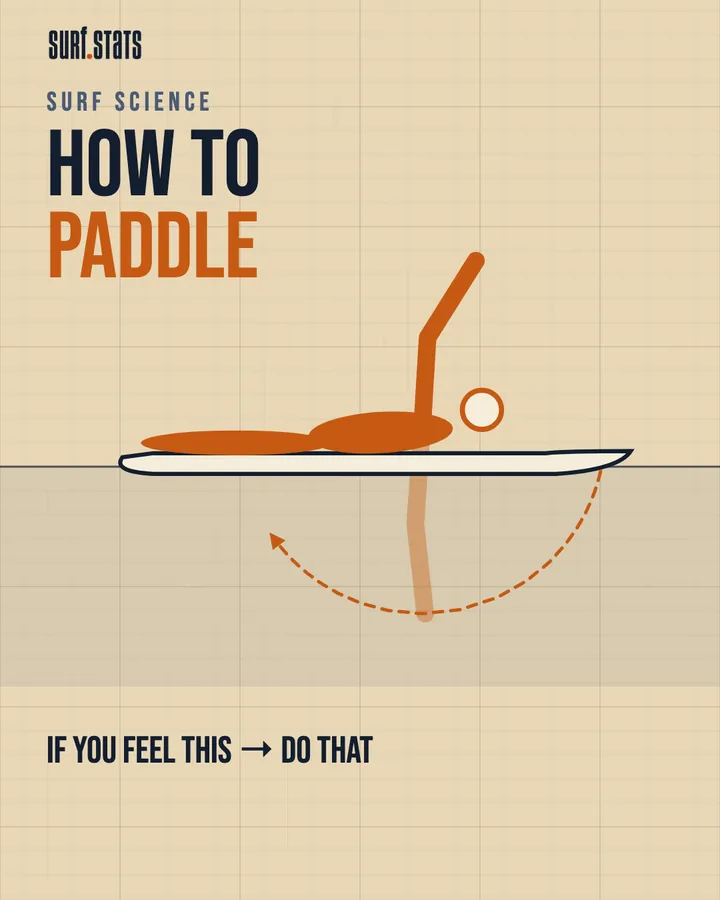
Same cut as the 3/2, one step thicker. The split is the point of the design. The torso is where warmth counts, so it gets the thicker neoprene. But thicker neoprene is less flexible, so the arms and legs stay thinner and you can still paddle (if your arms tire early, read how to paddle a surfboard).
This is the band where the charts disagree most. Some makers put the 4/3 at about 13 to 16°C, others at about 11 to 14°C. 12 to 15°C sits between them, inside or at the edge of every chart.
5. Colder than about 12°C (54°F)?
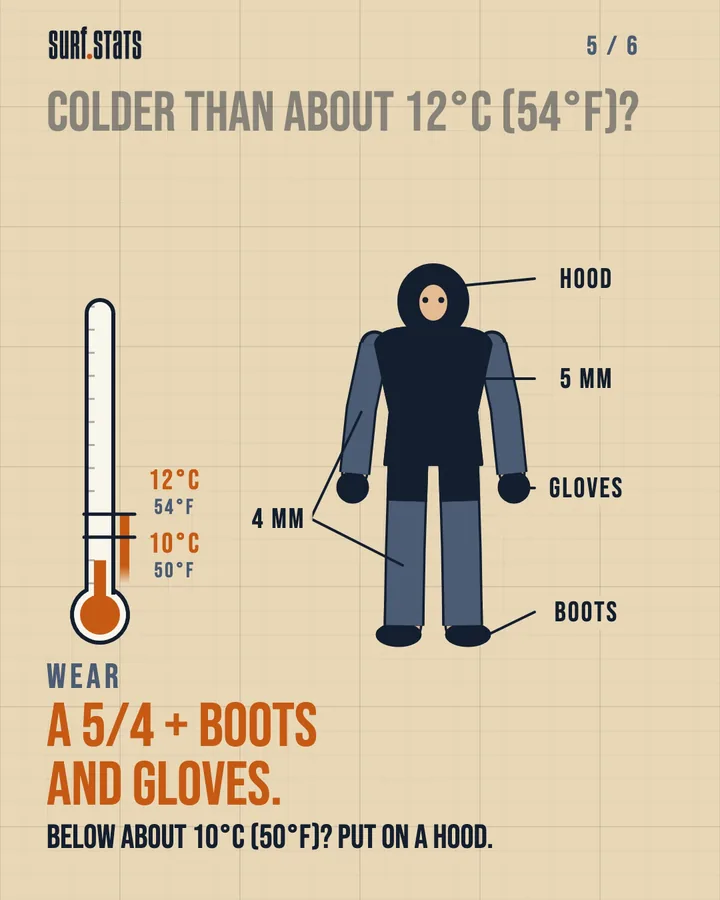
Try this: a 5/4 with boots and gloves. Below about 10°C (50°F), put on a hood.
Below about 12°C the charts move to a 5/4 full suit: 5 mm on the body, 4 mm on the arms and legs. By this point they add boots and gloves too.
Below about 10°C, add a hood. That is the latest any of the charts puts it; some add the hood a little earlier.
In near-freezing water, the charts go thicker again: a 6/5 or more, with a hood.
6. Cold water flushing in?
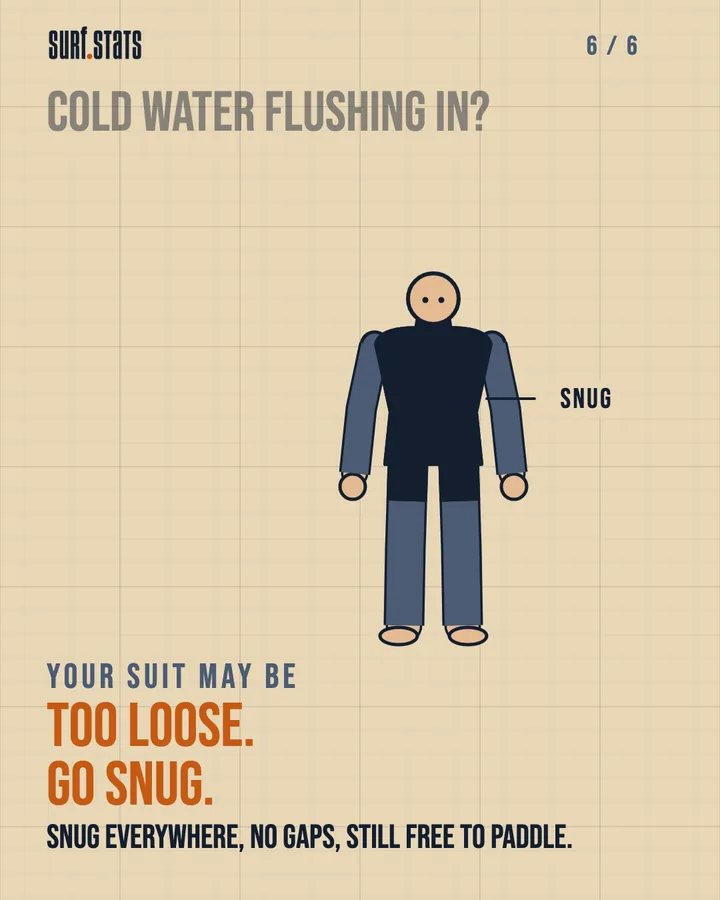
Try this: your suit may be too loose. Go snug.
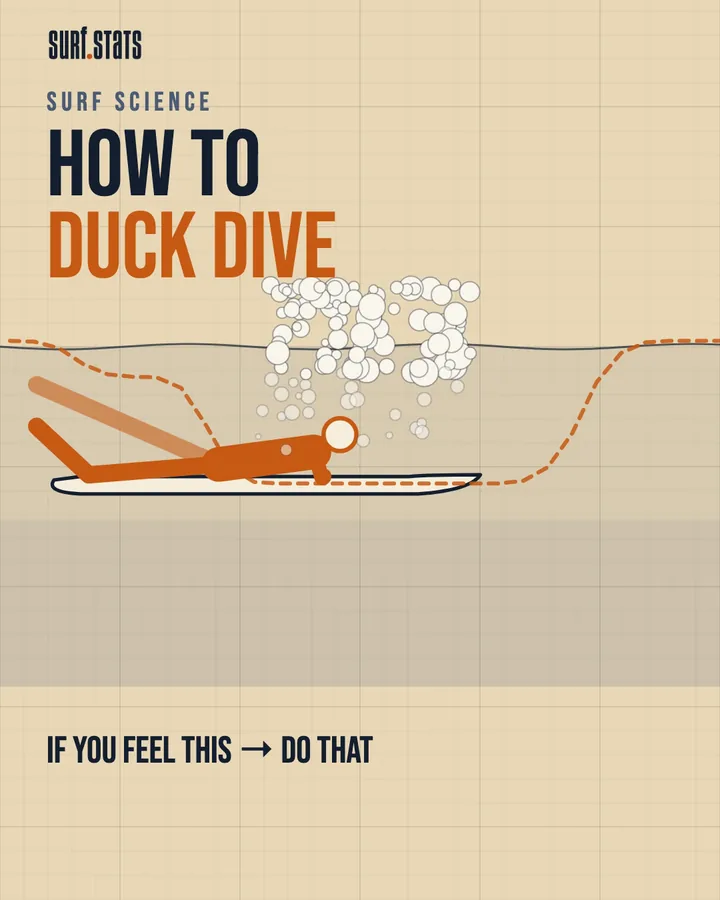
The right thickness does little if water keeps getting in. A loose suit lets cold water flush in and out, every time you duck dive. A wetsuit should sit snug everywhere, with no gaps at the lower back, chest or crotch.
Snug is not the same as too tight. A suit that's too tight makes it hard to paddle and to bend your arms and legs. You want it close everywhere and still free to paddle.
A loose fit is not the only way water gets in. Back zips and some seams can let water through too.
Colder water, thicker suit
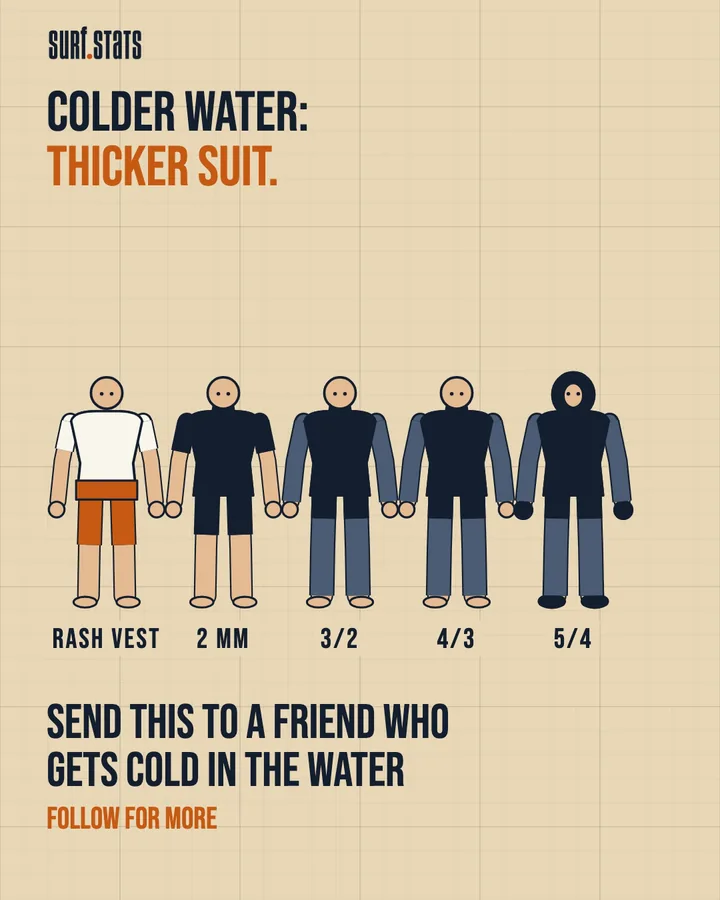
That is the whole pattern: as the water gets colder, the suit gets thicker and covers more of you. The temperature gets you to a band. Then adjust for the day. Wind, long sessions and running cold can push you a step thicker than the chart says.
Quick checklist
- About 24°C (75°F) and warmer: boardshorts, plus a rash vest for sun and rash.
- About 18 to 24°C (64 to 75°F): a 2 mm shorty.
- About 15 to 18°C (59 to 64°F): a 3/2 full suit.
- About 12 to 15°C (54 to 59°F): a 4/3 full suit.
- Below about 12°C (54°F): a 5/4 with boots and gloves. Below about 10°C (50°F), a hood.
- First number: torso. Second number: arms and legs.
- Snug everywhere, no gaps, still free to paddle.
- Windy, long session or you run cold: think one step thicker.