How to duck dive
 Fin Selector: your fins in 1 minute
Keep paddling straight at the wave and start your dive about a board-length from the whitewater. Push the nose down with straight arms, sink the tail with your knee or foot, keep the board level with your body close to it, and come up only once the wave has passed.
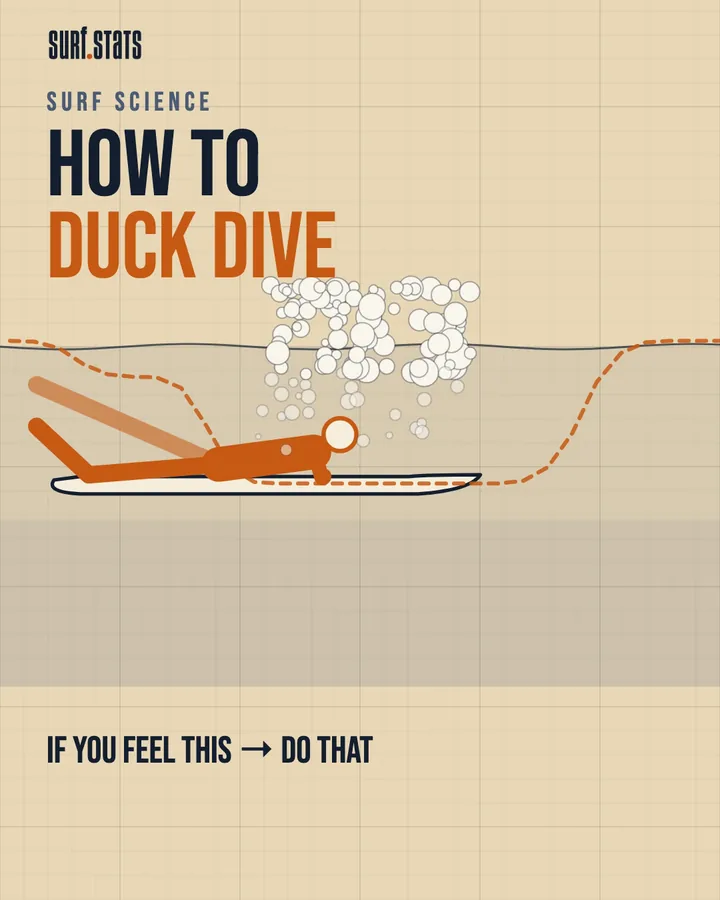
A duck dive is how you get a shortboard under a breaking wave instead of getting pushed back to the beach by it. You paddle at the wave, push the board under the whitewater, let the wave roll over you, and come up behind it ready to paddle. When it goes wrong, it usually goes wrong at one of five moments: the approach, the timing, the push, the wait under the wave, or the grip.
Below are the five common duck dive problems and the fix for each. They come from our how to duck dive reel, and every tip is backed by at least two independent coaching sources: surf magazines and surf coaches. There is no scientific study of duck dive technique, so this is what the coaching agrees on.
First: are you on a shortboard?
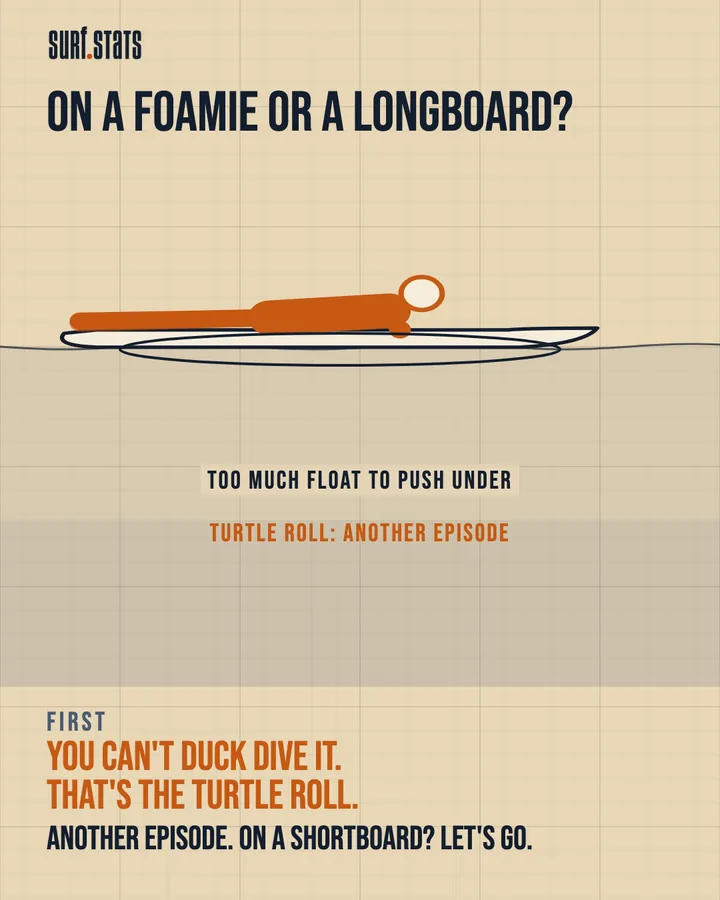
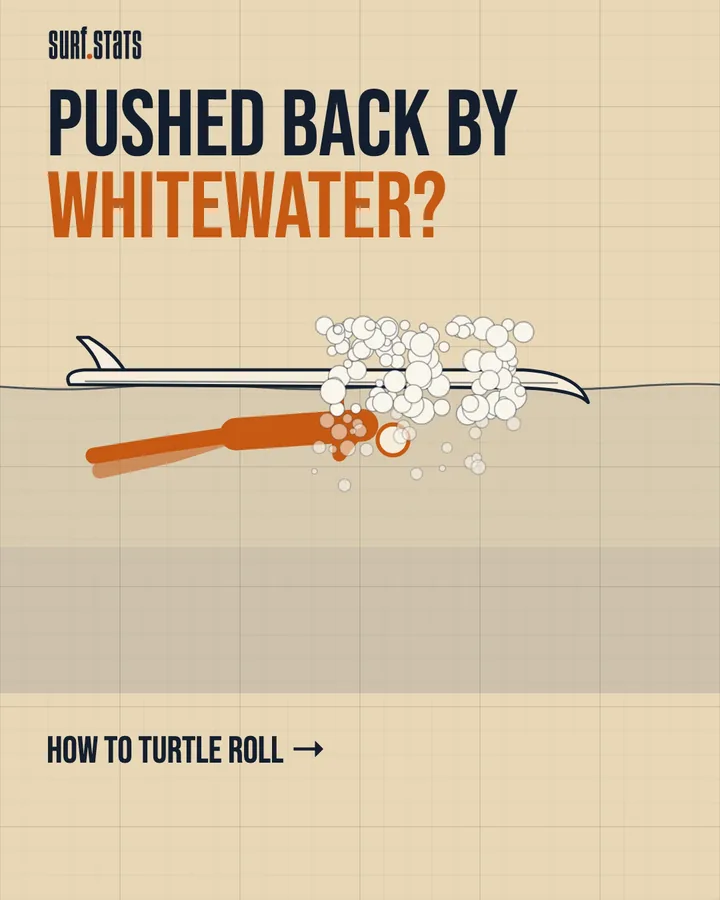
The short version: you can't duck dive a foamie or a longboard. That's the turtle roll, a different technique.
The more volume a board has, the harder it is to push under the water. Longboards, foam boards and bigger funboards float too much to duck dive, and the coaching sends you to the turtle roll instead. Everything below is for a shortboard or another lower-volume board.
1. Stop paddling when you see the wave coming?
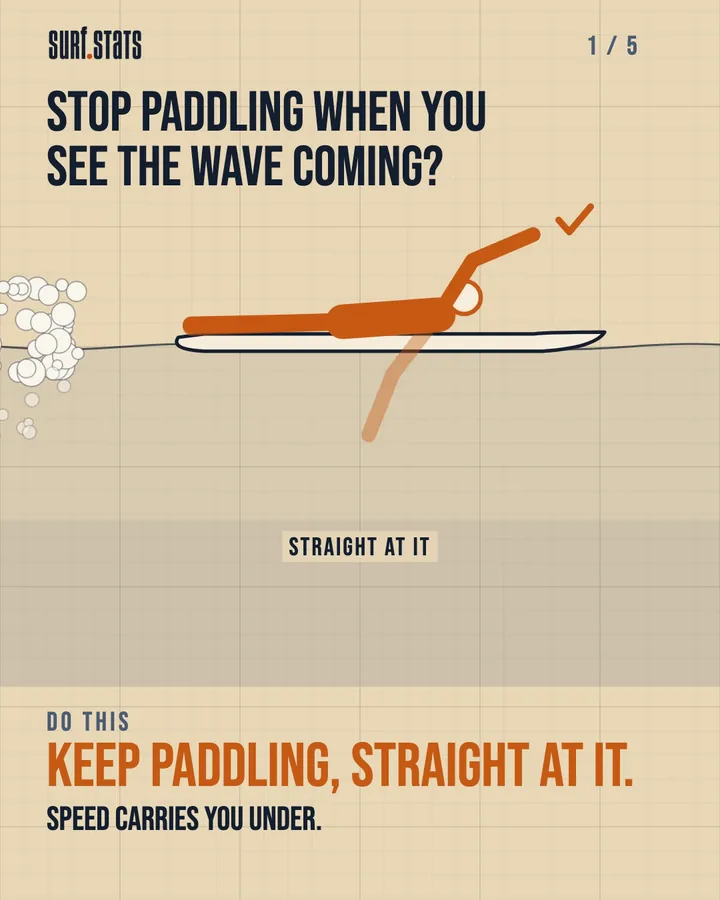
Try this: keep paddling, straight at it.
Freezing as the wave arrives is the classic beginner mistake. Speed is what carries you under, so keep paddling right up to the moment you start the dive, with the board pointed straight at the wave. Don't wait for the wave to come to you. Take a breath before you go under.
The stroke itself is its own skill: see how to paddle a surfboard.
2. Pop back up right into the wave?
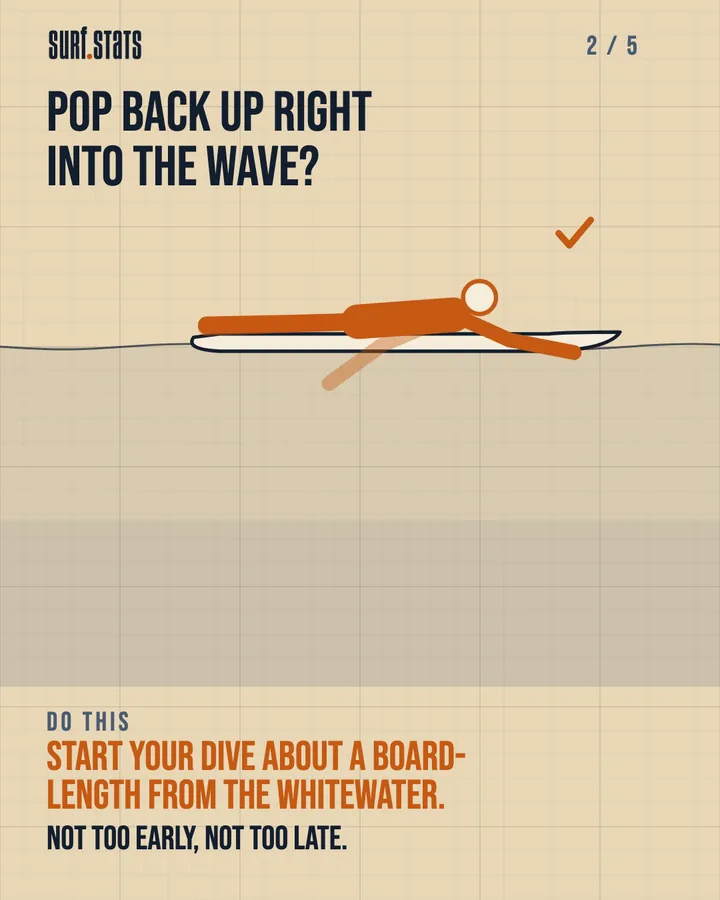
Try this: start your dive about a board-length from the whitewater.
Go too early and you lose your speed, and the board floats you back up into the wave. Coaches put the start point at roughly one board's length from the whitewater. Different guides give different numbers in feet or metres, but they all land around the same place, so treat it as a rule of thumb, not a measurement.
Not too early, not too late. "About a board-length" is the point where you stop paddling and grab the rails.
3. Only the nose goes under?
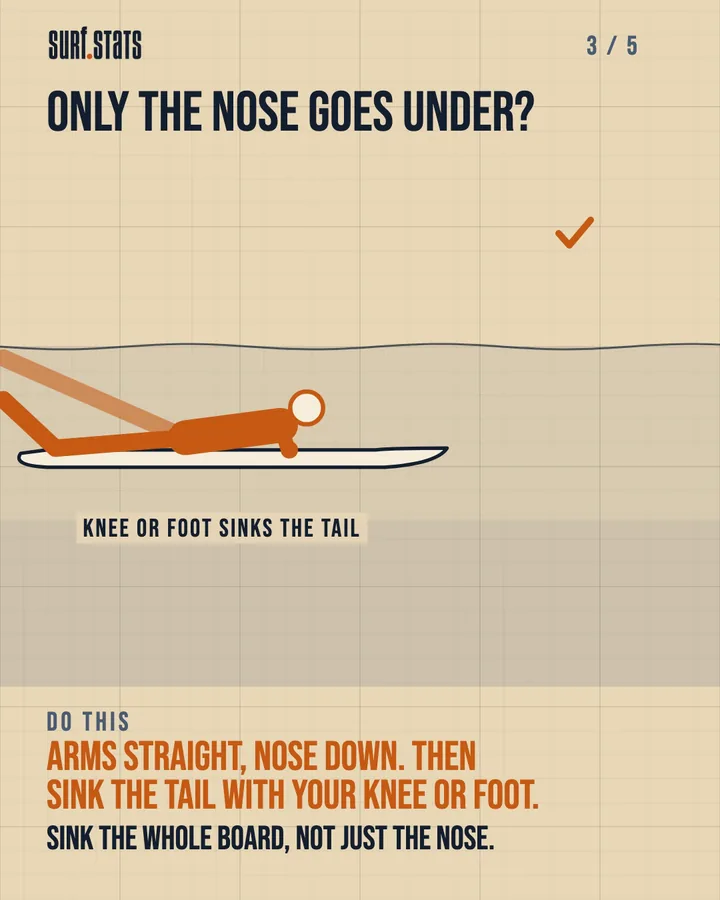
Try this: arms straight, nose down. Then sink the tail with your knee or foot.
People learn to push the front of the board down more quickly than the back. If the tail stays up above the surface, the whitewater catches it and drags you back. The sequence:
- Grab the rails with both hands, about level with your chest.
- Push the nose down with straight arms. Your head follows the nose.
- Then sink the tail: press down with one knee or with your foot.
Knee or foot is your choice, not a rule. A knee is enough for smaller waves. The foot drives the board deeper, which helps on bigger ones. The goal is the same either way: sink the whole board, not just the nose.
4. Dragged back under the wave?
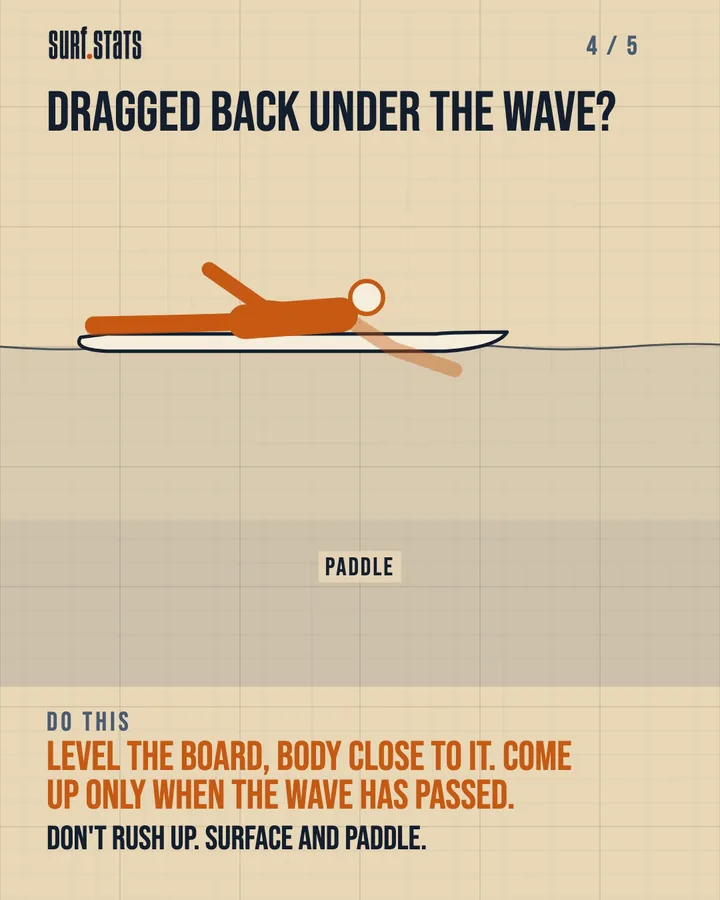
Try this: level the board, body close to it. Come up only when the wave has passed.
Once you're under the wave, bring the board level, parallel to the bottom, and pull your body close to the board instead of letting it peel away. Staying close keeps you deeper.
Then wait. Coming up too soon is how you get dragged back toward the beach. Don't rush to the surface: once the wave has passed, let the board's float bring you up, nose angled up, and start paddling again straight away so the next pull of the water doesn't take you backward.
Don't rush up. Surface and paddle.
5. About to let go of your board?
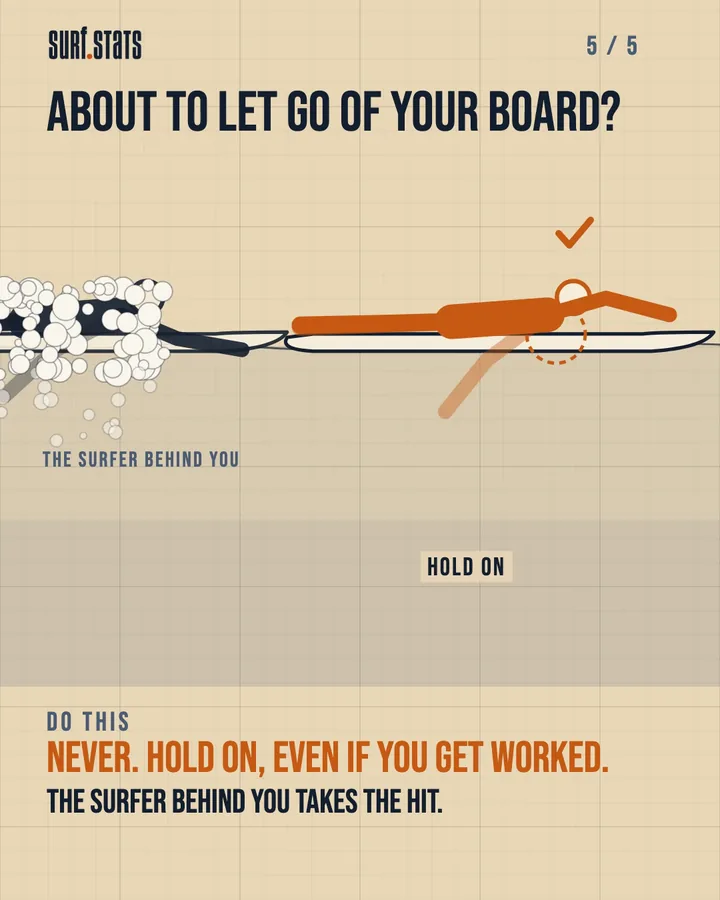
Try this: never. Hold on, even if you get worked.
Never throw the board away to dive under a wave. A loose board flies back toward the beach, and the surfer behind you takes the hit. Hold on through the whole dive, even when the wave thrashes you. Surfline's Nick Carroll puts it plainly: get thrashed if you must, but don't throw the board.
Practise on flat water first
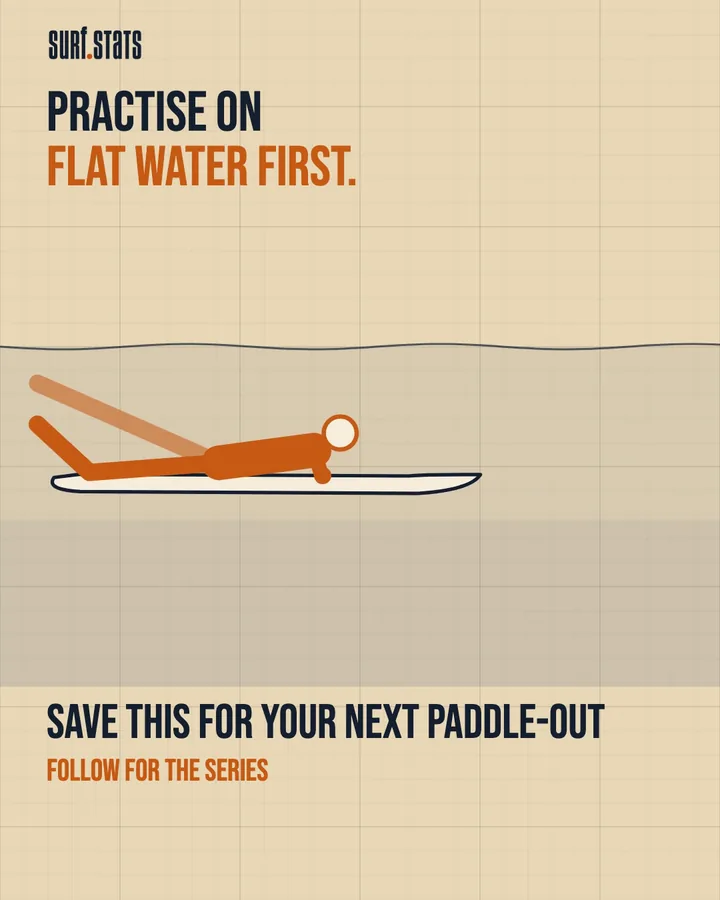
You don't need waves to learn the movement. Try the whole sequence on flat water first: a pool, a lake or a flat day at the beach. Still water lets you repeat the movement as many times as you like.
Quick checklist
- Shortboard only. On a foamie or a longboard, it's the turtle roll.
- Keep paddling, straight at the wave. Take a breath.
- Start the dive about a board-length from the whitewater.
- Hands by your chest, arms straight, nose down, head follows.
- Sink the tail with your knee or foot. Foot for deeper.
- Board level, body close to it.
- Wait for the wave to pass, float up, paddle at once.
- Never let go of the board.