How to turtle roll
 Fin Selector: your fins in 1 minute
A big board floats too much to duck dive, so you turn it over. Point the nose straight at the wave, grab the rails, take a breath and roll under the board before the whitewater reaches you, hold on with bent arms, then flip back and paddle.
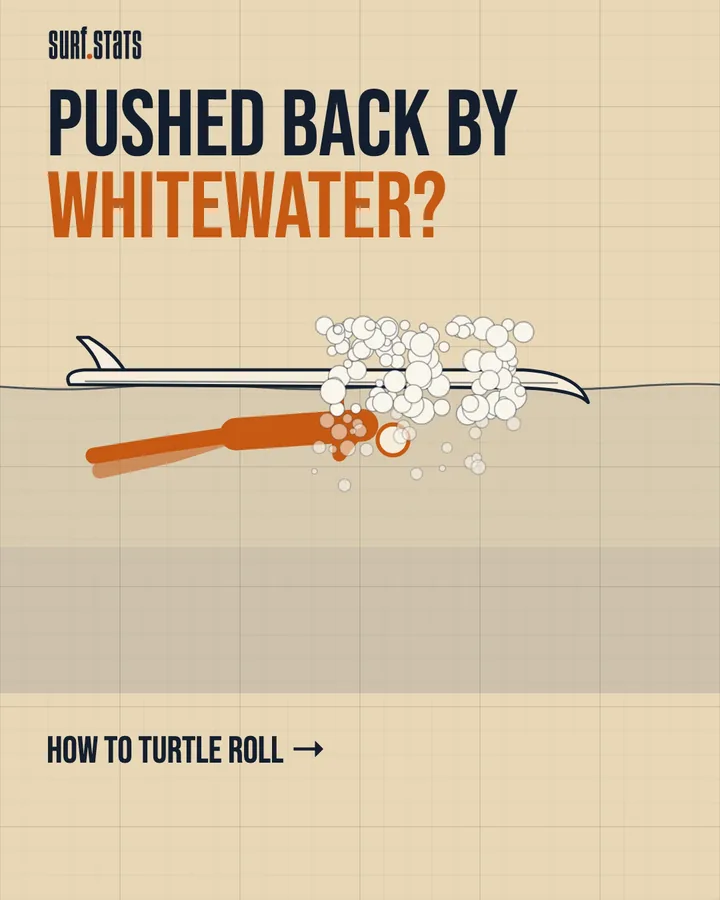
On a shortboard you get under a breaking wave with a duck dive. On a foamie or a longboard you can't: the board has too much float to push under. So you do the opposite. You turn the board over, hang underneath it, and let the whitewater pass over the bottom of the board. That move is the turtle roll.
Most turtle roll problems come down to one of five things: the roll itself, the angle of the board, the timing, your grip underneath, or what you do once the wave has gone. Below is how to turtle roll, one problem at a time, with the fix for each. It comes from our how to turtle roll reel, and every tip is backed by at least two independent sources: surf coaching sites and surf magazines.
Why turtle roll instead of duck dive?
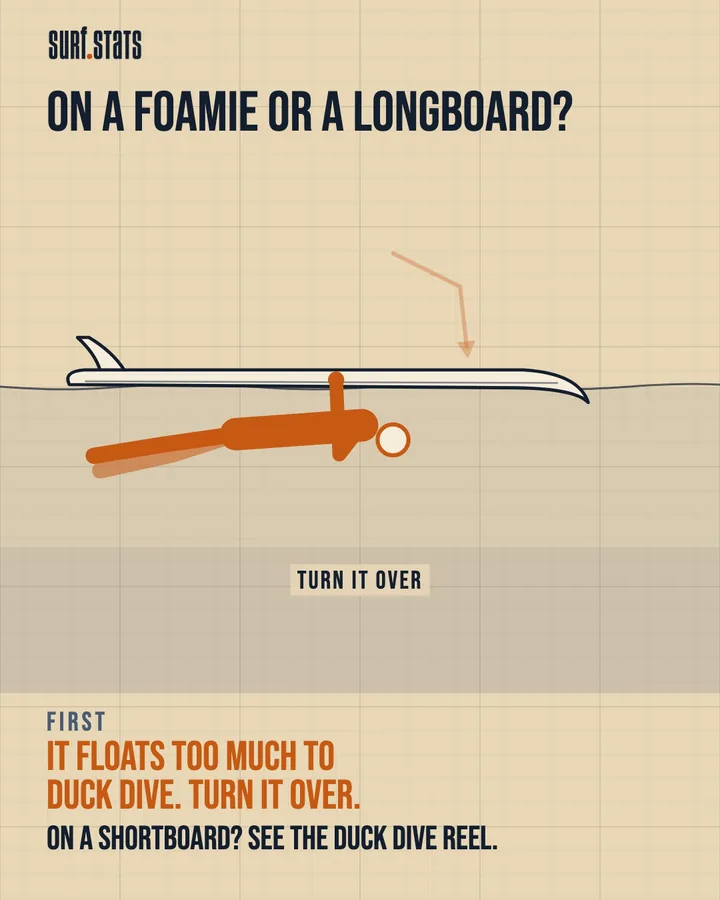
The short version: it floats too much to duck dive, so turn it over.
Longboards and big foam boards are very buoyant. The coaches agree that sinking one under the whitewater is close to impossible, and the board's float simply keeps you on the surface. That's why big boards turtle roll instead. If you're still choosing a board, read how to choose a surfboard. On a shortboard, the duck dive is the move.
1. Whitewater shoving you back to the beach?
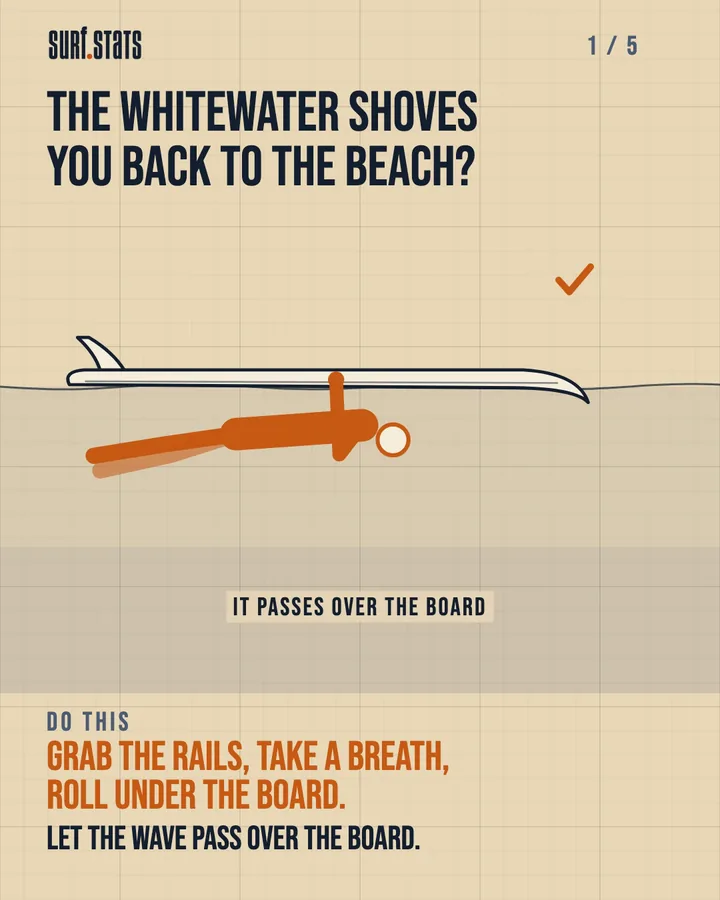
Try this: grab the rails, take a breath, roll under the board.
Lying on top of the board, you take the full push of the whitewater, and it sends you back toward the beach. The turtle roll gets you out of its way:
- Grab the rails.
- Take a breath.
- Roll under the board, so you're in the water and the board is upside down, fin up.
- Let the wave pass over the board.
You'll still lose a little ground with each roll. That's normal. It doesn't mean you did it wrong.
2. Wave knocks the board out of your hands?
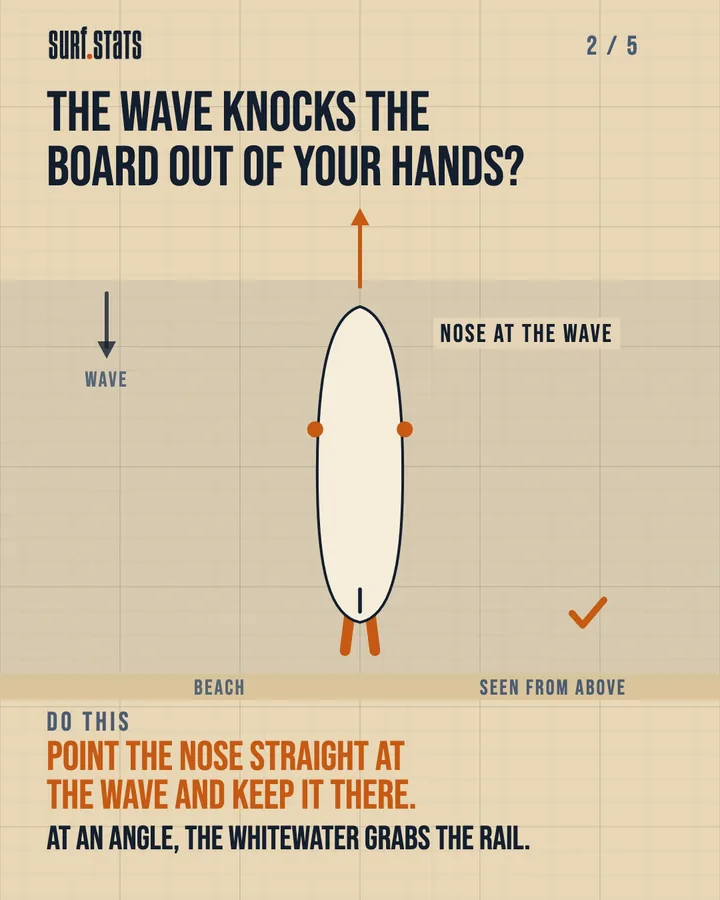
Try this: point the nose straight at the wave, and keep it there.
The board has to be square to the wave, at a right angle to the line of whitewater, before you roll and while you're under it. At an angle, the whitewater grabs the rail. It hits the side of the board and pulls the board out of your arms. Coaches warn that even a slight angle can be enough to lose it.
3. Wave hits you before you're under?
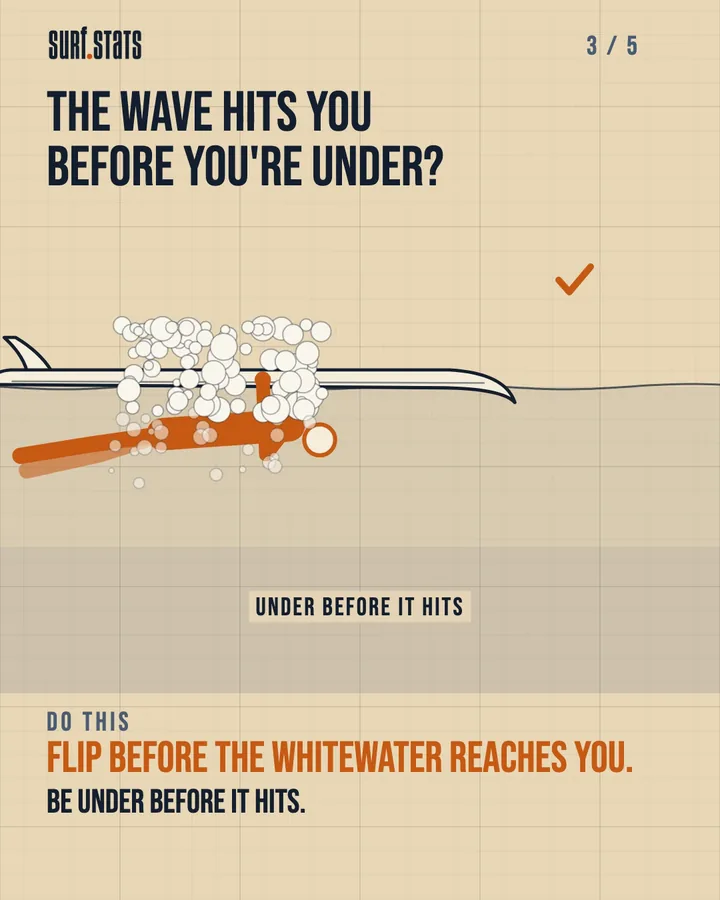
Try this: flip before the whitewater reaches you, not when it's on top of you.
If you wait for the wave to arrive, you're still on top when it hits, and you get knocked off. Roll while the whitewater is still coming at you, so you're already under the board when it lands. The rule is simple: be under before it hits.
How far away is "before"? Coaches give different distances, so we don't give you a number. What they agree on is the order: you roll first, then the whitewater arrives.
4. Wave gets between you and the board?
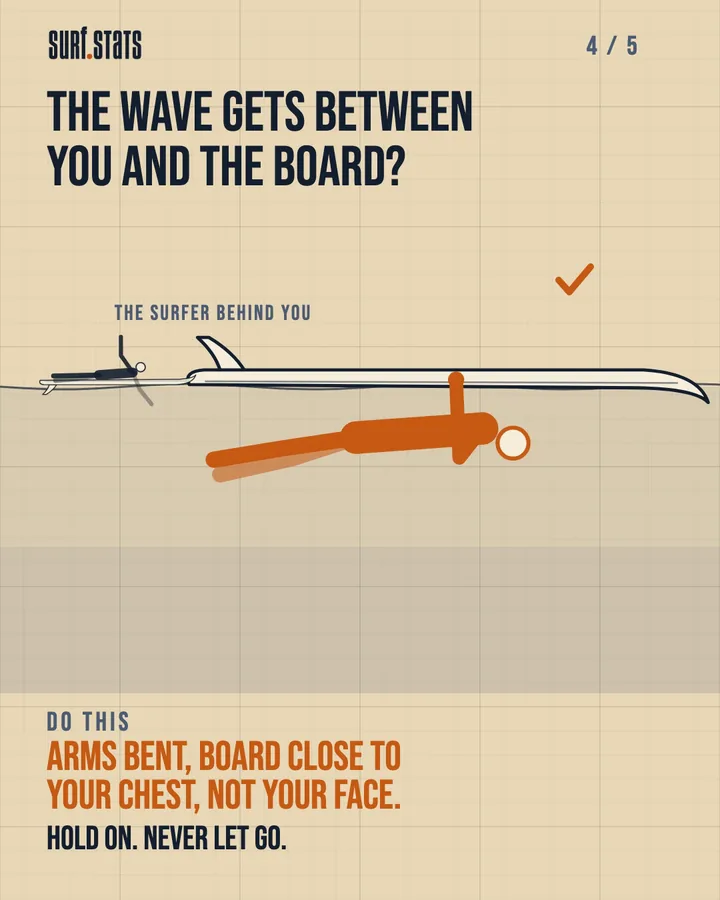
Try this: arms bent, board close to your chest, not your face.
Hanging underneath with your arms straight gives the wave room to get between you and the board, and then it tears the board away. Keep a firm grip with your elbows bent so the board stays close to your chest. Not so close that it can come down on your face: chest, not face.
Then hold on. Never let go. A loose board can hit the surfer behind you, and the same rule applies whatever board you ride.
5. Washed back after the wave passes?
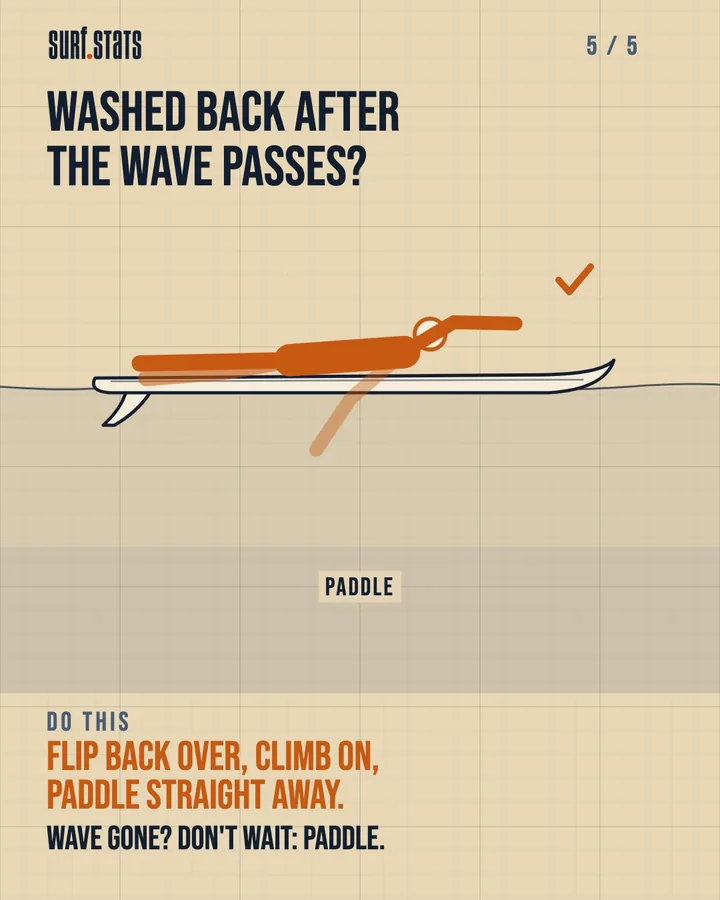
Try this: once the wave has passed, flip back over, climb on, paddle straight away.
If you stay upside down after the wave has gone, the whitewater washes you back toward the beach. As soon as the wave has passed over the board, flip back over, climb on and start paddling. Wave gone? Don't wait: paddle. Our paddling guide covers the stroke itself.
Where should you practise?
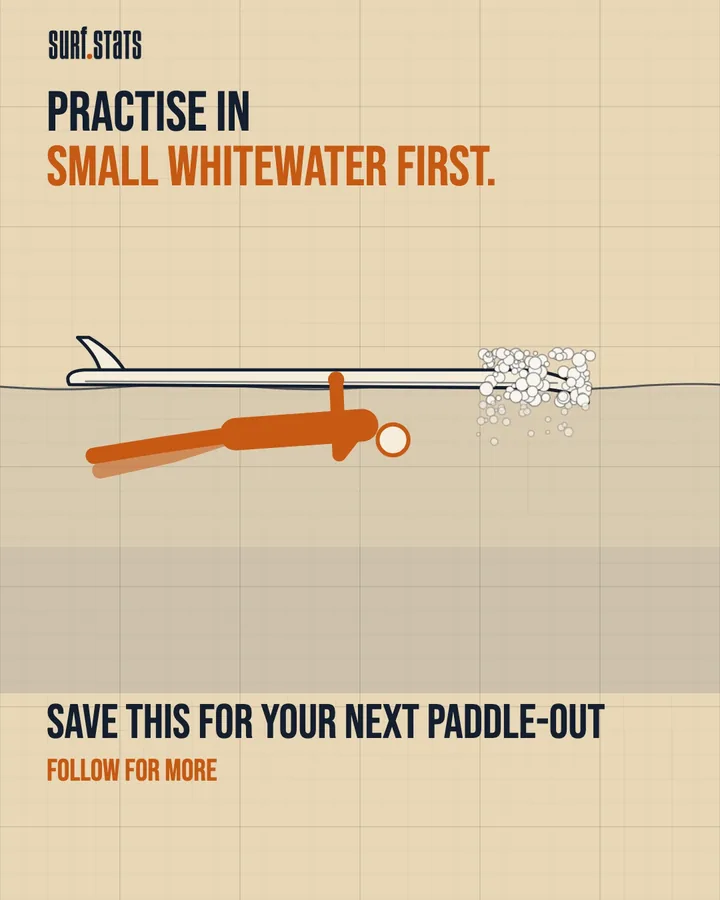
Practise in small whitewater first. Learn the grip, the breath and the flip when the surf is small. Save the reel for your next paddle-out.
Quick checklist
- Foamie or longboard: turn it over, don't try to duck dive it.
- Grab the rails, take a breath, roll under.
- Nose straight at the wave, and keep it there.
- Under before it hits.
- Arms bent, board close to your chest, not your face.
- Hold on. Never let go.
- Wave gone: flip back, climb on, paddle.
- Small whitewater first.