How to take care of a surfboard
 Fin Selector: your fins in 1 minute
Keep your board cool: in the shade or a board bag, never left in the sun or a hot car. Rack it deck down with the tail to the front, get out of the water when it has an open ding, and rinse it with fresh water after every surf.
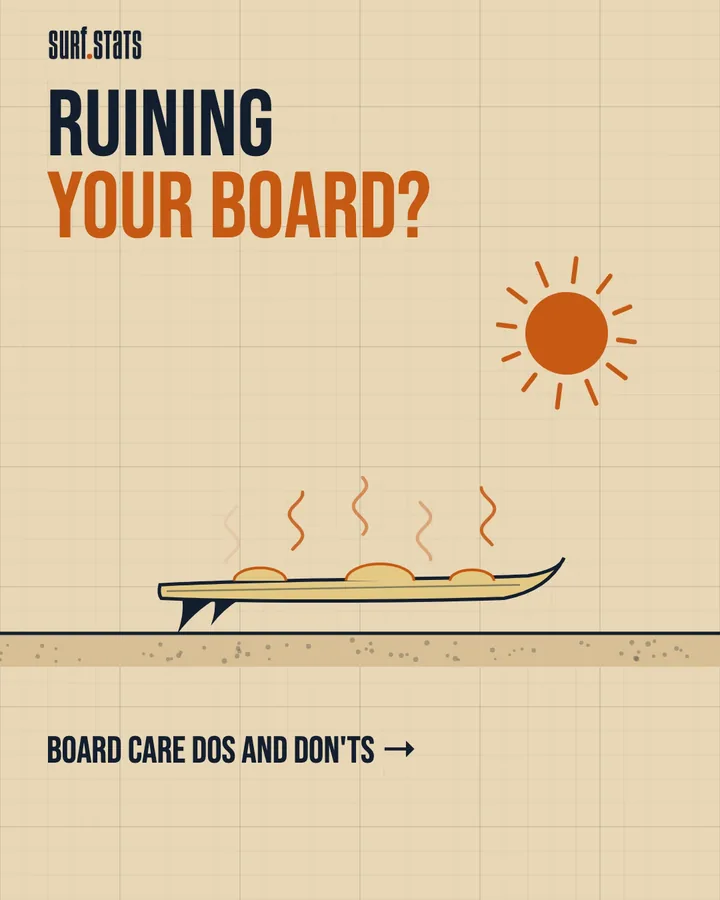
You can ruin a surfboard without knowing it. Five everyday habits do it: leaving it in the sun, leaving it in a hot car, strapping it to the roof the wrong way, surfing on with a crack that lets water in, and putting it away salty. Taking care of a surfboard starts with dropping those five habits.
Below are five surfboard care dos and don'ts, in the same order as our board care reel. Each one is a don't (the habit that hurts the board) and a do (the fix). They come from board makers, a car maker, a roof-rack maker and surf media. Where those sources disagree, we say so or leave the point out.
1. Don't leave it out in the sun
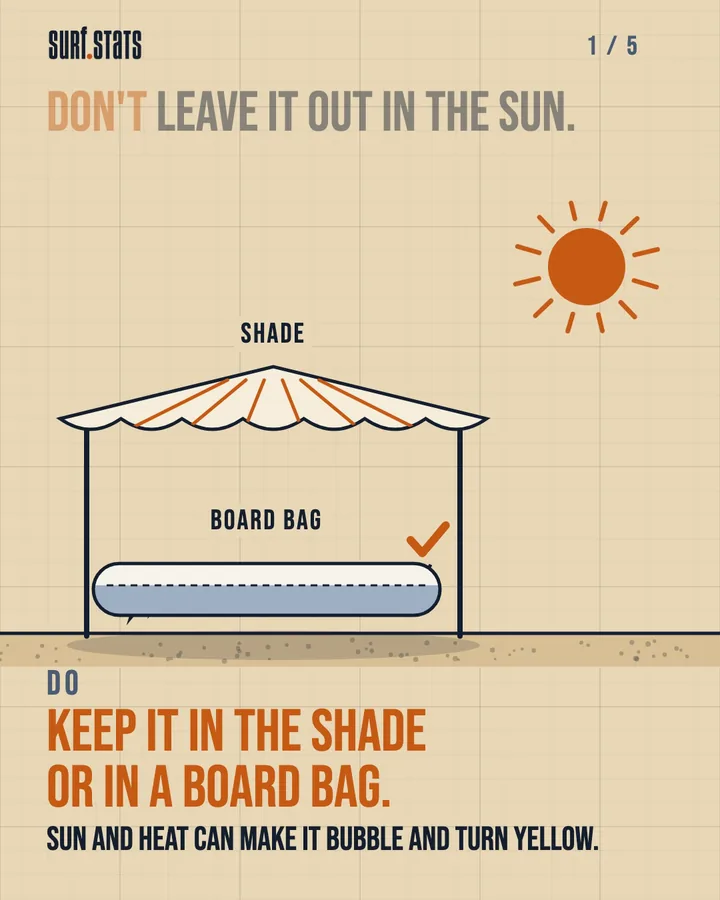
Do this instead: keep it in the shade or in a board bag.
Sun and heat can make a board bubble and turn yellow. The bubbles are delamination: the outer skin lifting away from the foam inside. Yellowing hits the foam core, and epoxy resin can yellow too. Surfer Today adds that the foam can weaken over time.
The risk is a board left out there, not one you carry across the sand. Surfer Today warns against leaving it under the sun for hours. When you're not riding it, put it in the shade. A board bag also works on the beach: board makers and surf media both recommend one to keep sun off the board.
2. Don't leave it in a hot car
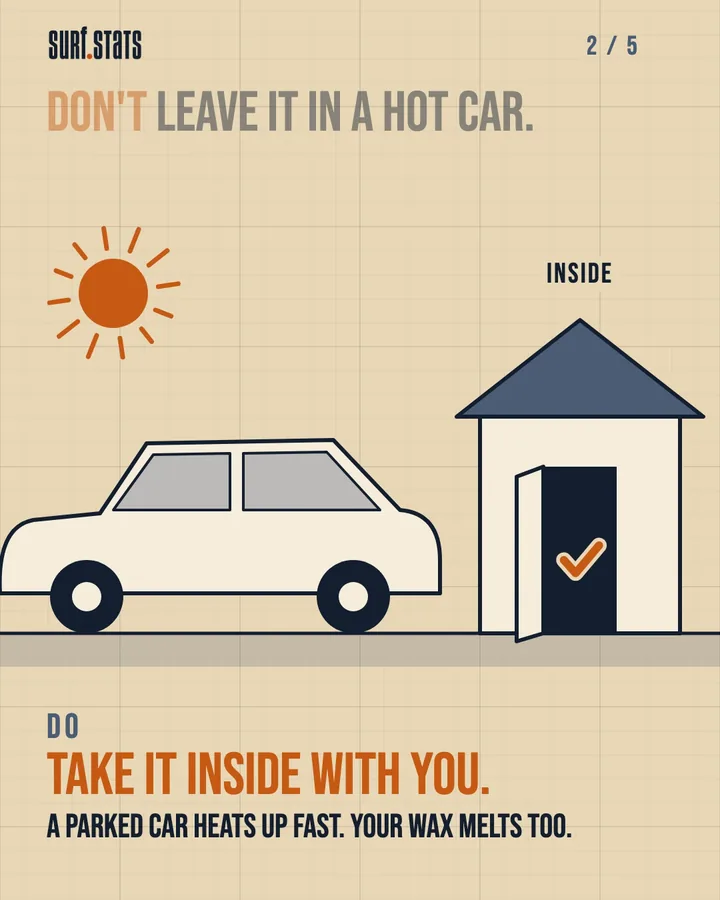
Do this instead: take it inside with you.
A parked car heats up fast, and Firewire and Surfer Today both warn that the heat can delaminate your board. Your wax melts too. (For rewaxing, see our guide on how to wax a surfboard.)
Shade or a bag is not enough here. GONG, a board maker, warns that a board left in a hot car is at risk even in the shade or in a bag. So the fix is to bring it inside with you.
3. Don't put it on the roof deck up
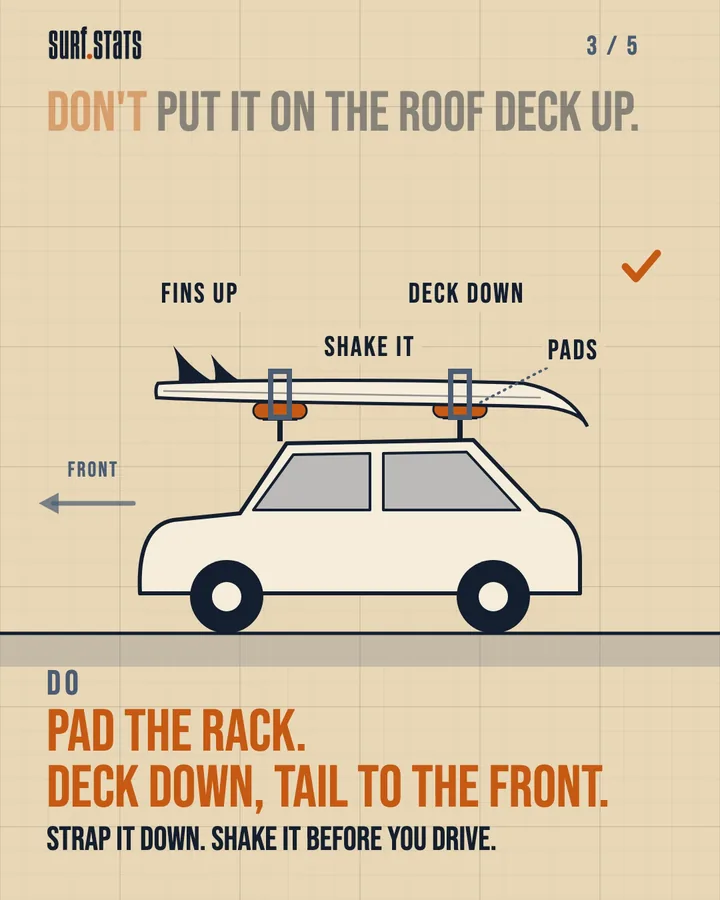
Do this instead: pad the rack. Deck down, tail to the front.
Surfer Today calls a board strapped deck up, or with the fins at the back, a common mistake. The way the sources teach it:
- Pad the bars of the rack. Surfer Today's setups lay the board on foam pads.
- Deck down, fins up. The board goes on upside down.
- Tail to the front of the car. Surfer Today puts the tail forward.
- Strap it down, then give it a shake before you drive to make sure it's secure. Thule's safety sheet adds a check again after a short distance.
Strap it snug, but not so tight you crush it. Surfer Today warns against overtightening the straps.
4. Don't keep surfing with an open ding
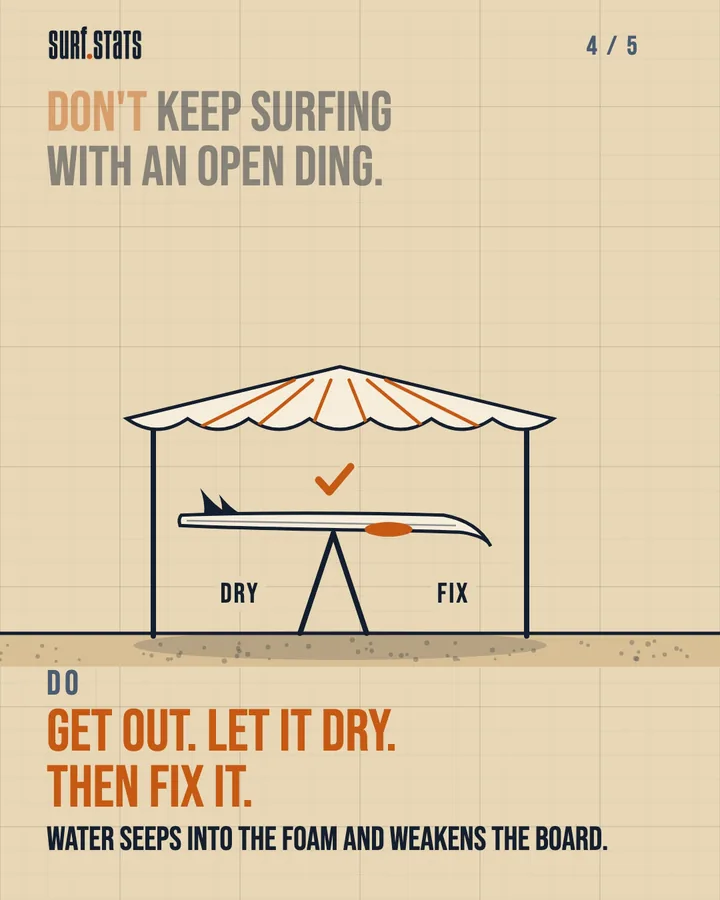
Do this instead: get out. Let it dry. Then fix it.
An open ding is a crack or hole through the outer skin. Water seeps in through it, gets into the foam, and weakens the board. Haydenshapes warns an unrepaired ding can lead to permanent damage.
So get out of the water. Then let the board dry before you fix it. SurfScience suggests turning the board so the ding faces down and the water drains, and Haydenshapes says a shady, dry place works. Then repair it soon: board makers say to fix dings as soon as you can. For a big crack, Haydenshapes, SurfScience and Surftech all point you to a repair shop.
Not every ding means trouble. A pressure ding, a dent that hasn't broken the surface, is normal wear: Haydenshapes says it is not a defect, and NSP says fixing one is up to you. The rule is about open dings.
5. Don't put it away salty
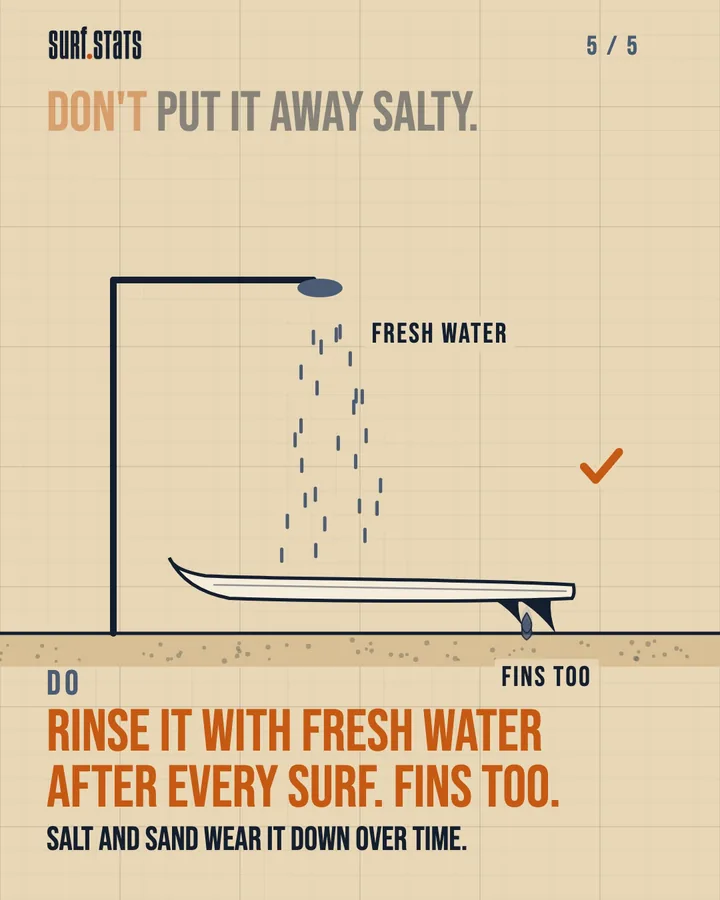
Do this instead: rinse it with fresh water after every surf. Fins too.
Salt and sand wear a board down over time. It is slow damage, not instant. The Inertia notes fiberglass holds up fairly well to salt, but salt still does harm over the long run.
Rinse the whole board with fresh water after each session, before it goes into its bag. Don't skip the fins: Firewire says to rinse the fin boxes too, and Surftech warns fin screws can rust or strip.
Keep it cool. Rinse it. Fix dings fast.
That's the whole routine in three parts. Know someone who just got a new board? Send this to them. And if you're still picking one, read how to choose a surfboard.
Quick checklist
- Not in use: shade or a board bag. Never left in the sun.
- Never in a hot car. Take it inside.
- Roof rack: pads, deck down, fins up, tail to the front. Strap it snug and shake it.
- Open ding: get out, let it dry, then fix it. Big crack: a repair shop.
- After every surf: fresh water, fins too.