How to catch unbroken waves
 Fin Selector: your fins in 1 minute
Once you stand up on most whitewater waves, move out a little on a small, gentle day. Sit where the waves start to break, not past them and not in the foam, and catch each one just before it breaks.
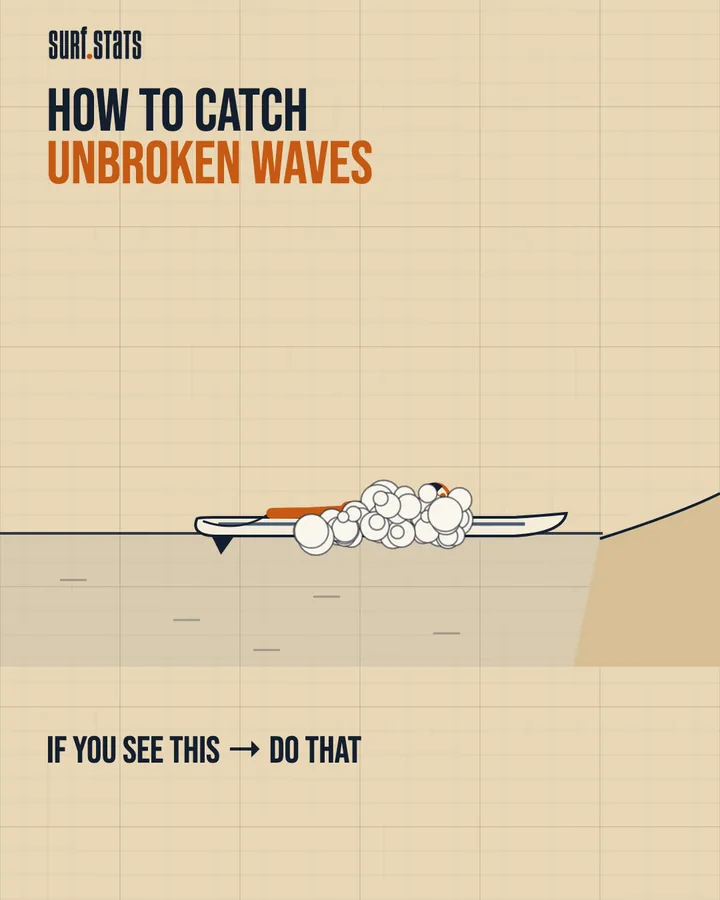
Beginners start in the whitewater, the foam a wave leaves once it breaks, and learn to stand up there. The next step is the unbroken wave: a wave you catch before it breaks. A lot of that comes down to where you sit.
Below are five things you might see in the water when you try to catch unbroken waves, and the fix for each. They come from our how to catch unbroken waves reel. We checked them against surf magazines and coaching guides, and each fix rests on at least two independent ones. Where a point comes from only one of them, we name it.
This post is about where you sit. For the catch itself (lining up, when to start paddling, where to lie), read how to catch your first wave.
1. Standing up on most whitewater waves?
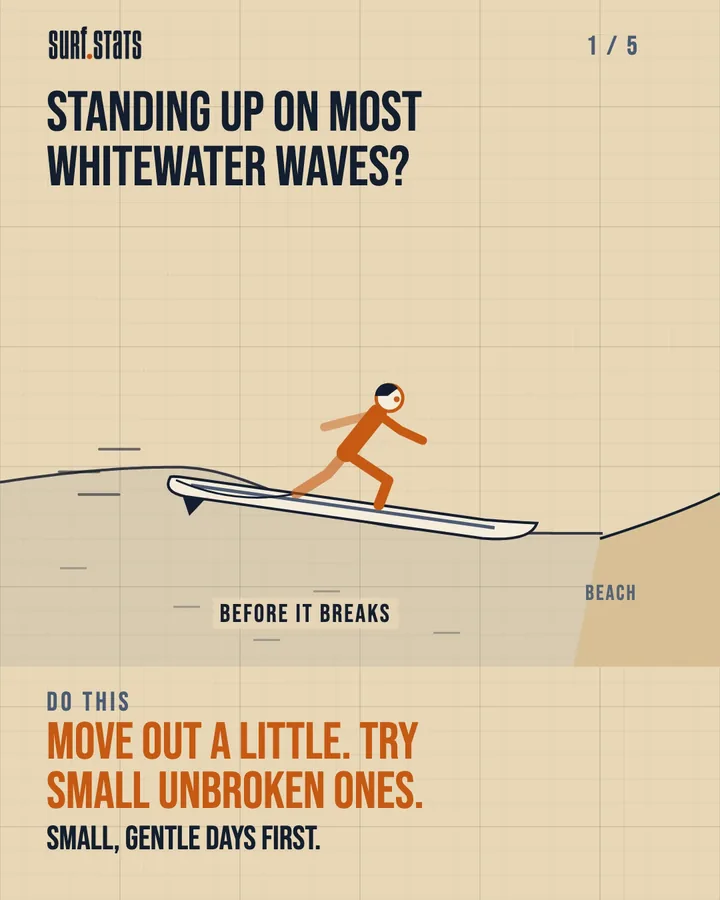
Try this: move out a little. Try small unbroken ones.
That's the sign you're ready. SurfGirl Magazine, Surfline and Surfer Today all describe the same order: whitewater first, then the unbroken waves once you've got the hang of it.
Small, gentle days first. Surfline says soft, slow-rolling waves suit beginners better, and Outside's guide says to make sure the waves are a comfortable size for you. SurfGirl Magazine adds that unbroken waves are trickier to pick and ask more of your paddling and control.
When you head out, paddle out around the breaking waves and stay away from the crowd. "A little" is the key word here. It's a small step out, not a big day out the back.
2. Not sure where to sit?
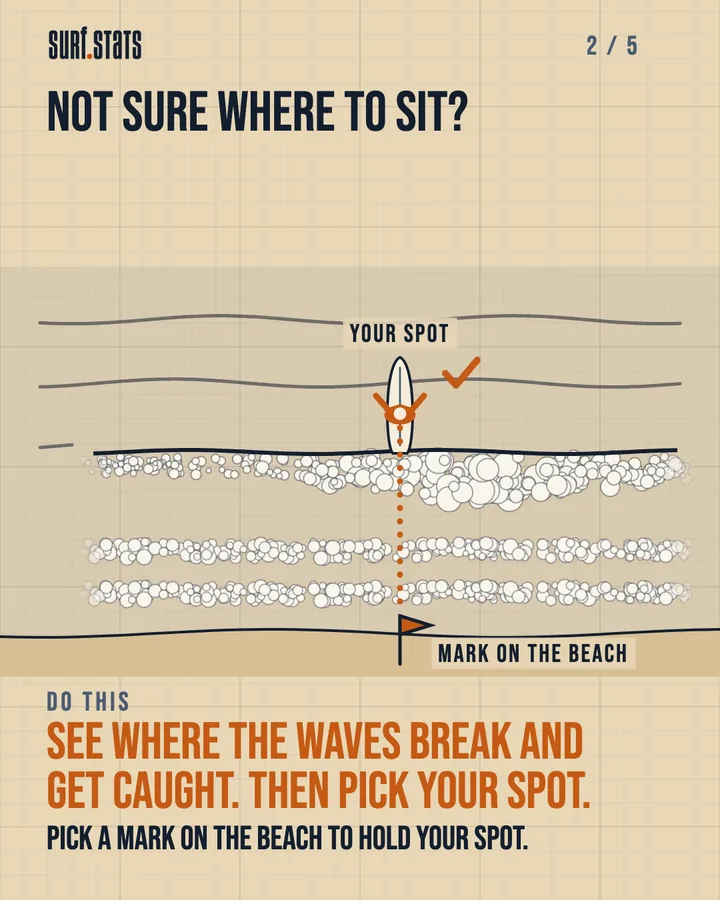
Try this: see where the waves break and get caught. Then pick your spot.
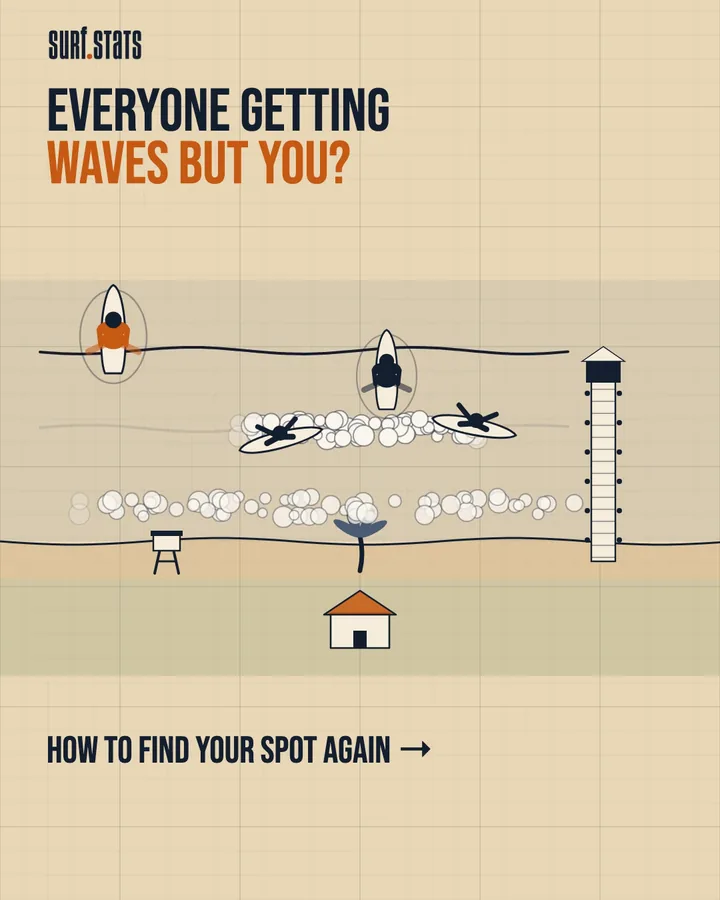
Sit and look first. Surfline says to work out where to sit by looking at the waves before you paddle out, and Outside's guide says the same: before you paddle out, see where the waves break, and once you're out, sit off to the side for a while and note where people catch them. SurfGirl Magazine suggests a few minutes of seeing which waves other surfers take.
Barefoot Surf says where the more experienced surfers sit is a guide to how far out to go, not a reason to sit right next to them and go for their waves.
Pick a mark on the beach to hold your spot. Surfline and The Inertia both suggest lining yourself up with things on land, like a tree or a building, to hold your position. Our post on where to sit in the lineup covers how to use those marks.
3. Waves breaking closer to the beach than you?
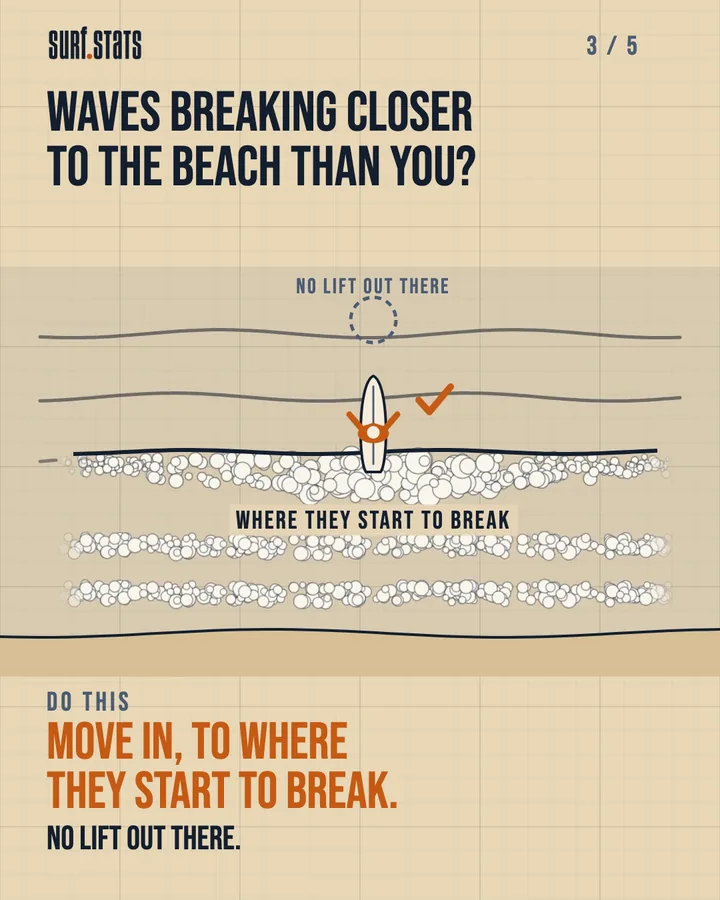
Try this: move in, to where they start to break.
You're too far out. Barefoot Surf says it often sees beginners sitting much further out than experienced surfers. Out there, the waves haven't started to break yet. OMBE puts it simply: the wave won't lift you in the swells, so you need to wait where the lift will be.
No lift out there. The Inertia says you need to be close to where the wave actually breaks, and Surfer Today and Surfline both put you where the waves are breaking.
4. Only catching foam?
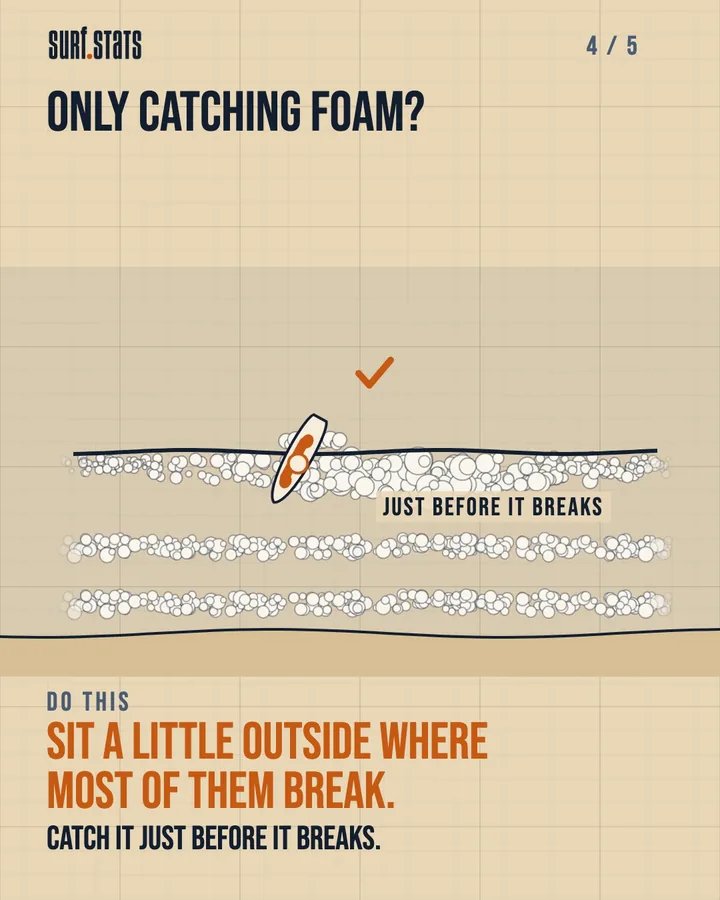
Try this: sit a little outside where most of them break.
You're too far in. Sit right where most of the waves break, Barefoot Surf explains, and when you go you'll either get a wave that has already broken or have it break right on top of you. Lush Palm tells learners to stick to the inside, catching whitewater.
So move out a little past that line. Spot the next one coming and catch it just before it breaks. Surfline says you want the wave to reach you just as it's about to break, and Lush Palm says to time it so it's just about to break as you paddle in.
Watch the horizon while you wait. Barefoot Surf and The Inertia both point out that good surfers move around a lot, getting to where a wave will break before it arrives.
5. Waves breaking off to one side of you?
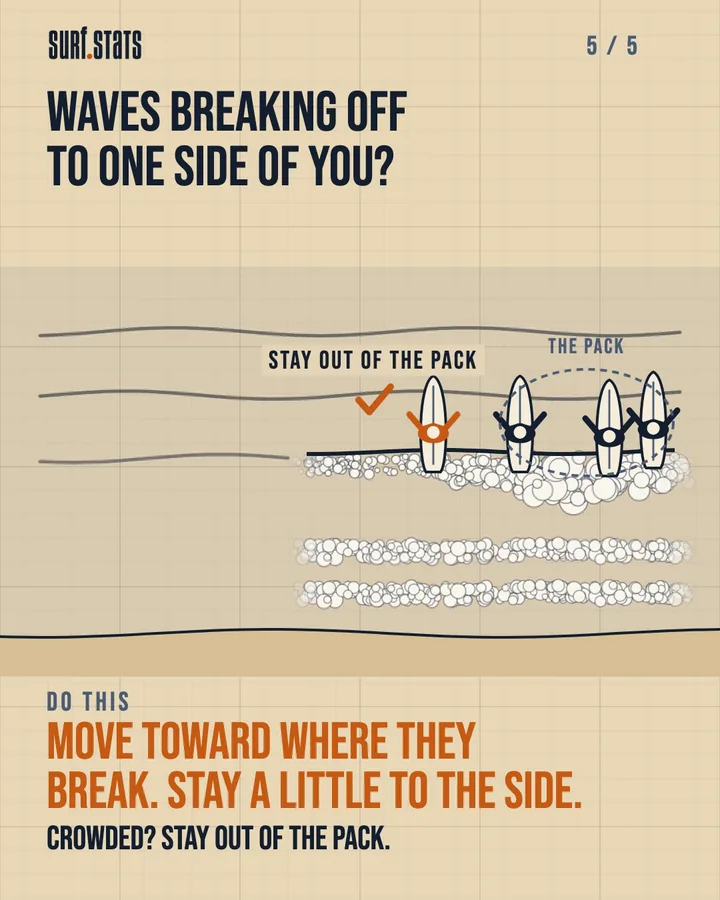
Try this: move toward where they break. Stay a little to the side.
Too far along from where it breaks, the wave can go on without you. The Inertia's Gershon Borlai says this happens because you aren't close enough to its breaking section. OMBE also warns that beginners tend to stay too far from the part of the wave with the power.
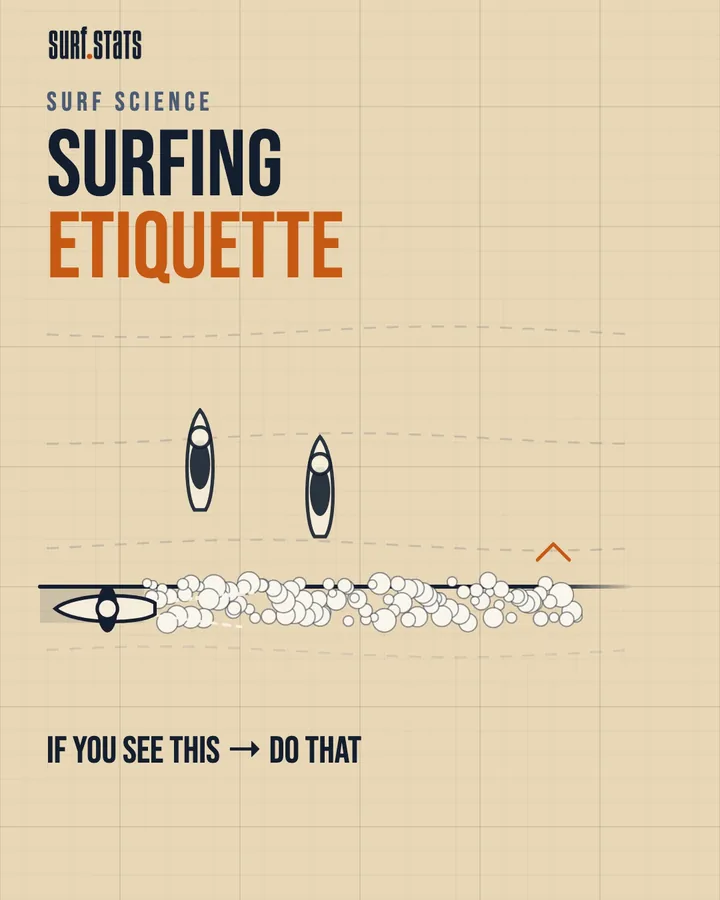
But don't paddle into the middle of everyone. Borlai also notes that the closer you get to the peak, the more people you'll be competing with. Red Bull's beginner guide suggests the edges of a main peak. And the rule still holds: someone closer to where it breaks? It's their wave. Outside and Wavelength both give the person closest to the breaking part the right of way.
Crowded? Stay out of the pack. Lush Palm tells new surfers not to sit in the pack, and The Inertia's Lauren Ringer says not to be afraid to break away from it.
Sit where they break. Decide early.
The whole reel in two lines: sit where they break. Decide early: go, or let it go.
Make the call while the wave is still coming. A wave you don't feel sure about is fine to let pass. Red Bull's guide says to wait for a wave you can confidently take and to let others have the ones that aren't right for you.
Quick checklist
- Standing up on most whitewater waves? Move out a little.
- Small, gentle days first. Paddle out around the breaking waves.
- Sit and look first. Pick a mark on the beach.
- Waves breaking inside you? Move in.
- Only catching foam? Sit a little outside where most of them break.
- Catch it just before it breaks.
- Move toward where they break, a little to the side, out of the pack.
- Someone closer to where it breaks? It's their wave.