How to paddle out
 Fin Selector: your fins in 1 minute
Look before you go in: where it breaks, the sets, where the rips are. Paddle out wide of the peak, not through it, start once a set has passed, and if a surfer is riding at you, go behind them into the whitewater.
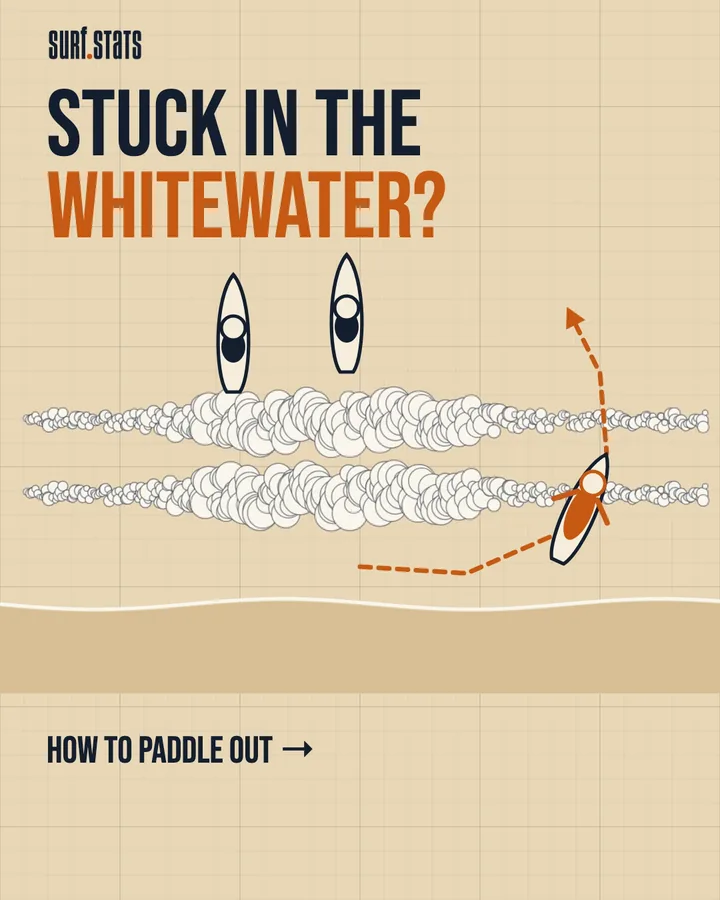
Stuck in the whitewater, paddling hard and getting pushed back to the sand? Getting out comes down to a few choices: where you go in, when you go, and which way you head when something comes at you.
Below are six situations you will meet on the way out, and what to do in each. They come from our how to paddle out reel, checked against 15 independent sources: lifesaving bodies, local governments and lifeguards, a university and surf media.
1. Straight from the car into the water?
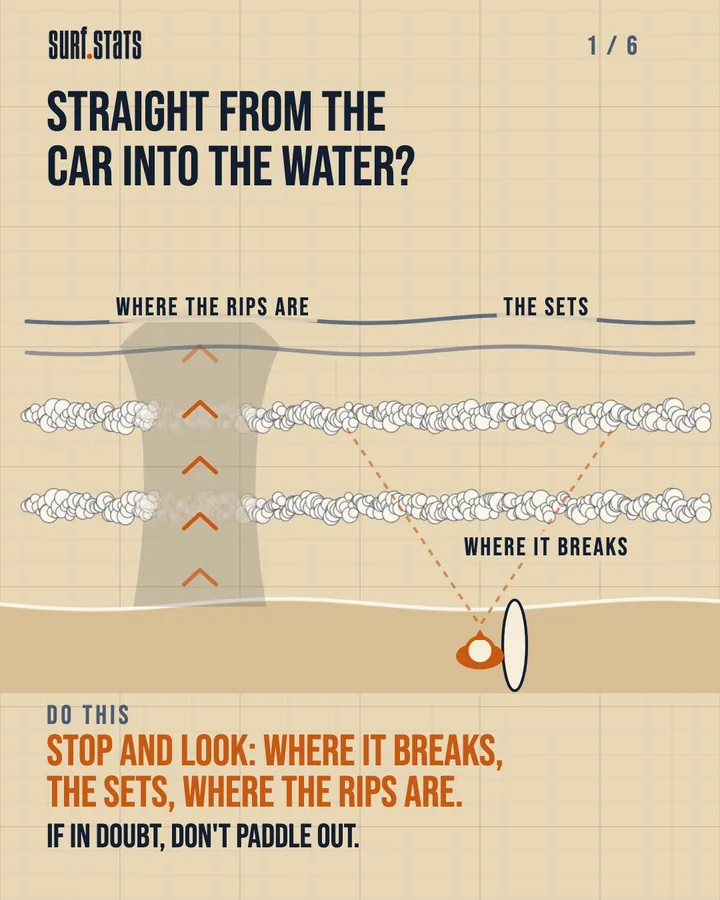
Do this: stop and look. Where it breaks, the sets, where the rips are.
Read the break from the sand before you paddle out, and take your time. Look for:
- Where it breaks. Where the waves are breaking along the beach.
- The sets. Waves come in sets, with quieter spells, called lulls, in between.
- Where the rips are. And other hazards, like rocks.
If in doubt, don't paddle out. That line comes straight from the surf safety advice of a local council and a national lifesaving body.
2. Paddling out right through the peak?
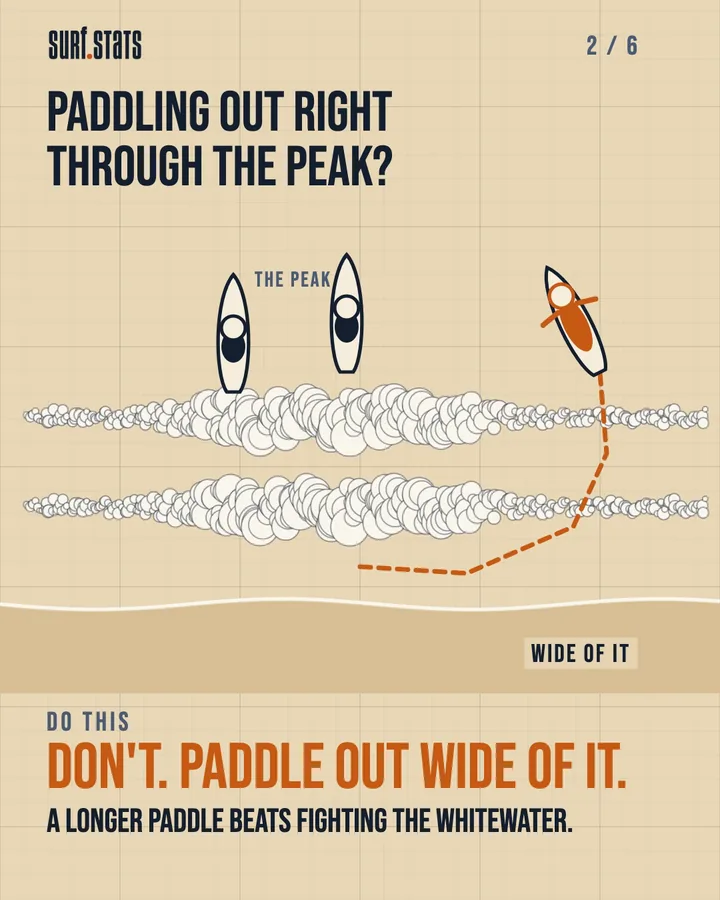
Do this: don't. Paddle out wide of it.
The peak is the heart of the break. Paddle straight out through it and you spend longer fighting the whitewater. Surfline's Nick Carroll puts the goal simply: spend as little time in the whitewater as you can.
A longer paddle beats fighting the whitewater. Going wide adds distance. But as The Inertia points out, if you get stuck in the impact zone, where the waves land, you can be paddling forever. Surf etiquette guides give the same advice: paddle out wide of the peak, not through it.
Going wide does not mean heading for a calm, dark gap. That gap is the next situation.
3. Calm, dark gap between the waves?
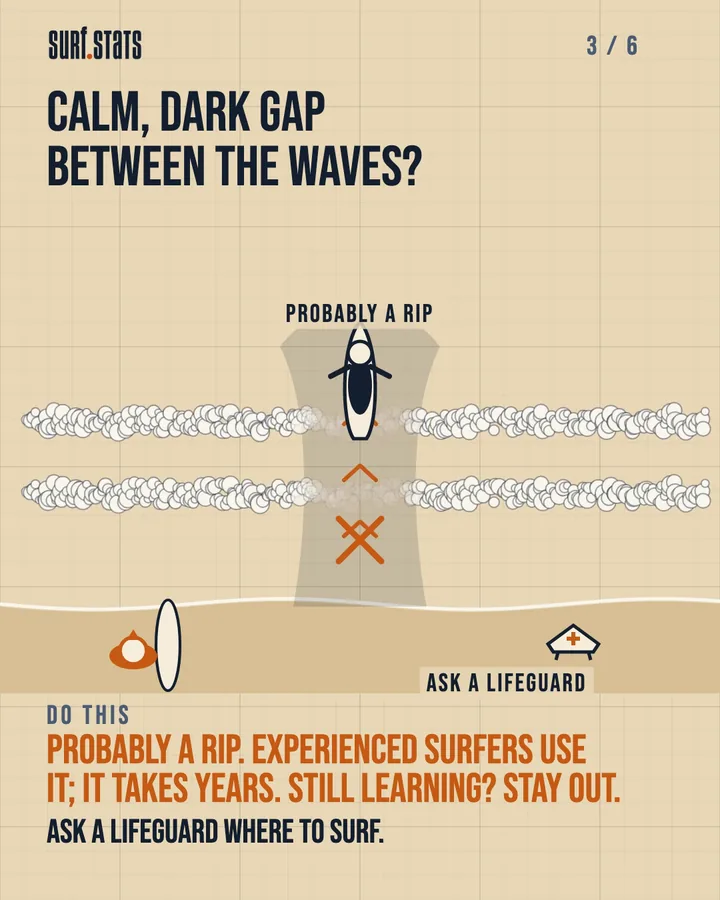
Do this: probably a rip. Experienced surfers use it; it takes years. Still learning? Stay out.
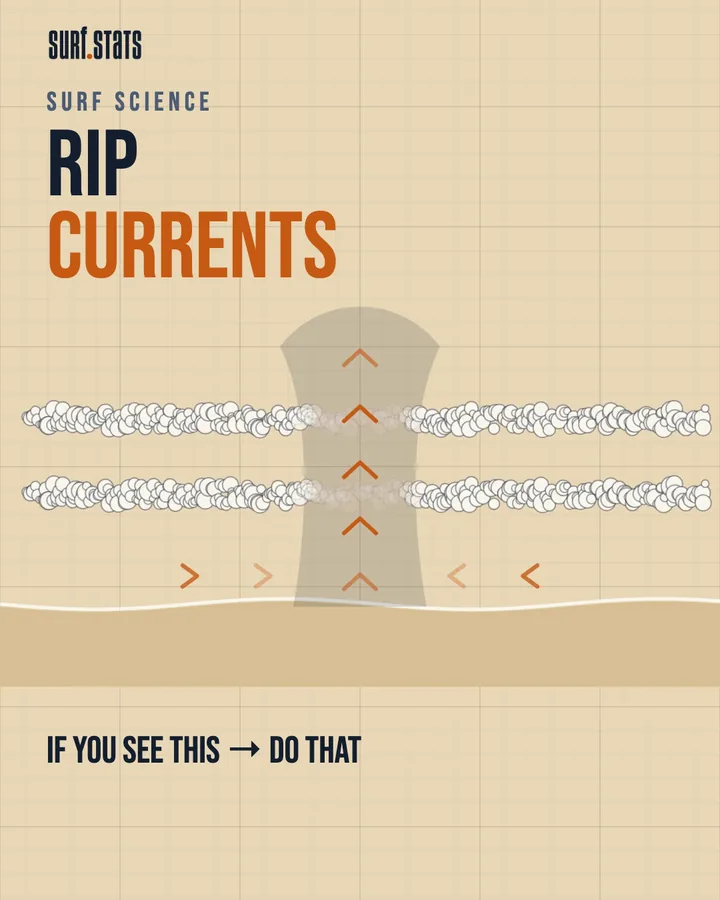
A strip of water that looks darker and calmer than the whitewater on either side is usually a rip. Waves seldom break in it, so it looks calm.
Experienced surfers do use rips to get out quickly. But Canada's CoastSmart campaign says the surfers who do have years of training and experience, and that for most people at the beach, rips are a major hazard.
Ask a lifeguard where to surf. Not sure where it's safe? Ask before you go in. Our guide to spotting and escaping a rip current covers the rest.
4. Pulled out by it?
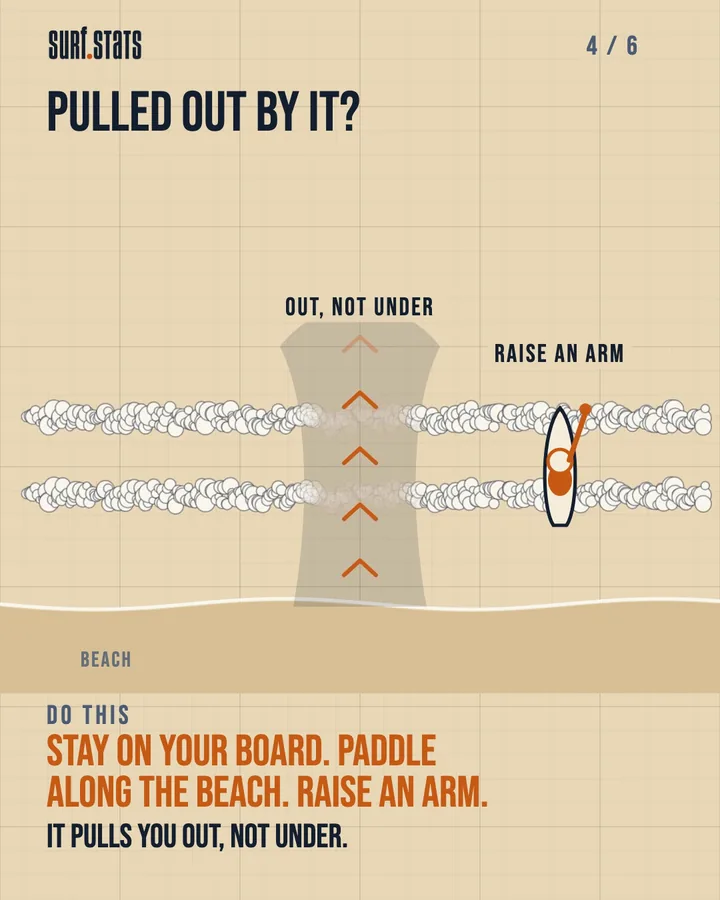
Do this: stay on your board. Paddle along the beach. Raise an arm.
- Stay on your board. Don't let go of it.
- Paddle along the beach, parallel to the shore, until you're out of the rip.
- Raise an arm if you need help. That's the signal for help in the water.
It pulls you out, not under. A rip carries you away from the beach. It doesn't drag you down.
5. A set rolling in as you're about to go?
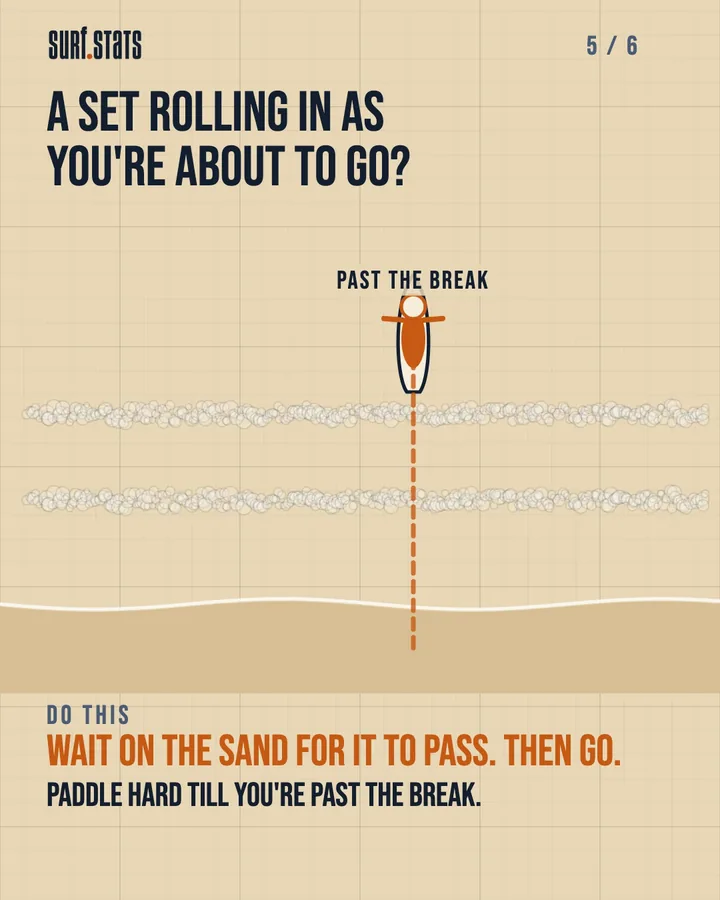
Do this: wait on the sand for it to pass. Then go.
Get the timing right. Look out to sea for the sets coming in, and start in the lull after one has passed, not while it's breaking in front of you.
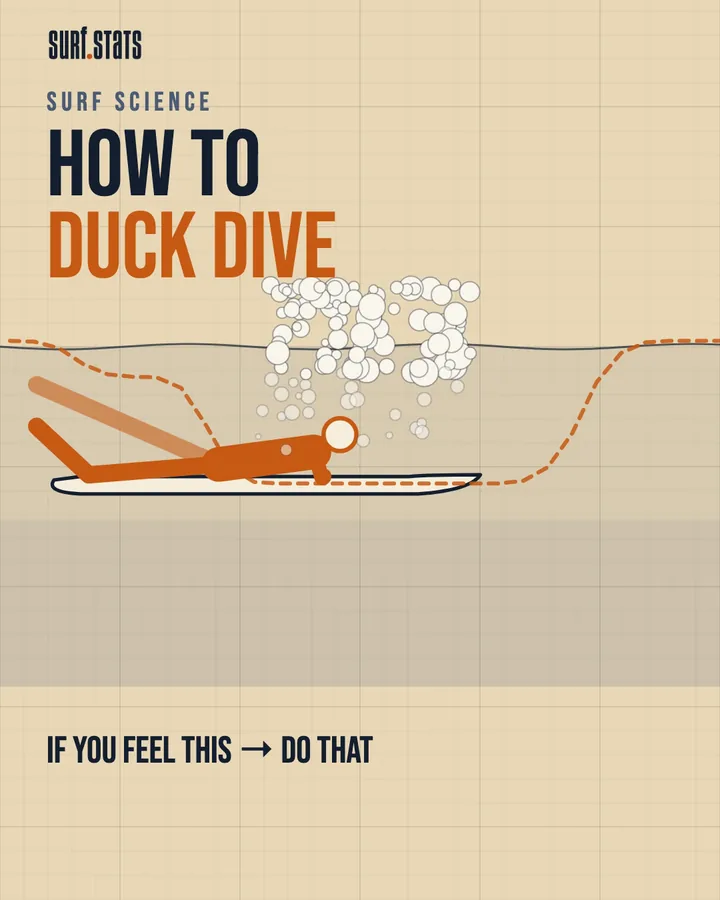
Paddle hard till you're past the break. Keep your speed up, and don't stop paddling when you see a wave coming: speed helps you get through it. For getting under a wave, see how to duck dive.
6. Someone riding straight at you?
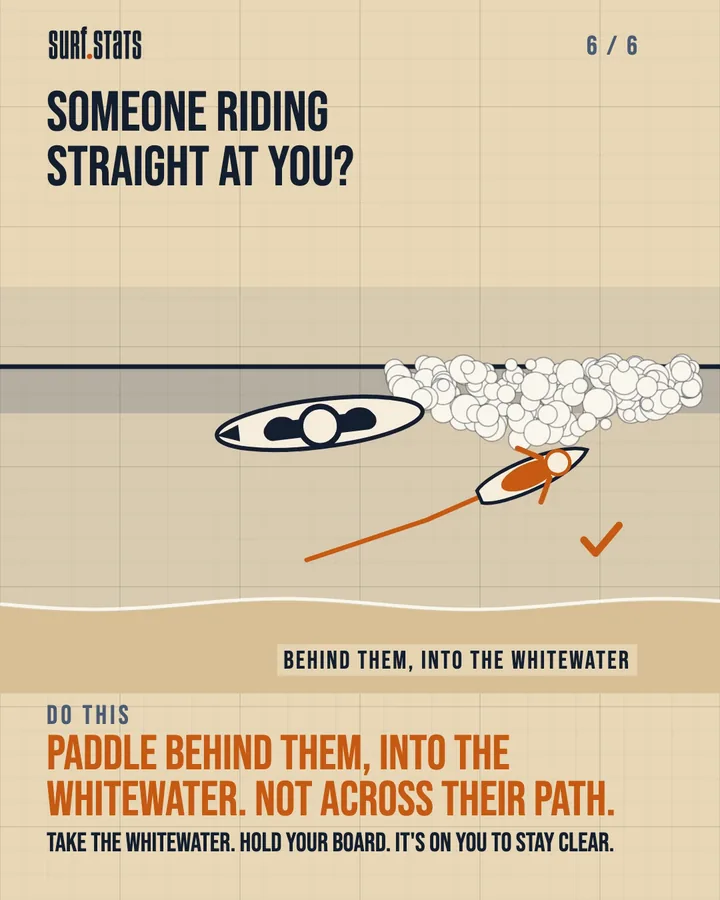
Do this: paddle behind them, into the whitewater. Not across their path.
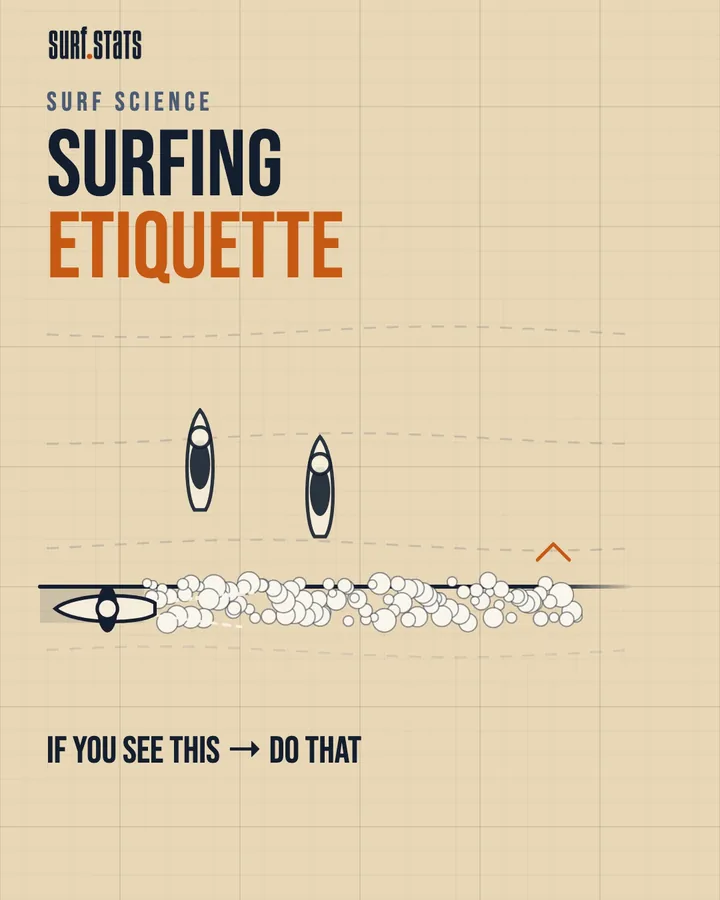
A surfer riding a wave has right of way over a surfer paddling out. Staying out of their way is your job. And as The Inertia warns, don't assume the rider can see you.
Surf guides agree on the direction: head for the whitewater, not the open face of the wave. That way you pass behind the rider instead of across their line.
Take the whitewater. Hold your board. Let the whitewater hit you, and keep hold of your board while it does.
Look first, then paddle out
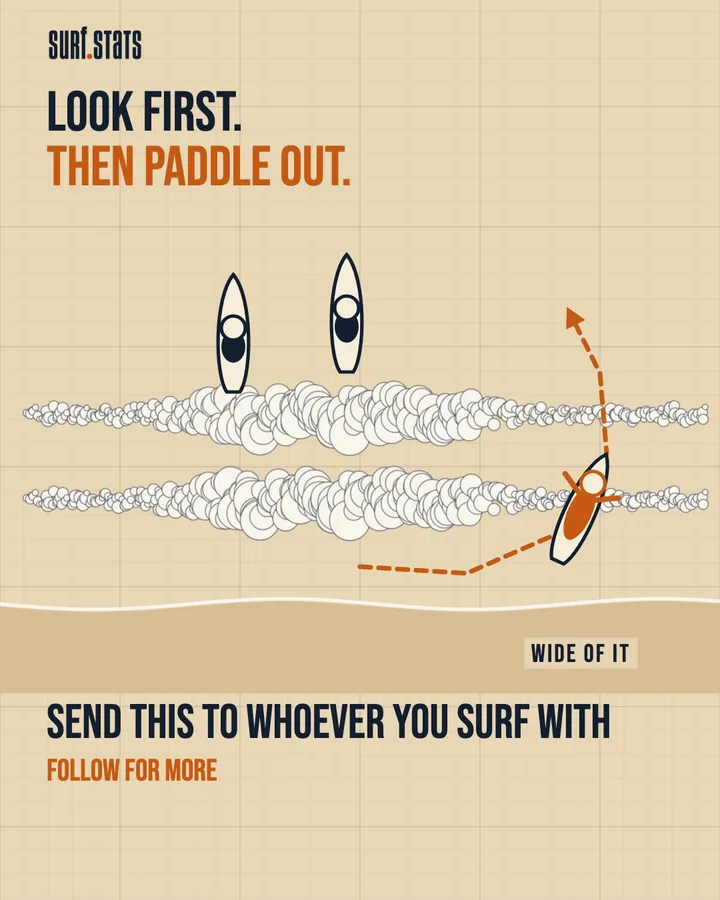
Where it breaks, the sets, where the rips are: you can see all three from the sand before you get wet. Send this to whoever you surf with.
Quick checklist
- Stop and look before you go in: where it breaks, the sets, where the rips are.
- Paddle out wide of the peak, not through it.
- Calm, dark gap: probably a rip. Still learning? Stay out.
- Pulled out: stay on your board, paddle along the beach, raise an arm.
- Wait on the sand for the set to pass, then paddle hard.
- Rider coming: go behind them, into the whitewater, and hold your board.