How to practice your surf stance at home
 Fin Selector: your fins in 1 minute
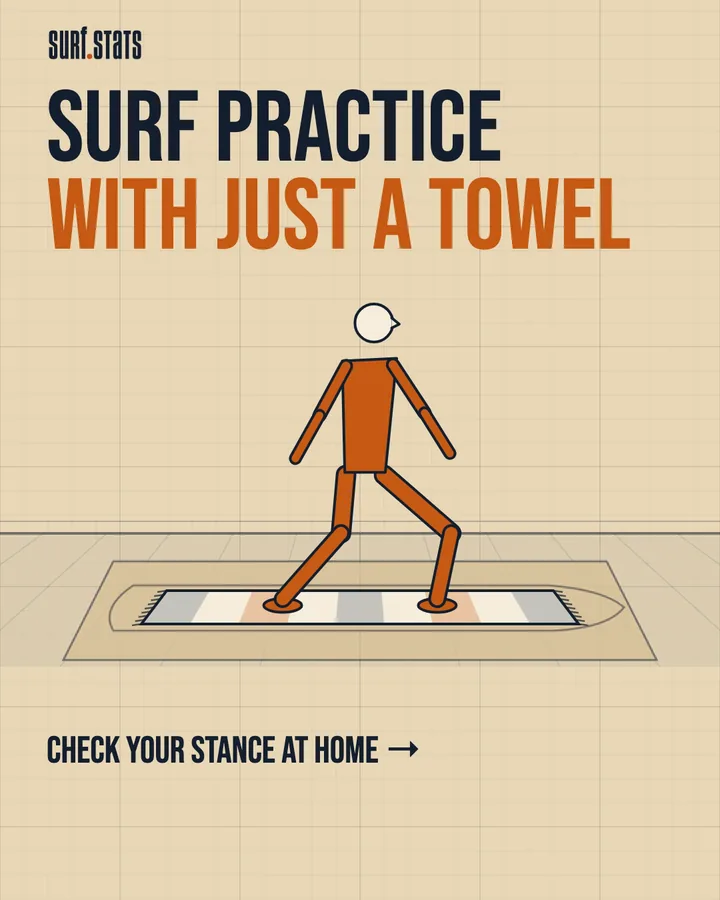
Lay a towel flat on the floor like a board and stand on it in your stance. Then check three things: both knees pointing the same way, one arm out each side, and your chest turned forward, where the board is going.
Falling off soon after you stand up? The pop-up isn't always the problem. Sometimes it's the stance you land in: your knees, your arms or your chest in the wrong place. The good news is that you can check your surf stance at home, standing still, with nothing but a towel.
The towel is a stand-in for your board. Lay it flat on the floor and pick one end as the nose. Surf media suggest practising on dry land too: Surfer Today says any flat surface will do if you don't have a board handy, and Surfline has beginners draw a line in the sand to stand in for the board's centre line.
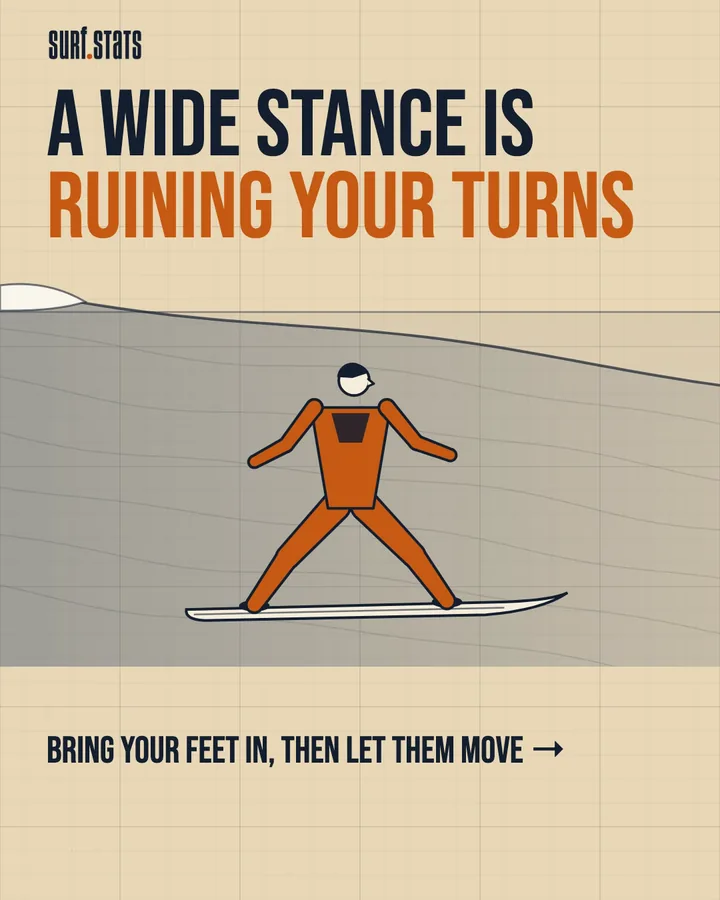
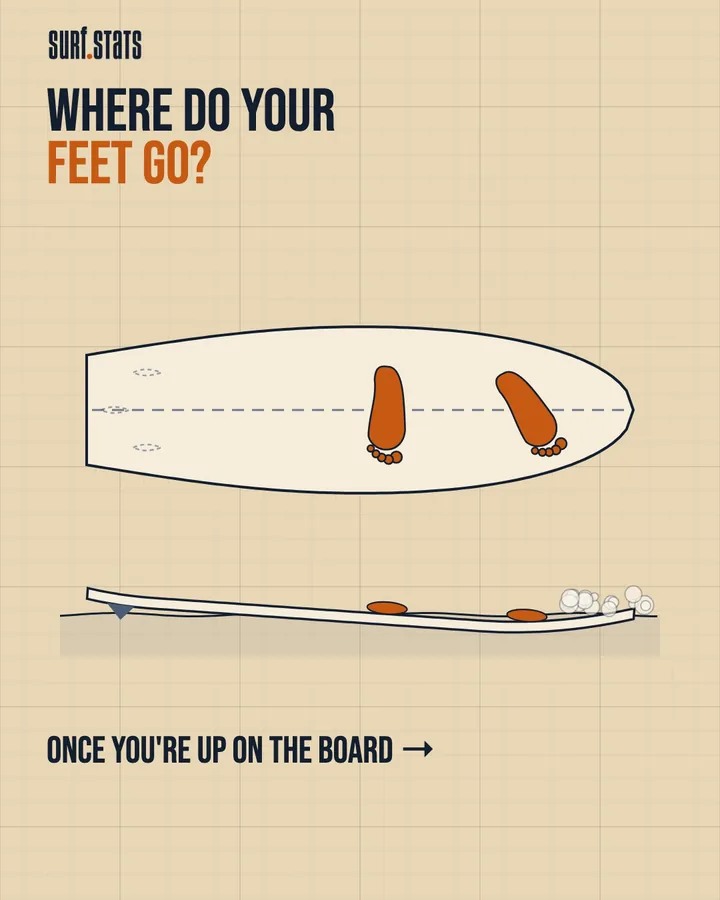
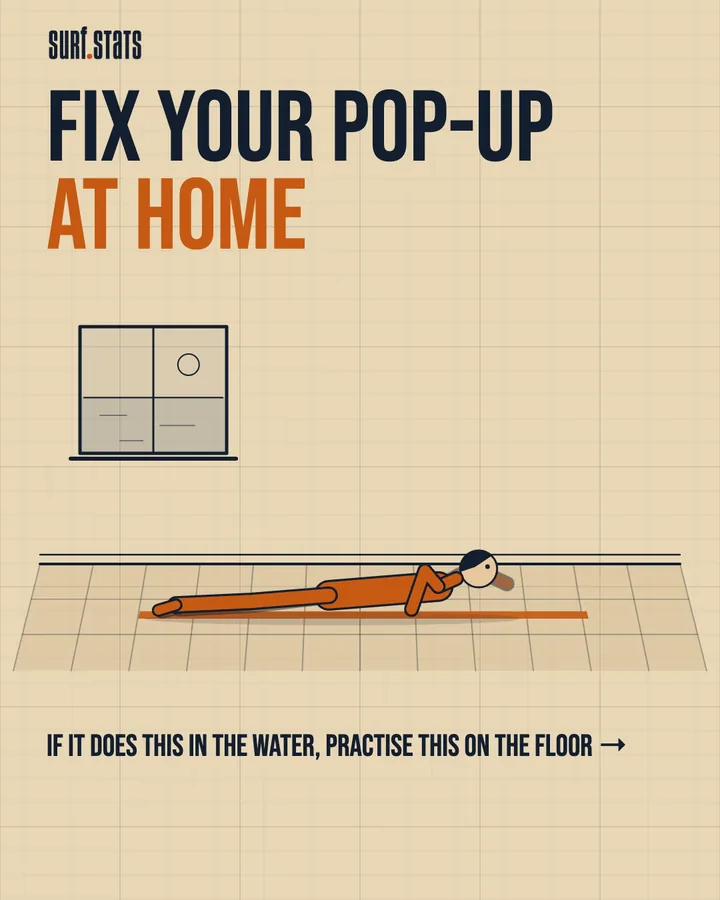
Below are three stance checks, and the fix for each. They come from our surf practice with just a towel reel, and each one is backed by at least two independent sources: surf media and a surf coaching programme. This post is about the stance you hold once you're up, not the pop-up itself. Where your feet go and how wide to stand are covered in where to put your feet on a surfboard and surf stance width.
1. Knees pointing apart?
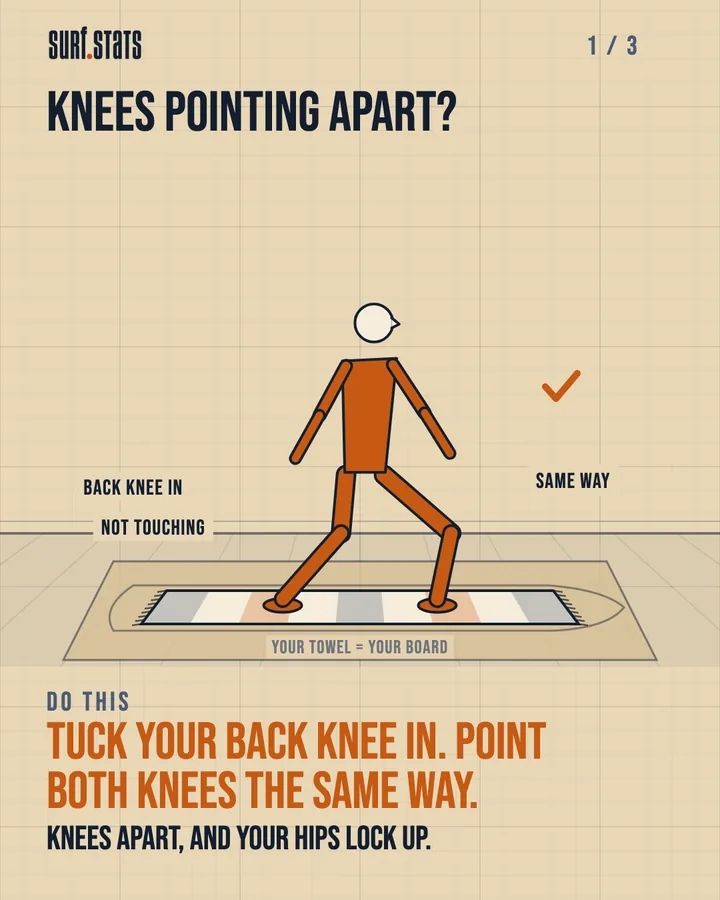
Try this: tuck your back knee in. Point both knees the same way.
Standing with your knees bowed out, one pointing each way, is a mistake Surfer Today says beginners, intermediate and even advanced surfers make. The trouble is what it does to your hips. Surfer Today says it gets in the way of moving your hips, and The Inertia says it locks them up and changes how your weight is spread. OMBE, a surf coaching programme, says that when your knees point in different directions, you can't shift your weight.
The fix is small. Your back foot sits more across the board than your front foot, so OMBE says to tuck the back knee a little further in until both knees face the same way.
Not touching, just the same way. The Inertia names the opposite mistake too: feet too close together and knees nearly touching. Keep your knees apart, both pointing in one direction. In The Inertia's version, the right stance lets you move your weight around while your feet stay put.
2. Both arms out to one side?
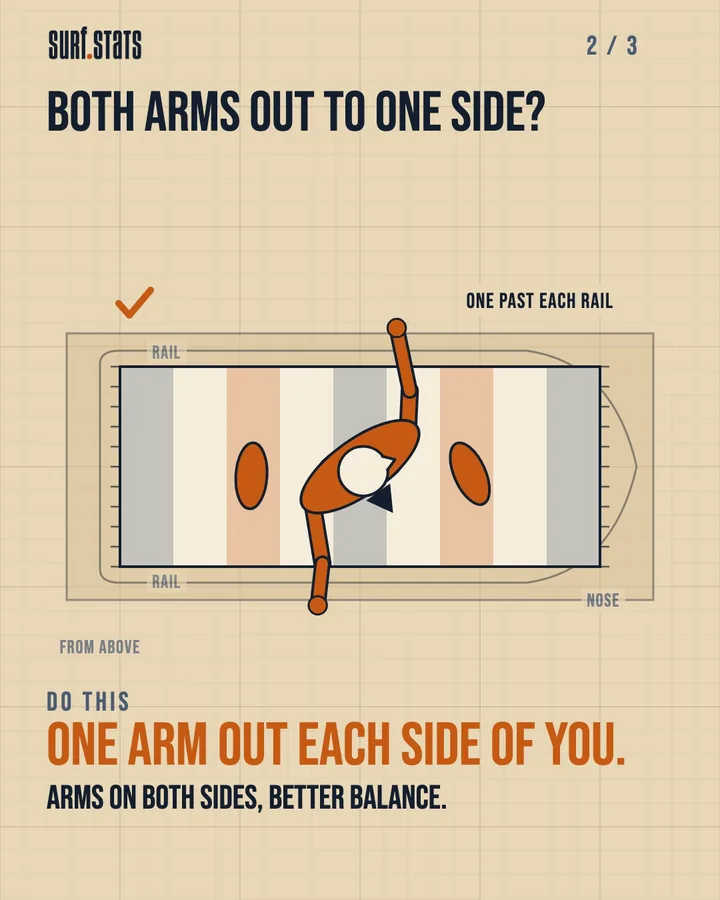
Try this: one arm out each side of you.
In an at-home drill, The Inertia lists landing with your arms on one side as a typical mistake. Its fix: don't let your arms drift to one side by instinct. Spread them out, one on each side of you.
OMBE gives a simple rule: your right arm just outside the right rail, your left arm just outside the left rail. On the towel, that's one arm past each long edge.
Why it matters: OMBE says that when both arms are on the same side of the board, your upper body can't face forward. That twist is the next check. And The Inertia says that thinking about where your arms are gives you greater balance and control.
Arms on both sides, better balance.
3. Chest turned to the side?
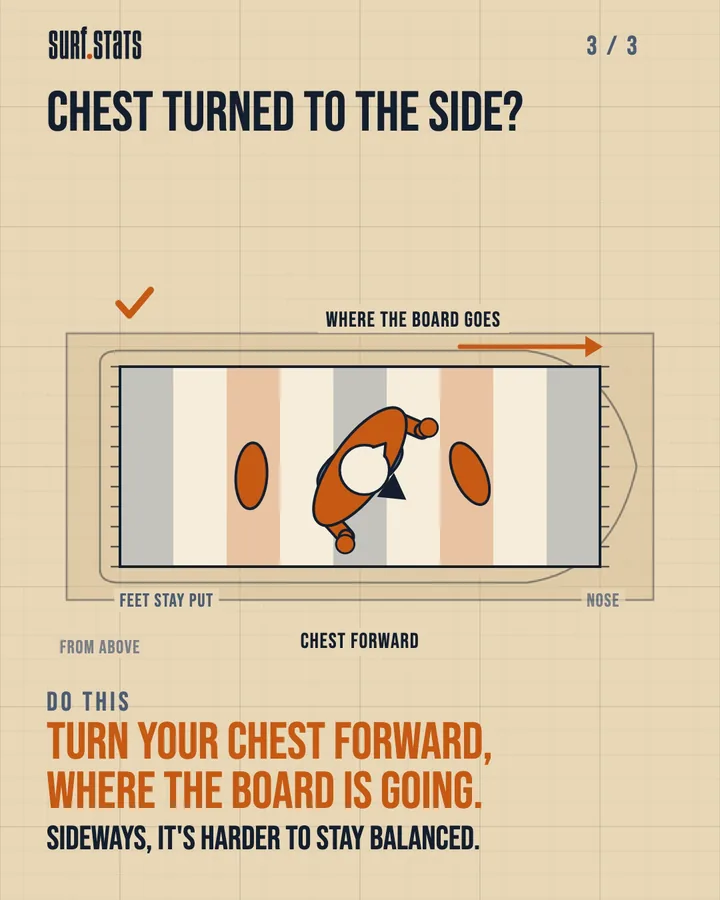
Try this: turn your chest forward, where the board is going.
The same Inertia drill lists another typical mistake: a chest pointing to the side instead of forward. OMBE says your upper body should be straight and face forward. Twist it toward a rail or turn it sideways, OMBE says, and it gets harder to look where you're going, to turn and to stay balanced. Surfer Today says the same about your shoulders: they stay facing forward.
On the towel there's no wave, so forward means toward the end you picked as the nose. On a wave, it's wherever the board is heading. Turn your chest only. Your feet stay where they are.
Sideways, it's harder to stay balanced.
Then take it to the water
Knees the same way. One arm each side. Chest forward. Check all three on the towel, then take your stance into the water. The Inertia's article on practising the pop-up at home ends the same way: practise at home, then get in the water and surf.
Know someone who keeps falling off? Send them this.
Quick checklist
- Lay a towel flat on the floor. One end is the nose.
- Stand on it in your surf stance.
- Knees: tuck the back one in, both pointing the same way. Not touching.
- Arms: one out past each side of the towel.
- Chest: turned forward, where the board is going. Feet stay put.
- Then take it to the water.