How wide should your surf stance be?
 Fin Selector: your fins in 1 minute
Keep your feet no wider than your shoulders: the wider the feet, the harder the board turns. Once you're riding along the wave, let your back foot move, back to turn and forward for speed, and slide it slow and smooth.
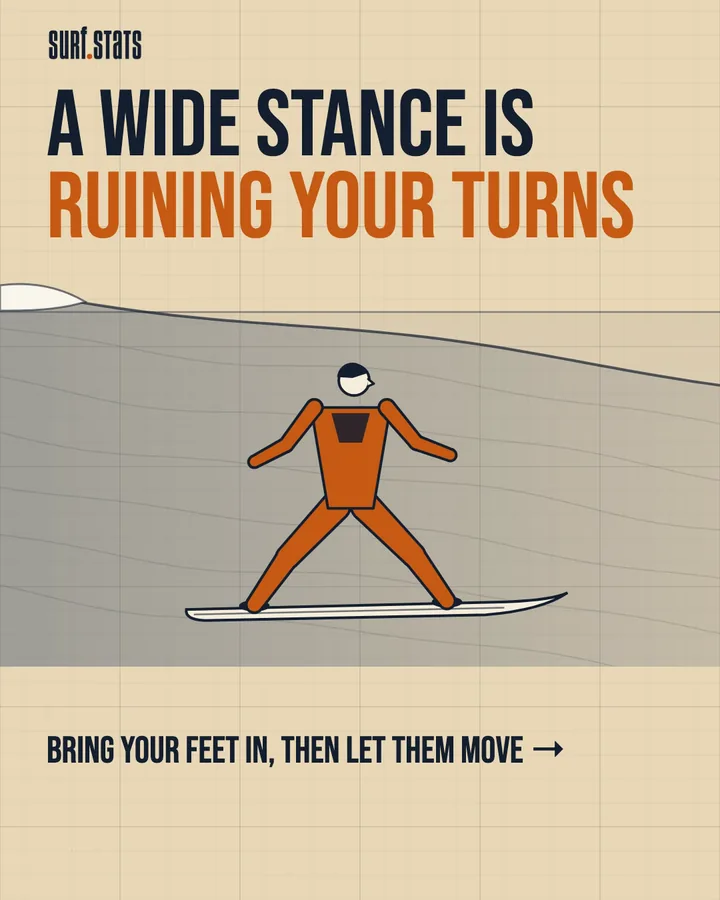
You're up, you're riding, and the board just won't turn. One reason can be your surf stance width: your feet are set too far apart. A wide stance makes the board harder to turn, and a back foot that never leaves its spot doesn't help either.
Below are three fixes: how wide to stand, how to move your back foot as you ride, and how to move it smoothly. They come from our stance width reel, and each tip rests on at least two independent sources: surf coaching sites and surf magazines.
1. Feet wider than your shoulders?
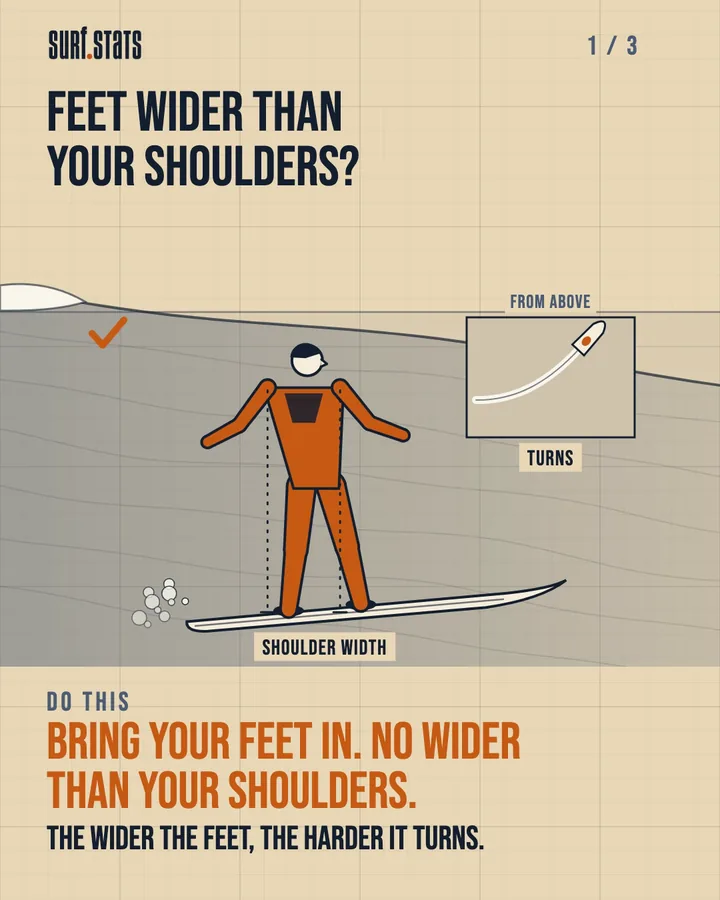
Try this: bring your feet in. No wider than your shoulders.
The wider the feet, the harder the board turns. Surf Science puts it simply: the further apart your feet are, the less freely you can move, and the harder the board is to maneuver. Gershon Borlai, writing in The Inertia, lists feet set too wide among the things going wrong when beginners first try to turn, and he sells the fix as the way to better turns.
So how wide is right? Your shoulders are the measuring stick:
- Shoulder width is the upper limit. Borlai sets shoulder width as the most your feet should be apart.
- Wider makes speed harder to control. OMBE says that when your feet sit wider (or narrower) than your shoulders, you'll struggle to control your speed or even to speed up.
- Beginners, start at shoulder width. Surfer Today's advice for new surfers is the same: feet shoulder-width apart.
Does a wide stance at least feel steadier? The sources we read disagree on that, so we won't tell you it does. If your feet keep landing wide straight out of the pop-up, start with the landing itself in how to pop up on a surfboard.
2. Back foot stuck in one spot?
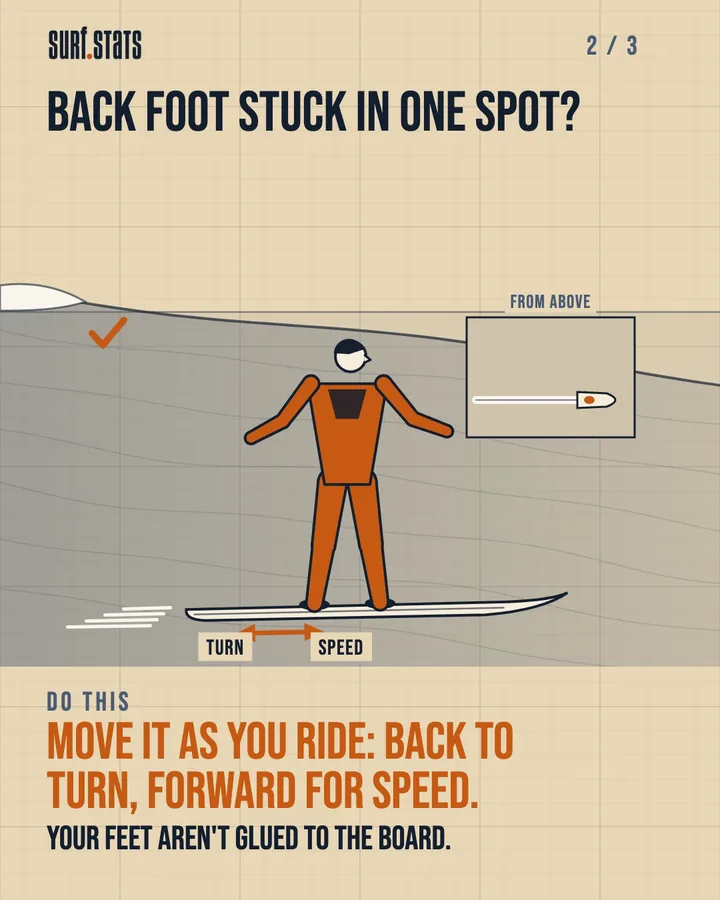
Try this: move it as you ride. Back to turn, forward for speed.
Plenty of surfers think they have to stay put once they're standing. OMBE's coaches say otherwise: you don't have to be glued to the board, and your feet are free to move.
Where you put your back foot changes what the board does. The Inertia notes that surfers learn early on that foot placement affects both speed and how well the board turns. The two directions:
- Back to turn. Barefoot Surf says having your back foot further back gives you more control when you want to change direction.
- Forward for speed. Barefoot Surf says putting your feet forward gives you more speed. Pro surfer Ace Buchan describes the same thing in The Inertia: he shifts his back foot forward to gain speed, then steps back when he wants the board to turn more easily.
Surfer Today adds a related point for taking off on small, slow, mushy waves: there, you may need to set your feet further toward the nose.
This is a step for once you're up and riding along the wave. Barefoot Surf pitches moving your feet at surfers who are progressing to intermediate, once they find that one fixed stance doesn't suit every wave.
3. Moving your feet mid-ride?
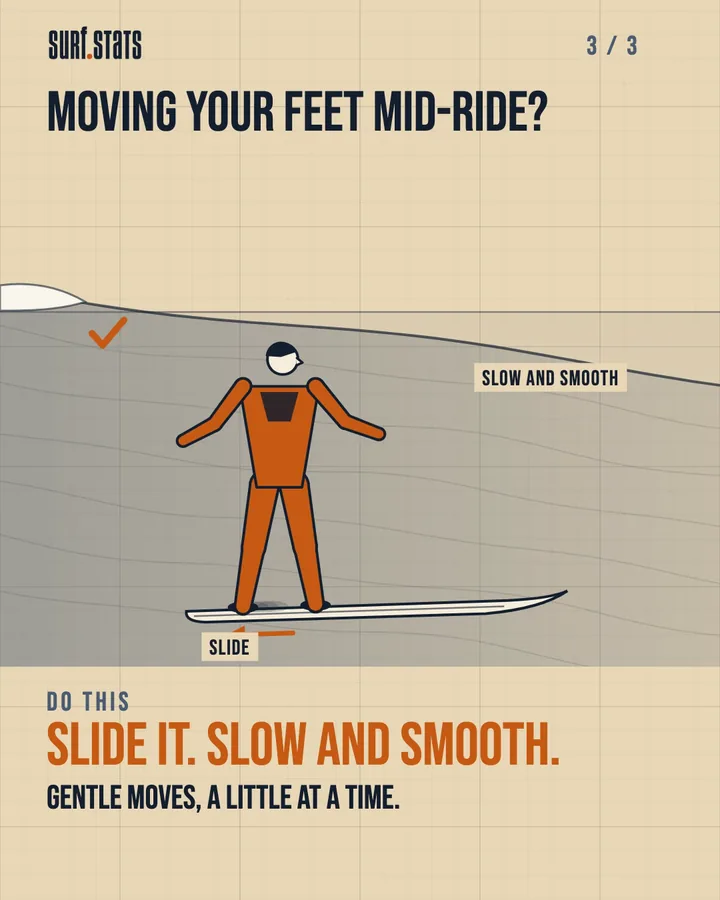
Try this: slide it. Slow and smooth.
Barefoot Surf says adjusting your stance and where your feet sit is fine at any point in the ride. The way you move matters, though:
- Slide the foot along the deck. Barefoot Surf says to move slowly and gently and slide your feet into place.
- Keep it smooth. OMBE describes the movement it wants as graceful, slow and smooth.
- Gentle moves, a little at a time. Barefoot Surf says to make only subtle, gentle adjustments, and OMBE says to adjust your stance gracefully until it's comfortable.
OMBE's point: surfing is about moving, so you're free to move your feet. Just do it gently.
Quick checklist
- Feet no wider than your shoulders.
- The wider the feet, the harder the board turns.
- Your feet aren't glued to the board.
- Back foot back to turn, forward for speed.
- Move it once you're riding along the wave.
- Slide it, slow and smooth, a little at a time.
Send this to a friend who surfs too wide. If you're working on your turns next, read how to do a cutback.