How to do a cutback in surfing
 Fin Selector: your fins in 1 minute
Turn when you start to slow, before the wave goes flat. Look back at the whitewater first, stay low and turn your hips, keep the arc smooth, then turn again just before the foam and ride on along the wave. A cutback is an S.
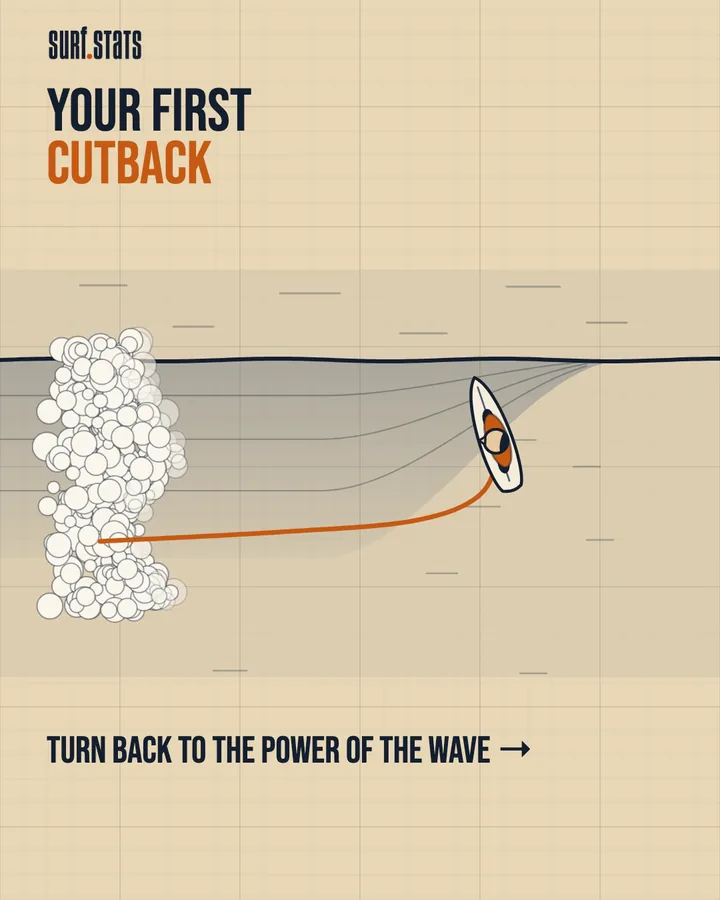
A cutback is the turn that takes you back to the power of the wave. You ride out onto the shoulder, the part of the wave away from where it's breaking, and the wave starts to lose its push. So you turn back toward the breaking part, then turn again and carry on along the wave. Seen from above, your line makes an S.
This guide is for surfers who already ride along unbroken waves and do a bottom turn. It works frontside and backside. Below are five common ways a first cutback goes wrong, in the order the move happens, and the fix for each one. They come from our your first cutback reel, and every fix is backed by at least two independent sources: surf magazines and surf coaches.
1. Cutback dies where the wave goes flat?
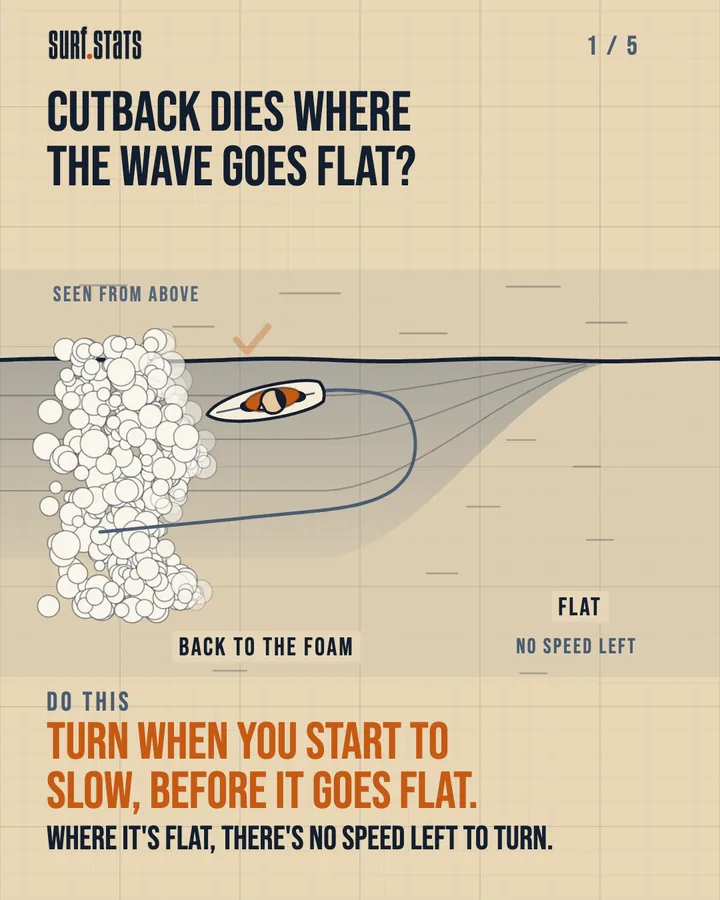
Try this: turn when you start to slow, before it goes flat.
Where it's flat, there's no speed left to turn. Ride on along a part of the wave that's getting flatter and you lose speed. That moment, when you feel yourself slowing, is your cue to cut back. Wait until the wave has gone flat and the speed you needed for the turn is gone. Carve magazine warns that once your speed is gone, you stall and drop off the back of the wave.
There's a catch the other way. If you're struggling to finish the turn, coaches say to try it further out on the shoulder first. Both are true: you need room to turn, and you need slope left to turn on. So the cue is a moment, not "sooner" or "later": turn when you start to slow. Barefoot Surf and Carve both suggest practising on steeper parts of the wave.
2. Still looking ahead as you turn back?
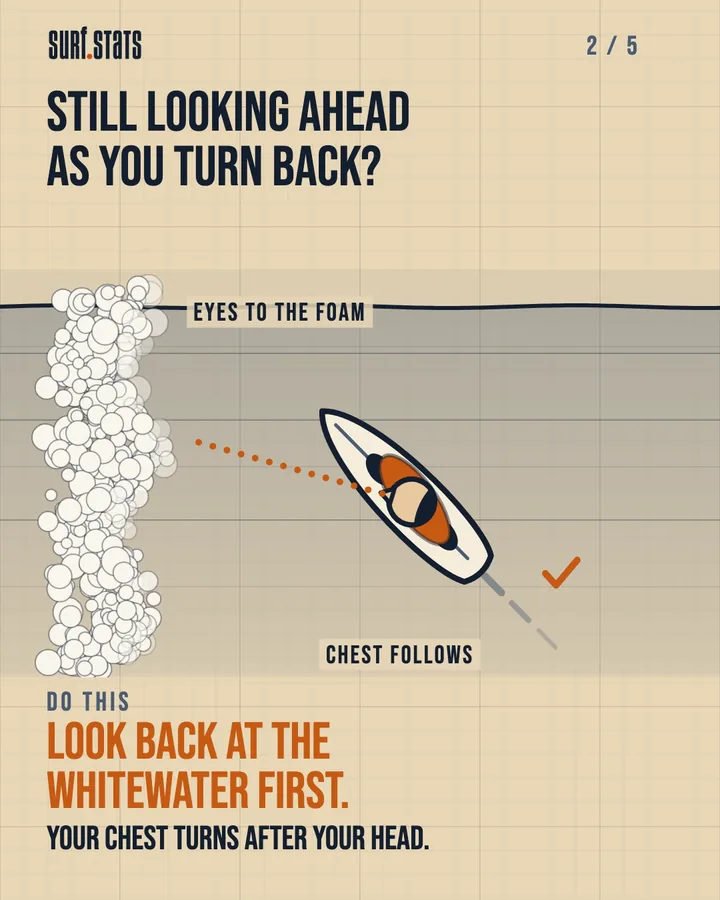
Try this: look back at the whitewater first.
Your chest turns after your head. Look back at the whitewater, and your shoulders and upper body come round after your eyes. Keep looking ahead, toward the open shoulder, and you lose control of where the turn goes.
Wavelength magazine calls not looking where you're going the most common mistake for people first learning the cutback. Barton Lynch, the 1988 world champion, makes the same point in Stab for top turns and cutbacks alike: the board goes where you look. Your target is the whitewater.
3. Board stops turning halfway round?
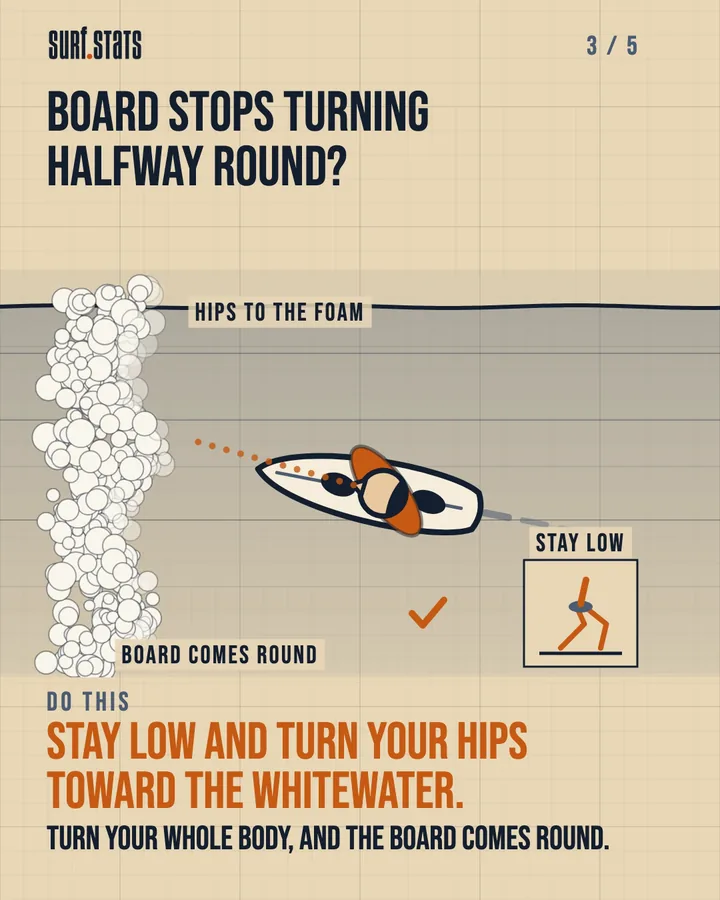
Try this: stay low and turn your hips toward the whitewater.
Turn your whole body, and the board comes round. If only your head and shoulders turn, the turn runs out of power halfway. Your hips and legs have to follow toward the breaking part too.
Stay low while you do it. Wavelength lists legs that are too straight as another common cutback mistake: once your legs straighten, you lose control of the board. Surfing-Waves also says to keep your body compressed, knees bent, all the way round.
4. Yanking the board round and losing your speed?
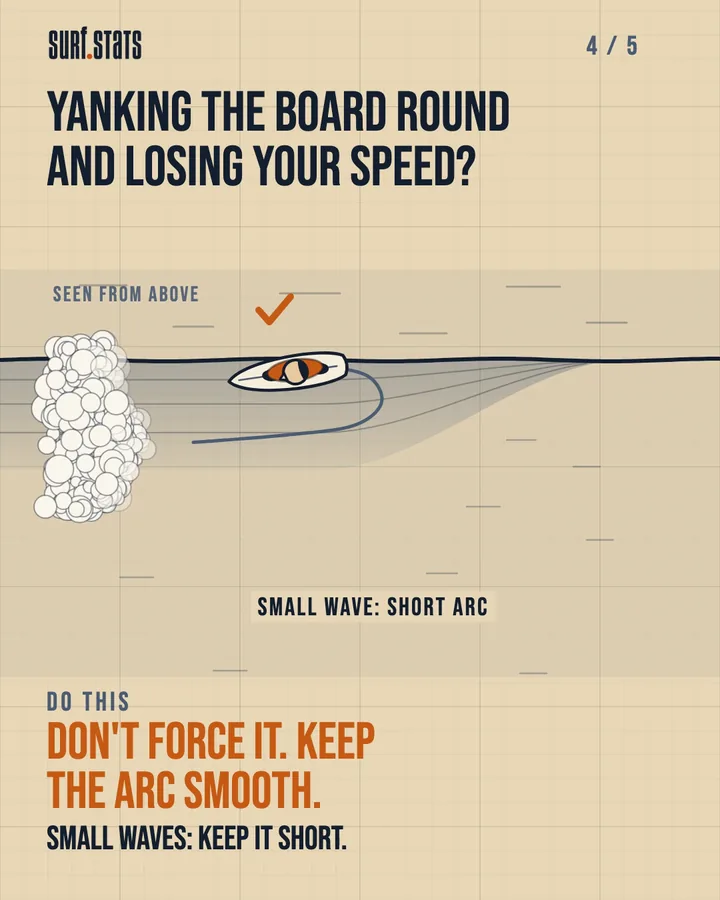
Try this: don't force it. Keep the arc smooth.
Coaches say not to force it or jerk the board round; let the turn flow. Carve magazine says the key is to keep the turn smooth. A smooth, round arc holds your speed. A sharp yank throws it away.
On small waves, keep it short. When the wave is small and weak, coaches suggest a quick, tight cutback so you keep your speed.
5. Turned back, and kept going into the foam?
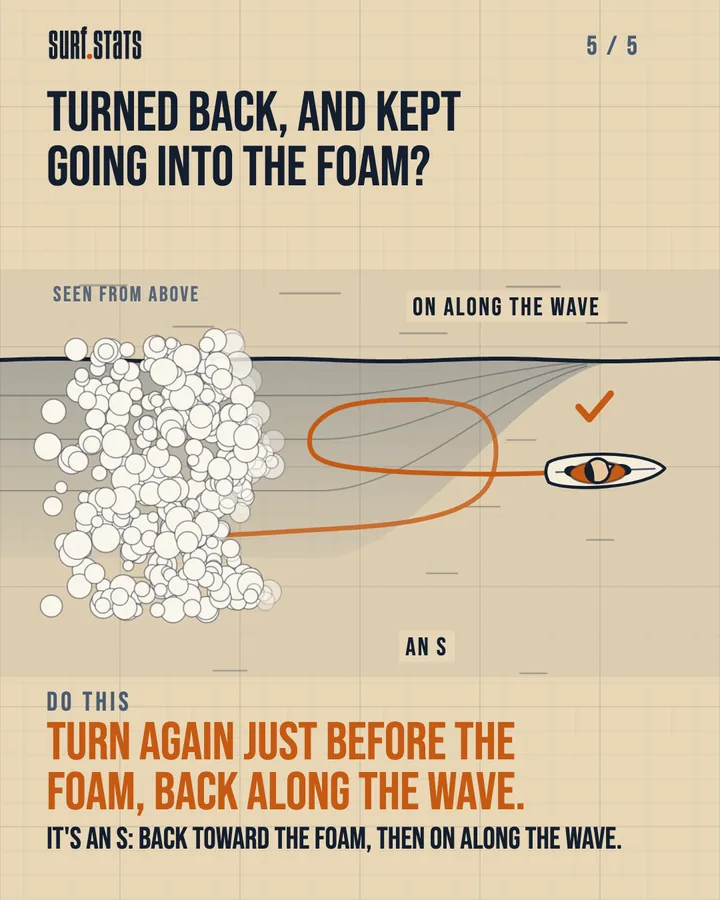
Try this: turn again just before the foam, back along the wave.
It's an S: back toward the foam, then on along the wave. The first turn points you at the whitewater. If you never make the second turn, you keep going straight into it. Carve magazine notes that when the foam gets under the tail, the board goes loose and keeping your balance gets hard.
So as you get close to the foam, start turning again, back toward the open part of the wave. Barefoot Surf's coaching sequence shows the head leading this turn too: as you near the whitewater, your head is already turning back the other way.
Putting it together
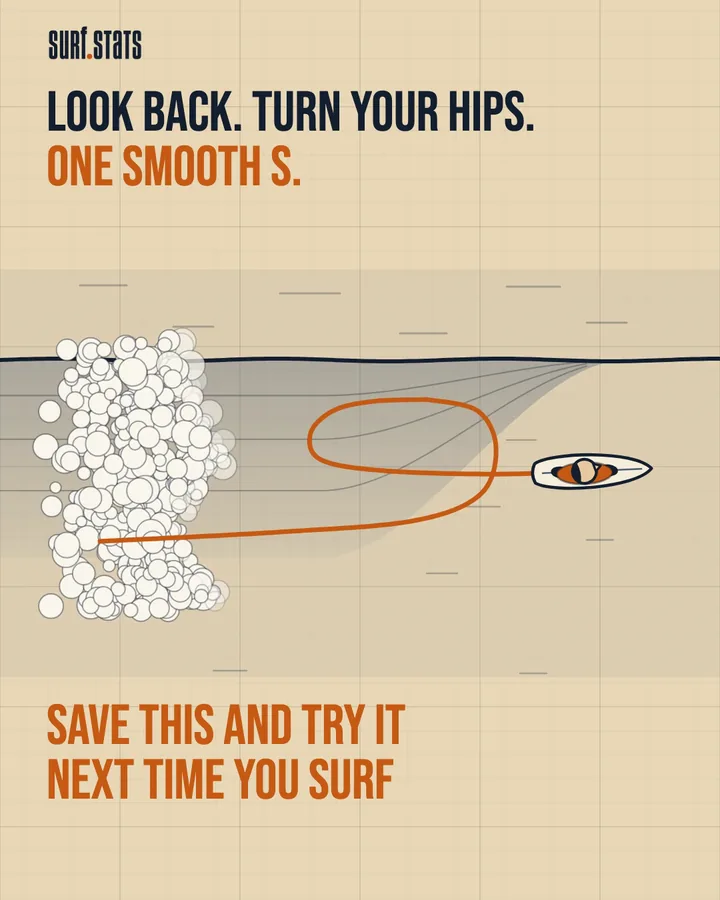
Look back. Turn your hips. One smooth S. Save the reel and try it next time you surf. If you're still working on getting to your feet quickly, start with how to pop up on a surfboard.
Quick checklist
- Turn when you start to slow, before the wave goes flat.
- Look back at the whitewater first; your chest follows your head.
- Stay low and turn your hips toward the whitewater.
- Don't force it. Keep the arc smooth, and short on small waves.
- Turn again just before the foam, and ride on along the wave.