How to do a bottom turn
 Fin Selector: your fins in 1 minute
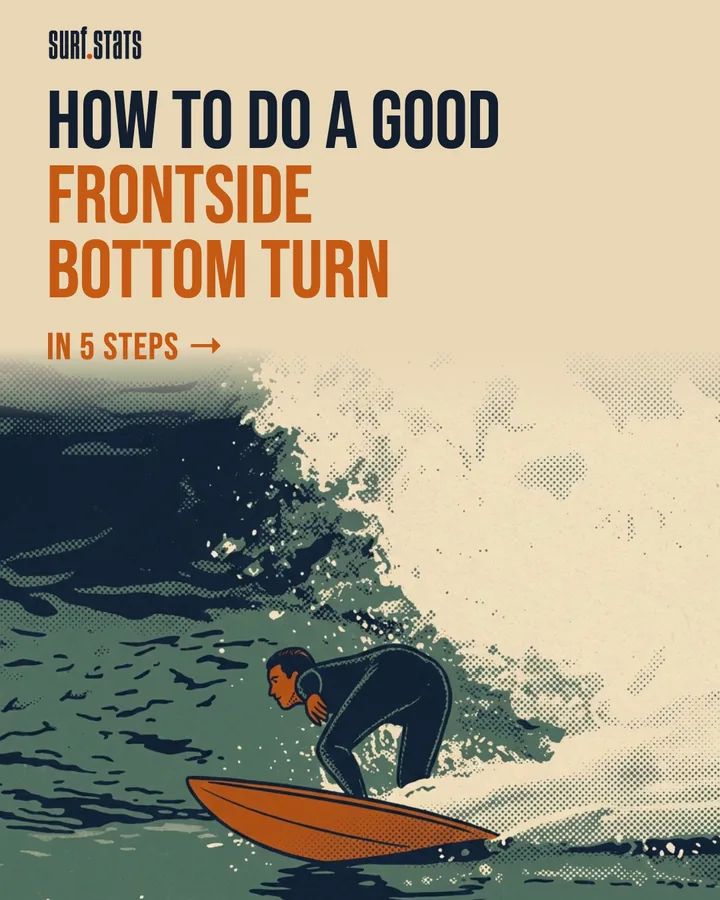
Get low with your knees bent as you reach the bottom, turn your head and shoulders toward where you want to go, put your weight on your toes so the board goes on its rail, push with your back foot, and stand tall as you climb the wave.
You've popped up, you've made the drop, and now you're at the bottom of the wave. The turn you make there is the bottom turn, and it sets up whatever you do next on that wave.
Here is how to do a bottom turn in five steps, in the order your body does them. They come from our how to do a good frontside bottom turn reel, and each step rests on at least two independent sources: surf magazines, coaching guides and a surfing guidebook. This post covers the frontside bottom turn, where you face the wave. Backside works the same way overall, but your weight goes on your heels instead of your toes. Still working on getting to your feet? Start with how to pop up on a surfboard.
What is a bottom turn?
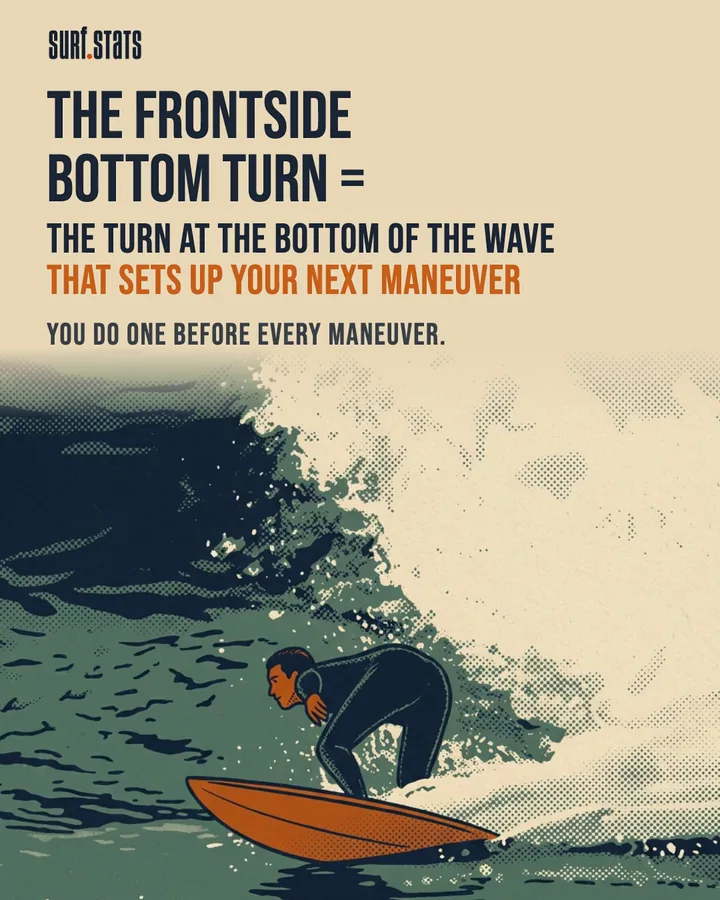
The short version: it's the turn at the bottom of the wave that sets up your next maneuver.
The bottom turn happens down in the trough, the low part of the wave, usually right after the drop. You turn there and head back up the face. In the reel's words: you do one before every maneuver.
It does two jobs:
- It carries your speed. The drop gives you speed, and the bottom turn carries it into the rest of the ride, along and up the wave.
- It sets up what comes next. Surf guides and coaches describe it as the turn the next move is built on.
1. Get low
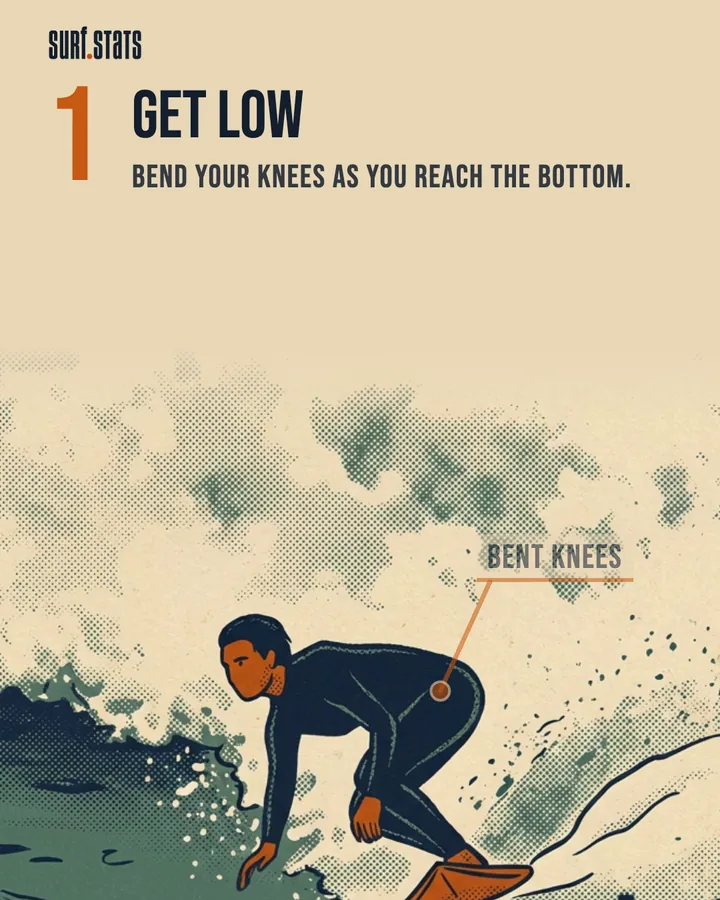
Try this: bend your knees as you reach the bottom.
A low stance gives you better balance. Bend at the knees and let your legs do the work.
Don't just lean your upper body into the turn: use your legs, not only your torso. Alf Alderson's beginner's guide warns that trying to throw your body and board into the turn will likely end in a fall.
2. Look where you want to go
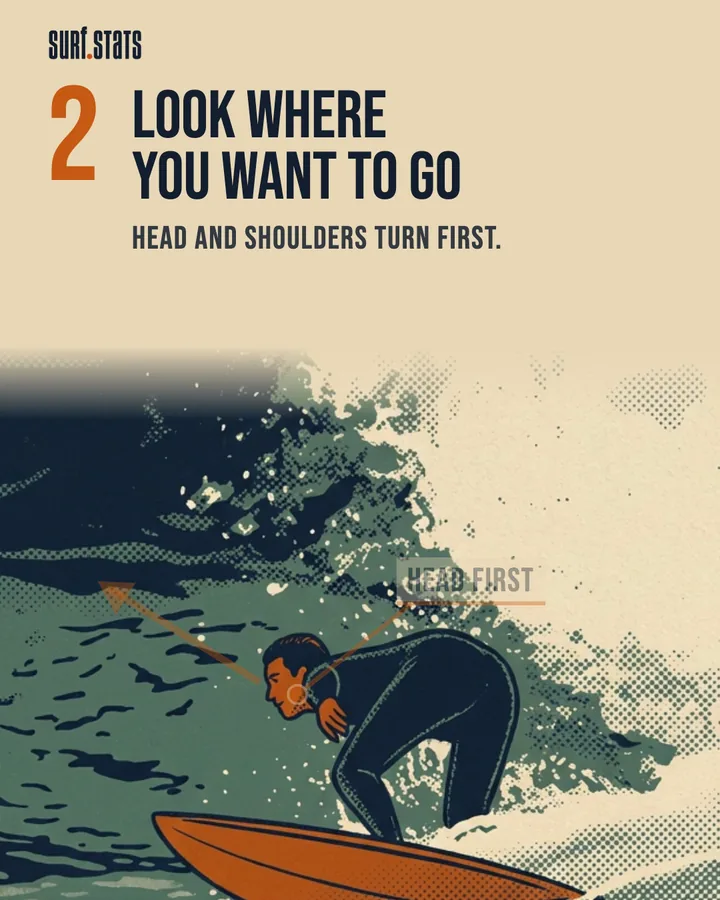
Try this: head and shoulders turn first.
Your turn starts with your head. Look at the part of the wave you want to go to. Then turn your shoulders the same way, and your body and board follow.
3. Weight on your toes
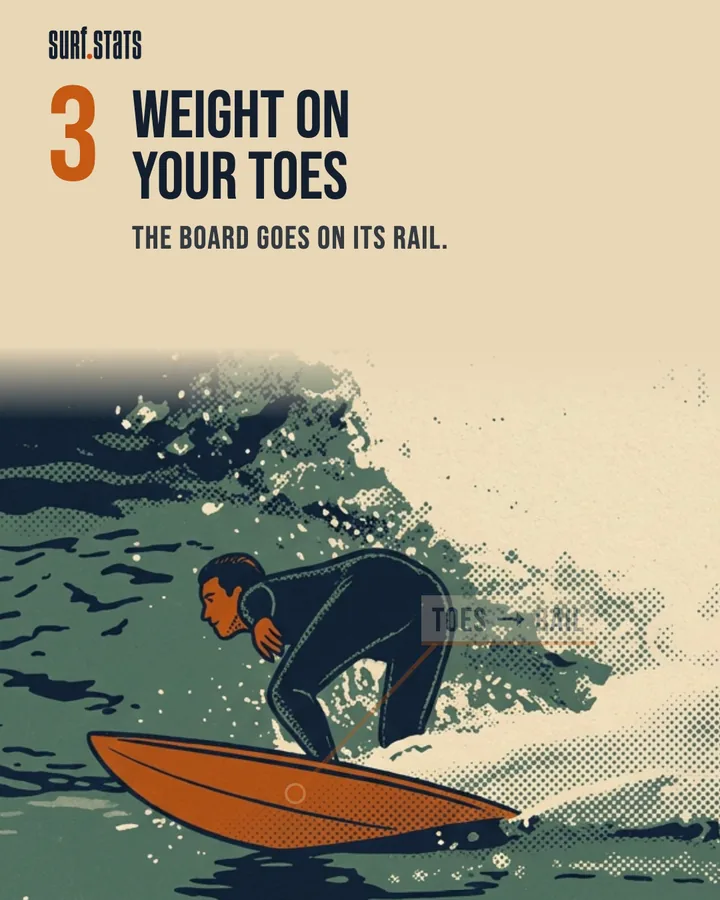
Try this: weight on your toes. The board goes on its rail.
On a frontside bottom turn you face the wave, so you lean toward it and press through your toes. That tips the board onto its rail, the side of the board nearest the wave. Once the rail is in the water, the board starts to turn.
Lean into the wave, but not too far. Surfer Today's advice on the frontside turn is not to lean your body too far forward, and it counts digging the rail among the most common bottom-turn mistakes.
4. Push with your back foot
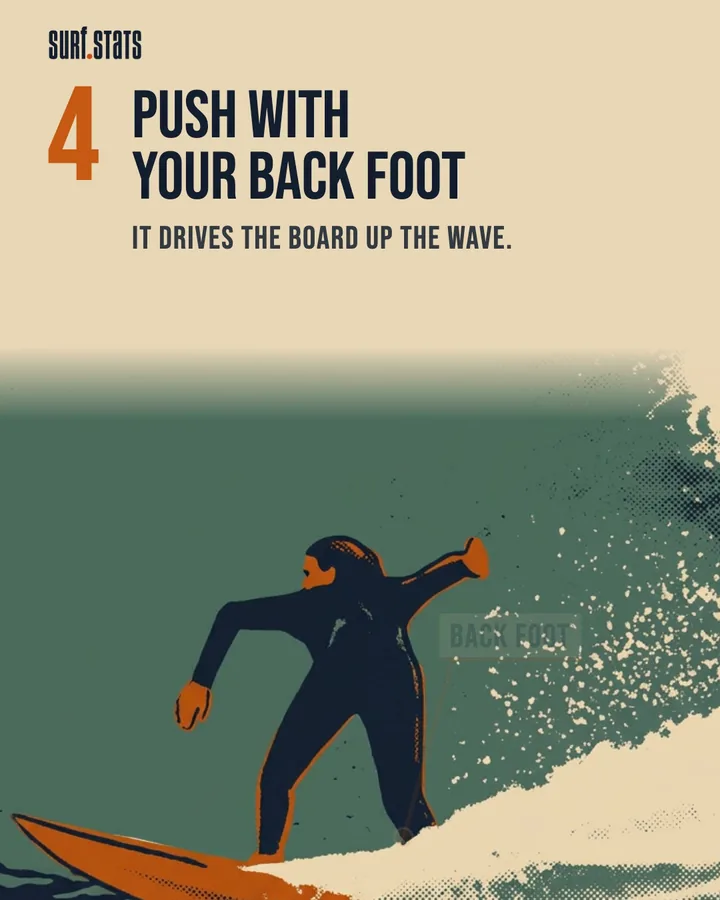
Try this: push with your back foot. It drives the board up the wave.
Then shift more of your weight onto your back foot. That push is what drives the board up the wave.
5. Stand tall as you climb
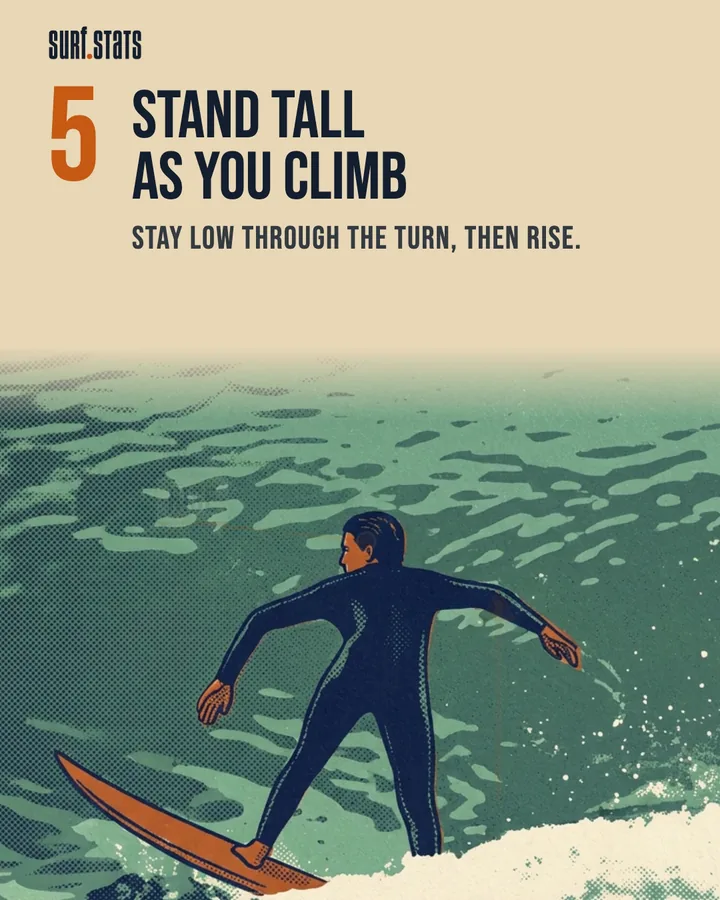
Try this: stay low through the turn, then rise.
Stay compressed while you turn, then extend your legs and open up your body as you climb the face. Alf Alderson's guide compares bent legs to a spring: they store energy, then let it go smoothly.
A mistake to avoid: going through the turn upright, with your legs straight. Keep it low, then rise.
Where on the wave do you turn?
- At the bottom. Start the turn where the wave flattens out and begins to curve back up. Not up on the face.
- Close to the curl. Stay close to the curl, where the wave has power. Out on the shoulder, there is less.
Researchers have looked at this turn too. A 2024 study of 199 frontside bottom turns by professional surfers at the 2017 J-Bay contest found that the way surfers came out of the turn helped predict their next move.
Low. Look. Toes. Push. Rise.
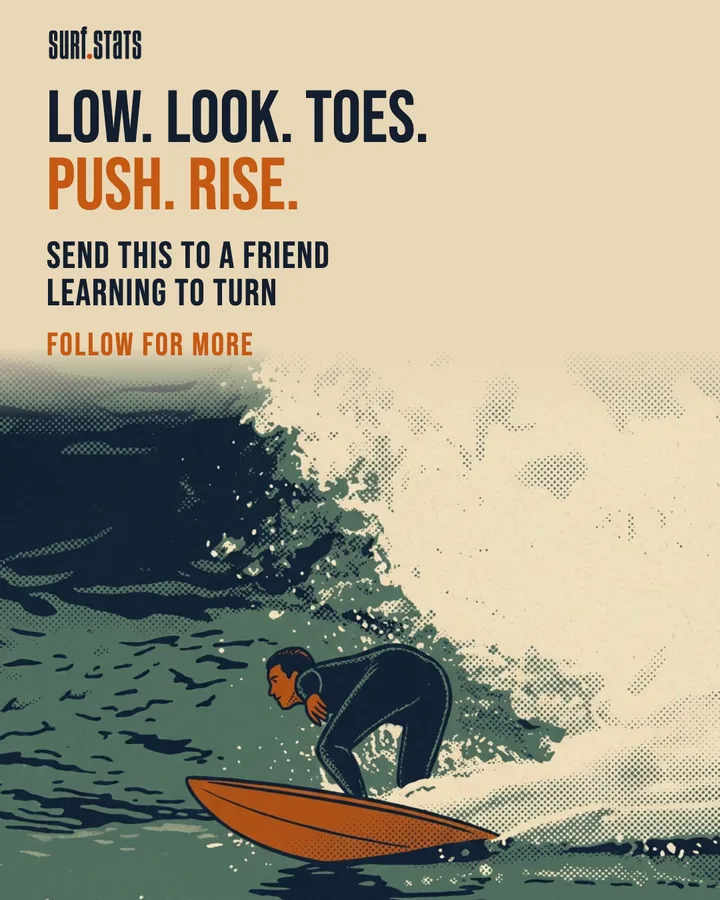
Five words to remember, one per step: get low, look where you want to go, weight on your toes, push with your back foot, stand tall as you climb.
Quick checklist
- Bend your knees as you reach the bottom. Legs, not just upper body.
- Head and shoulders turn first. Look where you want to go.
- Frontside: weight on your toes, board on its rail. Don't over-lean.
- Back foot drives the board up the wave.
- Stay low through the turn, then rise as you climb.
- Turn at the bottom, close to the curl.