Where to put your feet on a surfboard
 Fin Selector: your fins in 1 minute
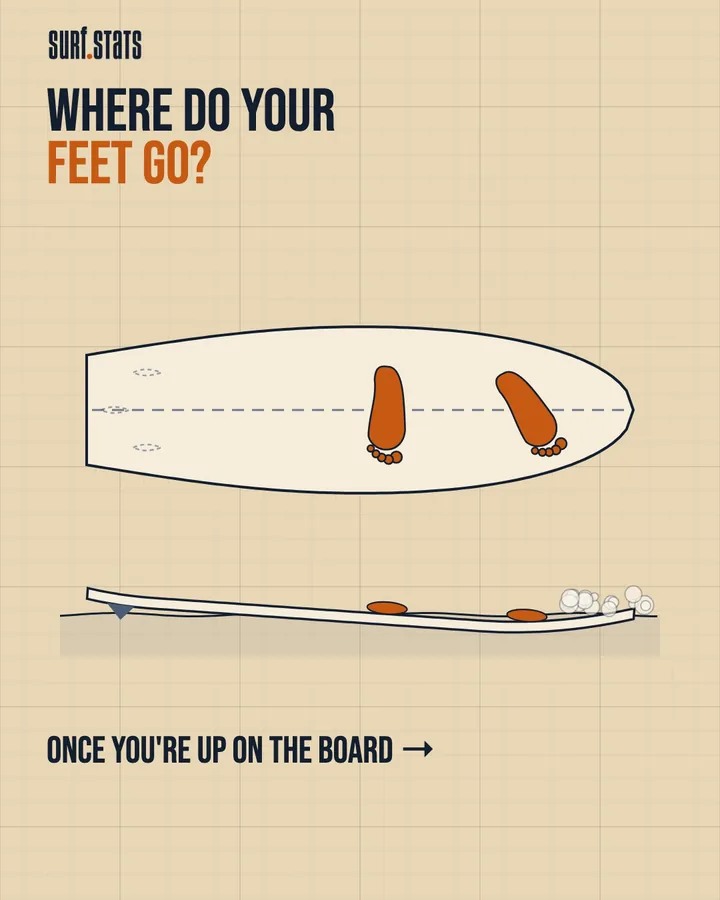
Once you're standing, turn both feet across the board, the front one turned out a bit more. Keep the front foot from going past the middle, move the back foot toward the tail over the fins, and keep your arches on the middle line.
Getting up on the board is one skill. Where your feet end up once you're standing is another. Surf magazines and coaches agree on why it matters: get your feet in the wrong place and the rest of the ride suffers.
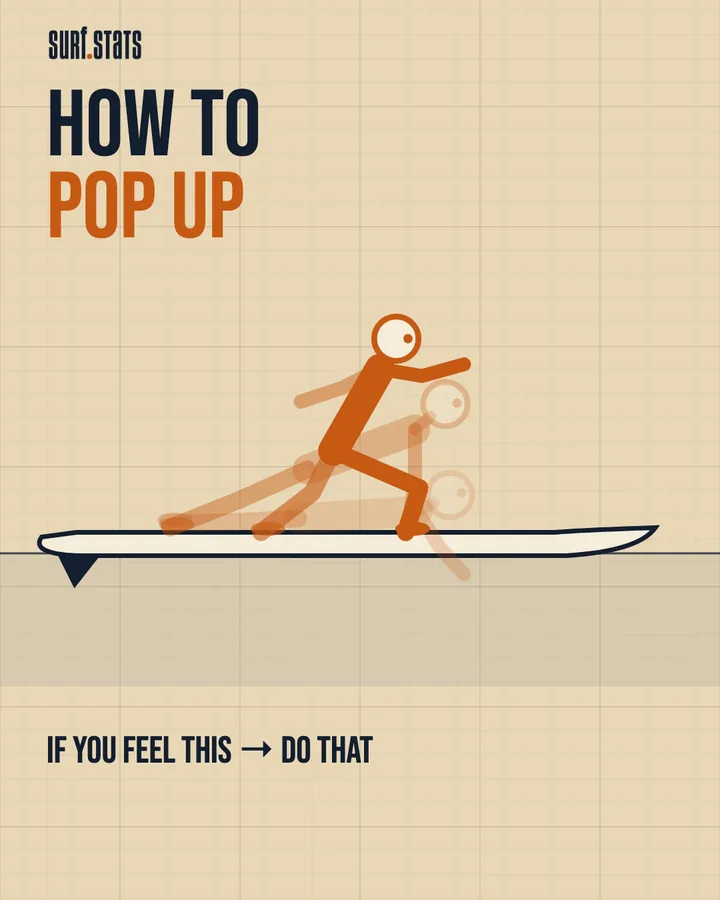
This post starts once you're already up. If you're still working on getting to your feet, start with how to pop up on a surfboard.
Below are five foot placement problems you can spot by looking down at your own board, and the fix for each. They come from our where do your feet go reel. This is coaching consensus, not science: each fix is backed by at least two independent sources, surf magazines and surf coaches.
1. Front foot pointing at the nose?
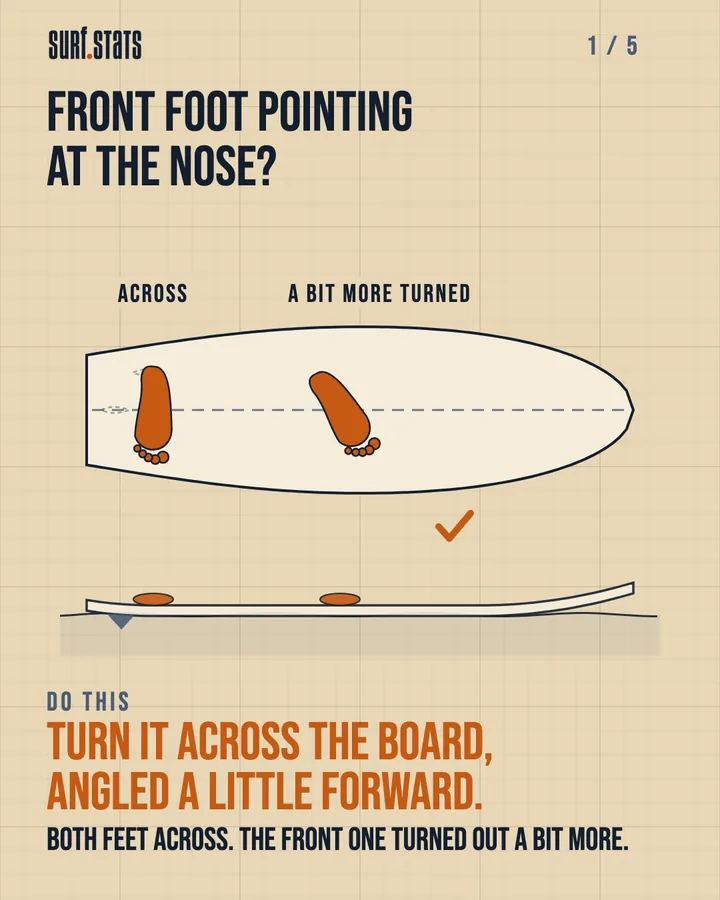
Try this: turn it across the board, angled a little forward.
According to Surfer Today, many first-timers stand with the front foot aimed at the nose when it should point sideways.
Where your feet go on a surfboard starts with which way they point:
- Both feet go across the board, not along it.
- The front foot is turned out a bit more, with the toes angled a little toward the nose.
- The back foot is across too, just not as turned out.
"Angled a little forward" is about where your toes point, not where the foot sits. Moving the whole foot up the board is a different problem, and it's the next one.
2. Feet too far forward?
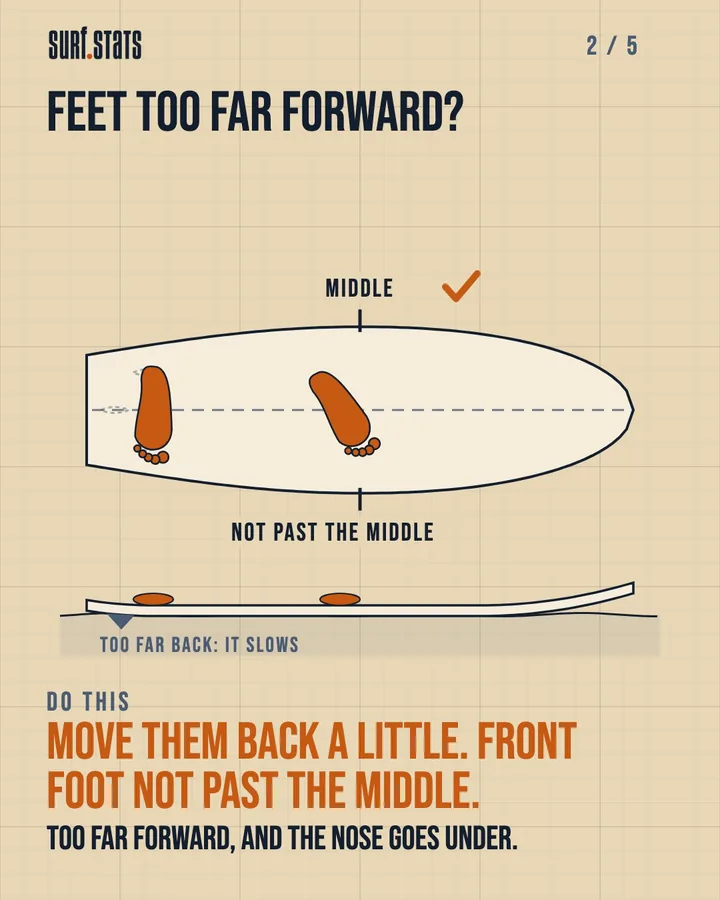
Try this: move them back a little. Front foot not past the middle.
Stand too far up the board and the nose is more likely to go under. Stand too far back and you slow the board down.
So the front foot stays at the middle of the board or behind it, never past it. Think of the middle as a limit, not a target you have to hit exactly. If your front foot is past it, slide both feet back a little.
3. Back foot near the middle?
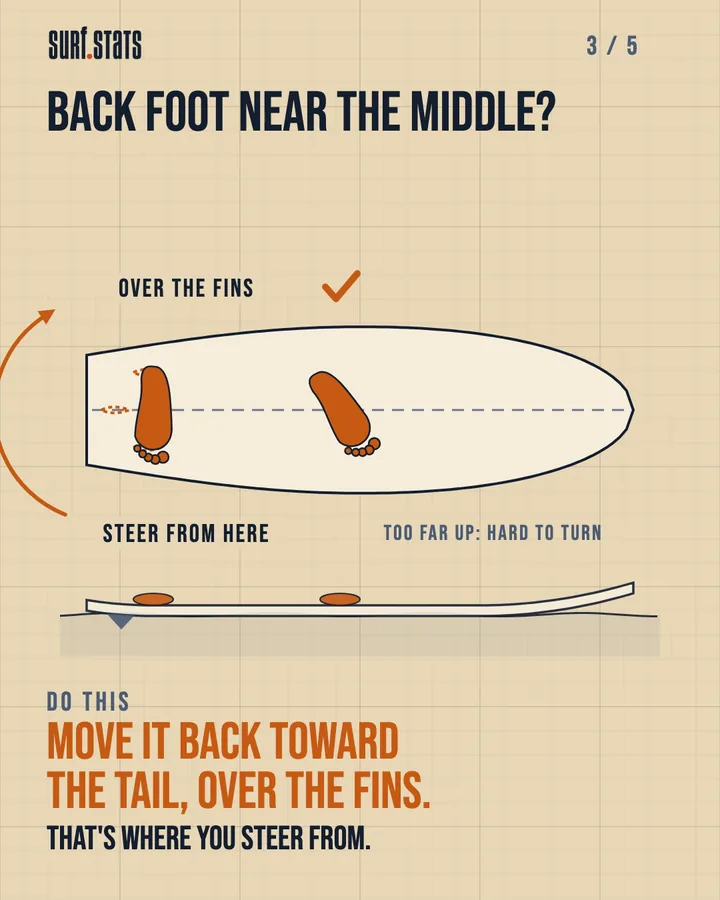
Try this: move it back toward the tail, over the fins.
Your back foot is where you steer from. With it too far up the board, near the middle, the board is hard to turn. Move it back toward the tail so it sits over the fins.
Treat this as an area, not one exact spot. For a beginner, toward the tail and over the fins is the place to aim. OMBE, a surf-coaching site, says the exact spot is nuanced and depends on what you're doing on the wave.
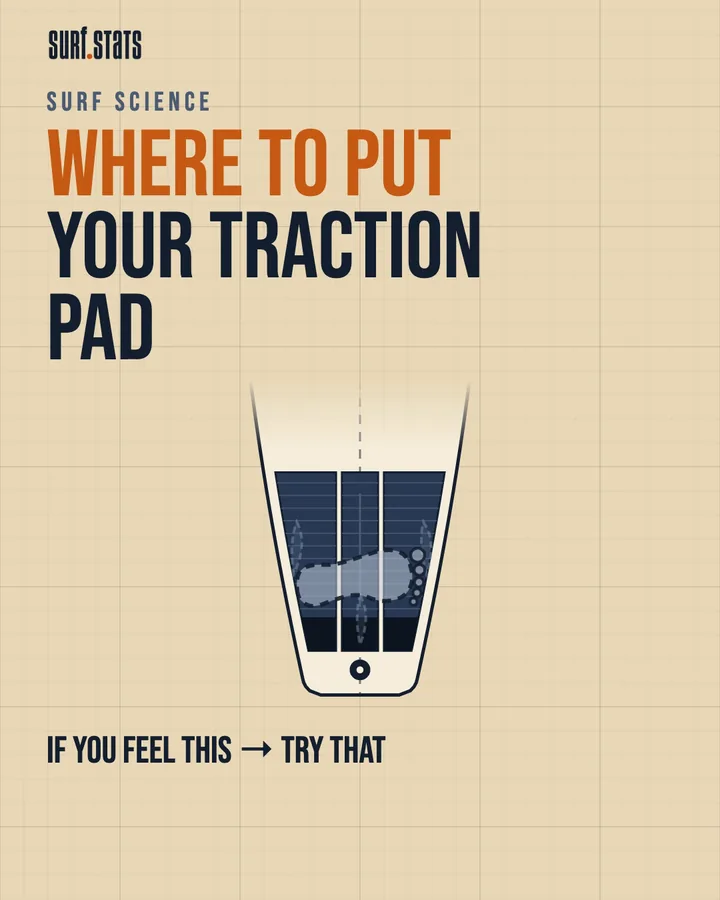
Riding a board with a traction pad on the tail? Read where to put your traction pad.
4. Feet off to one side?
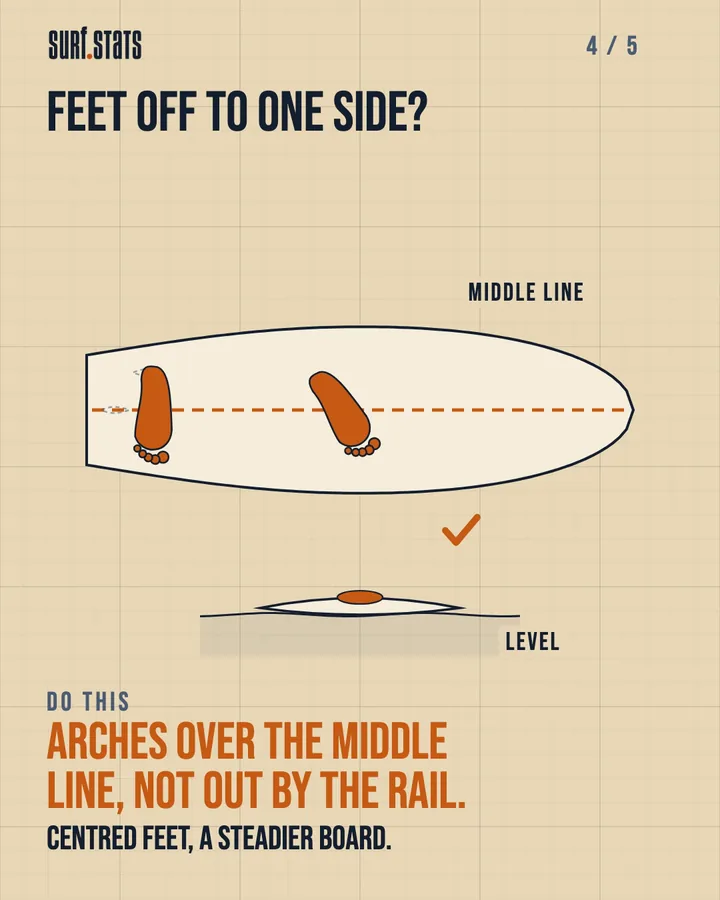
Try this: arches over the middle line, not out by the rail.
Picture a line running down the middle of your board, from nose to tail. If you can see a stringer down the middle of your deck, that's the line. If you can't, just imagine one.
Stand with the arches of both feet over that line, so your feet are centred on the width of the board and away from the rails. Centred feet make a steadier board.
5. Feet landed in the wrong spot?
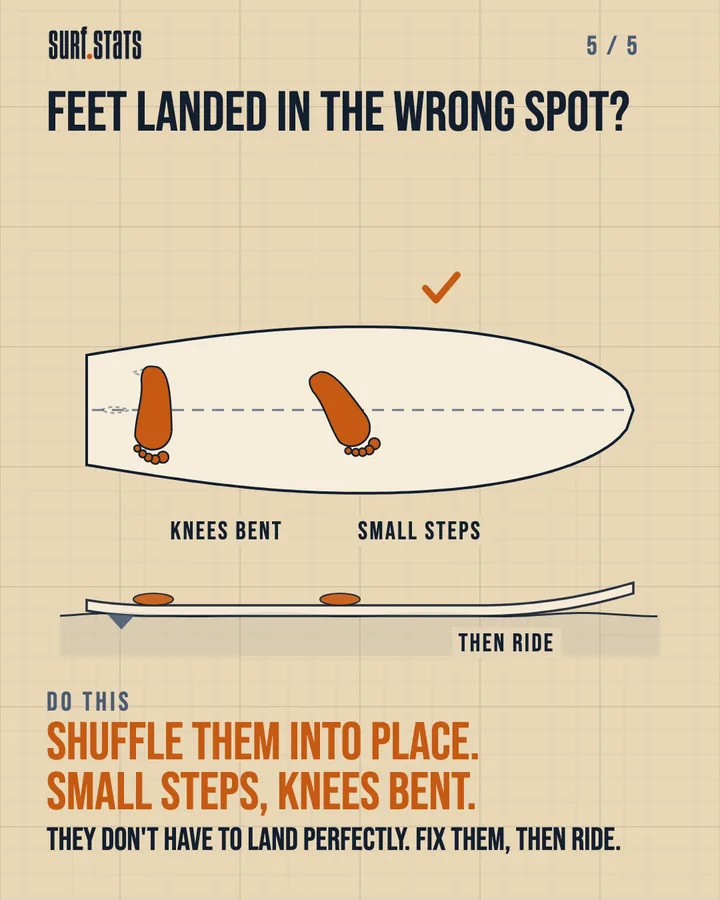
Try this: shuffle them into place. Small steps, knees bent.
Your feet don't have to land perfectly when you get up. Moving them once you're standing is fine.
- Shuffle them until they're where they belong and pointing the right way.
- Keep the steps small.
- Keep your knees bent while you do it.
Fix your feet first, then ride the wave.
Where your feet go, in two lines
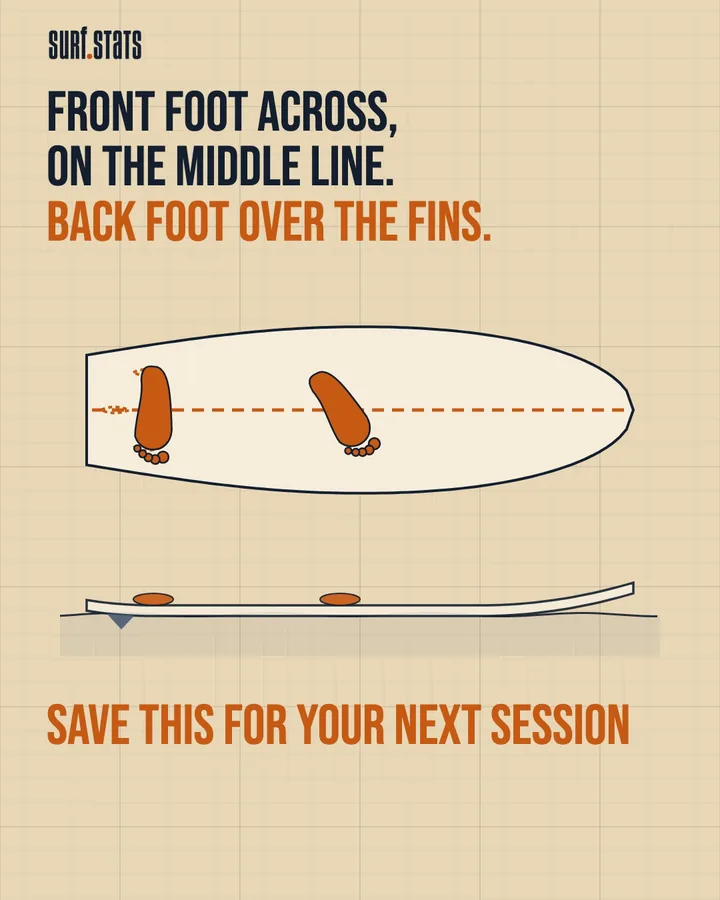
Front foot across, on the middle line. Back foot over the fins. That's the picture to come back to every time you stand up; the five fixes above are how you get there when your feet land somewhere else.
Quick checklist
- Both feet across the board, the front one turned out a bit more.
- Front foot not past the middle.
- Too far forward, the nose is more likely to go under. Too far back, the board slows down.
- Back foot toward the tail, over the fins. That's where you steer from.
- Arches over the middle line, not out by the rail.
- Landed wrong? Small shuffles, knees bent, then ride.