Surfing a new spot
 Fin Selector: your fins in 1 minute
Watch the surfers before you paddle out, ask a lifeguard where it's safe, and pick waves at your level. Then sit wide of the peak, clear of the riders, wait your turn, and come in a small, friendly group.
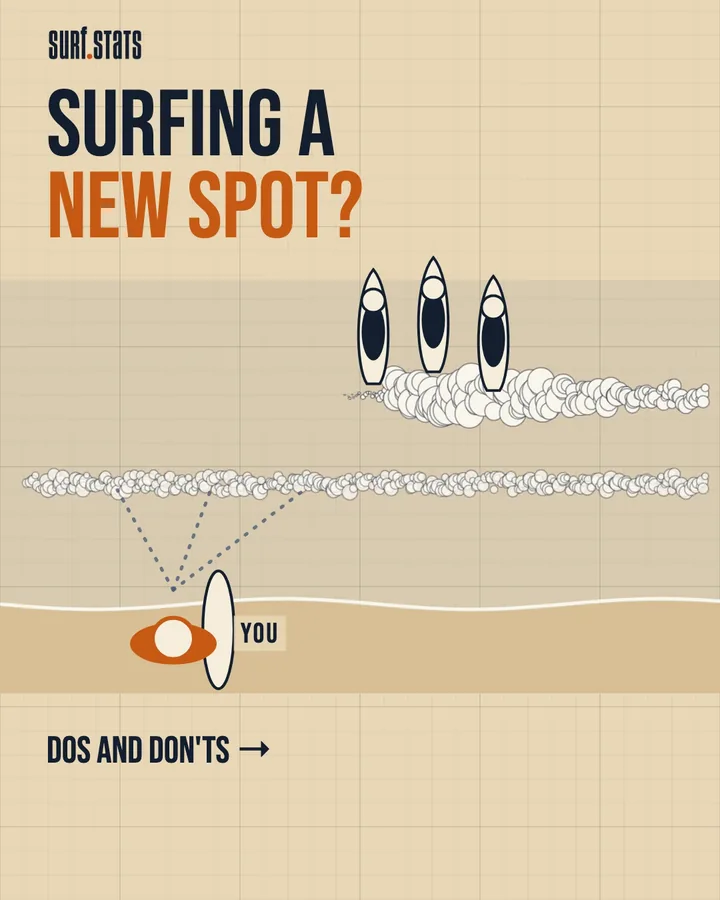
Surfing a new spot is exciting, and it can make you nervous. You don't know how the waves break, where the dangers are, or who's out. These five dos and don'ts cover what comes before your first wave there: where you look, who you ask, which waves you pick, where you sit and who you come with.
Each one is a don't and a do. They come from our surfing a new spot reel, and each one rests on at least two independent sources: lifeguards, lifesaving bodies, two governments, and surf and travel media. It's what they agree on, not science.
1. Paddling straight out?
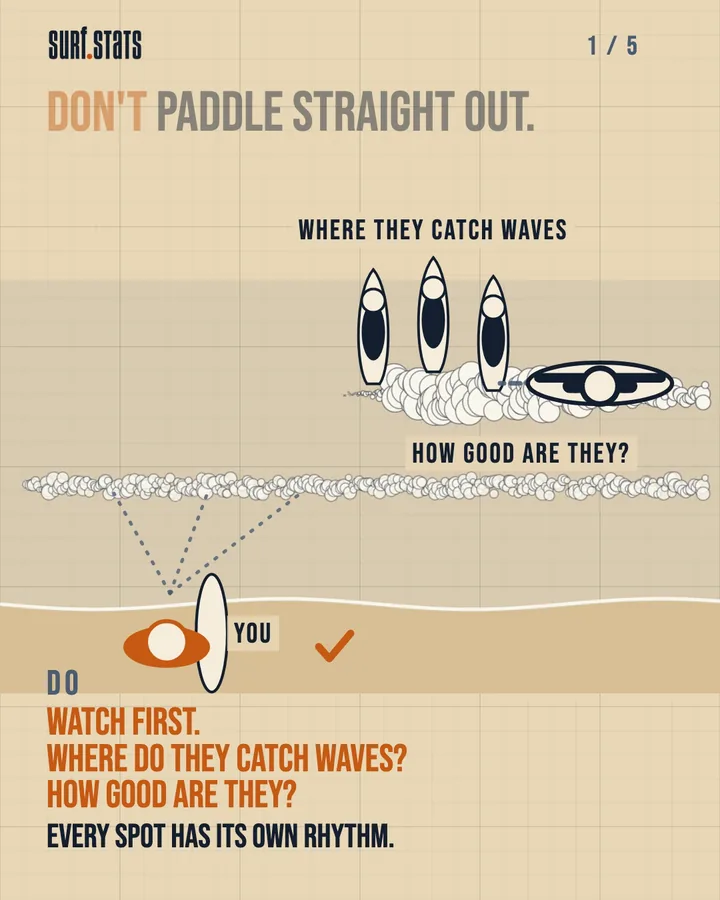
Don't paddle straight out. Watch first: where do they catch waves, and how good are they?
Every spot has its own rhythm. Before you paddle out, stand on the sand and watch the surfers already out:
- Where do they catch waves? Surf Europe's guide to surfing a new spot says to watch the others and see where they take off. Surfline adds that watching from the water, once you've paddled out wide, works too: see how people move around the lineup and pick their waves.
- How good are they? Surf Europe asks how their level compares to yours, and Surfline asks what the general skill level is.
Surfline, Carve, the Del Mar Lifeguards in California and Surf Life Saving New Zealand all say to look before you go in. Matador Network, writing about heavy or localized breaks, says to study the lineup for a while and let the locals set the rhythm.
2. Guessing where it's safe?
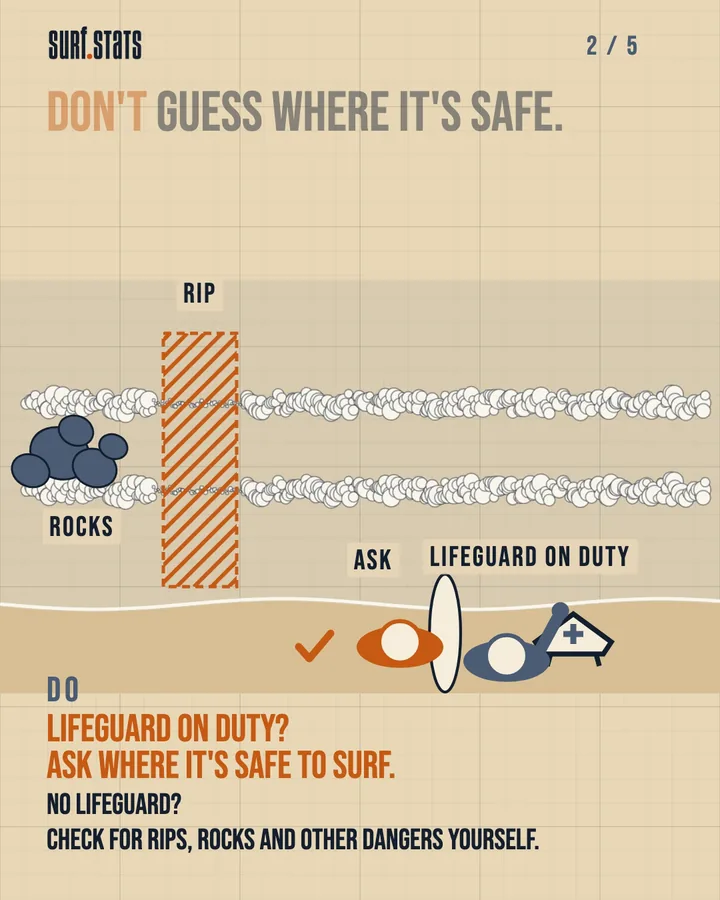
Don't guess where it's safe. Lifeguard on duty? Ask where it's safe to surf.
The Government of Jersey and the Del Mar Lifeguards both tell surfers who aren't sure where to surf to ask a lifeguard. Ask about rips and other dangers too. The RNLI, the UK's lifeboat charity, tells surfers to speak to a lifeguard about where the rip currents are, and the UK Maritime and Coastguard Agency tells beachgoers they can ask a lifeguard about conditions in the water, like how strong the waves are.
No lifeguard? Check for rips, rocks and other dangers yourself.
Not every spot has a lifeguard. The Maritime and Coastguard Agency tells beachgoers with no lifeguard on their beach to know the hazards themselves. Surf Life Saving New Zealand tells surfers to look out for hazards such as rocks or crowds before paddling out. If you're not sure what a rip looks like, read how to spot and escape a rip current before you go.
3. Paddling out in waves above your level?
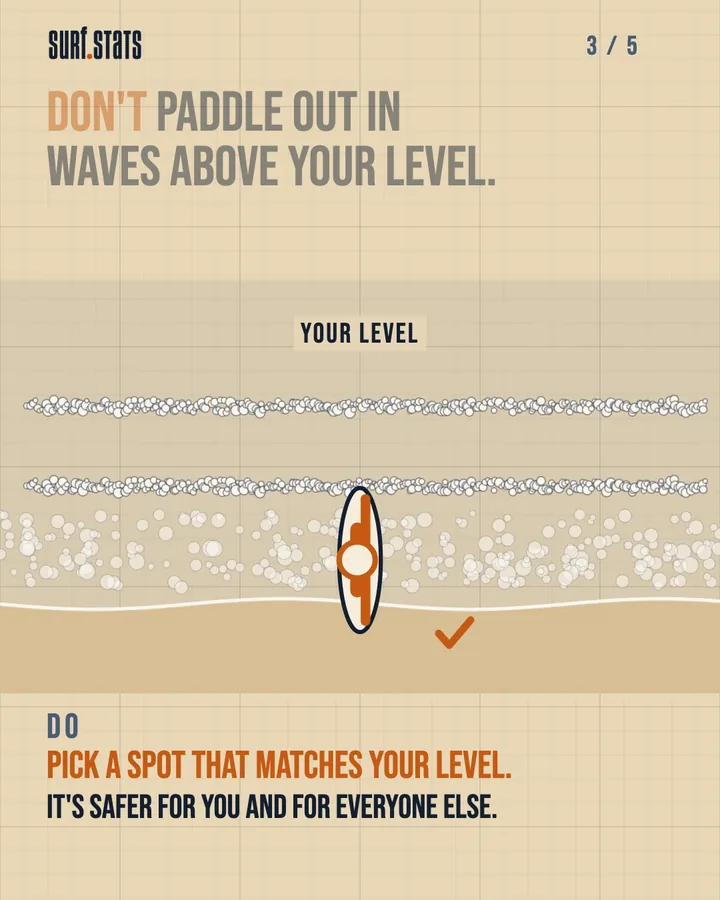
Don't paddle out in waves above your level. Pick a spot that matches your level.
It's safer for you and for everyone else:
- Surfline says to pick a spot that matches your ability, because it makes the lineup safer and happier.
- The Del Mar Lifeguards say a surfer at a spot beyond their ability gets in the way or can be a hazard for everyone.
- The Inertia tells beginners to paddle out only to a lineup right for their ability, for their own safety and the safety of others.
- The RNLI says don't challenge yourself too early, and know your limits.
Even at a spot that suits you, Surf Life Saving New Zealand says to go easy on your first couple of waves until you've worked out what's going on.
4. Paddling past everyone to the peak?
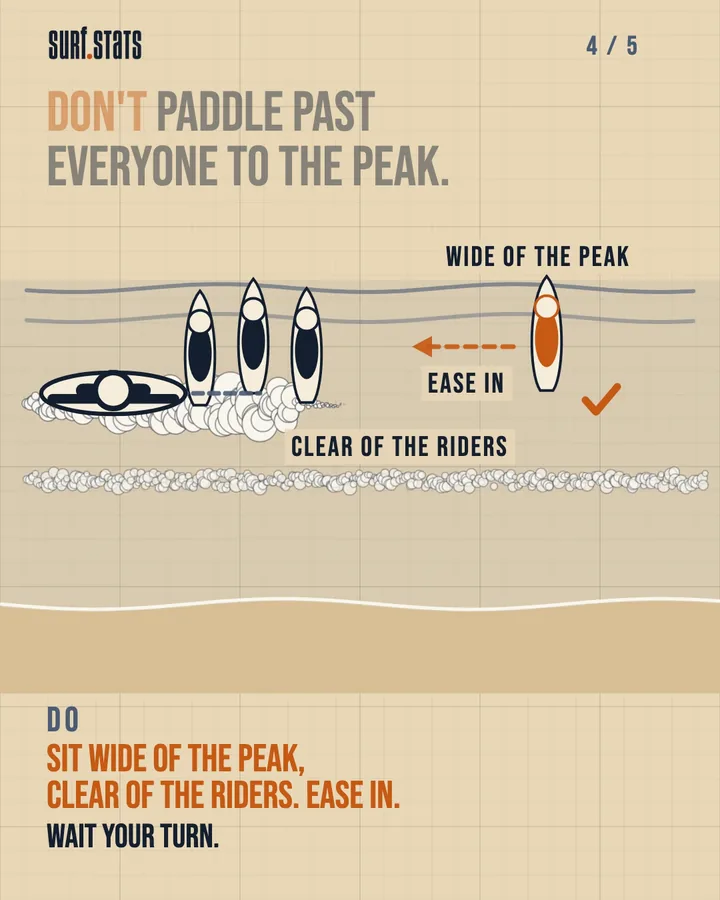
Don't paddle past everyone to the peak. Sit wide of the peak, clear of the riders, and ease in.
Wait your turn. Matador Network says almost every surf break in the world runs on two basic rules, and waiting your turn is one of them: don't paddle past the surfers who were already waiting and go straight to the peak. Carve says that if you wait your turn and watch what is happening, you can fit into the rotation of the locals.
Where to sit while you wait:
- Wide of the peak. Surfline suggests paddling out well wide of the break, so you're not getting in anyone's way and you can keep watching.
- Clear of the riders. Wide doesn't mean sitting where a surfer will ride. Surfline says to avoid the path of anyone up and riding, and if you end up paddling into it, to head for the whitewater, not the shoulder. The RNLI says to paddle wide, not through the peak.
- Ease in. Surfline says to ease into the lineup and come into the surf zone slowly and carefully. The Del Mar Lifeguards say don't rush straight outside: take your time.
The rules on who has priority once you're in the rotation are in surfing etiquette.
5. Showing up in a big group?
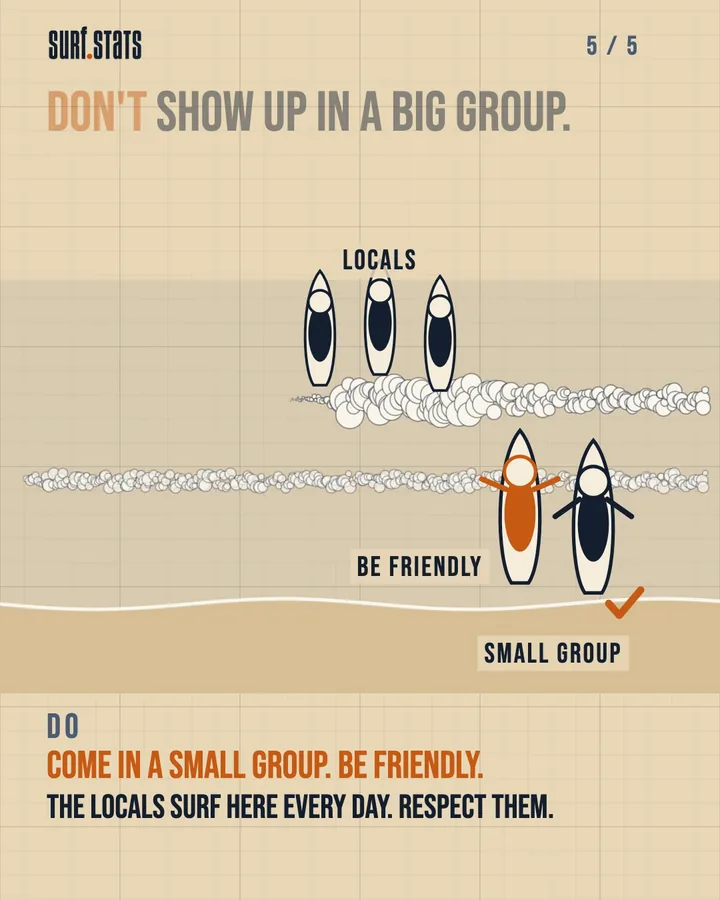
Don't show up in a big group. Come in a small group, and be friendly.
The locals surf here every day. Respect them. The Del Mar Lifeguards and The Inertia both describe locals as the people who surf the spot every day. Surfer Today's advice for surfing somewhere you don't know is to respect the locals.
- A small group. Carve says not to travel in large groups: a crowd turning up at a quieter spot puts everyone on the defensive straight away. Surfline says to keep the numbers low so you don't overwhelm the lineup, and the Del Mar Lifeguards say not to mob a spot in large numbers.
- But not alone. Small doesn't mean solo. Surfline's advice for your first time at a spot is not to go alone but to take a buddy, and the Government of Jersey says never surf alone.
- Be friendly. Matador says to be friendly when you paddle up next to someone, and the Del Mar Lifeguards say to keep things friendly when you're visiting. Surfline says the surfers already out will wonder who you are, and an easy entry with a few smiles and nods answers that.
Watch first. Sit wide. Be friendly.
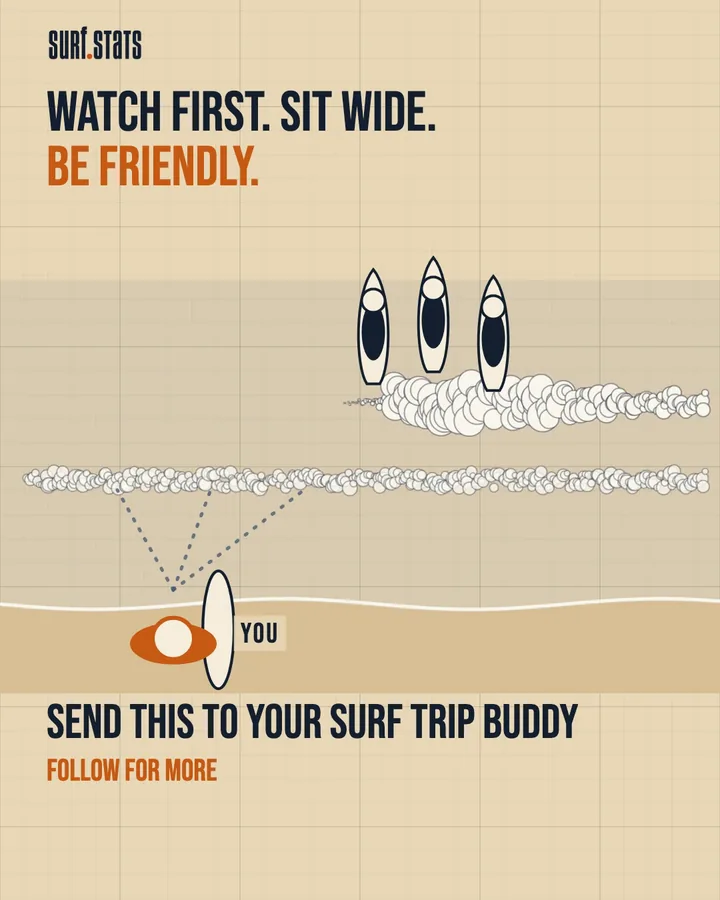
That's a new spot in one line. Send this to your surf trip buddy.
Quick checklist
- Watch first: where do they catch waves, and how good are they?
- Lifeguard on duty? Ask where it's safe to surf, and about rips and other dangers.
- No lifeguard? Check for rips, rocks and other dangers yourself.
- Pick a spot that matches your level.
- Sit wide of the peak, clear of the riders. Ease in and wait your turn.
- A small group, not alone. Be friendly, and respect the locals.