Types of surfing airs, explained
 Fin Selector: your fins in 1 minute
Five common surfing airs, roughly easiest to hardest: the straight air, the air reverse, the full rotation (or 360), the alley-oop and the backflip. The reverse and the 360 spin toward the beach; the alley-oop spins the other way, toward the lip.
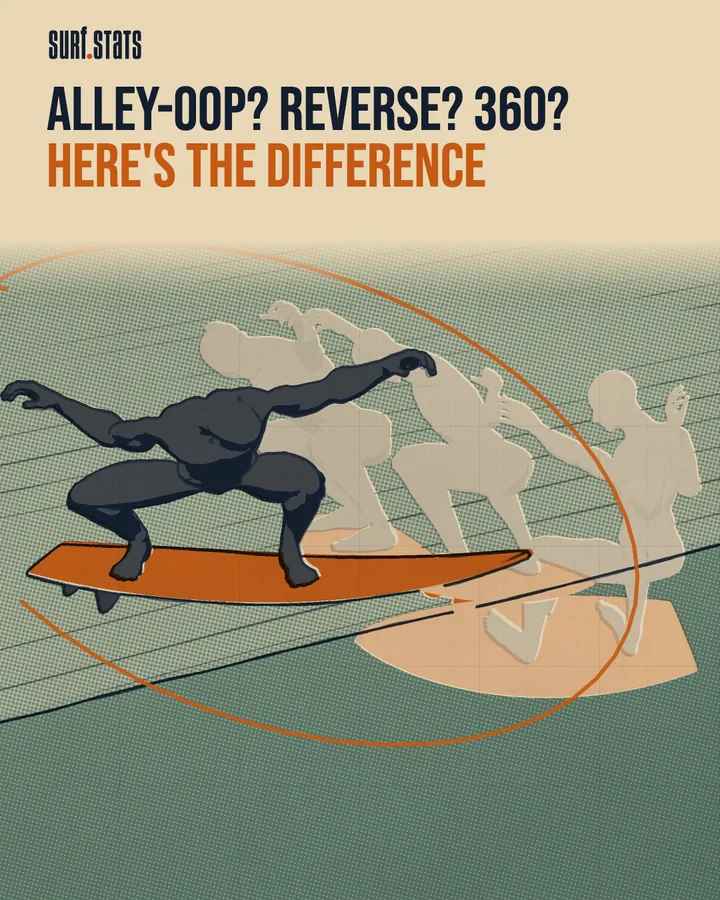
Alley-oop, reverse, 360: if surf commentary sounds like code to you, you're in good company. Surfers themselves don't agree on what to call every air. But the common ones are easy to tell apart once you know two things: which way the surfer spins, and how they land.
Below are five types of surfing airs from our surfing airs reel, roughly easiest to hardest, with a real pro score for most of them. Each definition and each score comes from at least two independent sources (surf magazines, the World Surf League, a study of pro airs and news reports), and every score matches our own heat results. What the rule book does and doesn't say comes from the WSL rule book itself.
First: what does frontside mean?
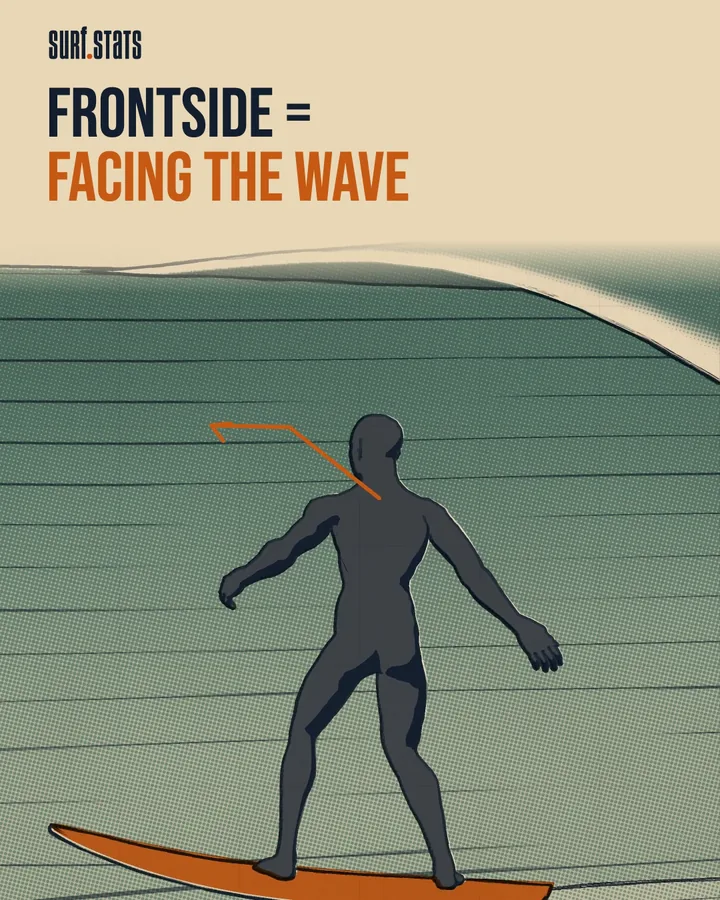
The short version: frontside means you're facing the wave.
Your chest and toes point at the wave as you ride it. In surfing, the word describes how your body faces the wave. Every air in this post is shown frontside, so picture the surfer facing the wave as they take off.
1. What is a straight air?
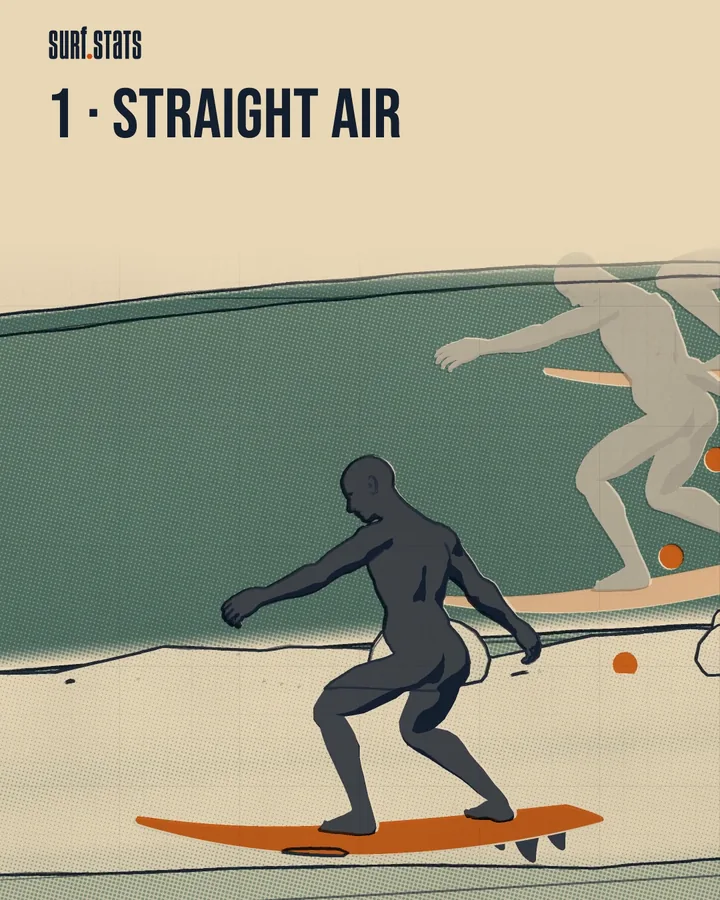
The short version: off the lip, land facing forward.
It's the first step on the ladder. You build speed, use a steep part of the wave as a ramp, leave the wave at the lip, fly, and come back down still facing forward. No spin. Red Bull's guide to airs sums it up as a jump.
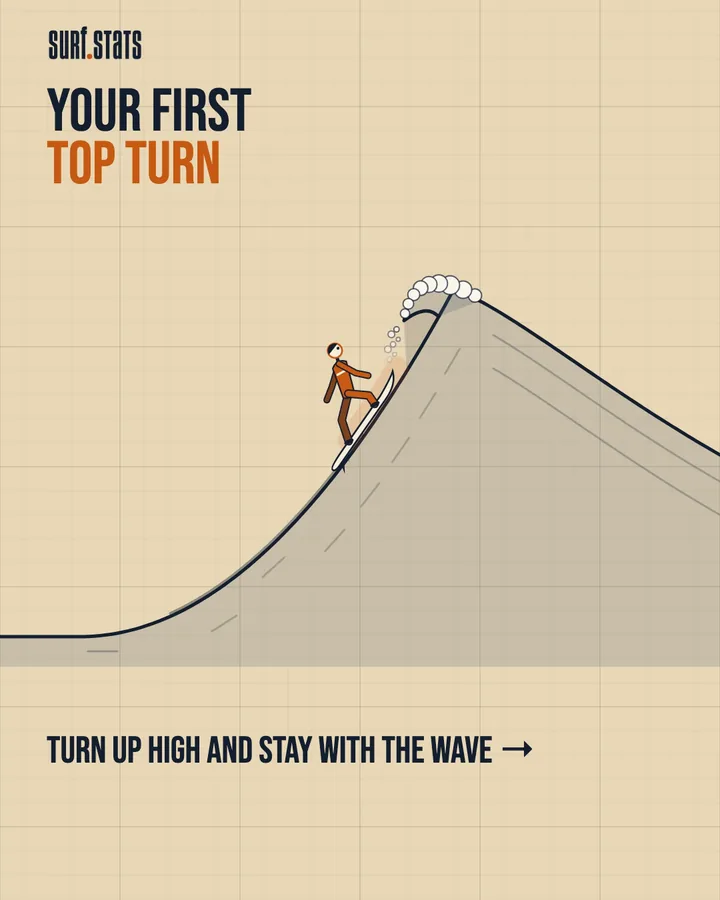
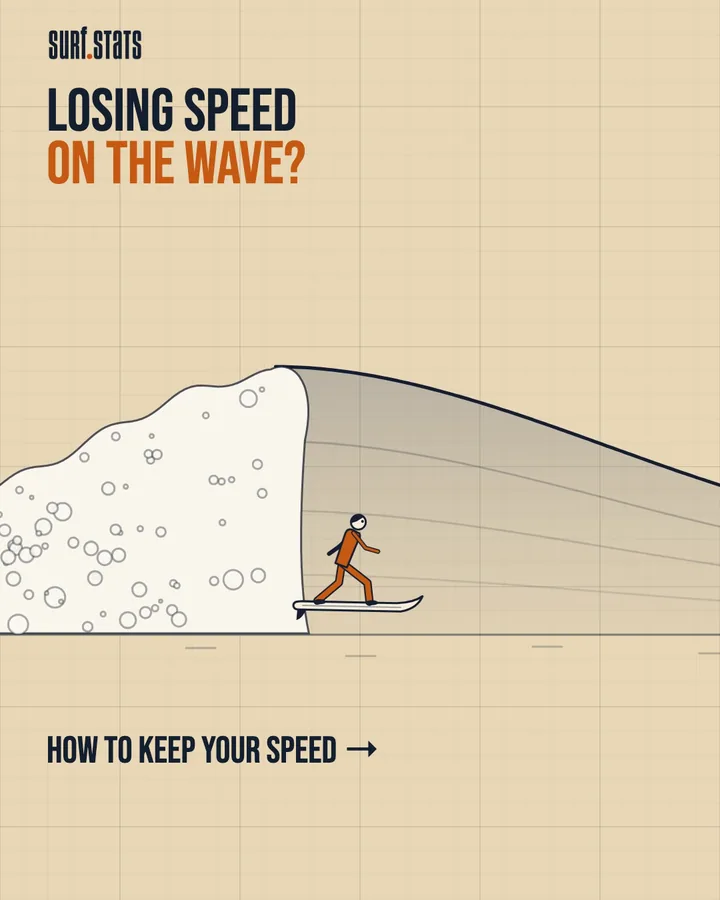
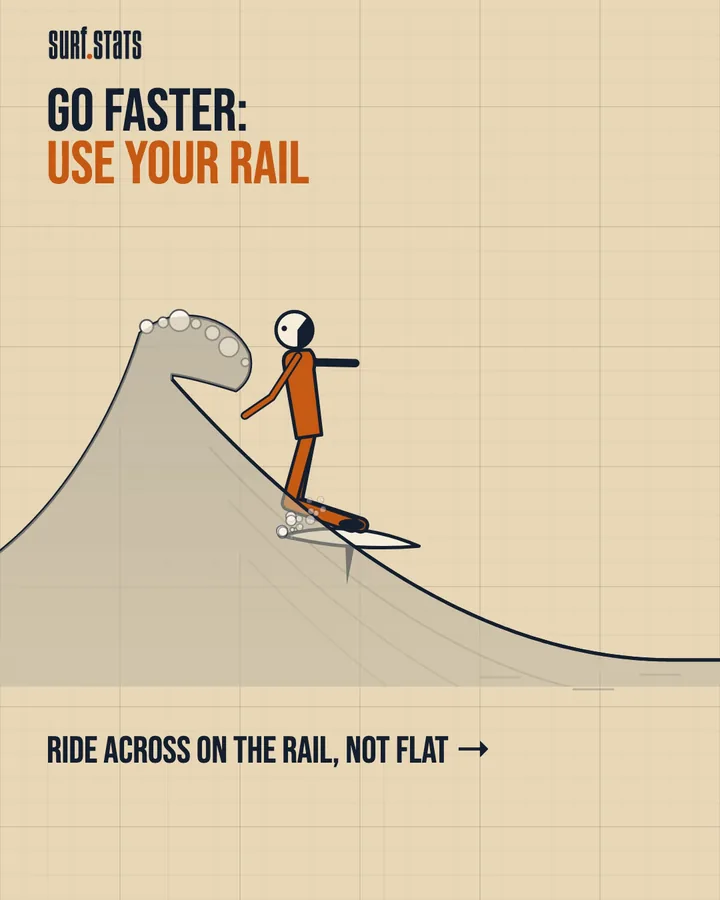
If you're still working on the top part of the wave, start with the top turn and keeping your speed.
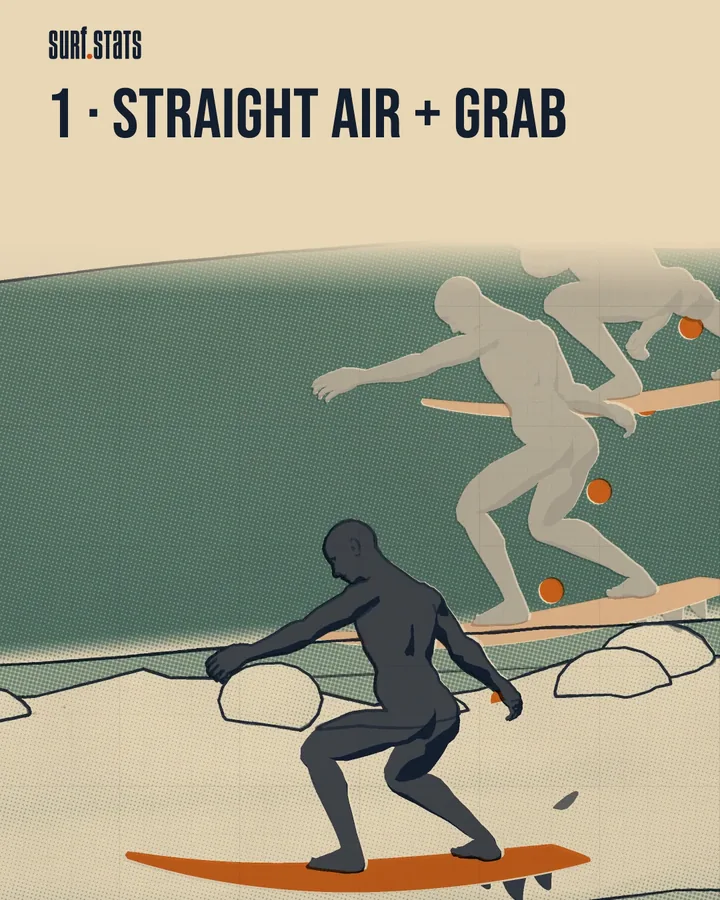
Add a grab, just for style.
Hold the board's rail with one hand while you're in the air and it's the same air, with a grab. Grabs are named by which rail you hold: the one on your toe side or the one on your heel side. A grab adds style. It doesn't move the air up the ladder.
2. What is an air reverse?
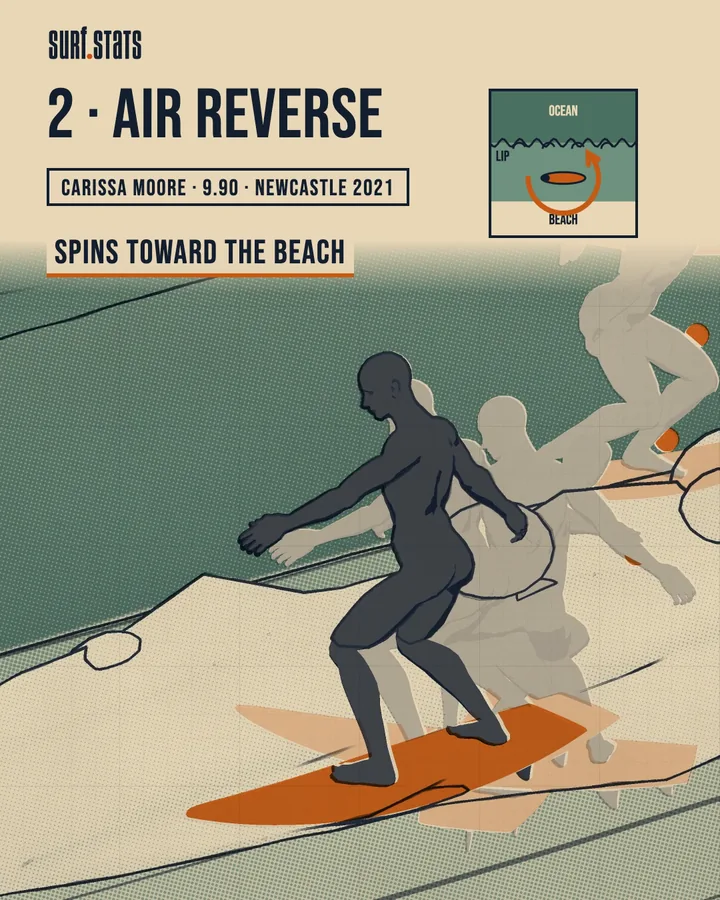
The short version: spin toward the beach, land backwards, and swing round.
You spin in the air toward the beach and land going backwards, tail first. Then the fins catch and swing the board round, so you're facing forward again.
Carissa Moore scored a 9.90 out of 10 for a frontside air reverse in her quarterfinal against Johanne Defay at Newcastle in 2021. Why 9.90 and not 10? See "How do judges score an air?" below.
3. What is a full rotation, or 360?
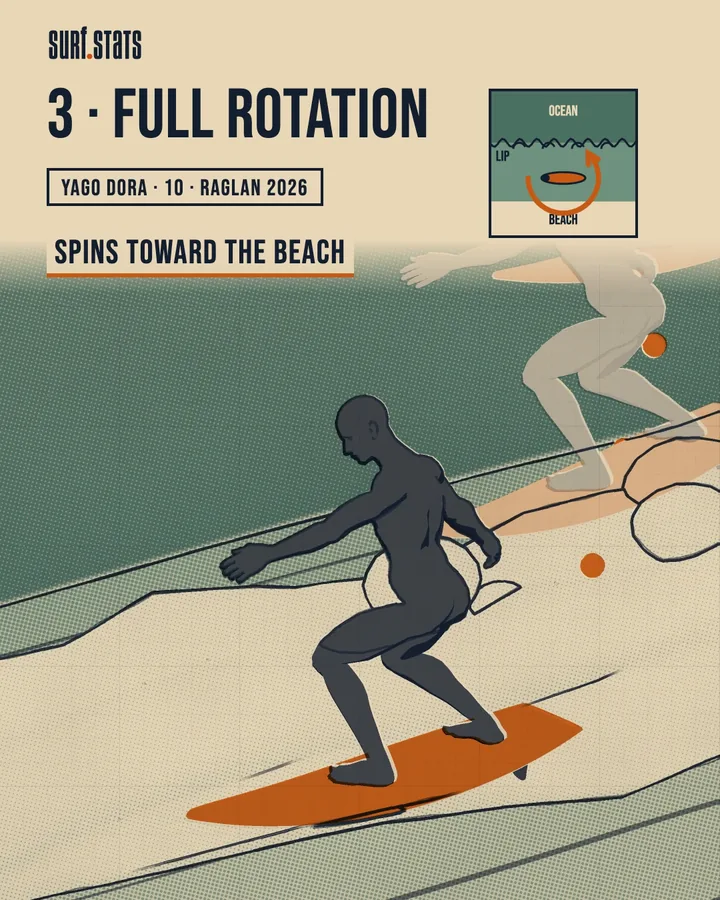
The short version: all the way round.
Keep the same spin going for a whole turn, toward the beach, and you land already facing forward. It's called a full rotation, or a 360.
Yago Dora got a perfect 10 for a full rotation in his quarterfinal at Raglan, New Zealand, in 2026. All five judges gave it a 10.
4. What is an alley-oop?
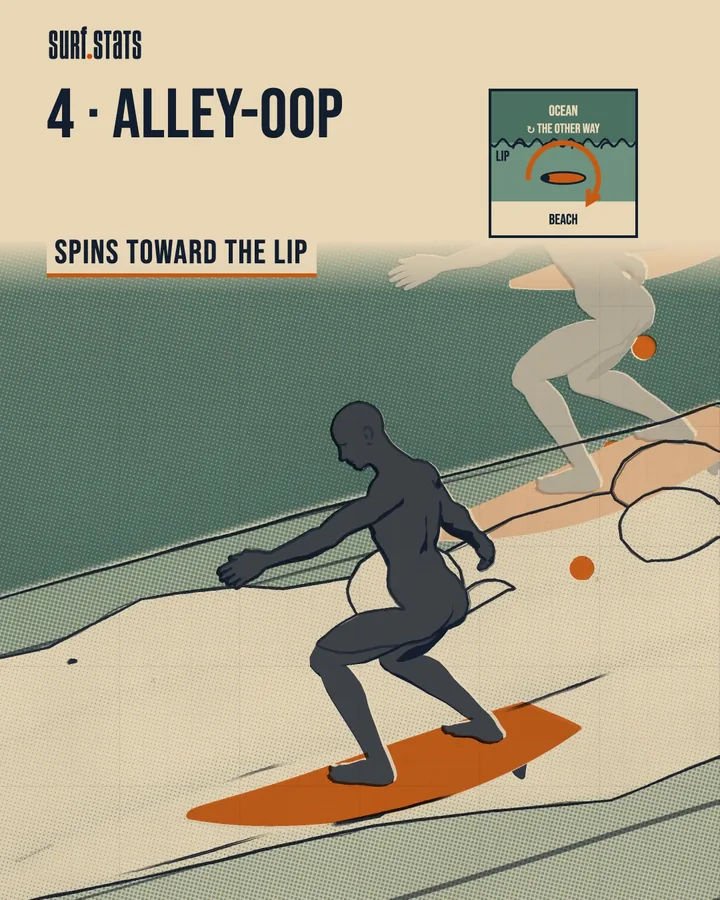
The short version: same spin, the other way: toward the lip.
Instead of spinning toward the beach, you spin toward the lip of the wave and the open ocean behind it.
Filipe Toledo got a 10 for back-to-back alley-oops at J-Bay in 2017. It's number 4 in the reel, but on the ladder further down it shares a step with the full rotation.
Full rotation or alley-oop: how do you tell them apart?
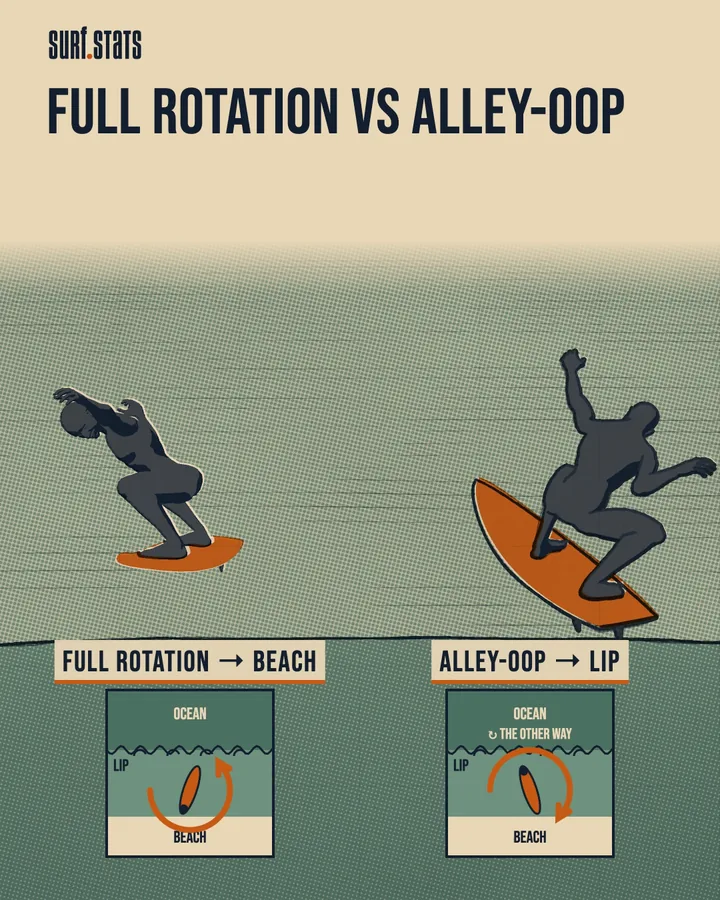
The short version: toward the beach, full rotation. Toward the lip, alley-oop.
What tells them apart is the direction of the spin. Watch which way the surfer turns in the air. If they turn toward the beach, it's a full rotation. If they turn toward the lip and the ocean, it's an alley-oop.
5. What is a backflip?
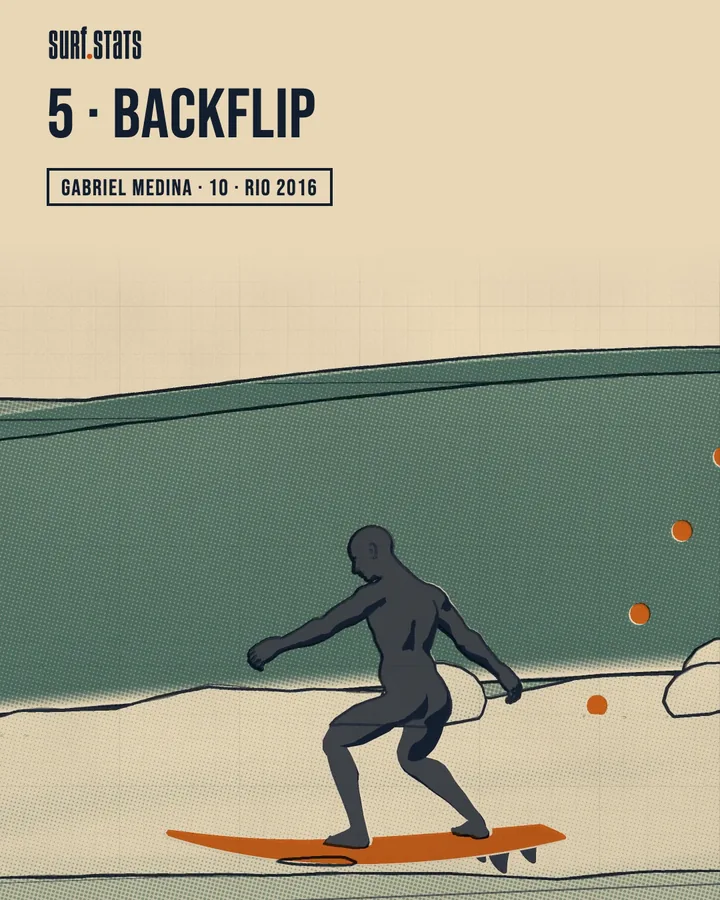
The short version: the surfer goes upside down.
On a backflip you go head over heels, backwards, off the lip.
Gabriel Medina landed the first backflip in a world tour heat at the Oi Rio Pro, in Round 2 on 14 May 2016, and the judges gave it a 10. It wasn't the first backflip ever surfed: Flynn Novak, for one, had done one before. It was the first landed in a world tour heat.
Which surfing airs are hardest?
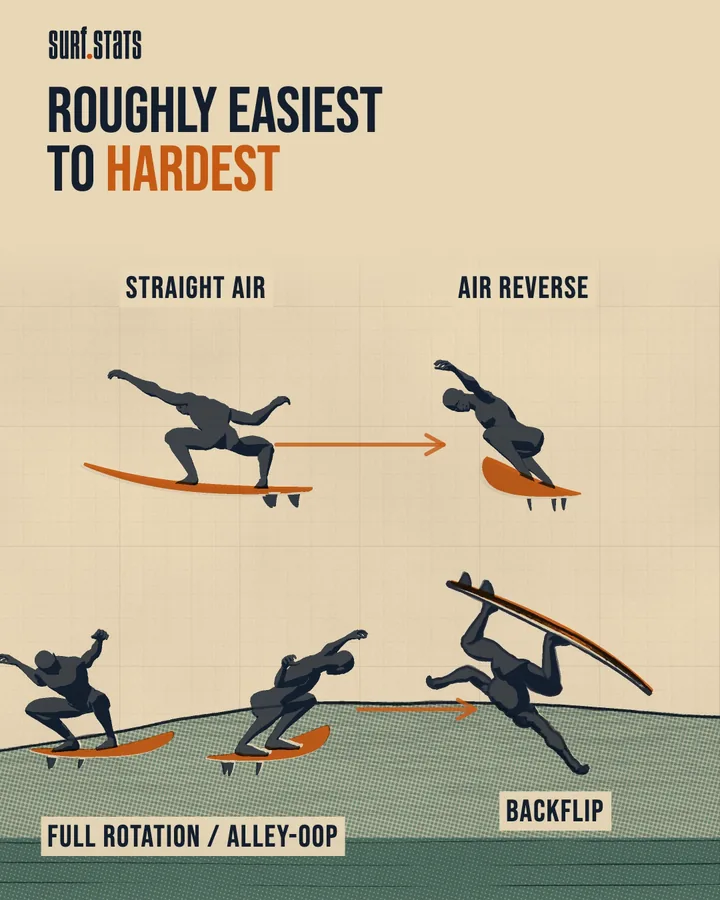
The short version: roughly easiest to hardest, by how much happens in the air.
- A jump: the straight air, with or without a grab.
- A half spin, landing backwards: the air reverse.
- A full spin, or a spin the other way: the full rotation and the alley-oop.
- Upside down: the backflip.
Why only roughly? The WSL rule book that pro judges work from doesn't list any airs or give any trick a fixed value. And names vary: the same air can go by more than one name.
How do judges score an air?
There's no price list. Under the rule book, judges look at five things on every wave:
- Commitment and degree of difficulty
- Innovative and progressive maneuvers
- Combination of major maneuvers
- Variety of maneuvers
- Speed, power and flow
How much each one counts depends on the spot and the conditions on the day. The head judge gives the surfers the criteria for each day of competition.
Five judges score each wave. The highest and lowest scores are dropped, and the surfer gets the average of the other three. So when Moore got a 9.90, at least one of the three judges who counted gave her less than a 10.
Quick checklist
- Frontside: you're facing the wave.
- Straight air: off the lip, land facing forward. A grab is style.
- Air reverse: spin toward the beach, land tail first, the fins swing you round.
- Full rotation (360): the whole way round, toward the beach.
- Alley-oop: the same spin toward the lip.
- Backflip: upside down.
- The order is rough. The rule book gives no trick a fixed value.