How to use your rail surfing
 Fin Selector: your fins in 1 minute
Put your weight on the rail on the wave side: your front toes if you face the wave, your front heel if your back is to it. Tip the board with your legs, not your shoulders, and if the rail catches, lean a little less.
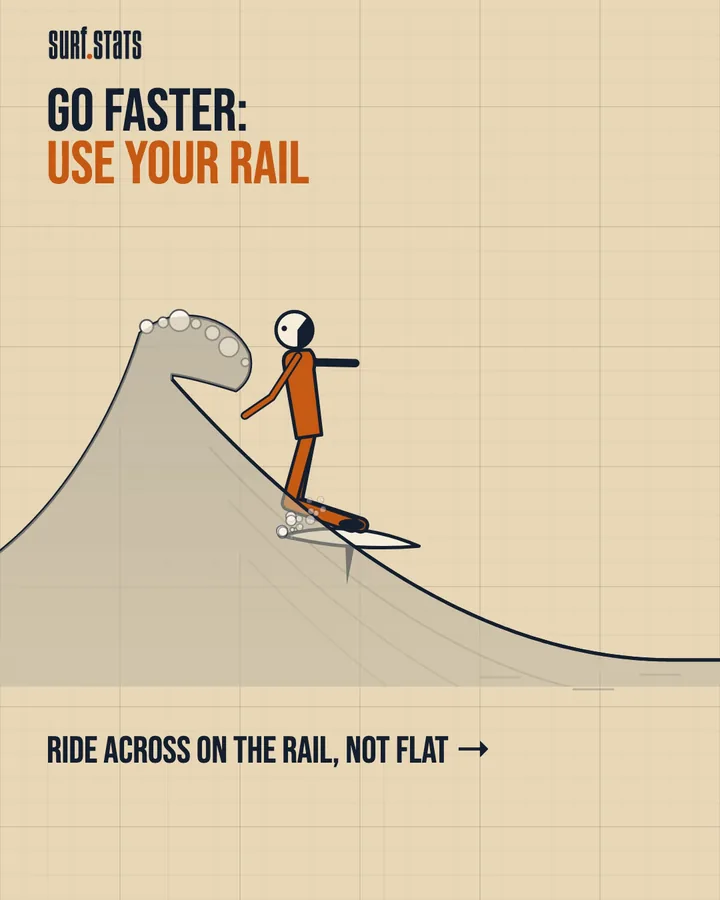
You can already stand up and ride across an unbroken wave, but the board feels slow. Is it flat on the water? Then the fix is to use your rail, the side of the board nearest the wave, and ride across on it instead of on the flat bottom.
This post is for that moment: you're up, you're going across, and you want more speed. It follows our use your rail reel: three things that go wrong, and the fix for each. The fixes come from surf coaching sites and surf magazines, checked for the reel (sources at the end).
1. Riding flat, and it feels slow?
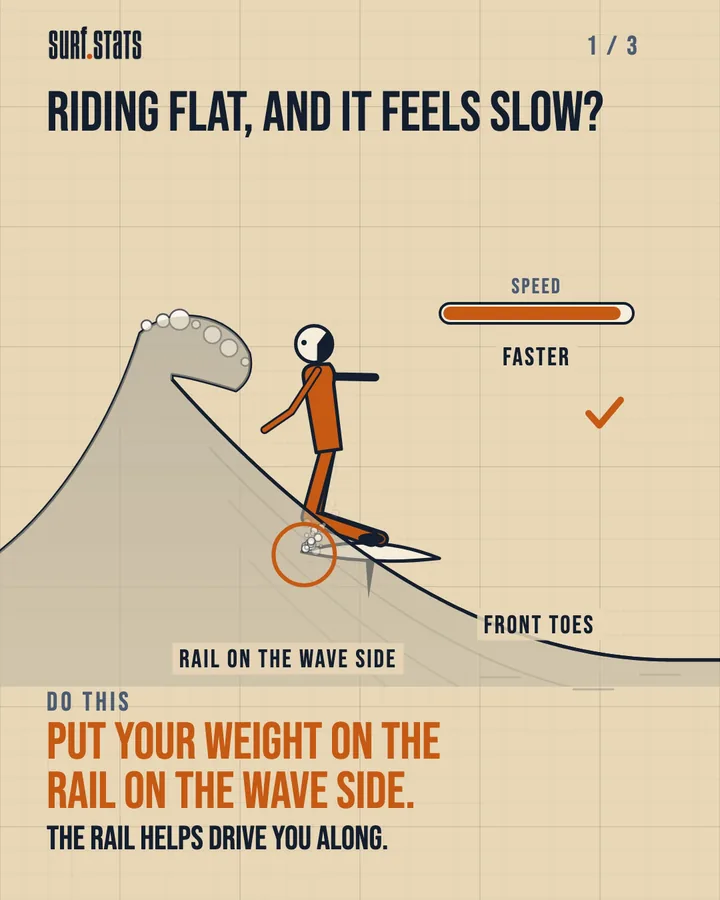
Try this: put your weight on the rail on the wave side.
When you ride across a wave, water is moving up its face. Surf Simply explains it this way: set the rail nearest the wave into that moving water, and the water hitting the underside of the rail gets pushed backwards. Pushing water back pushes the board forward. Barefoot Surf's coaches describe the same result: keep that inside rail engaged, and it keeps you moving forward the way you want to go.
How you put weight on that rail depends on which way you face. Surfline's learn-to-surf guide says to guide the board with your front foot:
- Facing the wave: press through your front toes.
- Back to the wave: press through your front heel.
The rail helps drive you along. It isn't the only thing that gives you speed: Surf Simply names three sources, gravity, the rail and the whitewater. This post is about the rail.
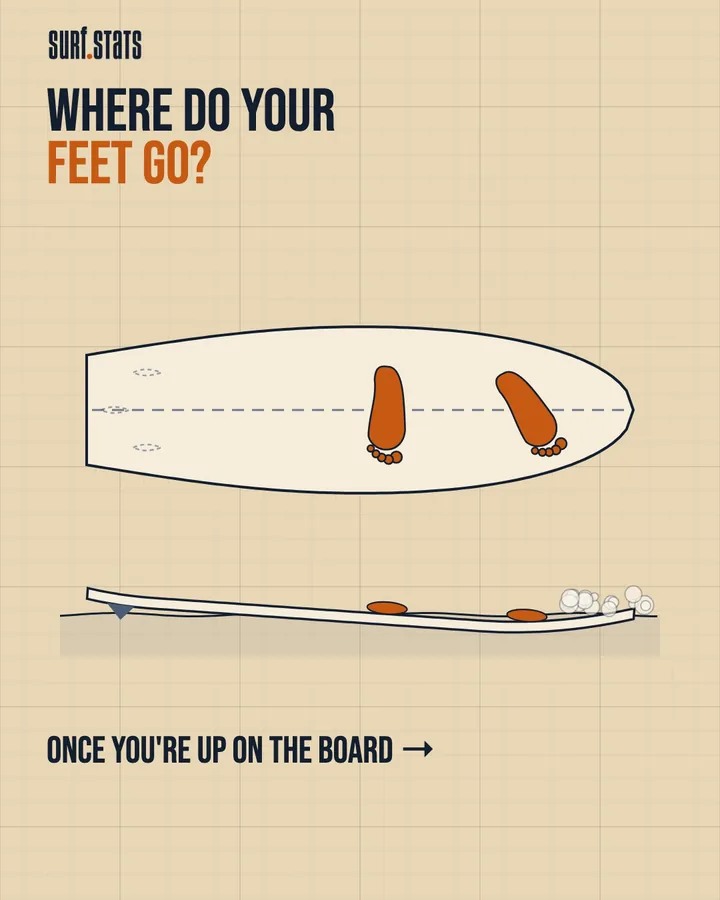
Not sure your feet are in the right place to begin with? Start with where to put your feet on a surfboard.
2. Leaning your shoulders into the wave?
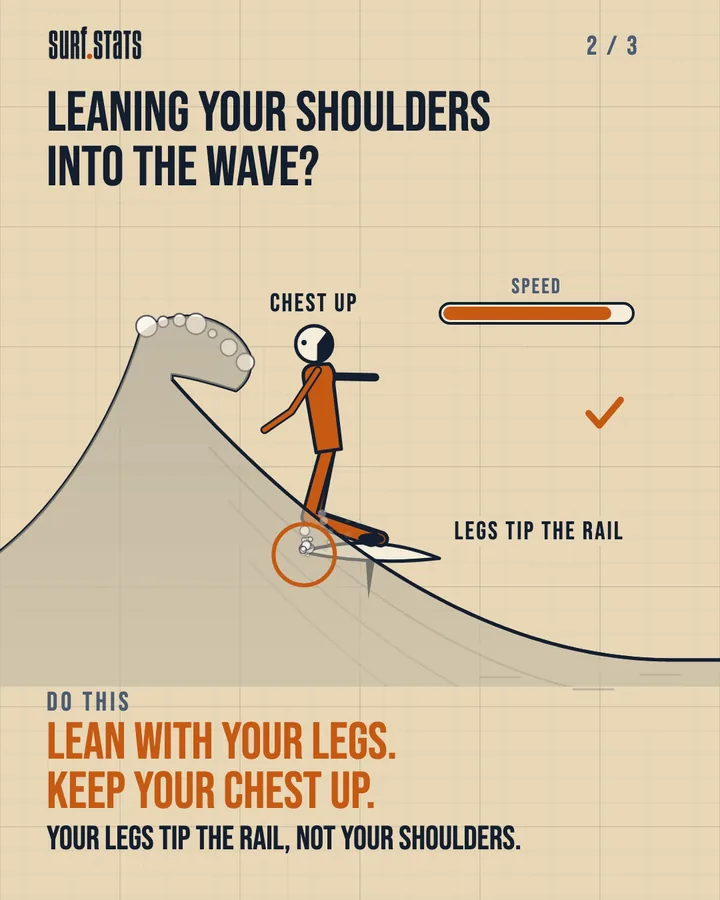
Try this: lean with your legs and keep your chest up.
If you try to get the board on its rail by leaning your shoulders toward the wave, you're leaning with the wrong part of your body. Your legs tip the rail, not your shoulders.
Surf coaches describe the same body shape for a good stance: bend the lower body and keep the upper body straight. Barefoot Surf puts it as bending your knees and hips while your chest stays upright. OMBE lists twisting your upper body toward a rail as a stance mistake, one that makes it harder to stay in balance.
So keep your chest up and let your knees and hips do the leaning.
3. Rail catches, and you stop or fall?
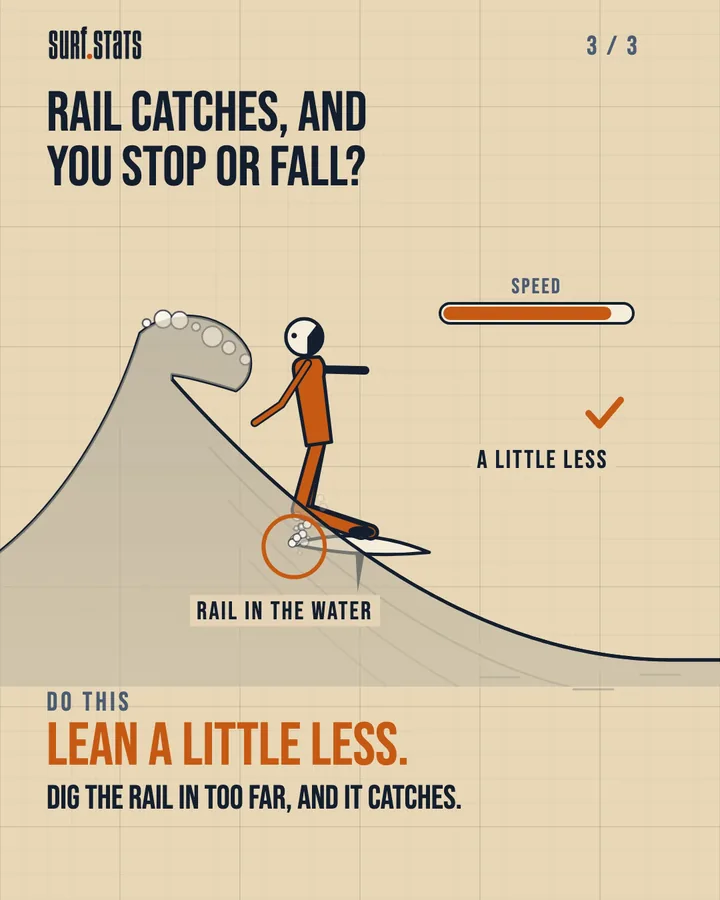
Try this: lean a little less.
More lean is not always more speed. Dig the rail in too far, and it catches. Surfer Today describes a dug rail as the edge sinking into the water when you don't expect it, and says that when it happens you often wipe out. It also lists digging rails among the common mistakes surfers make when they try to go faster.
You want the rail in the water, not dug in. Up high on the face, where the wave is steep, the wave itself sets the rail for you. Surf Simply's rule of thumb is less lean at the top of the wave. So if the rail keeps catching, lean a little less and keep the rail in the water.
The three fixes in one line
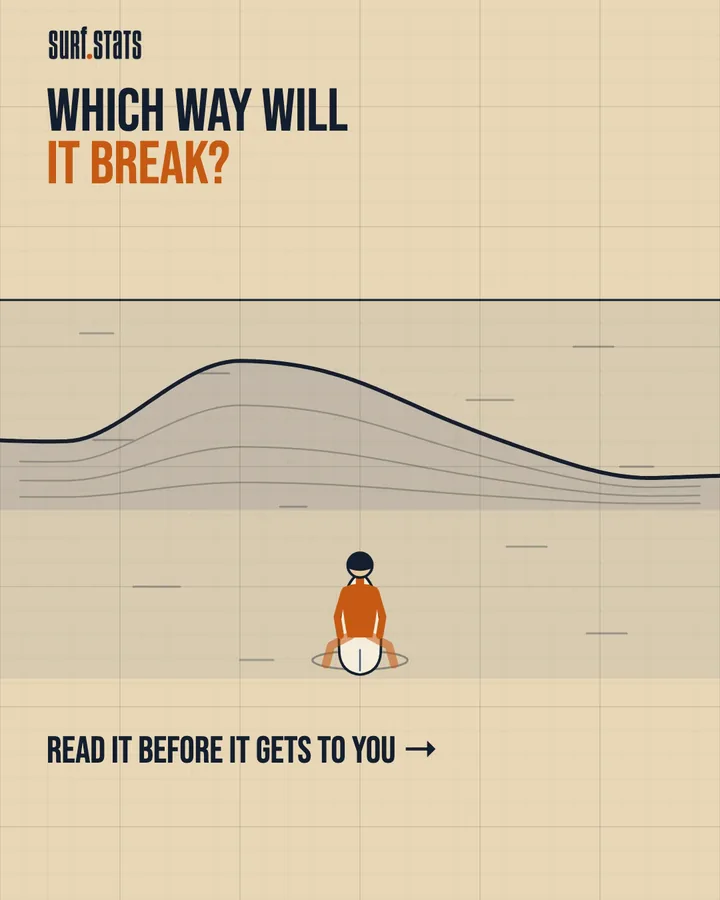
Rail on the wave side. Tip it with your legs. Don't dig it in. If you're still working out which way a wave will go before you ride across it, read how to read waves.
Quick checklist
- Riding across and feeling slow? Check if your board is flat.
- Weight on the rail on the wave side.
- Facing the wave: front toes. Back to the wave: front heel.
- Lean with your legs. Chest up, shoulders out of it.
- Rail catching? Lean a little less.
- Rail in the water, not dug in.