How to keep your speed on a wave
 Fin Selector: your fins in 1 minute
Ride higher on the face, below the lip, not down at the bottom. Ease off the back foot. If you end up out on a soft shoulder, turn back toward the breaking part. And when the wave is too fast to keep up with, pump with smooth ups and downs on the face.
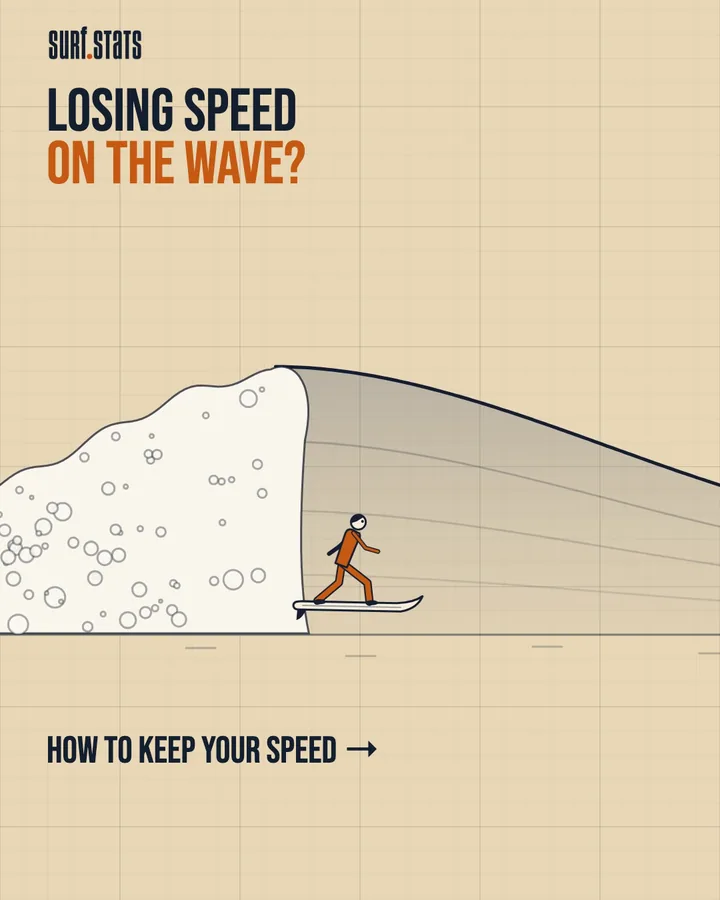
You stood up, you turned along the wave, and then the ride just fades out. The board slows, the wave gets away from you or the whitewater catches up, and it's over. The fixes below come down to two things: where you are on the wave, and how you stand on the board.
This post is for when you're already standing up and riding along unbroken waves, not straight to the beach. Below are four ways a ride loses speed, in the reel's order, with the fix for each. They come from our how to keep your speed reel, built from surf coaching guides and surf magazines. Read them as coaching advice, not science, and try them one at a time.
1. Riding down low, at the bottom of the wave?
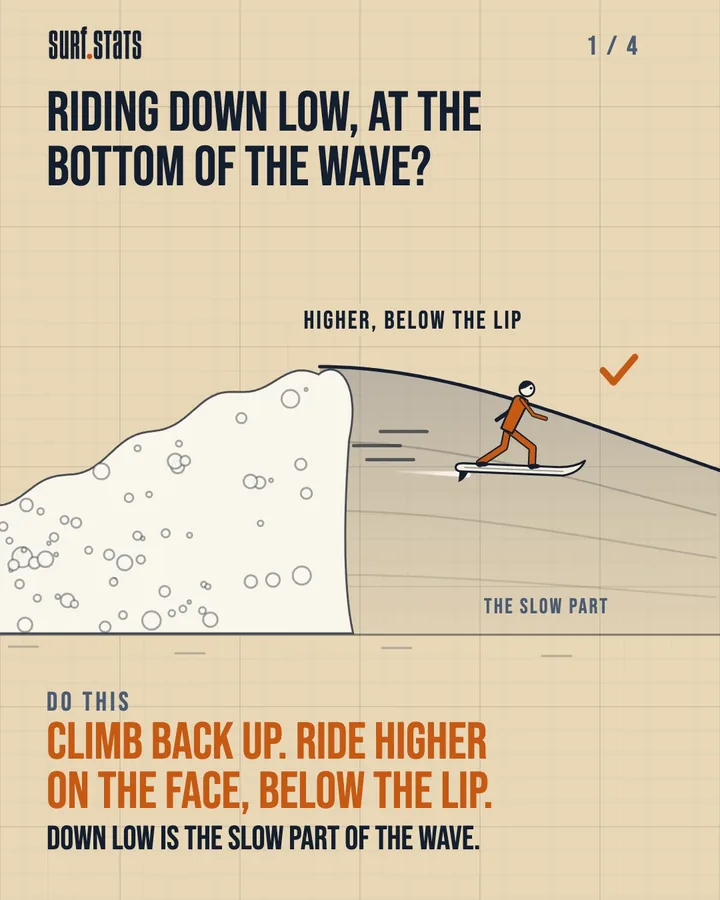
Try this: climb back up. Ride higher on the face, below the lip.
Down low is the slow part of the wave. Surf Simply explains it with a simple picture: a wave is like a hill, and the higher you are on it, the more gravity you have to give you speed. By the time you reach the bottom, there's none left to use. Barefoot Surf makes the same point from the other side: surfers who need speed stay out of the flat water at the bottom, because that's where they lose momentum.
Spending too much time down there is on Surfer Today's list of speed mistakes, too.
Higher doesn't mean right at the top. The same Surfer Today list counts surfing too high, above the pocket, as a mistake, and coaches don't agree on one exact height. So aim for the upper part of the face, below the lip. Getting back up from the bottom is the job of a turn: see how to do a bottom turn.
2. Feels like you're stalling?
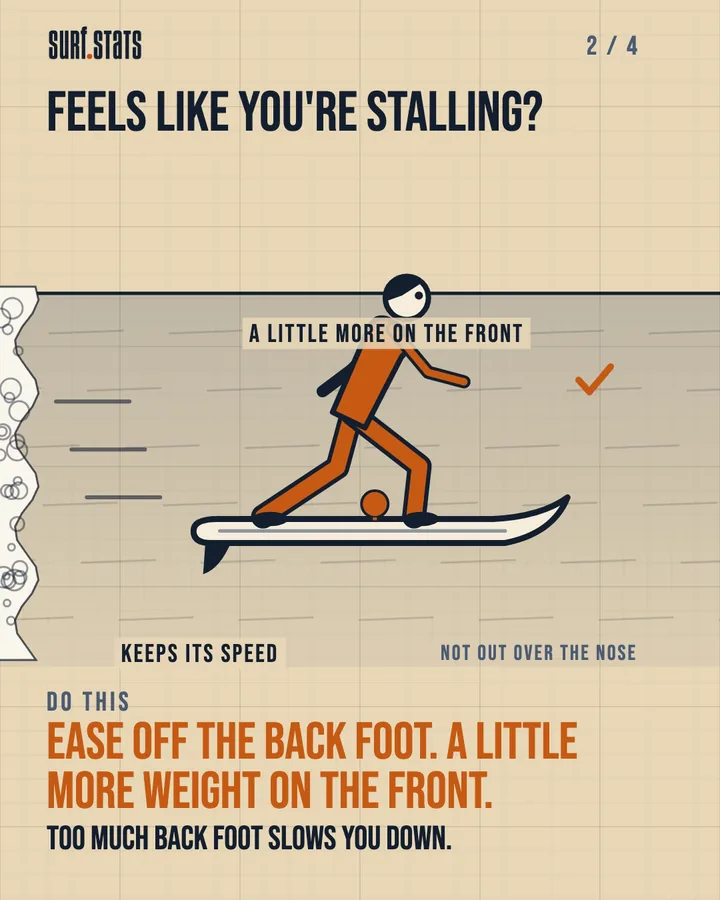
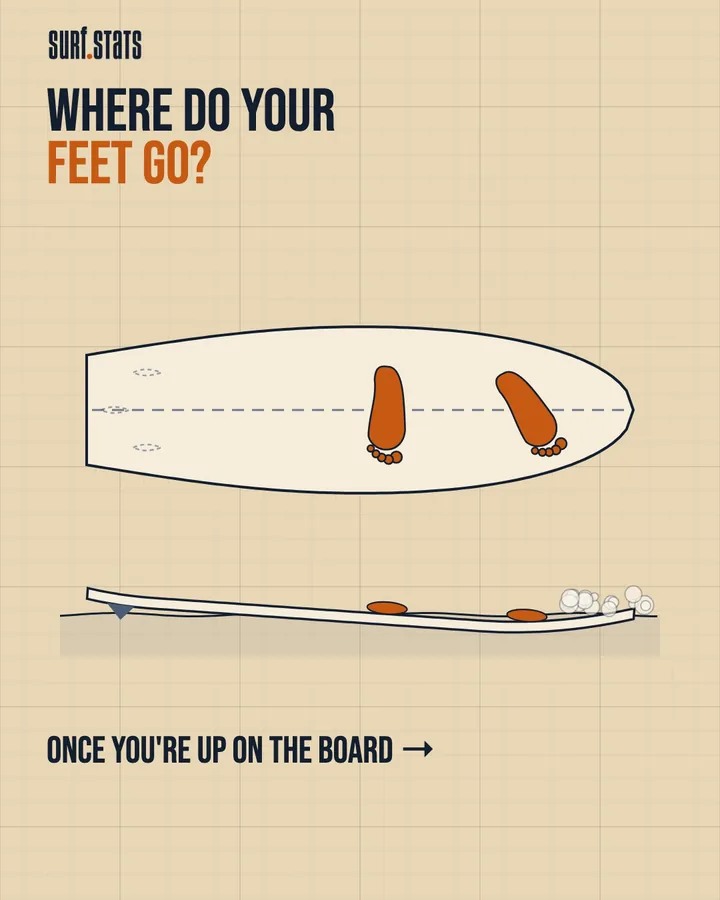
Try this: ease off the back foot. A little more weight on the front.
Too much back foot slows you down. Surfer Today lists too much pressure on the back foot as a speed mistake and calls it stalling. Surfline describes the same thing from the other end: when you want to get off a wave, one way is to step on the tail and lean back, which slows you until the wave passes you by.
When Surfline describes riding along the wave, the weight goes forward, on the inside rail.
Two limits:
- This is for riding along the wave, not the drop.
- A little, not a lot. Just a little more on the front foot, not out over the nose. And Surfline's own steps for a turn put your weight on the back foot, so this is about how you stand while you ride, not a rule for every moment.
3. Out on the shoulder, and it goes soft?
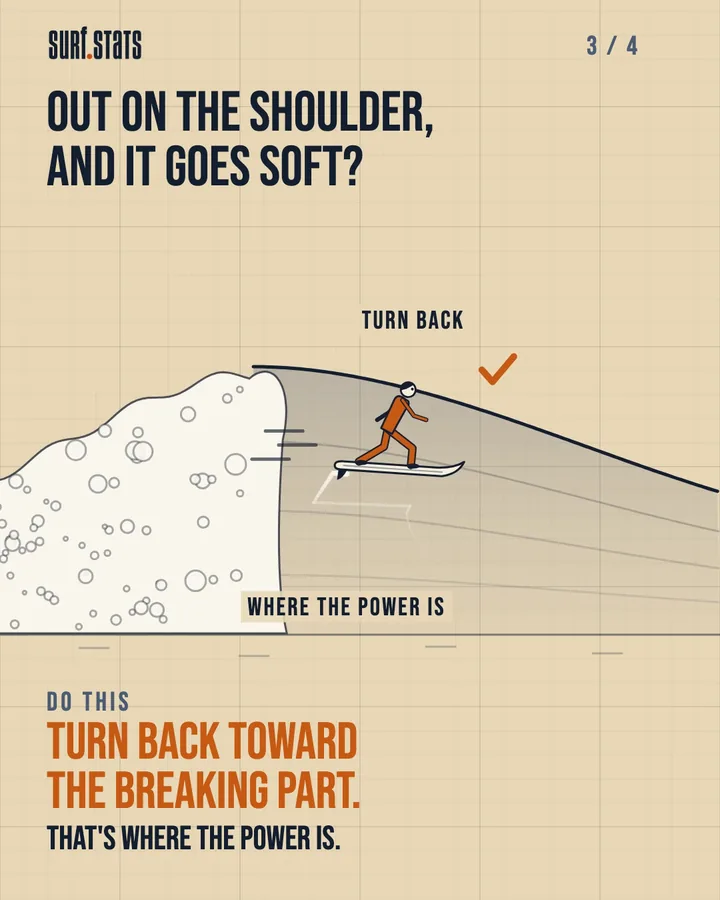
Try this: turn back toward the breaking part. That's where the power is.
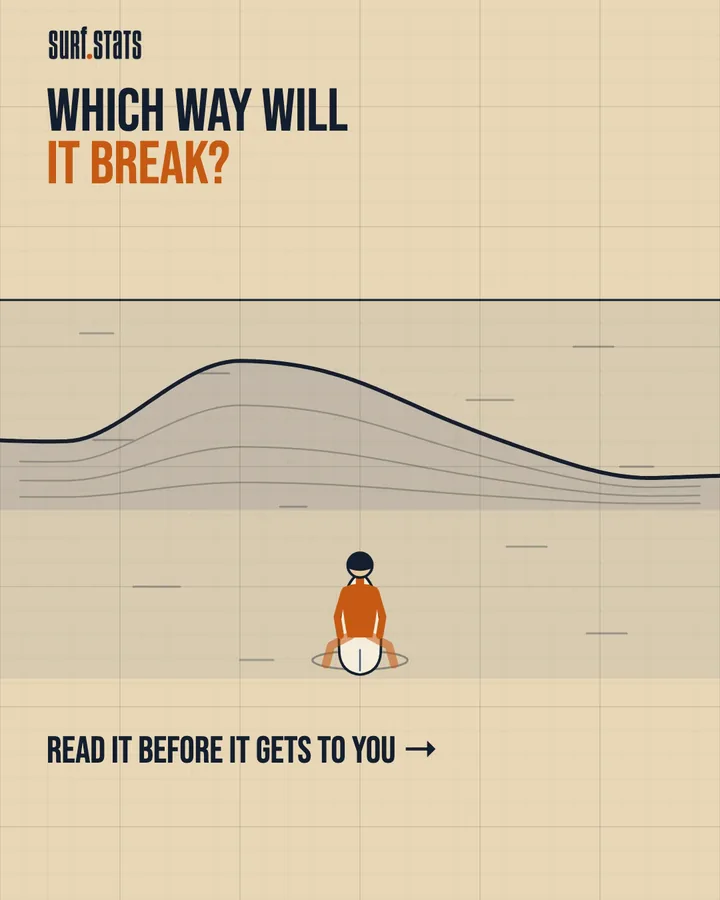
The shoulder is the part of the wave you ride toward (that's how you read which way a wave breaks). Go that way, just don't race out too far ahead of the breaking part. Surf Simply describes the shoulder as soft, with little energy left, and says you can head back toward the white water to get your speed back. Surfer Today notes that going too fast is what puts you out on the shoulder, and suggests making a few turns as you ride to stay in the part of the wave you can work with.
Barefoot Surf adds where the speed is: when experienced surfers pump, their line stays close to the breaking part, because the wave is steeper there. They don't pump far out on the shoulder.
A wide, easy turn back is fine. No fancy move needed.
4. Wave too fast to keep up with?
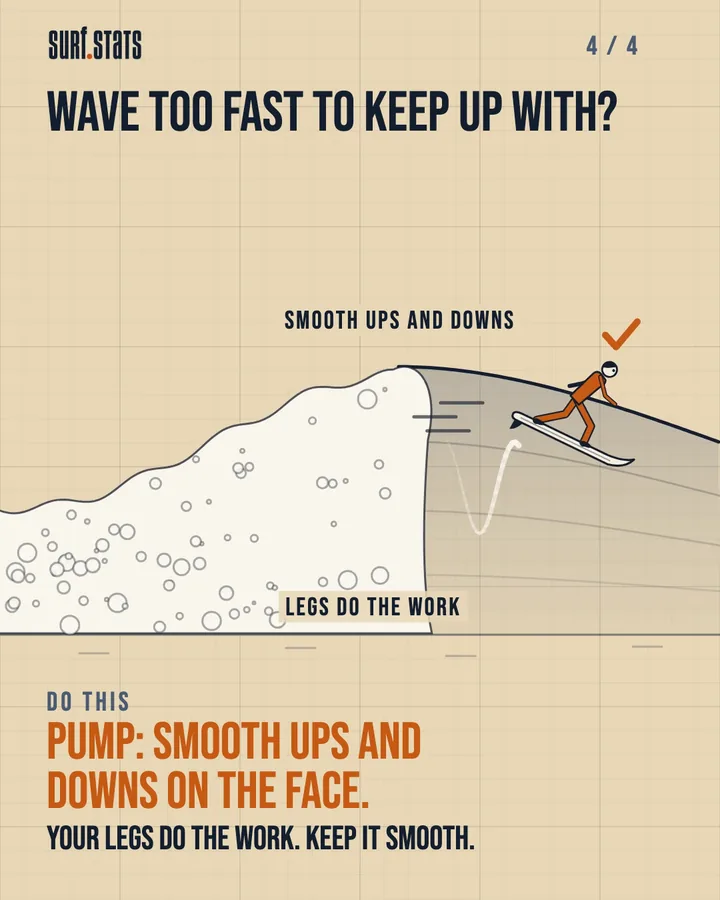
Try this: pump. Smooth ups and downs on the face.
Some waves peel too fast to keep up with just by riding along. Surfer Today says waves that peel very fast will force you to pump, and Barefoot Surf says that on a shorter board, just riding along the middle of the wave often isn't enough to keep up with how fast it peels.
Pumping is surfing up and down the face in a smooth motion, so you stay near the breaking part. What the sources agree on:
- Your legs do the work. Your knees bend and straighten as you go up and down. The Inertia's Lauren Ringer describes speed from compressing and extending your body; Surfer Today points to your knees and ankles.
- Keep it smooth. Ringer warns against stiff or sudden movements: they can make you stall and lose your speed.
- Use the face. Barefoot Surf says surfers use a big part of the face when they pump, not just tiny wiggles in the middle, and they stay out of the flat water at the bottom.
Barefoot Surf calls pumping a difficult technique that takes practice, and teaches it once students can already ride along the wave. On a longboard you'll need it less: Surf Simply says longboarders rarely need to pump for speed, while shortboarders have to.
Quick checklist
- Ride higher on the face, below the lip, not down at the bottom.
- Feels like you're stalling? Ease off the back foot, a little more weight on the front.
- Not out over the nose.
- Out on a soft shoulder? Turn back toward the breaking part.
- Wave too fast? Pump: smooth ups and downs, legs doing the work.