Which waves to catch when you surf
 Fin Selector: your fins in 1 minute
Go for a wave with a clear high point and a top that slopes down from it: it peels, so you get a ride along it. Let the straight-topped ones go: they usually close out. In a set, you don't have to take the first wave.
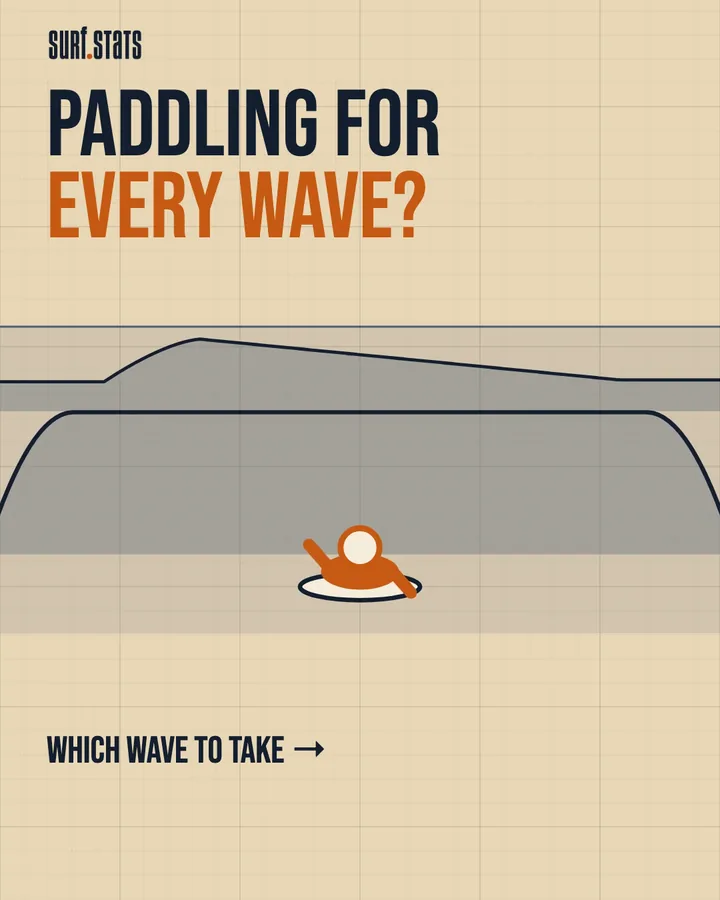
Paddling for every wave can feel like the way to get more rides. Surfer Today calls paddling into all waves a common beginner mistake, and in a study with wave videos, experienced surfers were better at deciding which waves not to surf. Knowing which waves to catch, and which to let go, is a skill.
Below are five wave-selection problems and the fix for each, in the order of our which wave to take reel. Every card in the reel was checked against at least two independent sources: surf magazines, a surf encyclopedia, surf coaches and one peer-reviewed study. This post is about choosing the wave. Once you have one, which way to go on it is its own read: see how to read waves.
1. Short, weak rides?
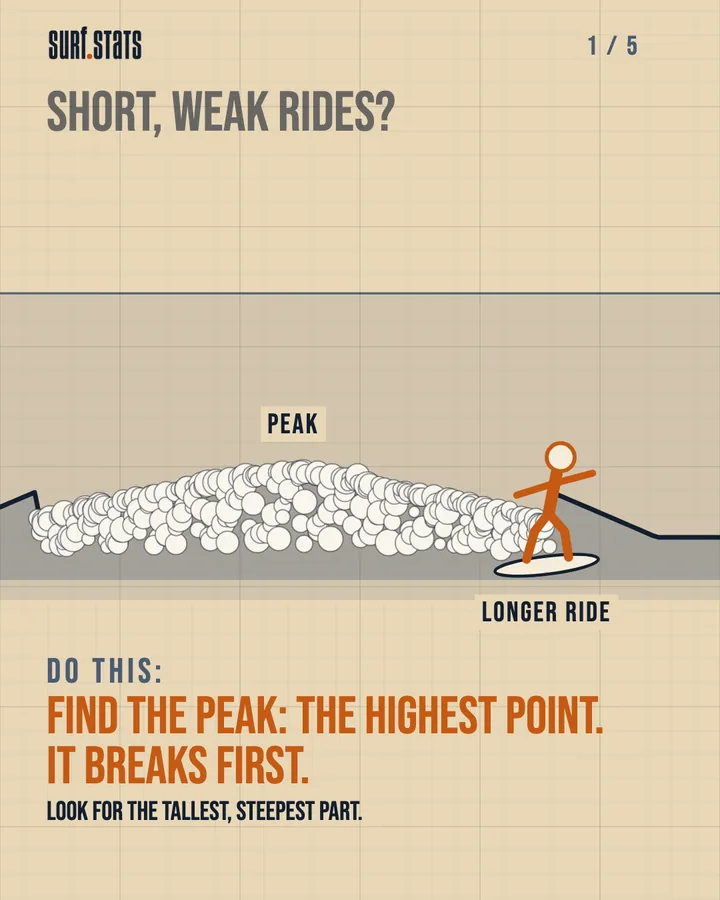
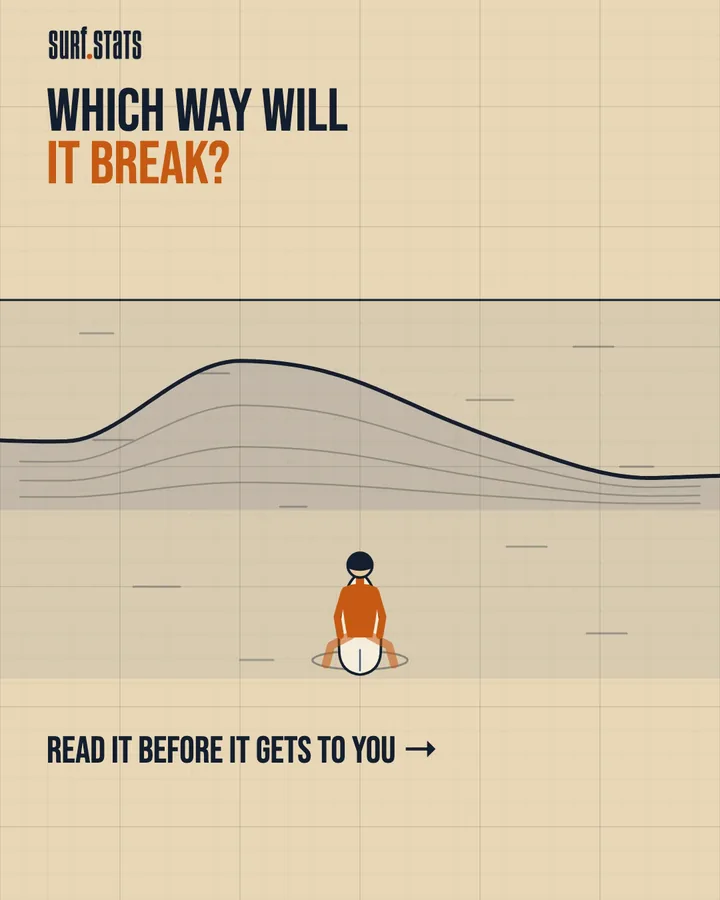
Try this: find the peak, the highest point of the wave. It breaks first.
The peak is the tallest, steepest part of the wave, and it's the first part to break. Away from it, the wave has less push. If you wait too far out along the wave, by the time it reaches you it has almost finished breaking, and you get a short, weak ride, or the wave rolls under you.
Catch it near the peak and the ride lasts longer. Two things to keep in mind:
- Only if no one's closer. The surfer closest to the peak has the wave.
- Near it, not on top of it. The Inertia calls the peak the best and the most difficult place to take off, and SURFER suggests beginners start on the edges of the main peak.
2. Top of the wave in one straight line?
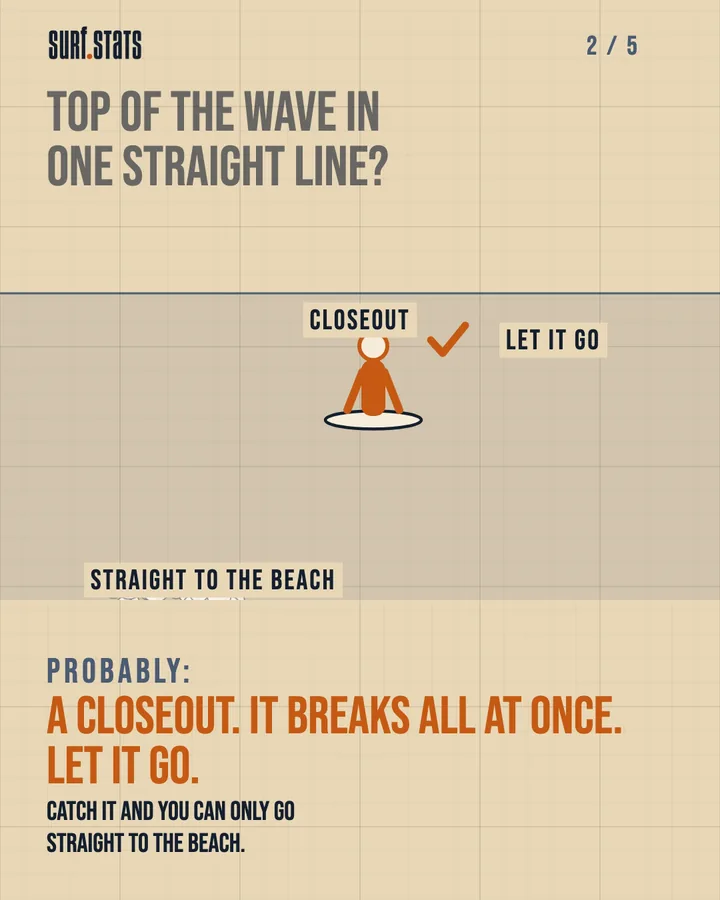
Try this: probably a closeout. It breaks all at once. Let it go.
Look at the top of the wave against the horizon. If it runs straight across, with no high point and nothing sloping away, it will usually break along its whole length at the same time. That's a closeout.
Catch it, and you can only go straight to the beach. There's no unbroken part left to ride along. Surf guides describe closeouts as waves surfers usually avoid, and SURFER tells beginners to avoid waves that are closing out.
Why "probably"? A wave that looks like a closeout sometimes isn't one, so keep looking as it comes.
One exception: if you're brand new and only practising pop-ups, a small, soft closeout is fine for that. The Encyclopedia of Surfing notes that beginners learn on soft-breaking closeouts.
3. Top sloping down from one high point?
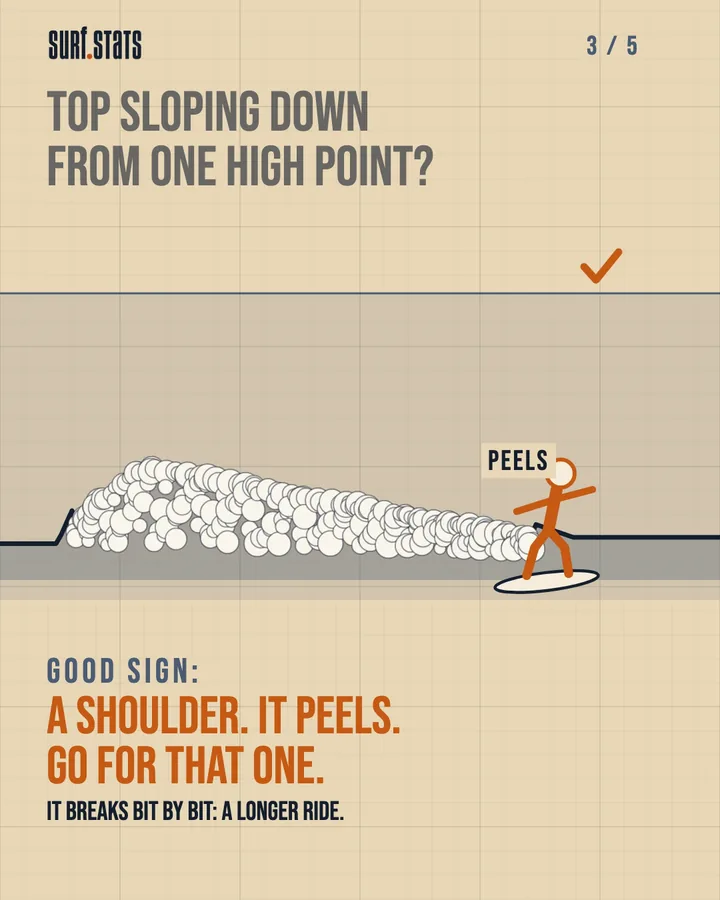
Try this: good sign. A shoulder. It peels. Go for that one.
When the top of the wave slopes down from one high point, the sloping part is the shoulder: the part next to the breaking crest that hasn't broken yet. A wave like that peels. It breaks bit by bit along its length instead of all at once, so you get a ride along the wave, and a longer one.
This is the wave surf writers describe as the ideal: one that peels down the line.
Note what you're going for. The shoulder is the sign that the wave is a good one, not the place to sit and wait. Take off near the peak (see problem 1), then ride toward the shoulder.
Still learning? Coaches say a shoulder that drops off more steeply usually peels slower, and slower waves are easier to manage when you're starting out.
4. A set on the horizon?
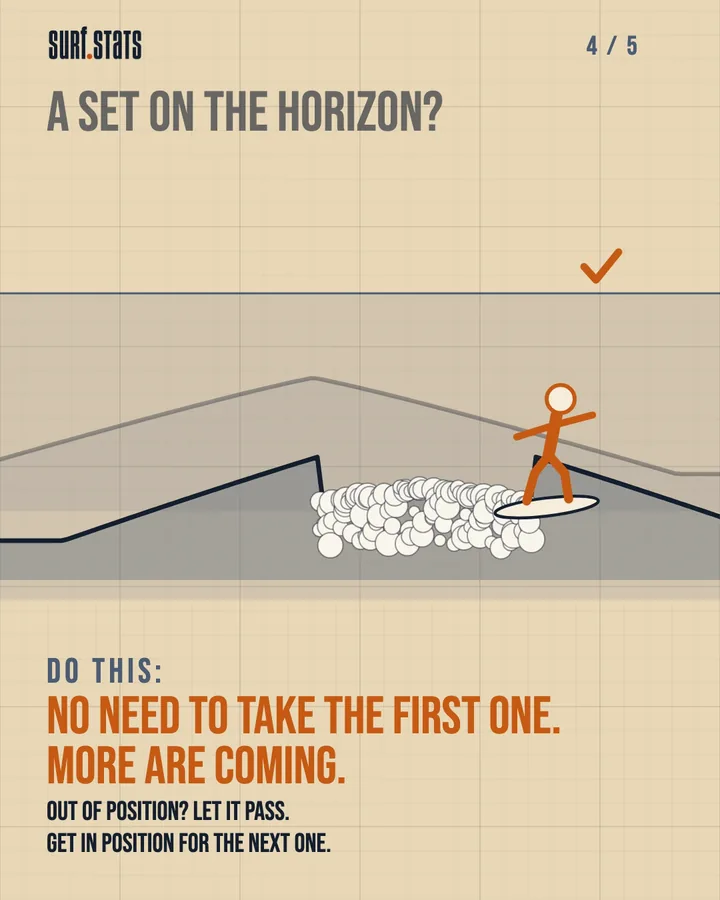
Try this: no need to take the first one. More are coming.
Waves arrive in sets: groups of a few waves. So when the first wave of a set comes and you're not in a good spot for it, you don't have to scramble for it. Out of position? Let it pass, and get in position for the next one.
Letting the first wave go also buys you something. You get a look at what the set is doing, and more time to move to where the next one will break.
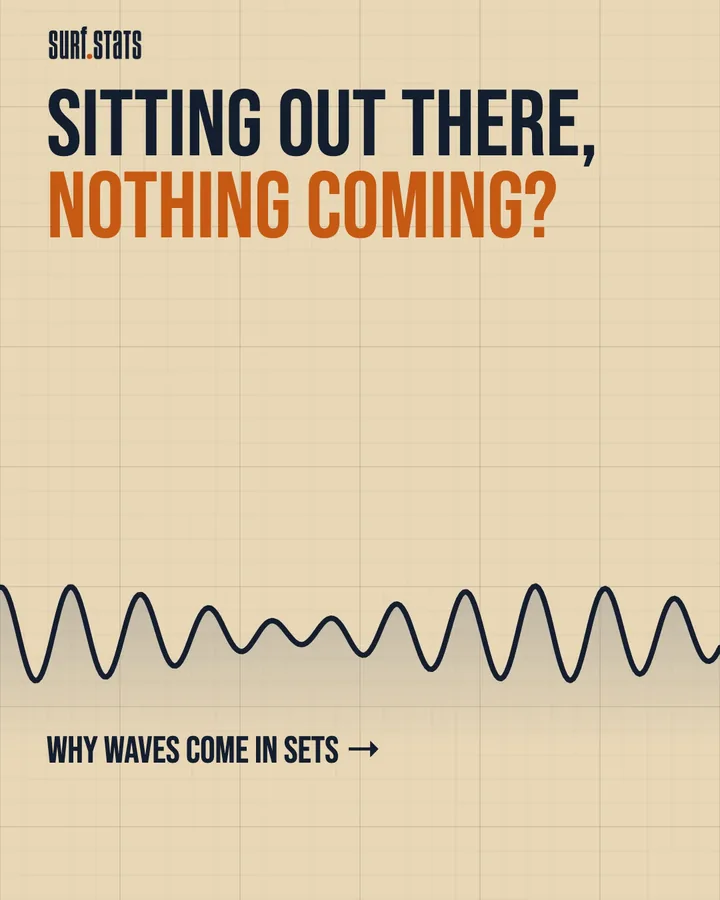
Don't count on a number, though. Bigger waves can come later in the set, and how many waves come in a set varies. If you want to know why sets happen at all, read why waves come in sets.
5. Letting waves go feels like a waste?
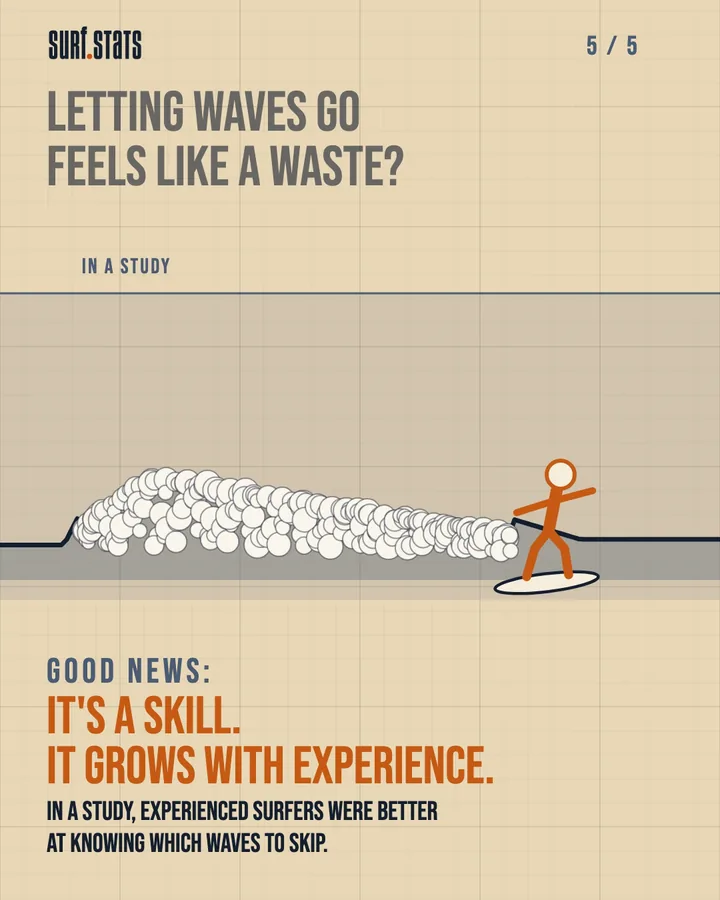
The short version: it's a skill, and it grows with experience.
In a study published in 2016, researchers Furley and Dörr showed 76 people, from experienced surfers to a group who don't surf, videos of waves coming in. Everyone pressed a button for the waves they would try to catch. The more surfing experience people had, the better they were at telling surfable waves from the rest, and the experienced surfers were in particular better at deciding which waves not to surf.
Surf guides put it in plainer words. FOAM's Linda Ly writes that deciding whether to paddle for a wave or skip it is something you learn with time and experience, and Barefoot Surf notes that experienced surfers tend to be more patient.
Let the closeouts go. Wait for one that peels.
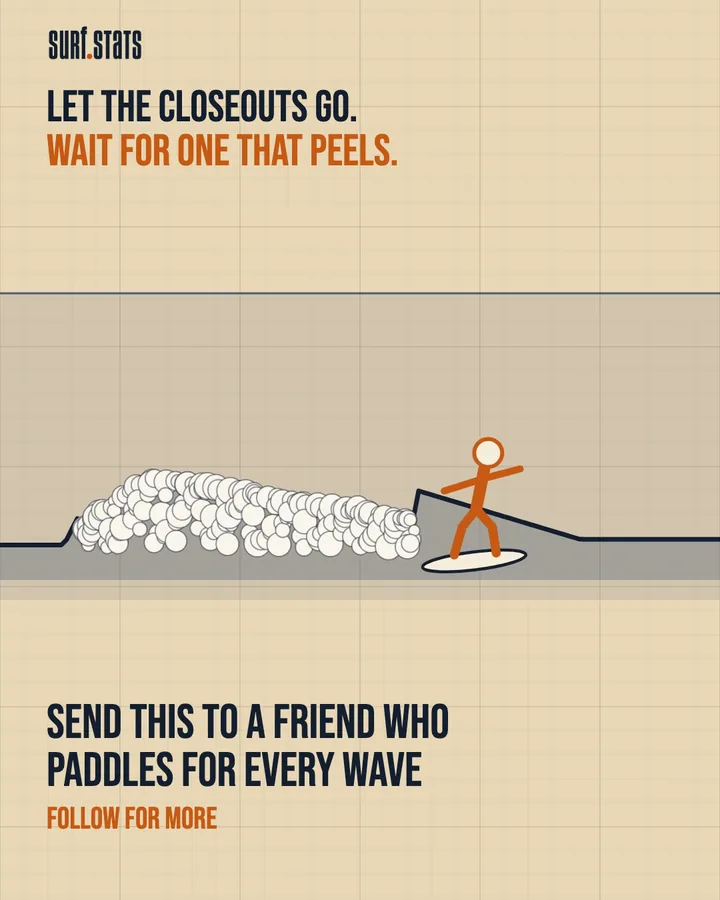
That's the whole idea in two lines. Send this to a friend who paddles for every wave.
Quick checklist
- Find the peak: the tallest, steepest part. It breaks first.
- Near the peak, a longer ride. Only if no one's closer.
- Top in one straight line: probably a closeout. Let it go.
- Top sloping down from one high point: it peels. Go for that one.
- No need to take the first wave of a set. Out of position, let it pass.
- Letting waves go is a skill. It comes with time in the water.