Beach break vs point break vs reef break
 Fin Selector: your fins in 1 minute
A beach break breaks over sand, a point break wraps around a point of land, and a reef break breaks over rock or coral. What's under the wave shapes how it breaks, so start at a beach break on a small, soft day and leave points and reefs for later.
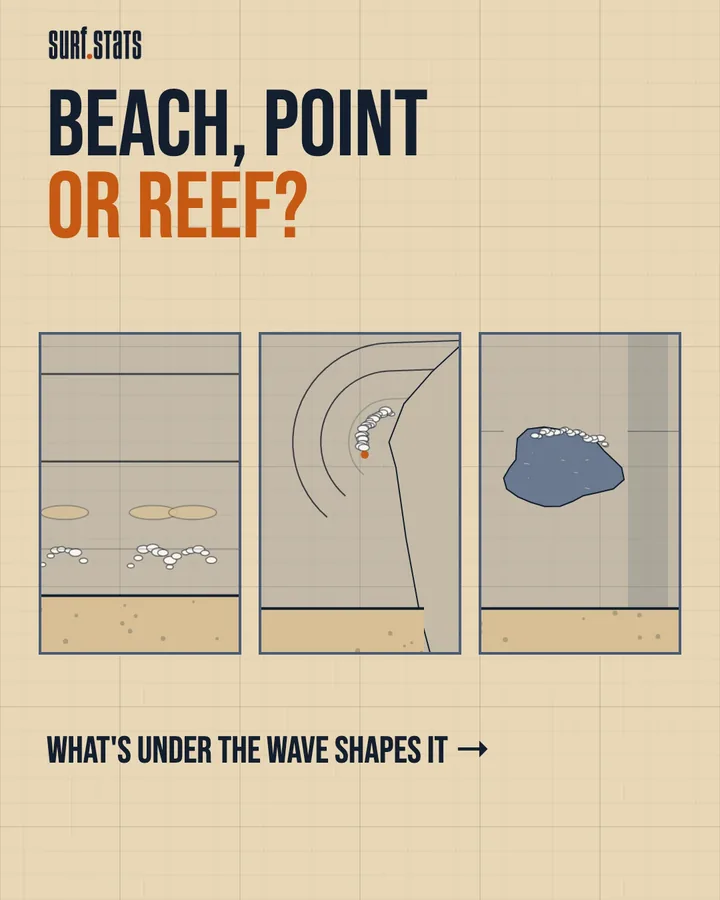
Some waves peel for a long way. Some move around from week to week. Some break the same way in the same spot, swell after swell. A big part of the reason is what's under the wave and around it, and surfers sort spots into three main types because of it: beach break, point break and reef break.
The short answer: a beach break breaks over sand, a point break wraps around a point of land, and a reef break breaks over rock or coral. What's under the wave shapes how it breaks, so each type tends to behave in its own way.
Below are five signs you can see from the beach, and the break type that could be behind each one. They come from our beach, point or reef reel, and each sign in it was checked against at least two independent sources: coastal scientists, an oceanography textbook, surf forecasters, surf coaches, a water-safety charity and surf magazines. Where a line below rests on one source, we name it.
1. Peaks along the beach, and they move?
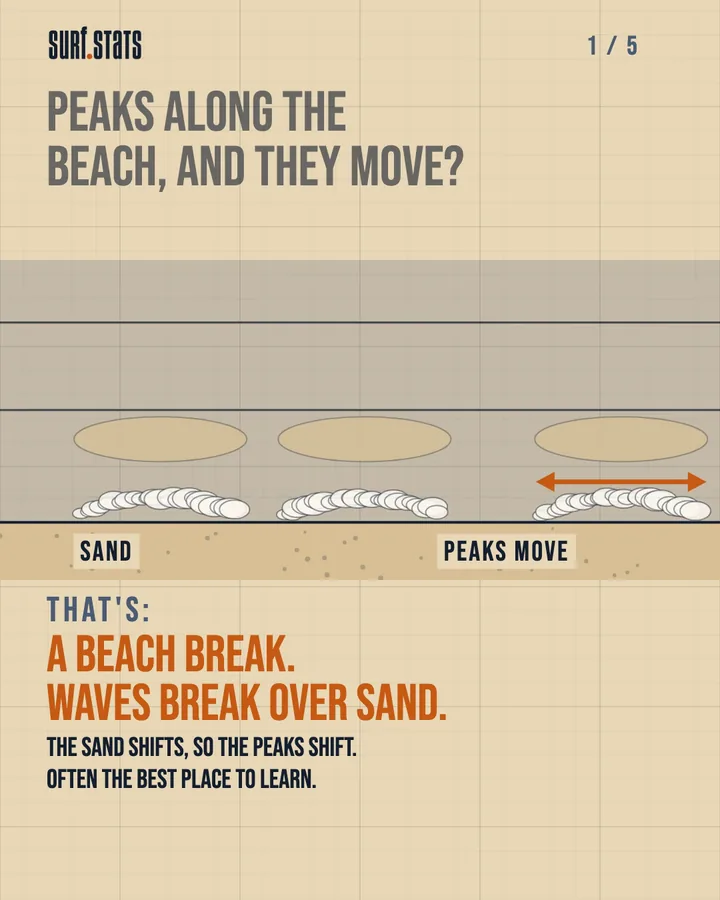
The short version: that's a beach break. Waves break over sand.
At a beach break, the bottom is sand. Under the water the sand forms bars, and the waves break in peaks over them, spread along the beach. Those bars don't stay put. The sand shifts, so the peaks shift with it, and from one week to the next a peak can turn up somewhere else.
Beach breaks are often the best place to learn. A sand bottom gives you less to get hurt on than coral or rock, and the waves are often gentler.
"Often" matters, though. Beach breaks vary: depending on how the sandbars sit, the waves can be soft or hollow, and on bigger days a beach break can throw powerful waves and a heavy shore break.
2. One long wave peeling along a point of land?
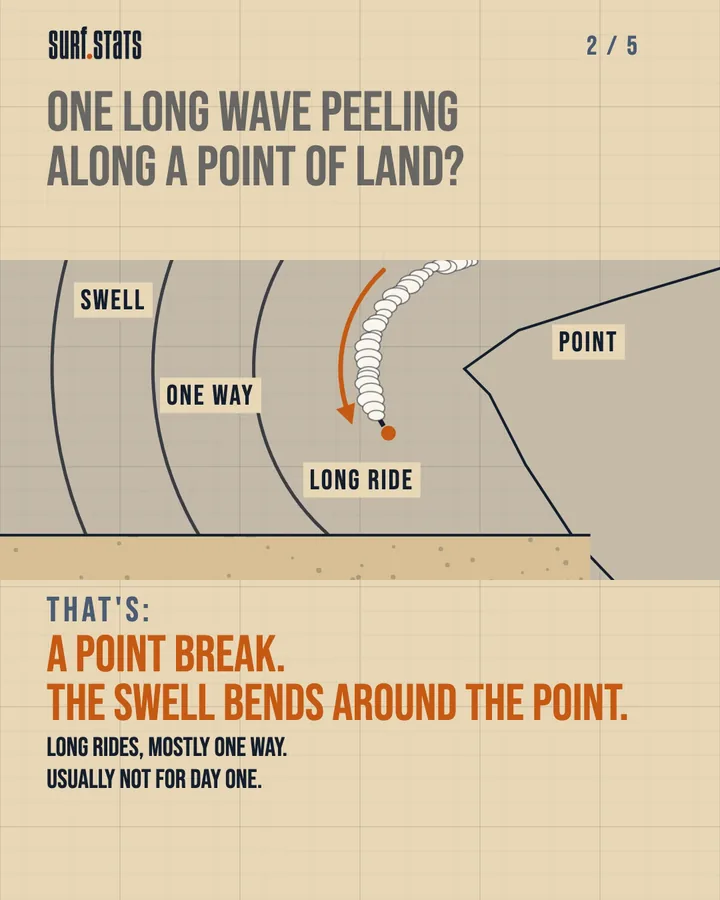
The short version: that's a point break. The swell bends around the point.
At a point break, the swell bends around a point of land, a headland, and the wave then peels along it. That gives long rides. And mostly in one direction: each point tends to give you a right or a left.
A point break is named for the shape of the coast, not for what's under the water. The bottom can be rock, reef or even sand.
Points are usually not for day one. Surf Report, a French surf forecaster, notes that points can have rocks along the shore and stronger currents, and Surfing England says the same of points in the UK. They usually come later, once you have more experience.
3. The same wave in the same spot, swell after swell?
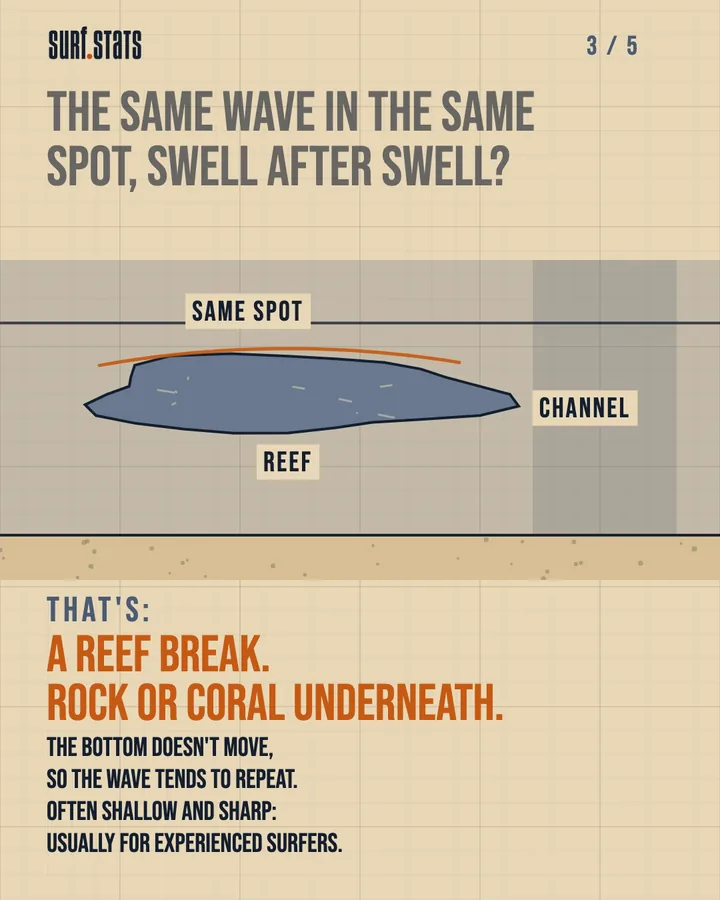
The short version: that's a reef break. Rock or coral underneath.
A reef break breaks over a shelf of rock or coral. Unlike sand, that bottom doesn't move, so the wave tends to break the same way in the same place, swell after swell.
"Tends to" is the honest word. Reef waves still vary in shape and size, and not every reef is the same: Surf Report notes that some reefs are less dangerous than others.
Reefs are often shallow, and rock and coral can be sharp. That's why reef breaks are usually for experienced surfers. Surfline's advice is that, as a general rule, beginners should stay off them.
4. Hollow here, soft there?
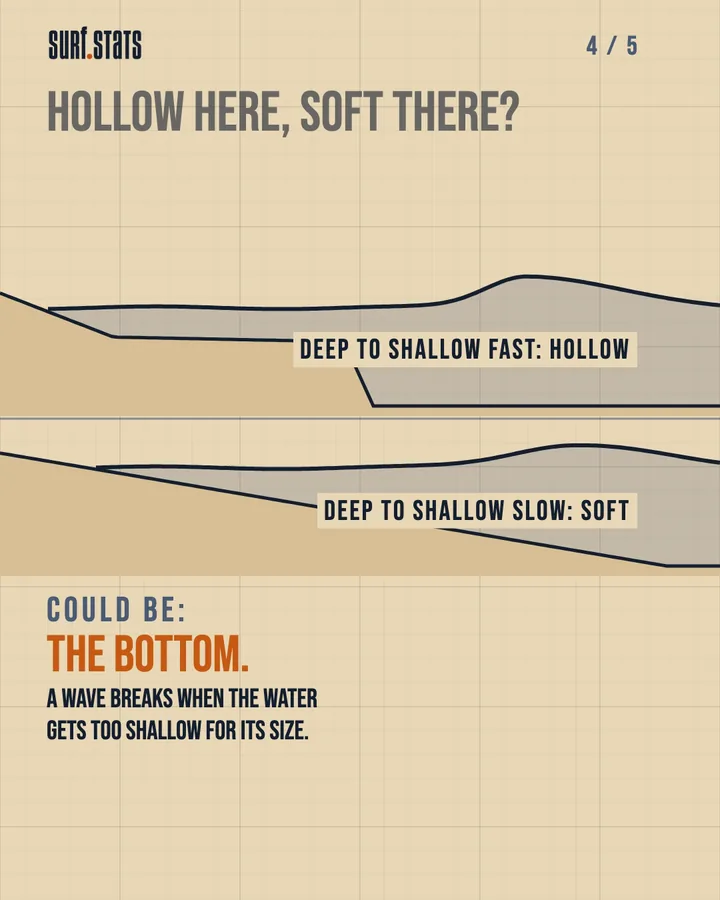
The short version: could be the bottom. Deep to shallow fast: hollow. Deep to shallow slow: soft.
As a wave moves into shallower water, it starts to feel the bottom. It slows down, the waves crowd together, and each one gets steeper. A wave breaks when the water gets too shallow for its size.
How fast the water goes from deep to shallow shapes the way it breaks:
- A sudden change (a reef ledge, a steep sandbar): the wave breaks fast and pitches forward. That's the hollow, barrelling wave.
- A gentle slope: the wave spills from the top and breaks slowly. That's the soft, mushy wave.
So a hollow wave doesn't need a reef. A sandbar that rises sharply can make one too.
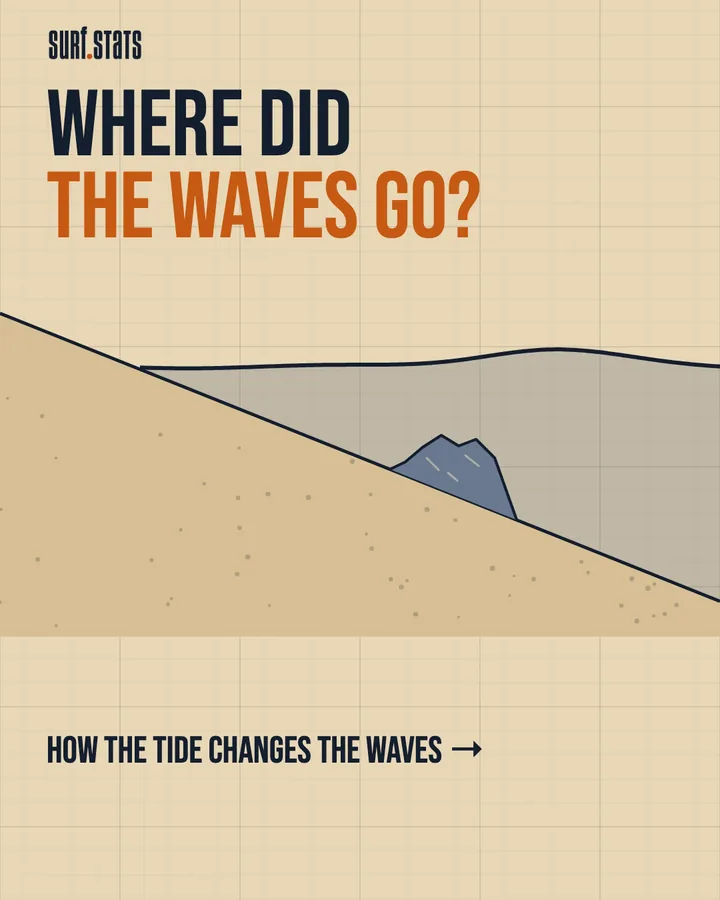
Why "could be" and not "that's it"? The bottom isn't the only cause. The tide changes how deep the water is over the same bottom, and swell and wind change the wave as well. For the tide side of it, read how the tide changes the waves.
5. Still learning?
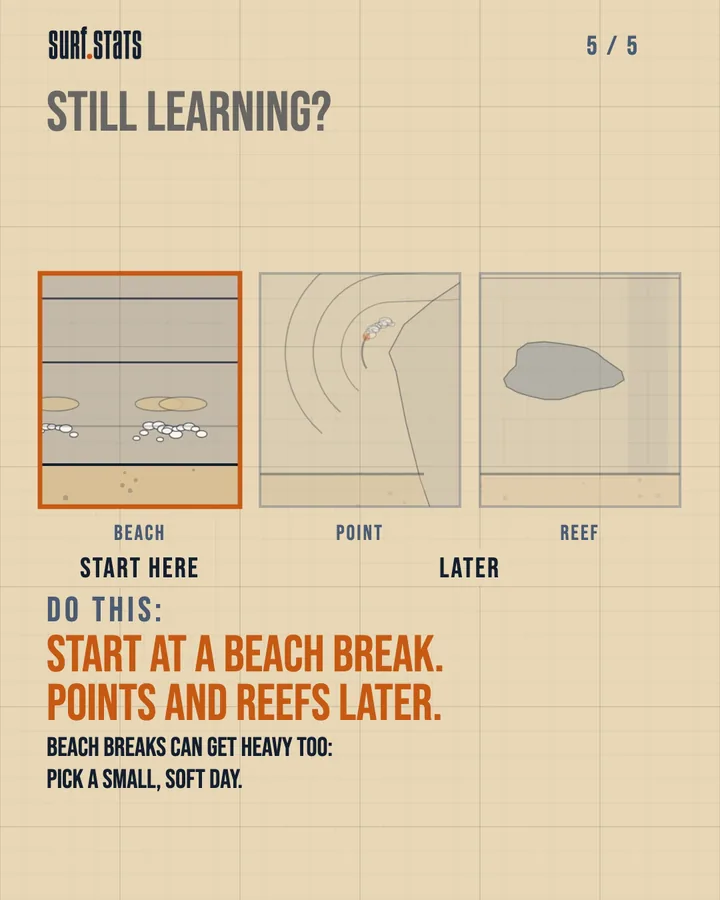
Do this: start at a beach break. Points and reefs later.
Sand is a kinder thing to fall on than rock or coral, and beach breaks often have the gentler waves you want while you learn. Save points and reefs for when you have the basics.
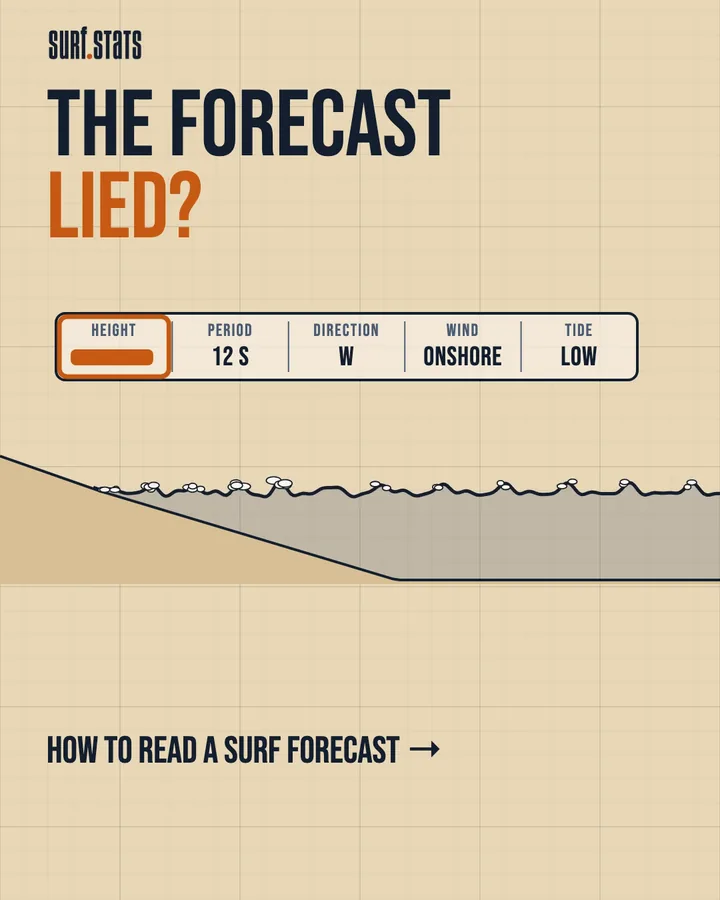
Beach breaks can get heavy too, so pick a small, soft day. The RNLI, Surfline and Surfer Today all point beginners to soft, spilling waves. To find one, start with how to read a surf forecast.
Beach break vs point break vs reef break, in three words
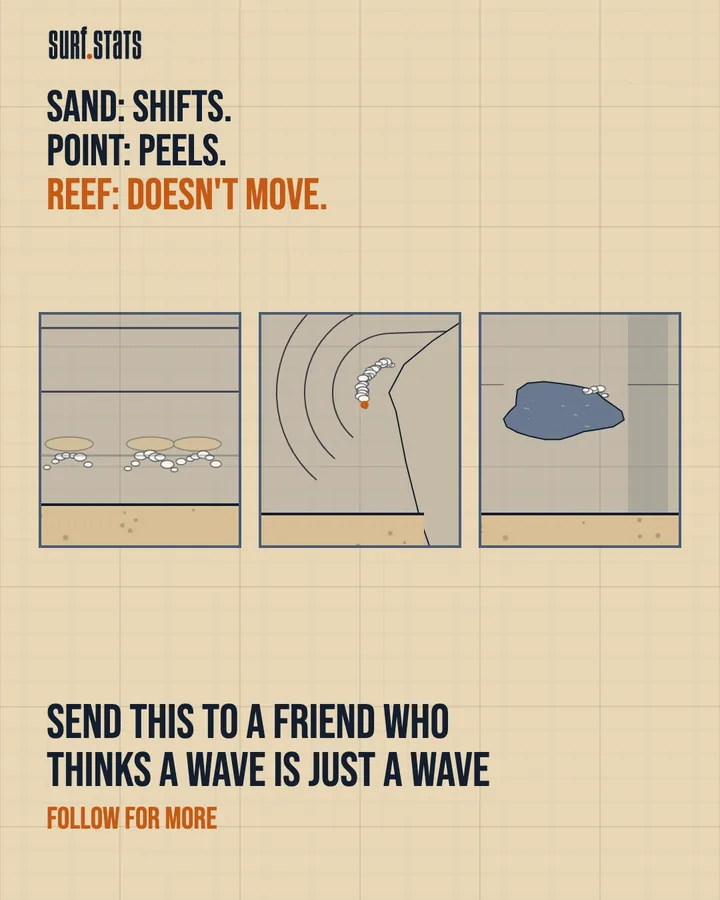
- Sand: shifts. The sandbars move, so the peaks move.
- Point: peels. The swell bends around the point and peels along it.
- Reef: doesn't move. So the wave tends to break the same way in the same spot.
The types blur: some spots are a bit of both. And swell, wind and tide change each break too, so the same spot can look different from one day to the next.
Quick checklist
- Peaks along the beach that move around: beach break, sand underneath.
- One long wave wrapping around a point of land: point break.
- Same wave, same spot, swell after swell: reef break, rock or coral underneath.
- Deep to shallow fast: hollow. Deep to shallow slow: soft.
- Still learning: a beach break on a small, soft day. Points and reefs later.