How to angle your take-off
 Fin Selector: your fins in 1 minute
Paddle in straight, then in your last strokes, once the wave has you, turn the nose a little toward the part that isn't breaking yet. Look along the wave, lean a little that way, and set the angle before you stand.
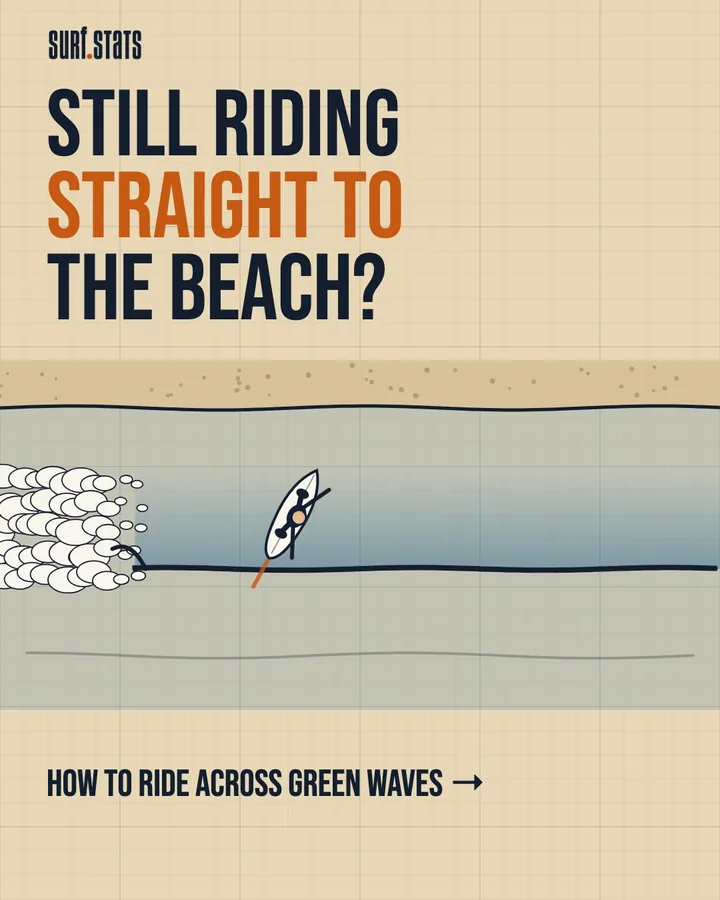
You're catching unbroken waves and standing up. Then the whitewater catches you from behind, and the ride can be over fast. The fix is the next step after your first waves: angle your take-off, so you ride across the wave instead of straight to the beach.
Angling the take-off means your board points a little diagonally along the wave as you go from paddling to riding. Surf coaches and magazines treat it as the step after you've got catching waves and the pop-up down.
Below are five problems and the fix for each. They come from our riding across the wave reel. Every fix is one that at least two independent sources in the list at the end agree on: surf magazines, coaching guides, a surf encyclopedia and a city council's etiquette booklet.
1. Whitewater catching you from behind?
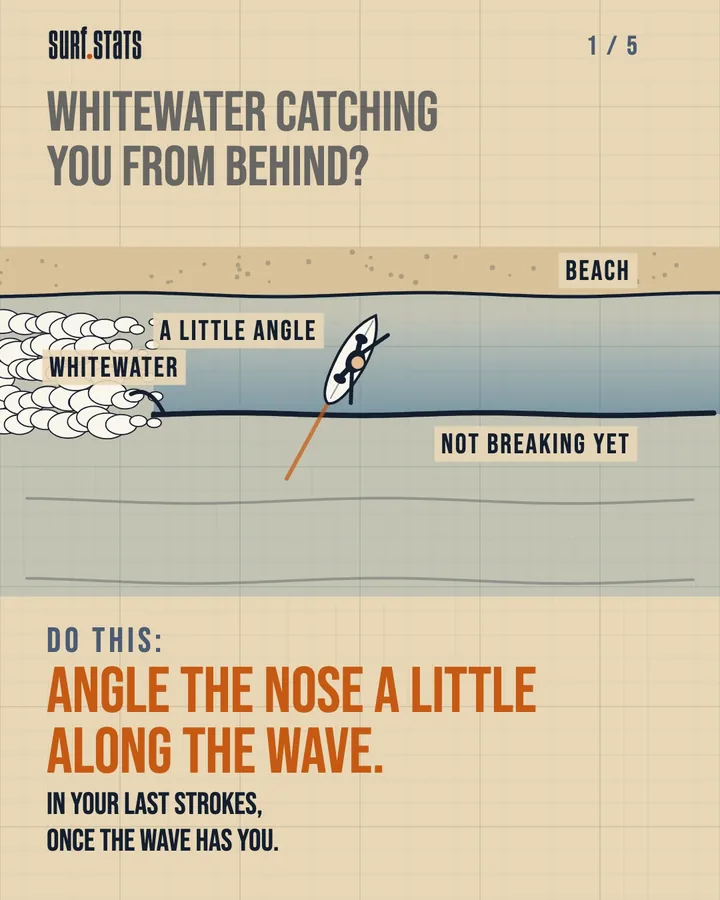
Try this: angle the nose a little along the wave, in your last strokes, once the wave has you.
Go straight in and the whitewater can catch up with you. Surf coach Lauren Ringer, writing in The Inertia, lists it as a common mistake: with too little angle, you head straight down and the whitewater catches you again.
The timing matters as much as the angle:
- Paddle in straight until you're sure you're on the wave.
- In your last strokes, turn the nose a little toward the part that isn't breaking yet.
- Keep it small. A slight angle, not a big one.
Angle too early, or too much, and you can end up out on the shoulder and miss the wave.
2. Not sure which way to go?
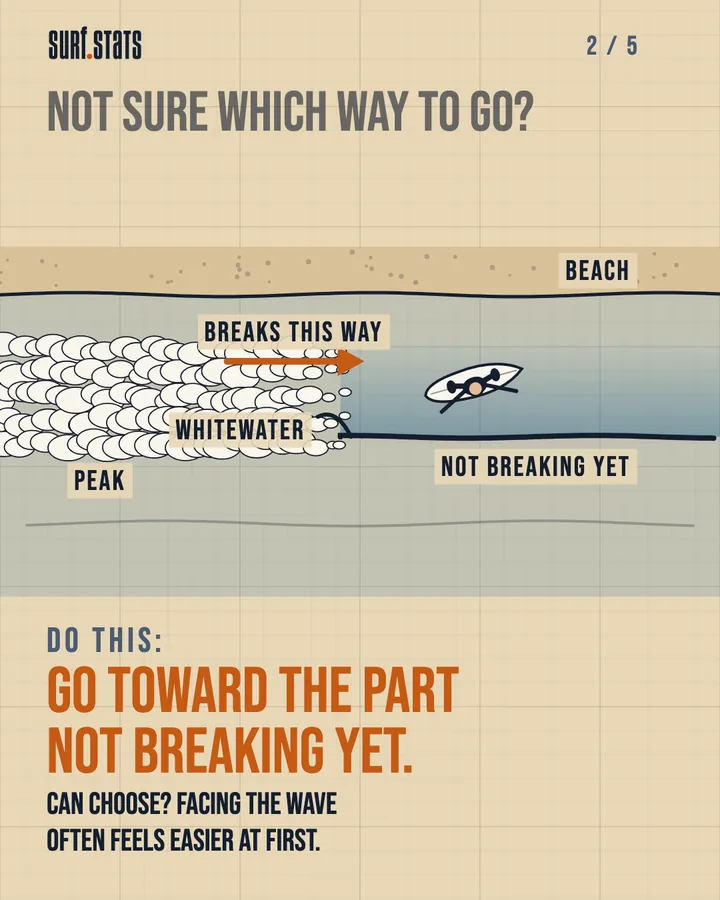
Try this: go toward the part not breaking yet.
Find the peak: the highest point of the wave, where it breaks first. From there the wave breaks along toward the part that's still open, and that's the direction to go. For more on spotting it from the lineup, read how to read waves.
If the whole wave looks like it will break at once, it's a closeout. There's no open part to ride, so it usually just sends you straight in.
Can you choose? Facing the wave often feels easier at first. That means going right if you're regular, left if you're goofy. Not everyone agrees here: Surfer Today says that for many surfers, backside is actually easier. And the open part comes first. Barefoot Surf names heading for the whitewater, just because frontside feels more comfortable, as a common mistake.
3. Nose swinging back to the beach?
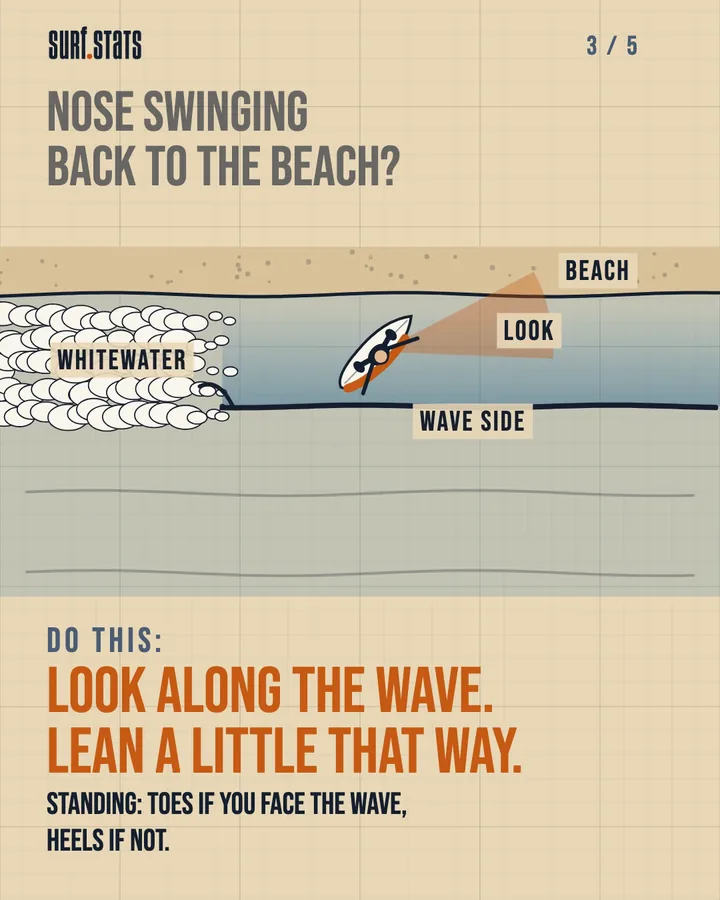
Try this: look along the wave. Lean a little that way.
Your board tends to go where you look. Surfer Today says your body will often start to follow your gaze, and Kassia Meador, in The Inertia, puts it as: where we look is where we go. So keep your eyes on the open part of the wave, not down at your board.
Then lean a little that way:
- Lying down: put a little more weight on the hand on the side you're going. Going right, your right hand.
- Standing: press the edge of the board nearest the wave. That's your toes if you face the wave, your heels if your back is to it.
"A little" is the point. Kassia's advice for that hand: a little bit, not a lot.
4. Nose digging in on steeper waves?
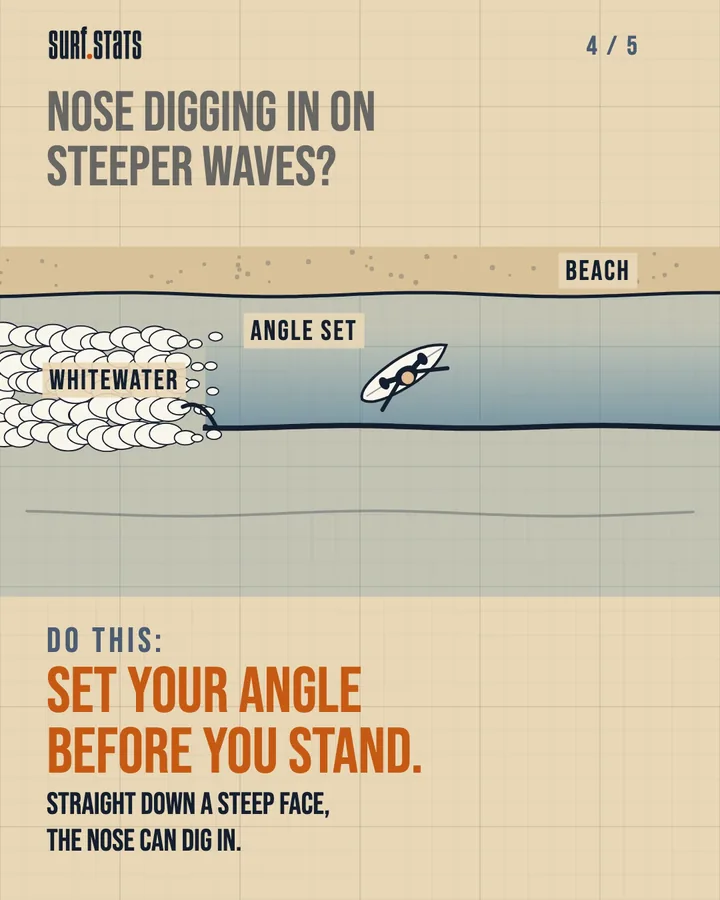
Try this: set your angle before you stand.
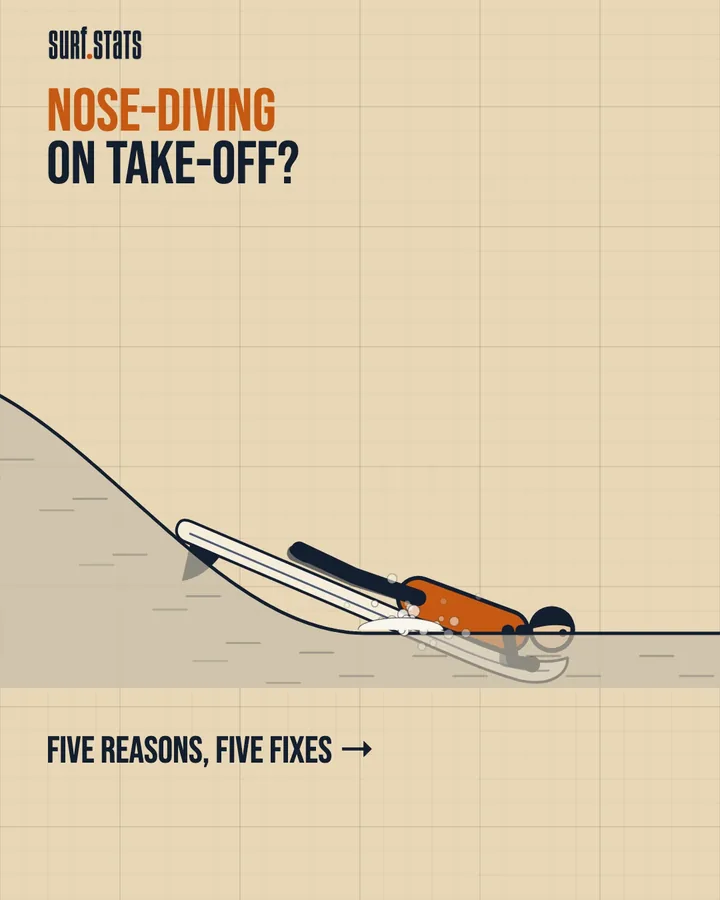
Straight down a steep face, the nose can dig in. Surfline's advice: on a slow, sloping wave you can paddle in straight, but on a steeper one you may need to come in at an angle to help avoid pearling (the nose going under).
Set the angle while you're still lying down, then pop up. The Inertia warns that leaning on the rails once you're already dropping down the face won't set the angle on its own. Surfer Today adds that a short extra lean right before you stand adds to the angle, and that keeping your head and chest pointed where you're going holds that line as you get up.
Barefoot Surf notes that a nose-dive can have other causes too. For those, read how to stop nose diving.
5. Someone closer to the peak?
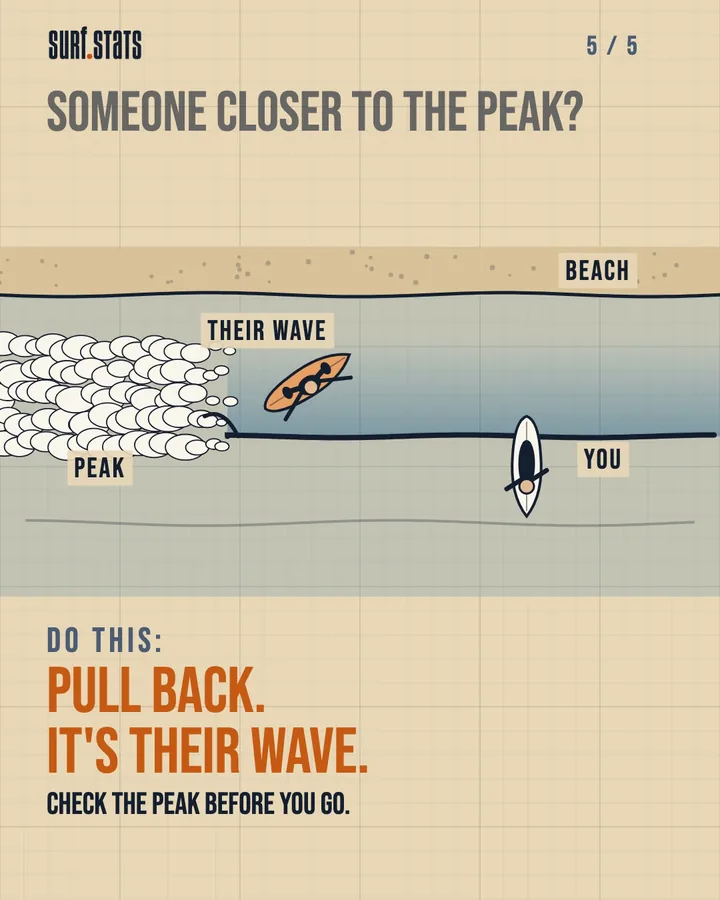
Try this: pull back. It's their wave.
Check the peak before you go. If someone closer to it is up and riding, or paddling and committed, it's their wave. Don't drop in. If you do by accident, pull back or kick out.
Surfer Today notes that beginners often drop in on others' waves by accident, so make the look a habit.
Why ride across?
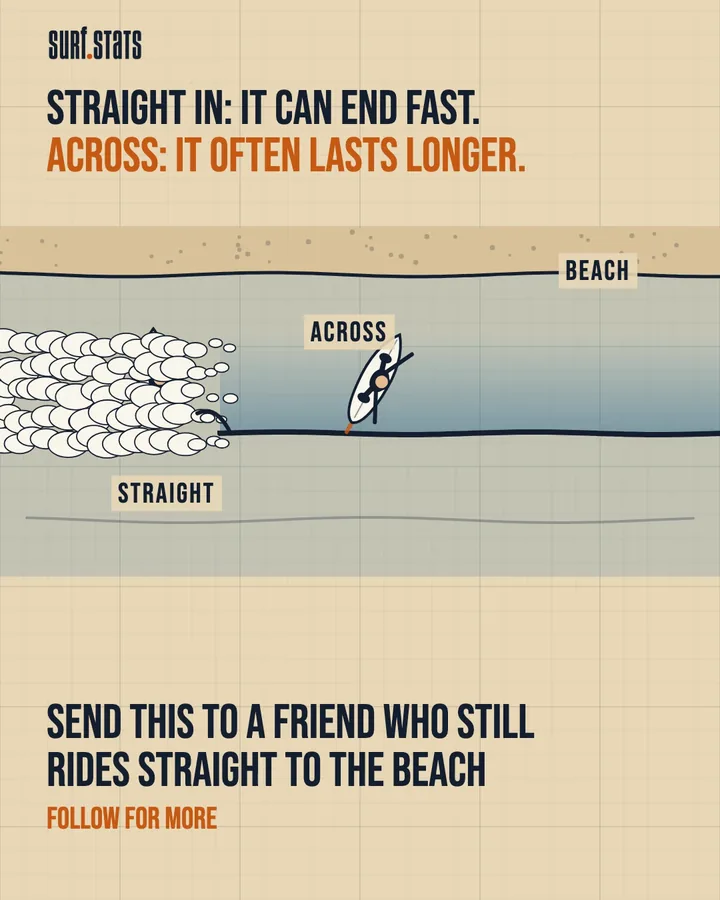
Straight in, the ride can end fast. Across, it often lasts longer. Surfer Today describes the beginner who rides straight to the beach as not using the room the wave gives them.
Quick checklist
- Paddle in straight. Angle in your last strokes, once the wave has you.
- A little angle, not a big one.
- Go toward the part not breaking yet. A closeout has no open part.
- Look along the wave and lean a little that way.
- Standing: toes if you face the wave, heels if not.
- Set the angle before you stand.
- Check the peak. Someone closer to it has the wave.