Why your nose dives on take-off
 Fin Selector: your fins in 1 minute
Lie a little further back so the nose sits just above the water, be moving at the wave's speed when it reaches you, set a slight angle on steeper waves, pop up as soon as the wave is carrying you, and stand with your weight over the middle.
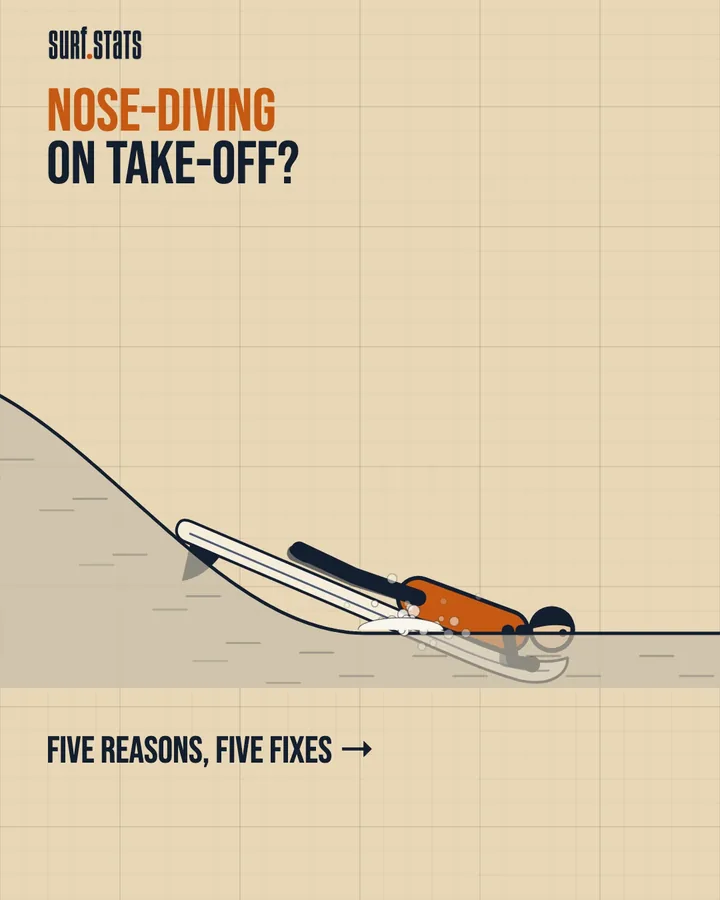
A nose-dive, also called pearling, is when the nose of your board dips under the water as you try to catch a wave. The tail goes up, and you get thrown off the front. It's a very common wipeout for beginners, and it has causes you can fix.
Below are five reasons your nose dives on take-off, and the fix for each, in the order they happen: from your last strokes to your first second standing. They come from our nose-diving on take-off reel. Each fix rests on at least two independent sources: surf magazines, surf-tips sites, coaching guides and a surf instructors' academy.
1. Nose goes under as the wave picks you up?
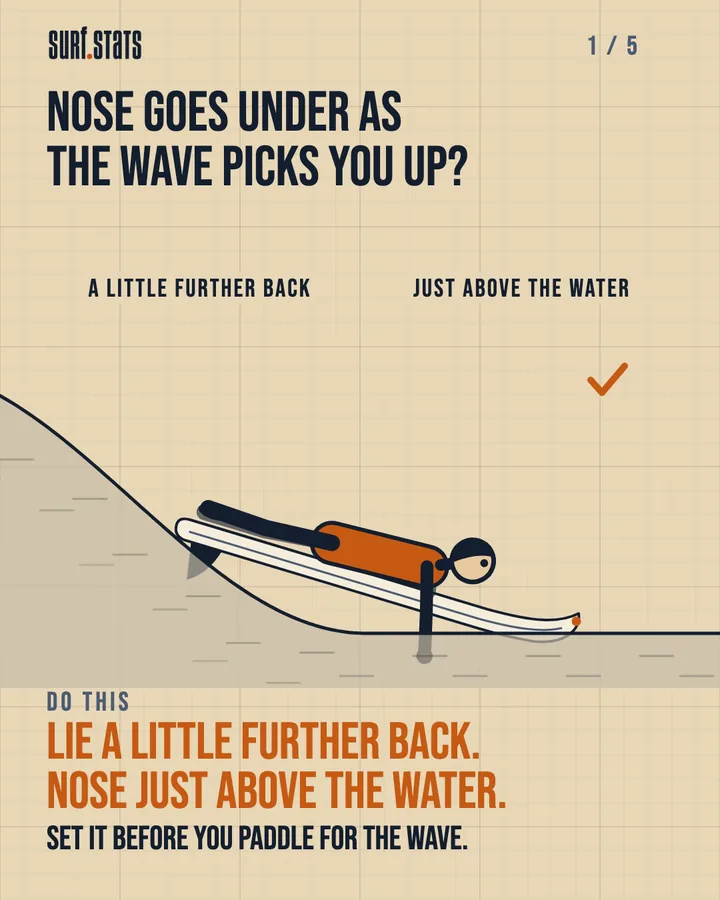
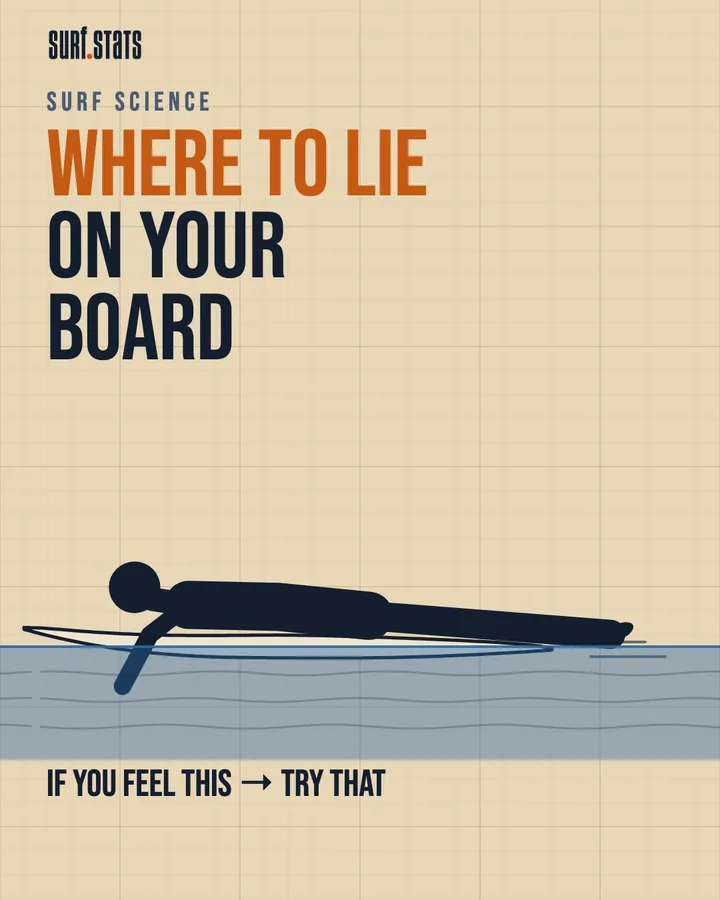
Try this: lie a little further back. Nose just above the water.
You're lying too far forward. Surfer Today says nose-dives usually happen when your weight is too far forward, and the Academy of Surfing Instructors says they typically do. Slide back until the nose sits just above the water and the board is close to level.
Set it before you paddle for the wave. Where you lie is decided before the wave gets to you, not as it arrives.
Don't overdo it. Lie too far back and the tail drags and slows you down, and you can miss the wave altogether. If water keeps washing over the nose while you paddle around, that's the same fix at a different moment: see where to lie on a surfboard.
2. Board barely moving when the wave reaches you?
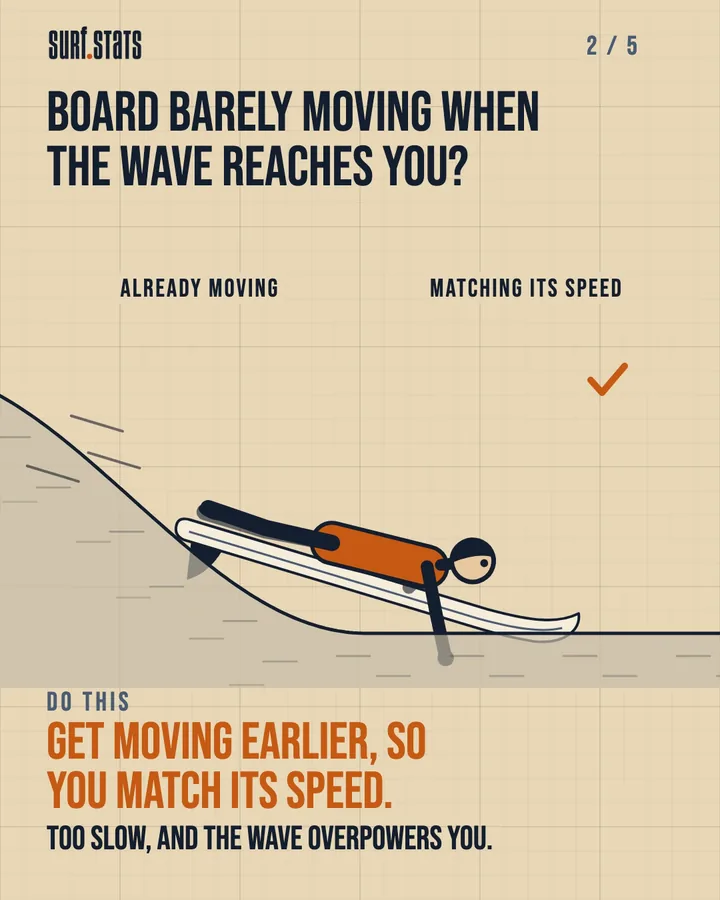
Try this: get moving earlier, so you match its speed.
Too slow, and the wave overpowers you. It catches up with you while the board is still barely moving.
The fix is timing. Start paddling while the wave is still behind you, so the board is already moving at close to the wave's speed when it reaches you. Our guide on how to catch a wave walks through that timing step by step.
3. Going straight down a steep one?
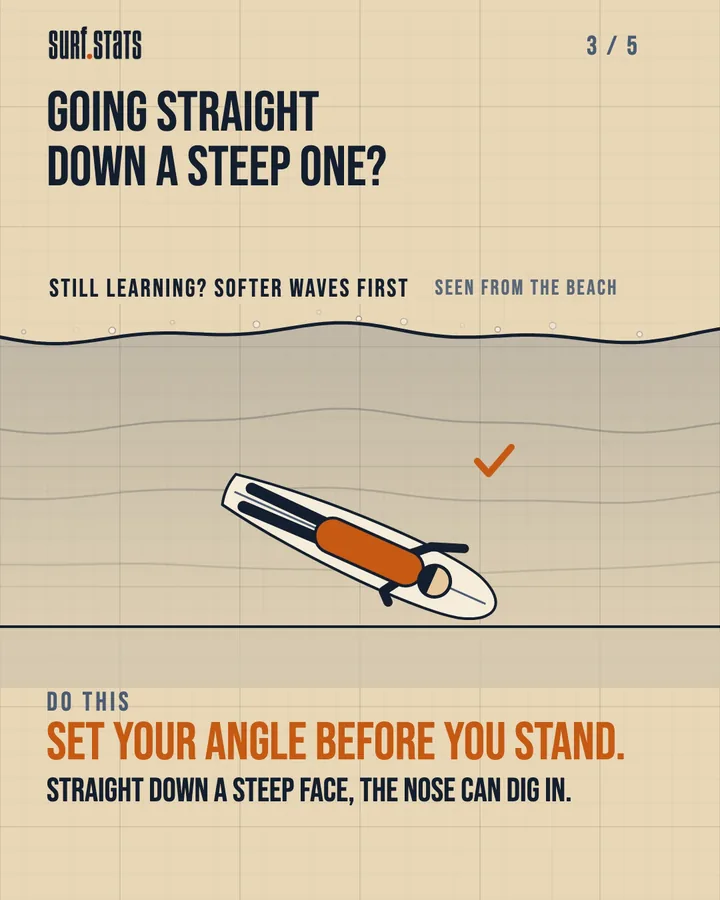
Try this: set your angle before you stand.
Straight down a steep face, the nose can dig in. On a steeper wave, take off at a slight angle along the face instead of pointing straight at the beach. Set that angle before you pop up, not once you're already on your feet.
This is for steeper waves. On a slow, rolling wave, Surfline's beginner guide says to paddle in straight.
Still learning? Softer waves first. Pick smaller, gentler waves while you learn, and leave the steep ones for later.
4. Still lying down as the nose tips down?
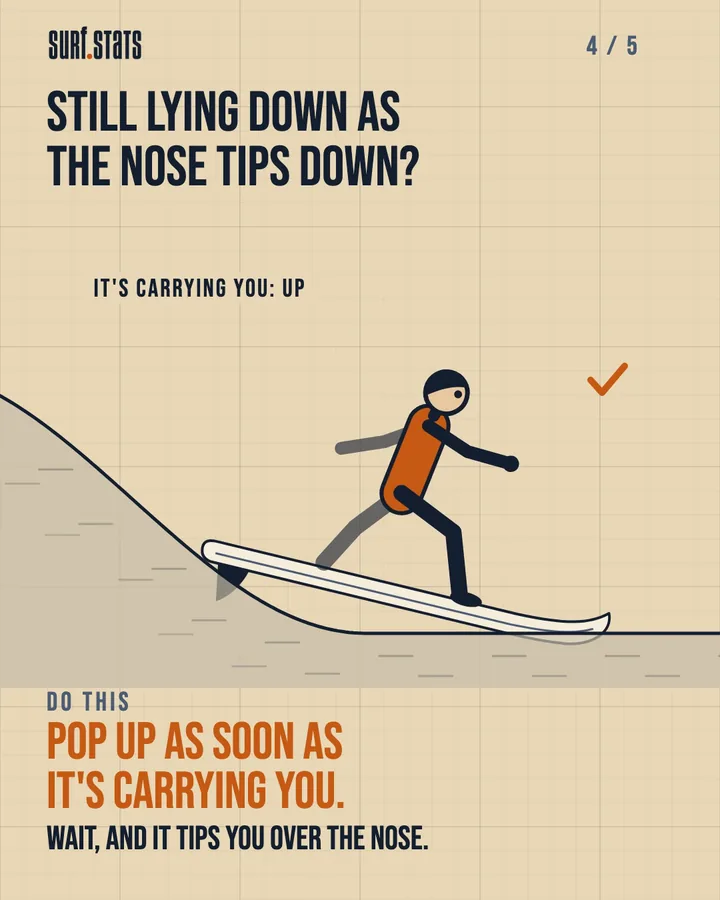
Try this: pop up as soon as it's carrying you.
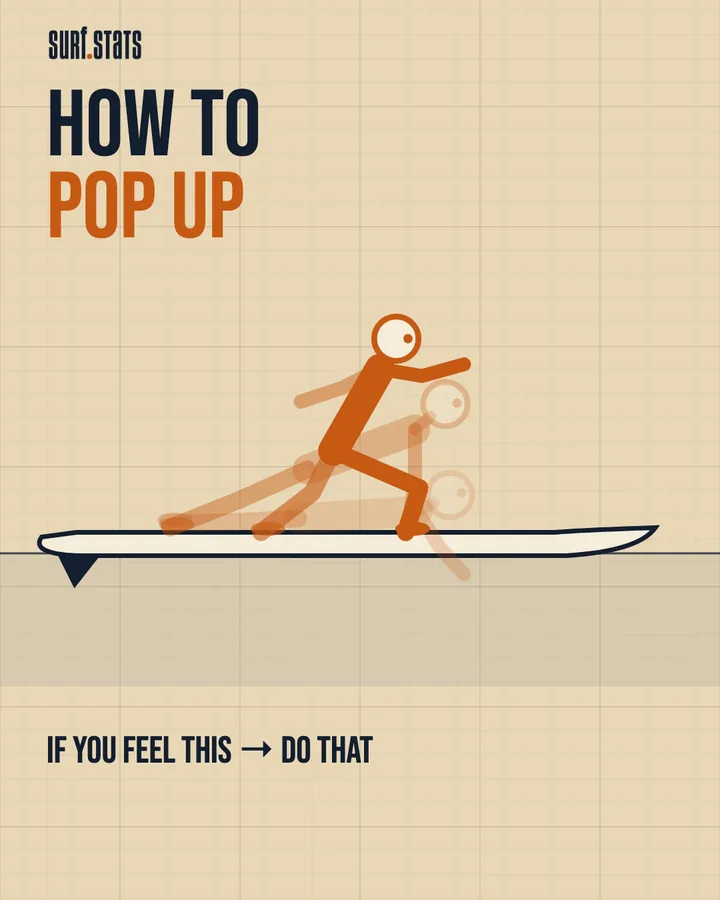
Wait, and it tips you over the nose. Surf Science says that if you wait to pop up, the wave pushes your tail up and your nose down. So as soon as you feel the board enter the wave, get to your feet fast.
First the wave has you, then you stand. Staying down once it's carrying you lets the nose go under.
5. Leaning out over your front foot?
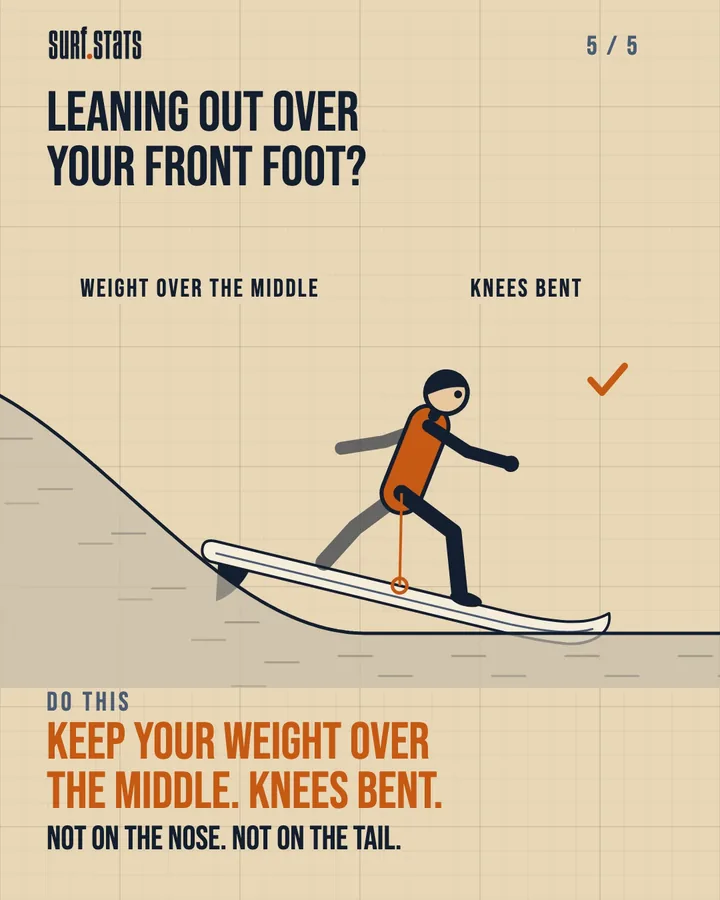
Try this: keep your weight over the middle. Knees bent.
Getting up isn't the end of it. Stand too far forward and you're more likely to nose-dive. Stand too far back and you slow the board down instead.
Aim for the middle: not on the nose, not on the tail. Wavelength's pop-up guide says to keep your weight over the same area from lying to standing. Keep your knees bent and your eyes up. OMBE and The Inertia both warn that looking down pulls you down.
Two things to take into the water
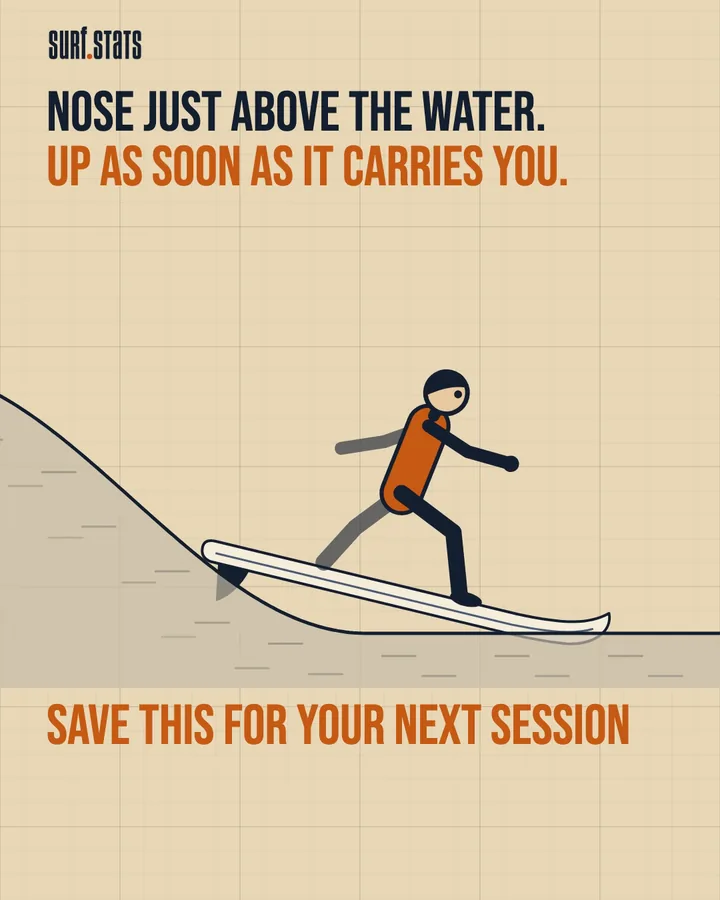
If you only keep two of these, keep these:
- Nose just above the water.
- Up as soon as it carries you.
Quick checklist
- Lie so the nose sits just above the water. Set it before you paddle.
- Be moving at the wave's speed when it reaches you.
- Steeper wave: set a slight angle before you stand.
- Still learning: softer waves first.
- Pop up as soon as the wave is carrying you.
- Weight over the middle, knees bent, eyes up.