How to cross step on a longboard
 Fin Selector: your fins in 1 minute
Cross your back foot over your front foot and plant it before the other foot swings past. Take it one step at a time, walk up high on the wave near where it's breaking, cross-step back to the tail the same way, and practise the walk on the floor first.
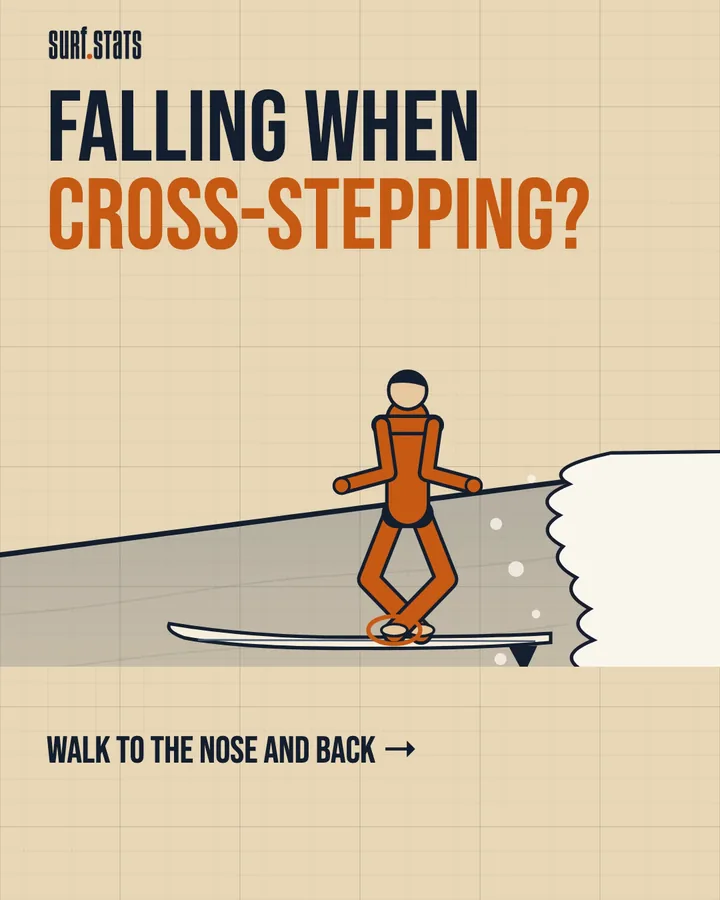
Cross-stepping is how you walk a longboard: up to the nose and back again, one crossed step at a time. While you learn it, you might rush, sink the nose, or end up stuck at the front with nowhere to go.
This post is for longboarders who can already stand up and ride along unbroken waves. Below are five problems when you learn how to cross step on a longboard, and the fix for each. They follow our cross-stepping reel, checked against surf and sports magazines and a surf encyclopedia (sources at the end).
1. Shuffling your feet up the board?
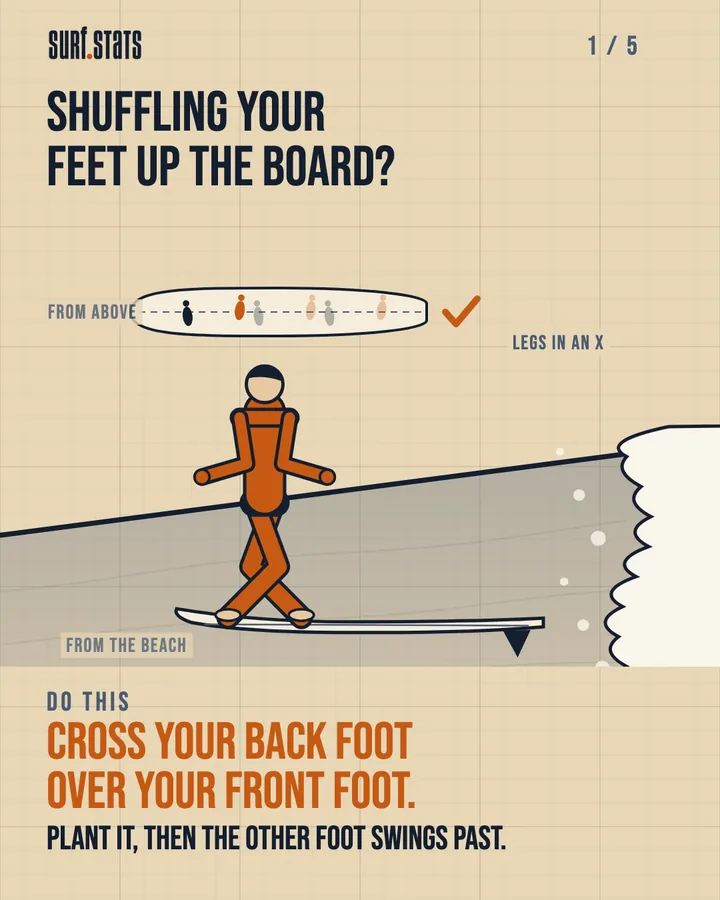
Try this: cross your back foot over your front foot. Plant it, then the other foot swings past.
A shuffle is when both feet slide toward the nose without ever crossing. The guides behind this post point you to the cross-step instead. Surfer Today tells you to avoid shuffling, and one of The Inertia's longboard lessons is about leaving the shuffle behind.
Here's the walk:
- Bring your back foot across your front foot, so your legs make an X.
- Plant that foot on the deck.
- Then the other foot swings past it, to the front.
Surfer Today says the same: as soon as the moving foot touches the deck, bring the other one through to the front. Crossing your feet is the classic way to the nose. Surfer Today calls it one of the main techniques of longboard surfing, and the Encyclopedia of Surfing calls it the method for setting up a noseride.
2. Rushing to the nose?
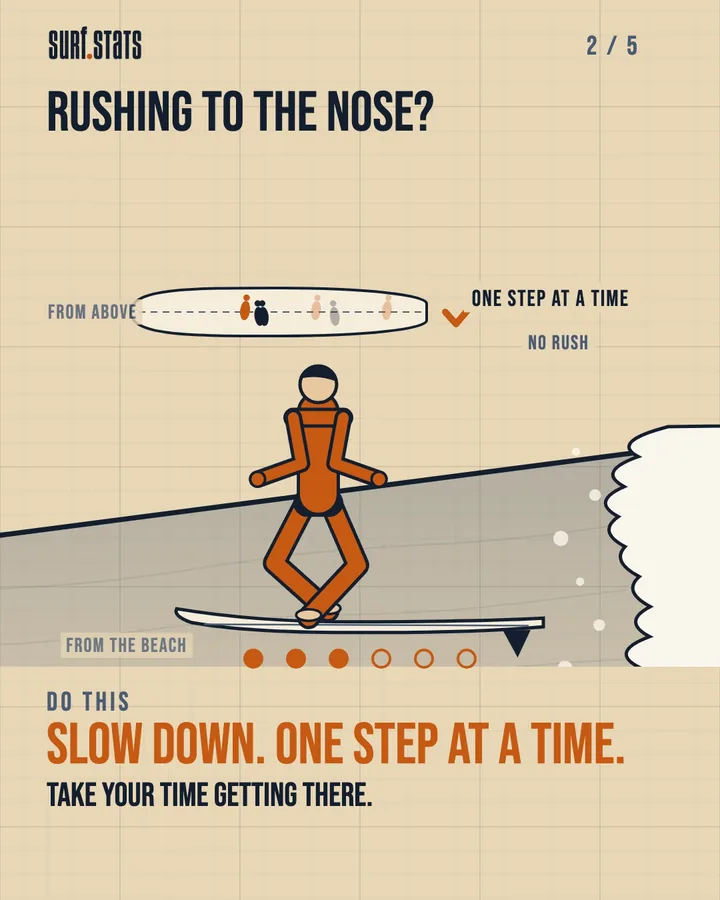
Try this: slow down. One step at a time.
Take your time getting there. Surfer Today's cross-step guide says not to hurry the process, and that a faster board makes the cross-step harder. Kassia Meador, in one of her noseriding tips for The Inertia, says she takes her time getting to the nose rather than trying to go fast.
Treat this as a rule for learning the walk. The guides don't all agree on pace, so get the steps right first.
3. Nose sinks as you walk up?
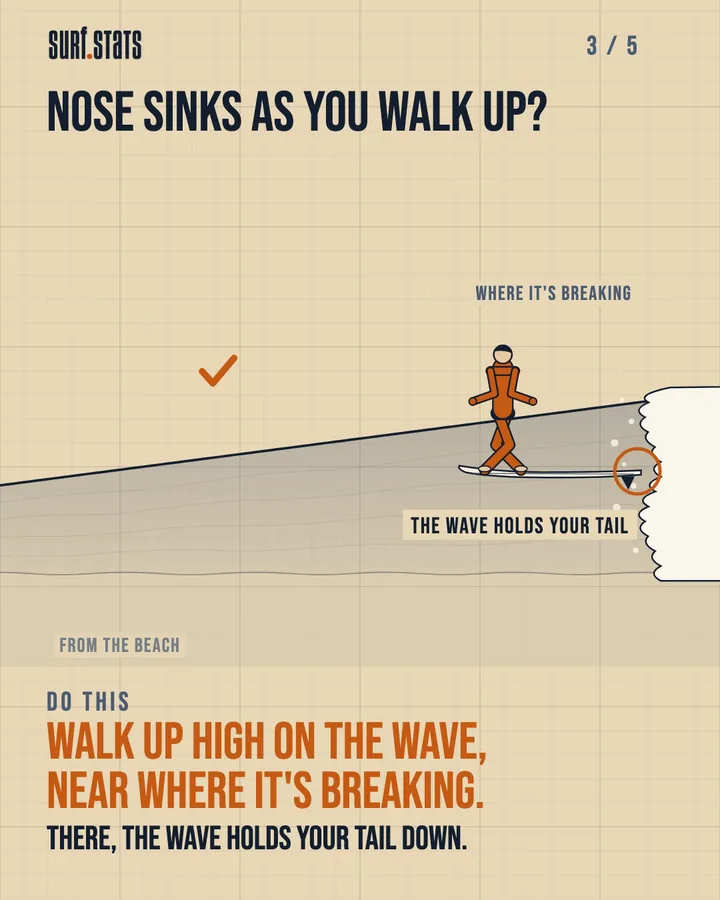
Try this: walk up high on the wave, near where it's breaking. There, the wave holds your tail down.
Sometimes the problem isn't your feet but where you are on the wave. Kassia Meador says to stay back toward the whitewater: a lot of people get too far out on the shoulder and end up sinking the nose.
So stay near where the wave is breaking. Near there, the wave holds the back of your board. Kassia Meador describes the board being held by the back of the wave, Bella Eberz talks about the board locking in to hold your tail, and Surfer Today describes the breaking part of the wave wrapping around your tail. American Surf Magazine adds that in the area just before the whitewater, the board feels steady and the walk gets easier.
If you want to get better at riding along that part of the wave first, read how to trim on a surfboard.
4. Stuck up on the nose?
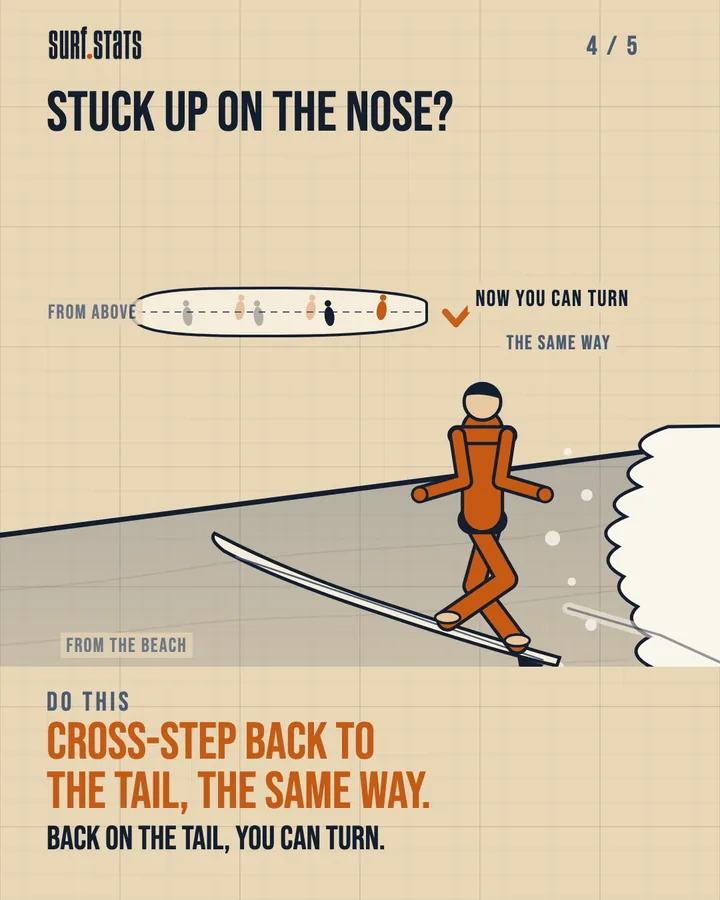
Try this: cross-step back to the tail, the same way. Back on the tail, you can turn.
Getting to the nose is only half the walk. Surfer Today's advice for going backward is to reverse the process, and American Surf Magazine says you cross-step backwards the same way you go forwards.
Why go back at all? Because the tail is where you can turn. American Surf Magazine says you put pressure on the tail to turn your longboard, and Surfer Today's hang-ten guide has you trim back and cut back when your hang ten starts to sink. For what to do once you're there, read how to turn a longboard.
5. Crossing your feet feels awkward?
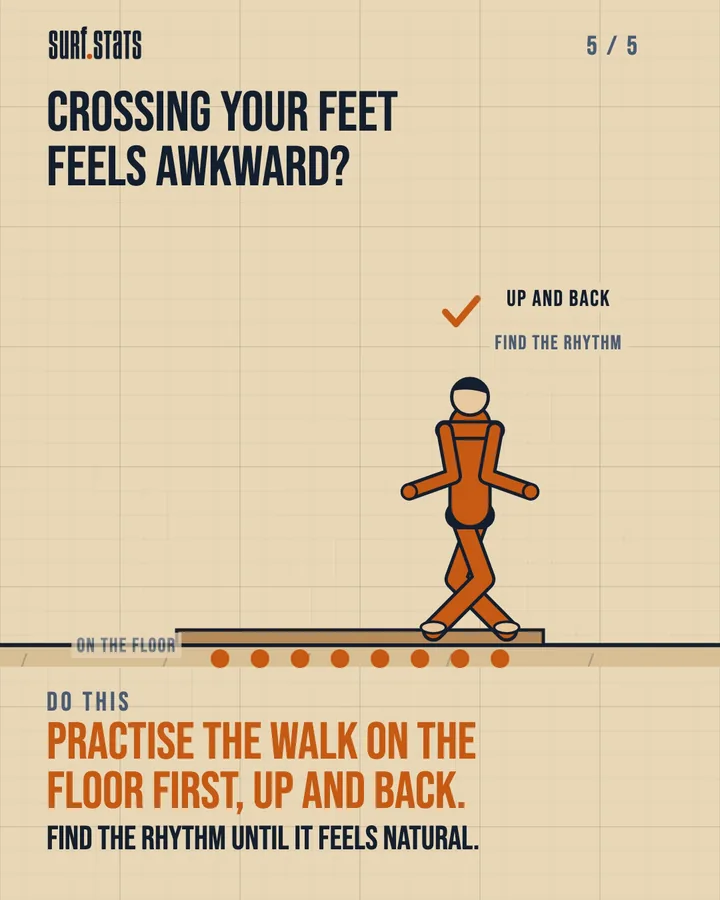
Try this: practise the walk on the floor first, up and back. Find the rhythm until it feels natural.
You don't need waves to learn the footwork. Two ways to practise it:
- A plank on the floor. Kassia Meador's drill in The Inertia: at home, lay a plank of wood on the ground, treat it as your board's stringer, and walk it up and back with crossed steps.
- Your own board. American Surf Magazine suggests taking the fin off your longboard, laying it on carpet or grass, and practising the walk there to find the rhythm and timing.
Surfer Today says the cross-step should feel like a natural movement of your body. Walk it up and back until it does, then try it on a wave.
Cross, don't shuffle
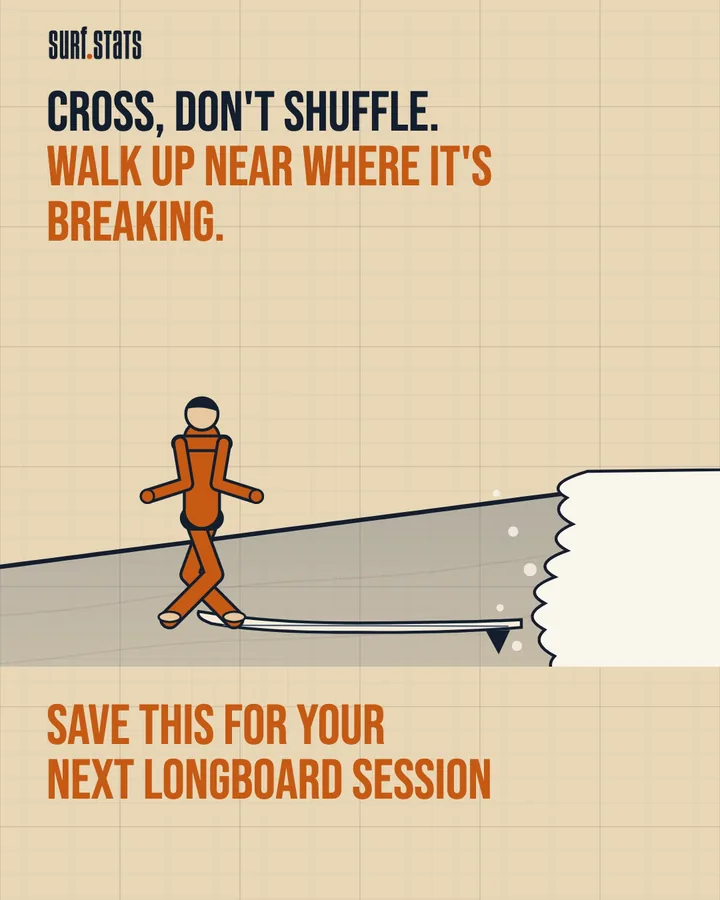
If you only keep two things from this post: cross your feet instead of shuffling, and walk up near where the wave is breaking. Save it for your next longboard session.
Quick checklist
- Back foot crosses over the front foot, legs in an X.
- Plant it, then the other foot swings past.
- While you learn, one step at a time. No rush.
- Walk up high on the wave, near where it's breaking, not out on the shoulder.
- Need to turn? Cross-step back to the tail the same way.
- Practise the walk on the floor, up and back, until it feels natural.