How to turn a longboard
 Fin Selector: your fins in 1 minute
Keep your weight centred as you step back, then move your hips back over that back foot. Lean slowly so the board can catch up, and hold the turn longer: a big board turns slowly.
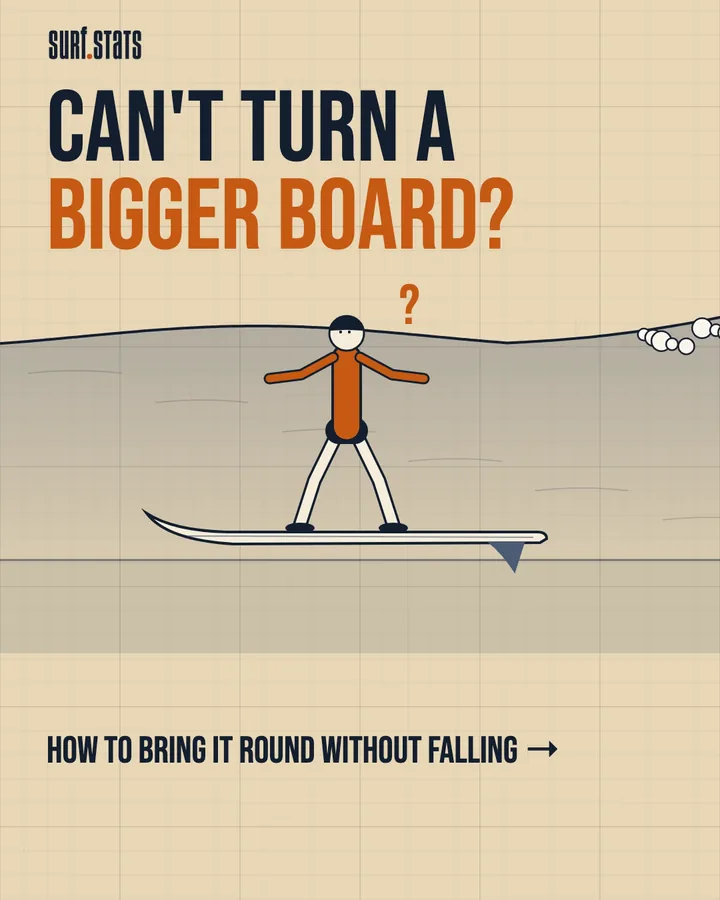
You can already ride along unbroken waves on a longboard or another big board. Then you try to turn it, and either you fall, or the board just won't come round. This post is about how to turn a longboard, or any bigger board, without falling.
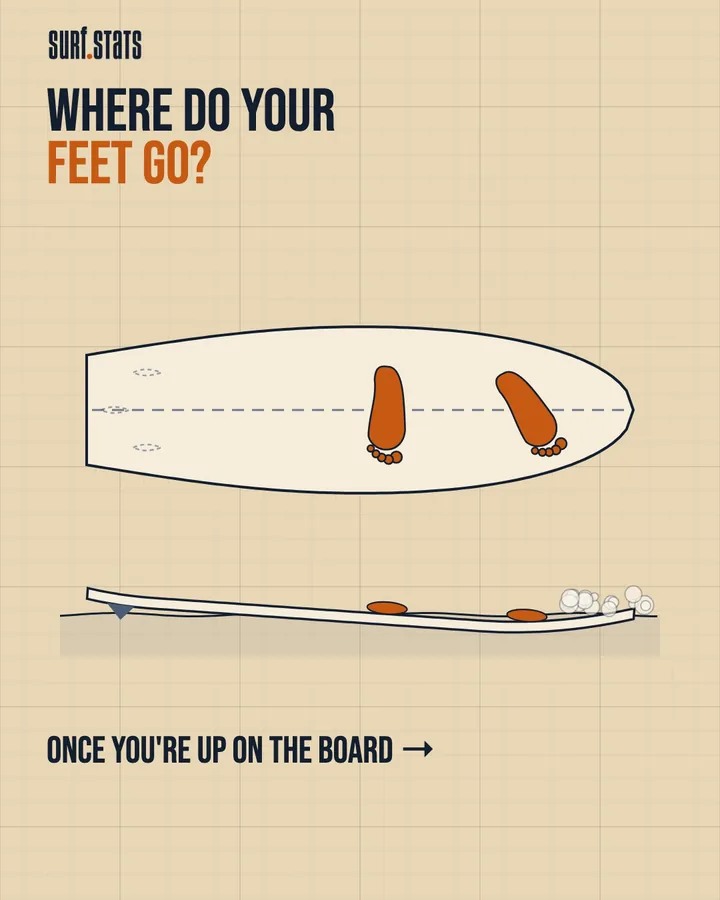
Two things matter on a big board. It turns from the back: The Inertia's longboard cutback lesson says your back foot should be over the fin when you turn, and Surfer Today says your back foot slides back toward the tail when you want to turn more quickly. And it turns slowly: the longer and heavier the board, the slower it comes round compared with a short, light one. If you're not sure where your feet go in the first place, start with where to put your feet on a surfboard.
So stepping back is the starting point. The four cards below are what goes wrong once you do it. They follow our turning a bigger board reel, and come from surf coaching sites, surf magazines and a science museum's page on surfing, checked for the reel (sources at the end).
1. Falling as you step back to turn?
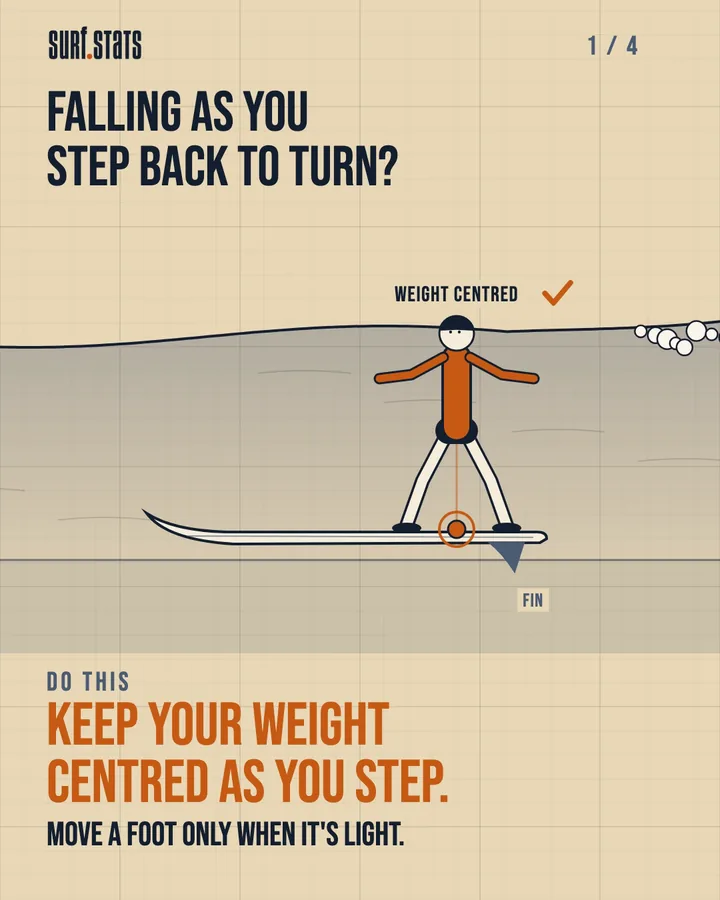
Try this: keep your weight centred as you step. Move a foot only when it's light.
On a longboard, getting back to the fin can mean walking there. Surfer Today describes the backward cross-step as the same movement as the forward one, done from the nose toward the tail, and says it often comes right before a cutback or a bottom turn. OMBE's coaches also say a cross-step can take you back on a longboard, not only forward.
On your weight, the two point the same way. Surfer Today's cross-step guide says to keep your weight centred as you step, and, when you walk backward, to keep one foot on the board until the other one has landed. OMBE describes your weight ending up centred over both feet at the end of a cross-step.
A "light" foot is one with no weight on it. Keep your weight in the middle, and move only the foot that is free.
2. Foot's back, but it still won't turn?
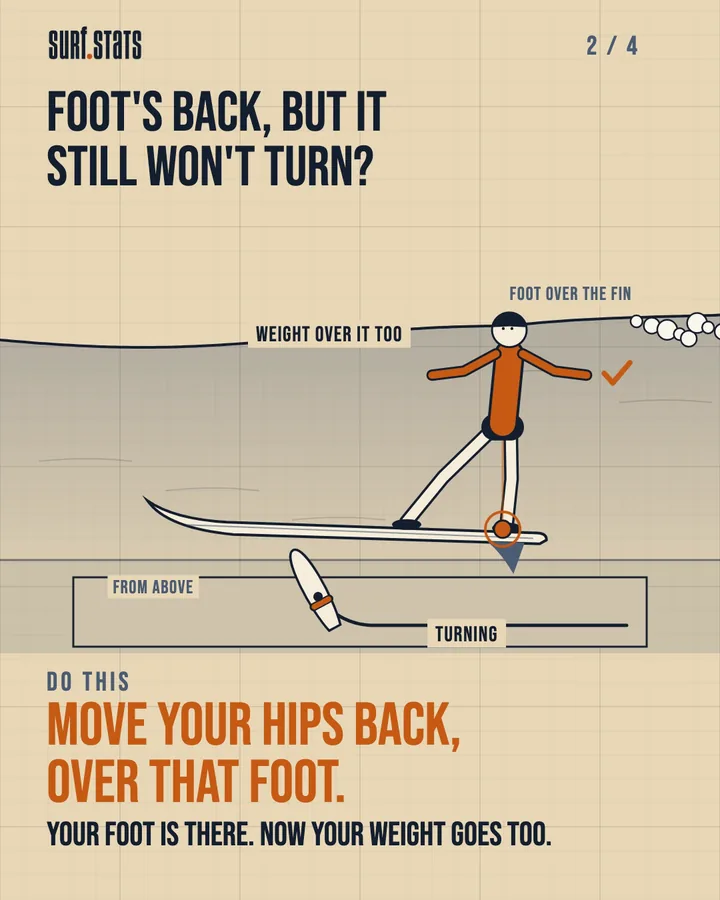
Try this: move your hips back, over that foot. Your foot is there. Now your weight goes too.
Getting your foot back is only half of it. Your foot is there; now your weight has to go there too.
The Inertia's guide to completing turns, by Gershon Borlai, lists this among the reasons you fall in a bottom turn: your upper body does the leaning while your back leg carries too little weight. In his practice drill, you move your hip back to load more weight onto the back foot. The Exploratorium describes a turn starting the same way: first your weight moves onto the back foot.
So once the foot is there, bring your hips back over it.
3. Leaning hard, like on a shortboard?
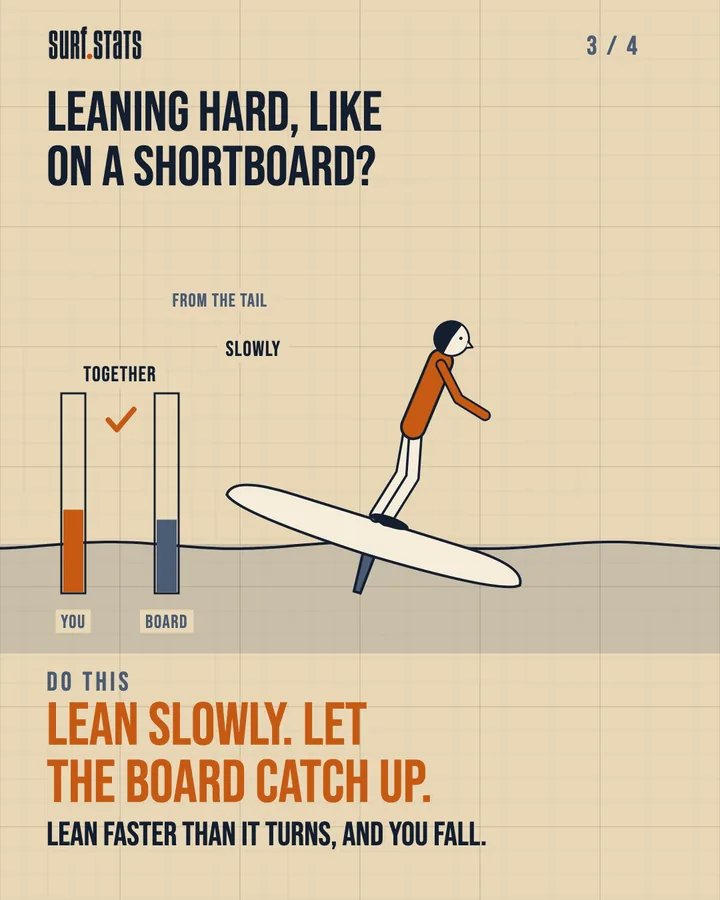
Try this: lean slowly. Let the board catch up. Lean faster than it turns, and you fall.
OMBE's coaches explain that a longboard is wider, with more volume to roll onto its rail, so the turn is slower. Leaning on the rail all at once won't make it move.
They describe what happens to surfers coming from a shortboard: they lean hard, the board may turn, but most of them fall. The reason, OMBE says, is that they leaned harder and faster than the board could turn. Their fix is to match your lean to the board. Kassia Meador's turning tips in The Inertia put it in five words: "Don't over-compensate with your weight."
So lean slowly, and let the board catch up.
4. Letting go of the turn too soon?
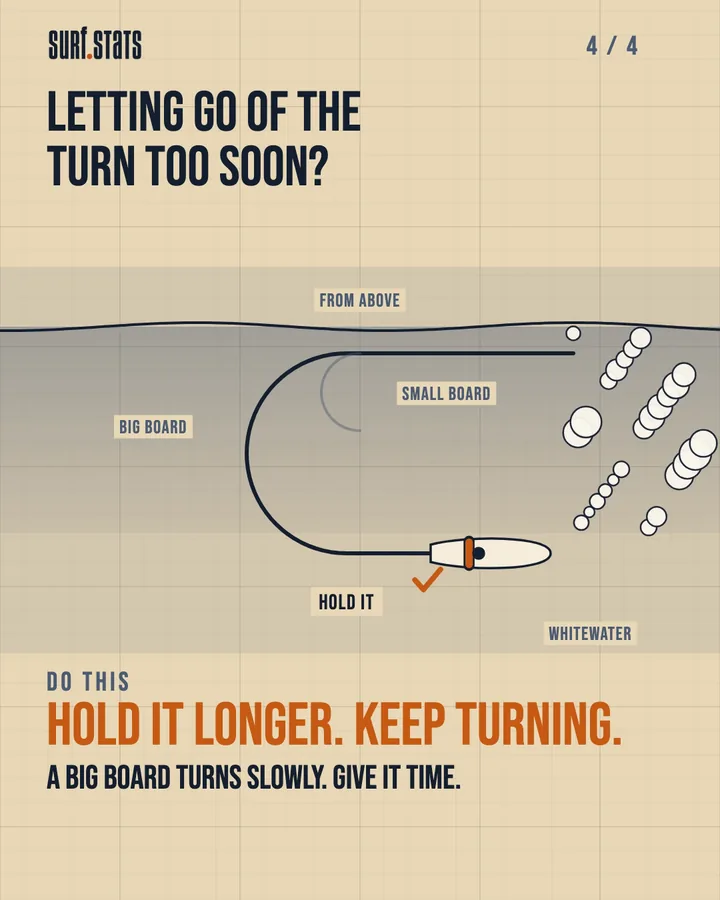
Try this: hold it longer. Keep turning. A big board turns slowly. Give it time.
This one is physics. The Exploratorium's page on surfing explains that a long, heavy board is slower to turn than a short, light one. Physicists have a name for that resistance to turning: moment of inertia. OMBE says the same in plain terms: a longboard is bigger, so its turn is bigger too, and like a bigger boat, it needs longer to come round.
That means the same turn takes more time. OMBE's coaches see surfers cut their turns short, doing only a quarter or half of the turn instead of all of it, and their advice for turning a longboard is simple: hold the turn longer. The Inertia's guide says that failing to finish carving turns is probably the one thing that holds surfers back the most in controlling a wave.
So stay in the turn until the board has actually come round.
The fixes in one line
Weight centred. Lean slow. Hold it. If you're also working on moving your feet during a ride, read how wide to stand on a surfboard. And if you know someone on a big board who keeps falling in their turns, send this to them.
Quick checklist
- A big board turns from the back, and it turns slowly.
- Stepping back: weight centred, and move only the foot that's light.
- Foot over the fin? Move your hips back over it too.
- Lean slowly, and let the board catch up.
- Lean faster than the board turns, and you fall.
- Hold the turn longer than you would on a shortboard.