How to trim on a surfboard
 Fin Selector: your fins in 1 minute
Trim is letting the wave carry you while you do very little. When the board speeds up on its own, stop pumping. Don't hop to go faster; keep your feet quiet. And swap big moves for small shifts of your weight.
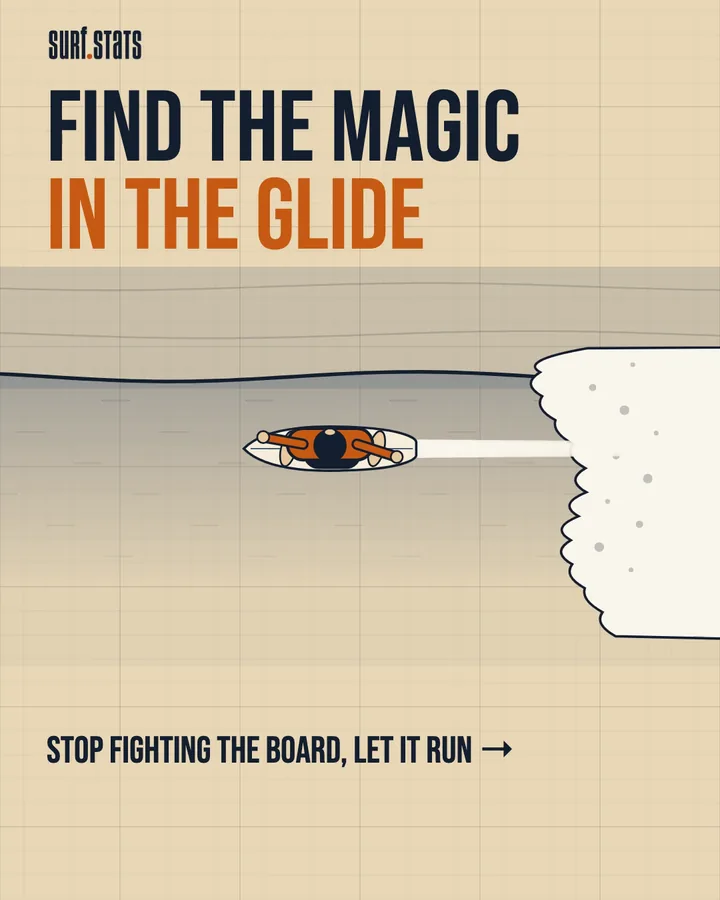
In Surfline's learn-to-surf guide, trimming is riding across the wave at the angle and speed that match how fast it breaks. Kassia Meador, talking to The Inertia, adds the part that matters most: trim is going with the wave's own speed and doing almost nothing. That second part is the hard one. It's easy to keep working the board when the wave is already doing the work.
This guide is for surfers who already stand up and ride across unbroken waves. If you're still working out which way to go, start with how to read waves.
Below are three ways surfers stop their own board from gliding, and the fix for each. All three fixes come down to doing less. They come from our find the magic in the glide reel, and they rest on surf coaches and surf magazines. Where a tip rests on a single coaching source, we name it.
1. Still pumping when the board's already fast?
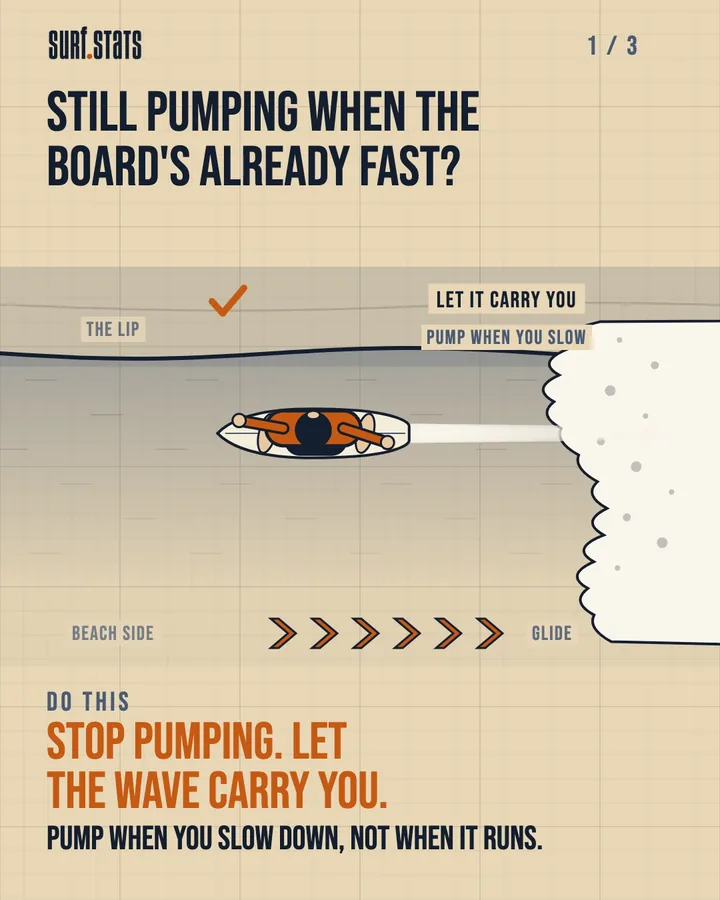
Try this: stop pumping. Let the wave carry you.
Feel the board speeding up on its own? That's the wave doing the work. Stop pumping and ride it.
A surfer writing in The Inertia noticed this when going back to a smaller board: rushing, pumping too fast and throwing the board back and forth for speed, instead of reading the wave and flowing with it. Meador makes the point for longboards: there, the push of the wave is what moves you.
This doesn't mean "don't pump". Shorter boards need it more. Surf Simply says longboarders rarely need to pump for speed, while shortboarders have to pump to keep theirs. Barefoot Surf says that on shorter boards, trimming alone often can't keep up with the wave. And Surfer Today says fast, peeling waves will force you to pump.
So the rule is about timing: pump when you slow down, not when the board is already running.
2. Hopping on the board to go faster?
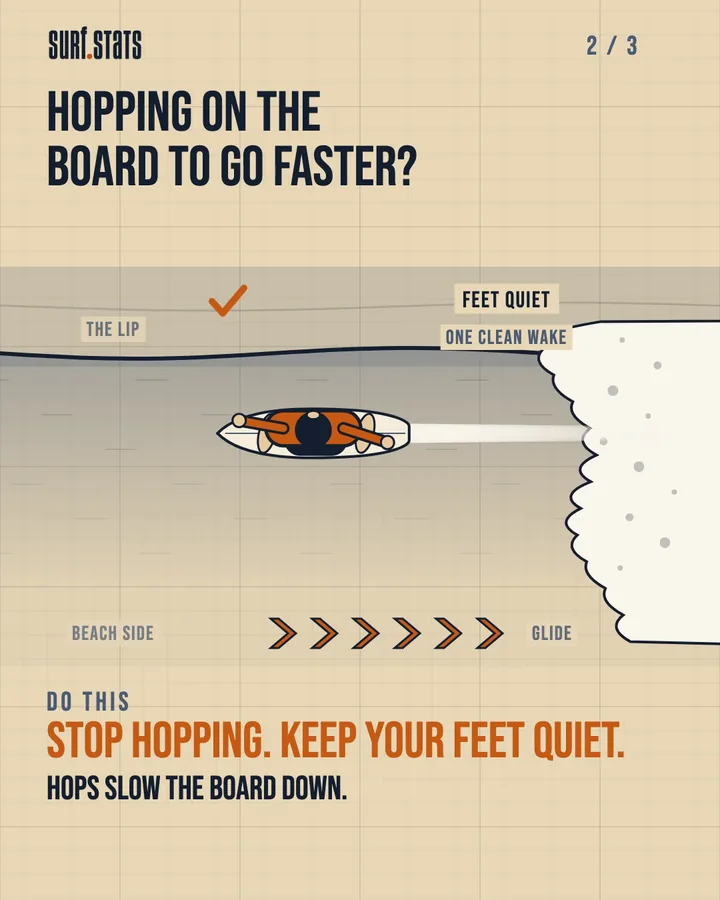
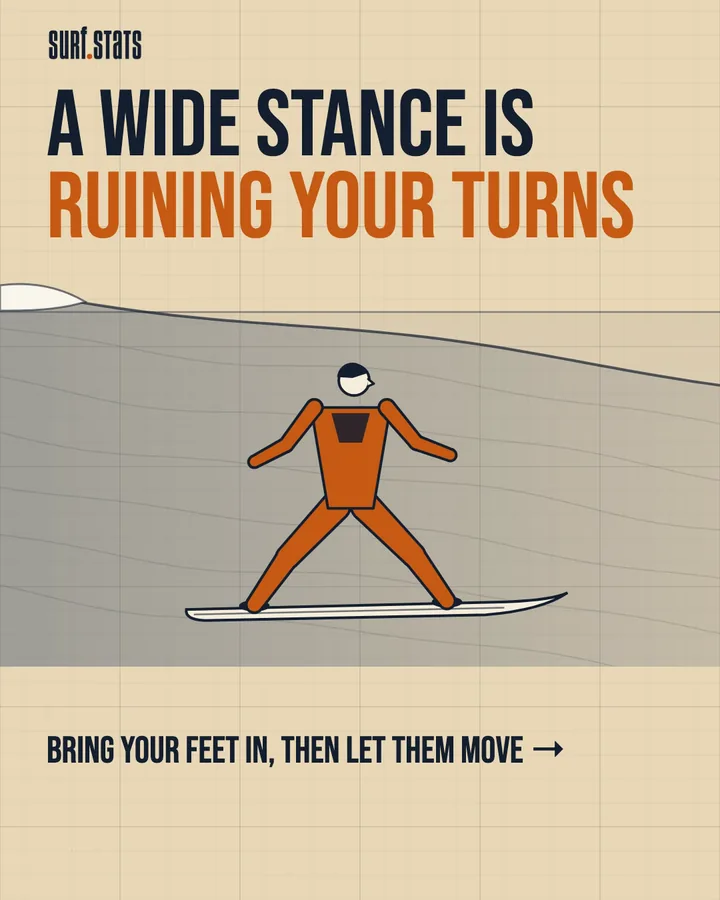
Try this: stop hopping. Keep your feet quiet.
Some surfers try to kick the board into speed by hopping or bouncing on it. The surf coaches at OMBE say that only holds you back. Their fix is to stay calm, keep your stance and use the wave's energy instead of your own. That's the reel's line too: hops slow the board down.
This card leans on one coaching source (OMBE, across two of its guides), so treat it as their advice, not a law. One more limit: bouncing across a flat section of a weak wave is a different situation. Surf guides disagree on whether that's a useful trick or a bad habit, so this tip is only about a wave that is already carrying you.
3. Fighting the board the whole ride?
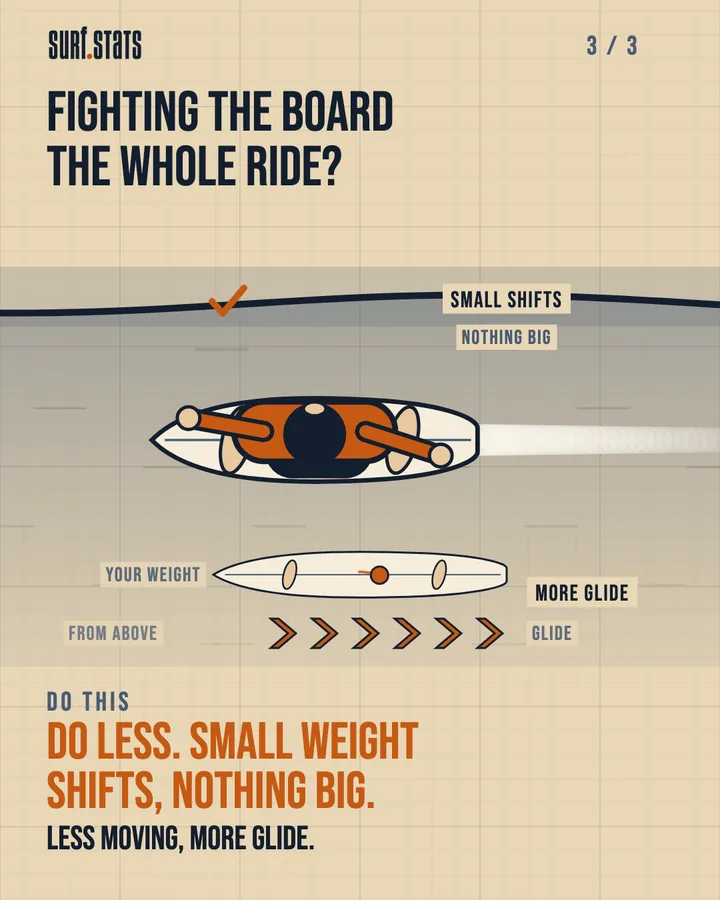
Try this: do less. Small weight shifts, nothing big.
Fighting the board looks like big, busy moves all ride long: throwing it back and forth, rushing every section. OMBE's coaches note that the best surfers barely steer the board at all: just small shifts of weight and tiny adjustments. That weight-shift advice comes from OMBE alone, so read it as their coaching.
"Less is more" is how both OMBE and The Inertia's piece on Meador put it. That piece describes the opposite as racing through every move and flailing through the ride, and the Inertia column from card 1 describes throwing the board back and forth for speed.
The reel's line, the less you move, the more it glides, is a coaching idea, not a measured effect. But it's the whole point of trim.
Let the board run
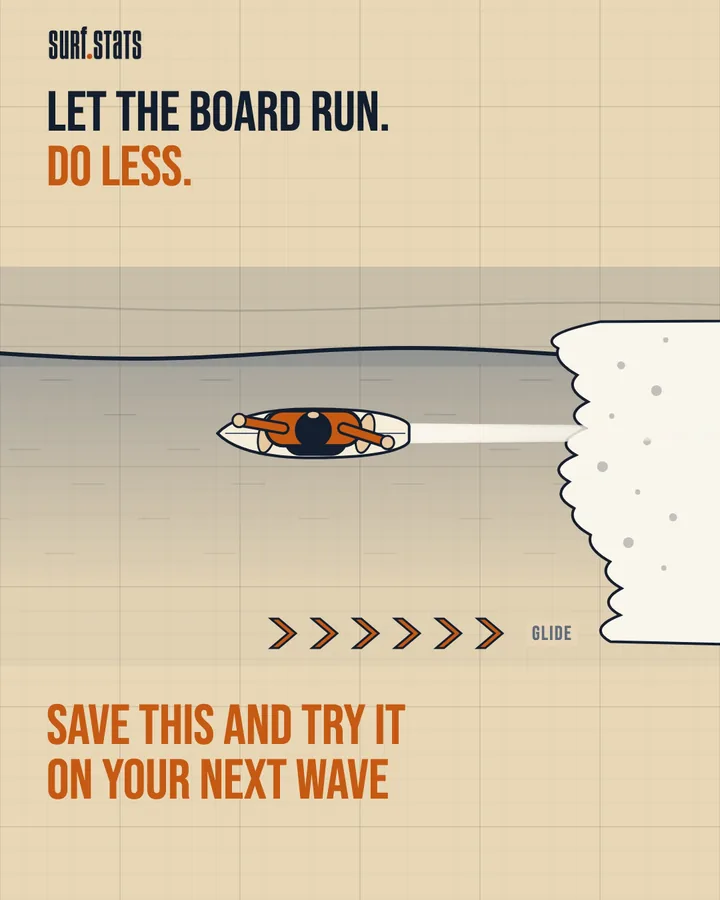
Put the three together and you get one habit: let the board run, and do less. Pick the one you catch yourself doing and try the fix on your next wave. Ready to add turns? Read how to do a bottom turn next.
Quick checklist
- Trim means the wave carries you and you do very little.
- Board speeding up on its own? Stop pumping.
- Pump when you slow down, not when it runs.
- On a wave that's running, keep your feet quiet. No hops.
- Small weight shifts, nothing big.
- Less moving, more glide.