How to duck dive a bigger board
 Fin Selector: your fins in 1 minute
Move your weight forward over your hands, lift your other leg up in the air to sink the tail, use your foot on the tail instead of your knee when the wave is bigger, and go under a set one wave at a time, with a breath in between.
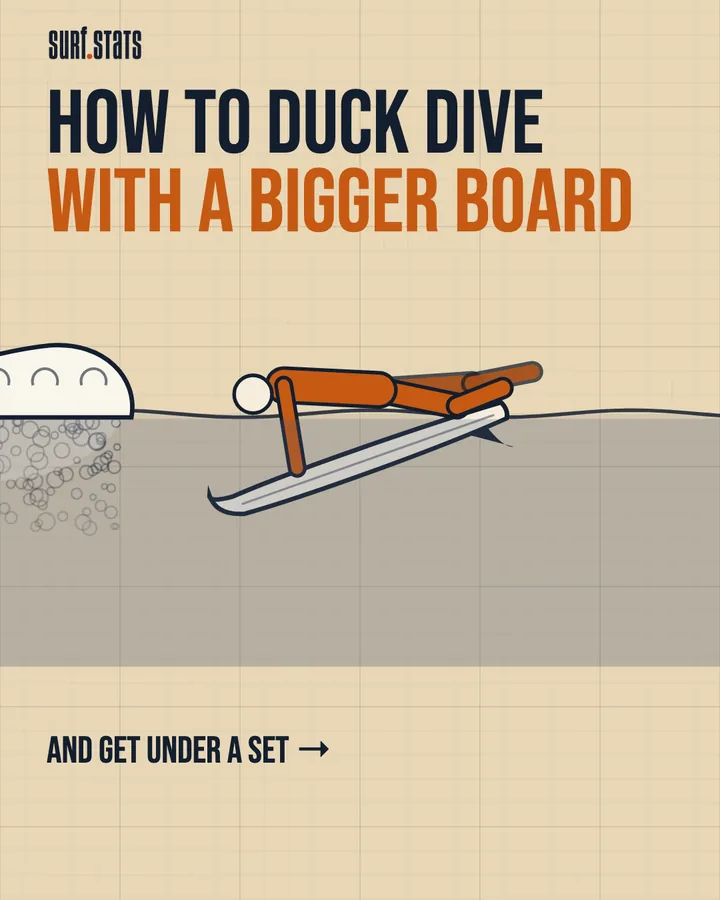
Your board is bigger than the one you learned to duck dive on, and when you push it under, the nose dips and the board floats right back up. That is the volume: the more volume a board has, the harder it is to push under. If it's a fish or a hybrid, it can still go under. It just needs more of your body behind the push.
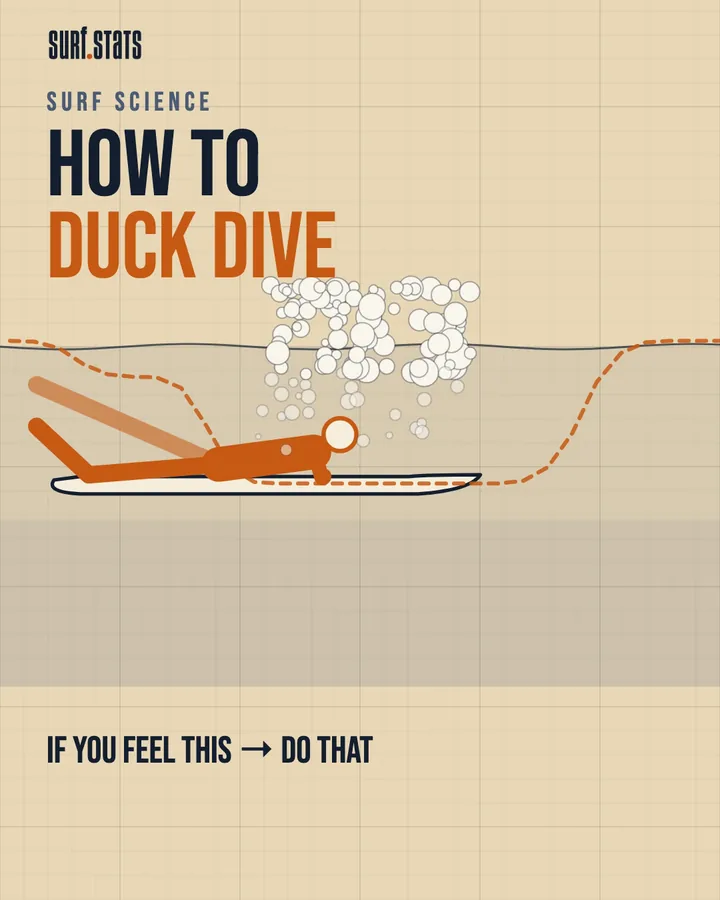
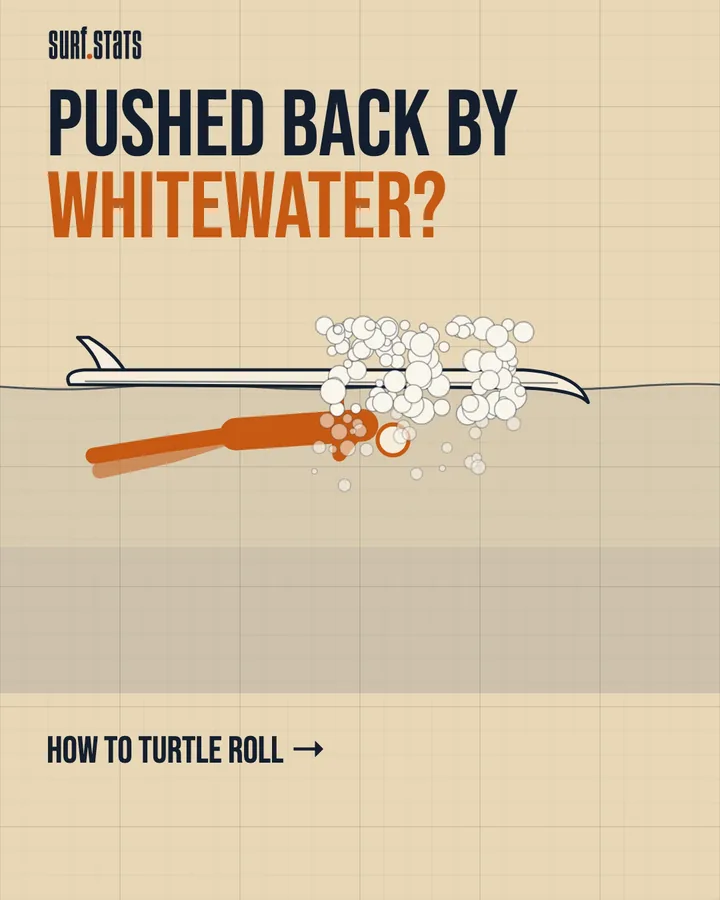
This is not for longboards or foam boards. The guides send you to a different move on those boards: you turn the board over instead, with the turtle roll. And if you're still learning the basic move (when to start, how to push the nose, how to come up), start with how to duck dive. This post picks up where that one ends.
Below are four problems you can hit when you duck dive a bigger board, and the fix for each. They come from our how to duck dive with a bigger board reel, built from surf magazines, coaching guides and a lifesaving manual.
1. Board won't go under?
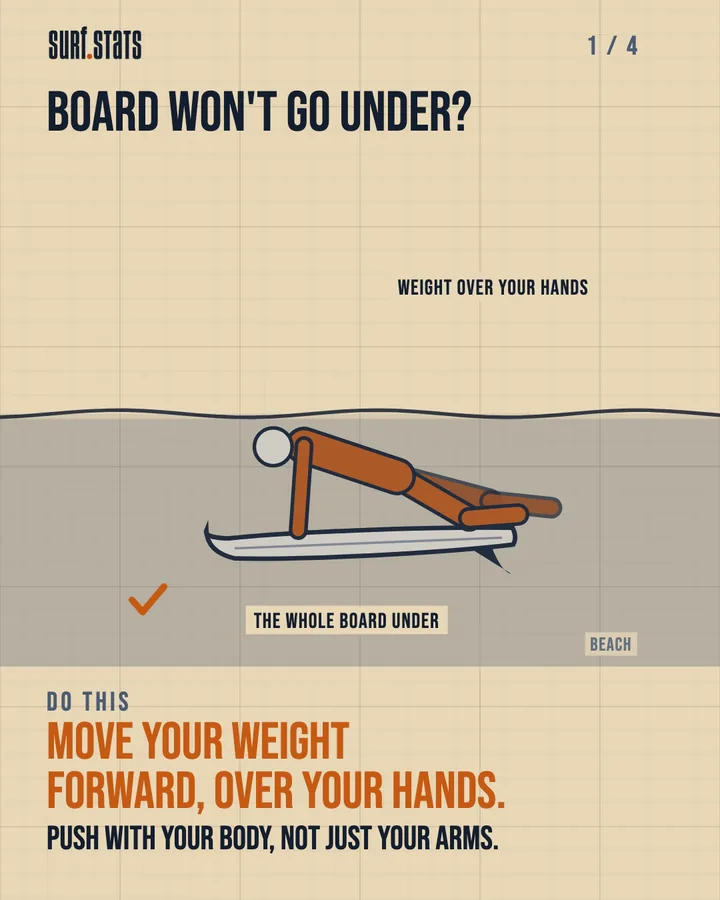
Try this: move your weight forward, over your hands. Push with your body, not just your arms.
If your weight stays back while your arms do the pushing, the board floats back up. The coaching says to move your body weight forward and let your head and chest follow the board down. The Inertia's guide has a dry-land drill for it: push your body forward between your palms.
Keep your body going forward until the board is fully under. Your arms still push. They just don't do it alone.
As the wave passes over you, the weight comes back. Surfline's Nick Carroll describes bringing your upper body weight back at that point, so the nose can rise.
2. Tail still floating as you push it?
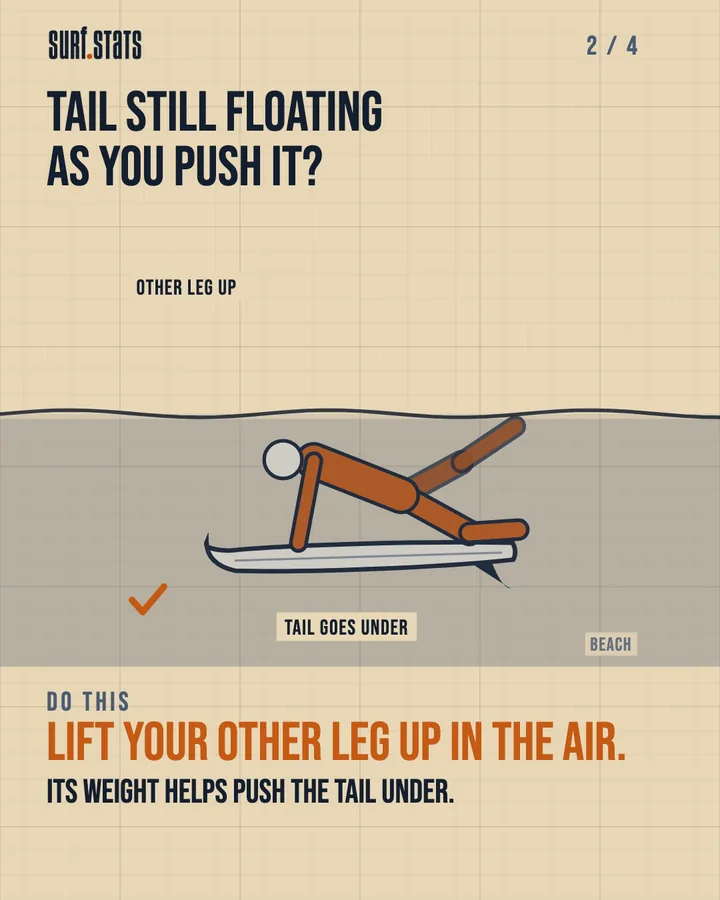
Try this: lift your other leg up in the air. Its weight helps push the tail under.
You already have a knee or a foot on the tail, the nose is under, and the tail still sits at the surface. That matters: Surfline's Nick Carroll warns that a tail left above the surface takes the force of the foam and pulls you backward.
The fix is the leg you're not using. Lift it up into the air, behind you. Its weight then goes onto the board and helps push the tail down. Several guides describe the same move, and Barefoot Surf compares the pose to a scorpion.
3. Bigger wave, same shallow dive?
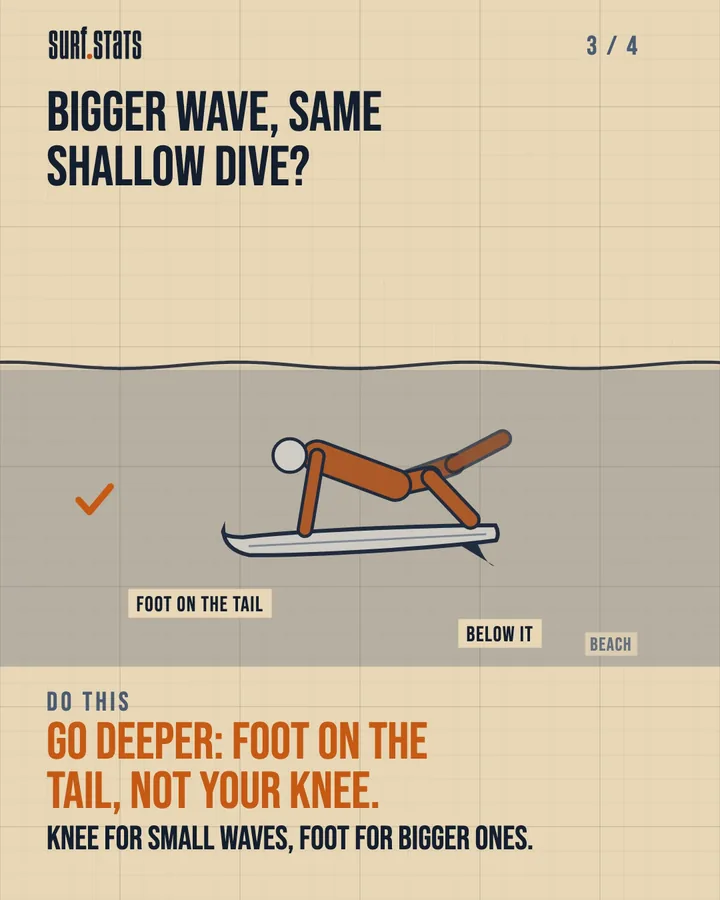
Try this: go deeper. Foot on the tail, not your knee. Knee for small waves, foot for bigger ones.
A knee on the tail is fine when the wave is small. You don't need to go deep, and a knee push gets you under the foam. On a bigger wave, that same shallow dive keeps you inside the turbulence, and the wave drags you back toward the beach. The Inertia's guide names not diving deep enough, along with coming up too soon, as the most common duck dive mistake.
To get deeper, put your foot on the tail and drive the board down with it, instead of your knee in the middle of the board. Surfline's Nick Carroll says the foot also gives you better leverage.
This is not a rule against the knee. Choose by the wave: knee for small ones, foot for bigger ones.
4. A whole set coming at you?
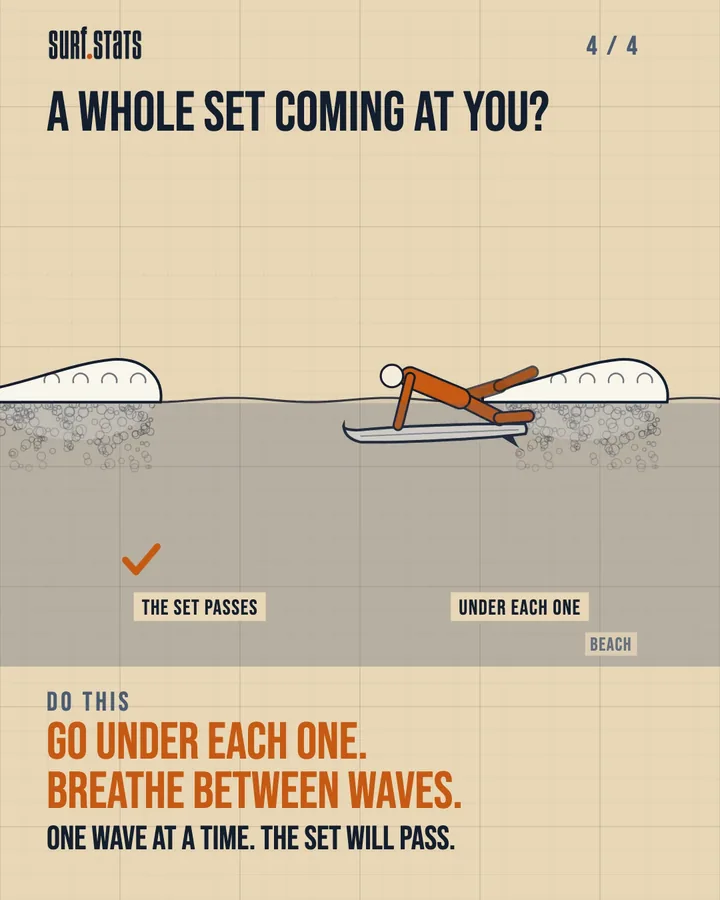
Try this: go under each one. Breathe between waves. One wave at a time. The set will pass.
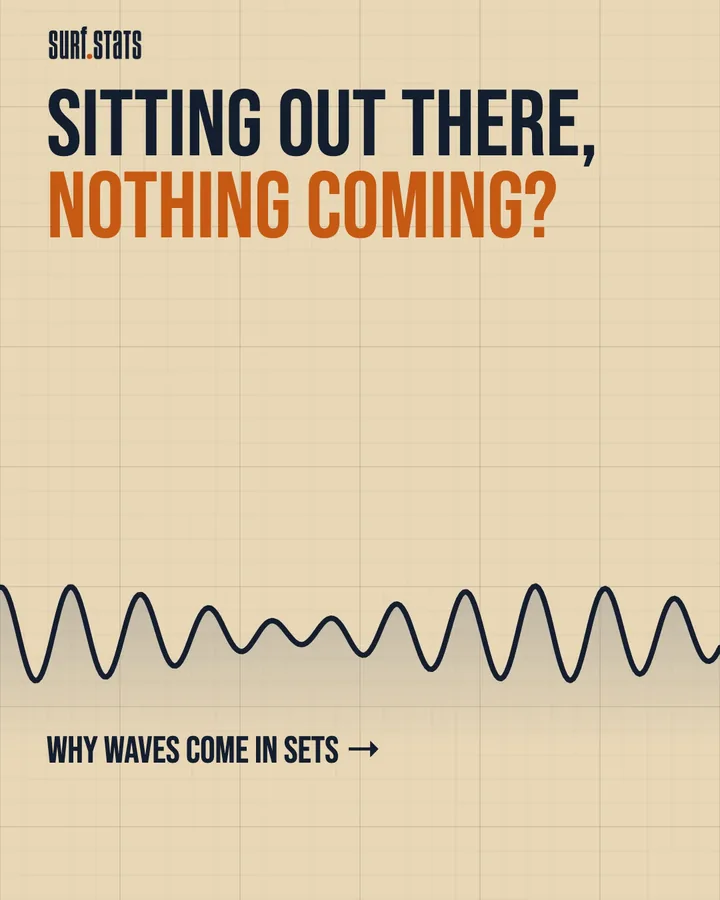
The biggest waves arrive in groups called sets, with smaller waves, the lulls, in between. So when a set catches you inside, you're not facing an endless wall. You're facing a group of waves in a row, and then it eases off.
Take them one at a time:
- Go under the first wave.
- Come up once it has passed over you.
- Take a breath.
- Go under the next one.
Surf Life Saving Australia teaches swimmers in large surf a similar order: dive under before the whitewater reaches you, let it pass over you, come up, check what's coming, and go again or wait for a lull. Surfer Today's advice for a big set includes balancing your breathing so you use less energy. Keep hold of your board the whole time, as in the basic duck dive.
The two moves to remember
Weight forward. Leg in the air. If you remember two things from this, make it these. Know a friend who just moved to a fish or a hybrid? Send this to them.
Quick checklist
- A fish or a hybrid still duck dives. A longboard or a foamie: turtle roll.
- Weight forward, over your hands. Body, not just arms.
- Tail still up? Lift your other leg into the air.
- Small wave: knee on the tail. Bigger wave: foot on the tail, go deeper.
- A set: under each wave, breathe between, the set will pass.
- Hold on to the board.