How to fall surfing over reef or rocks
 Fin Selector: your fins in 1 minute
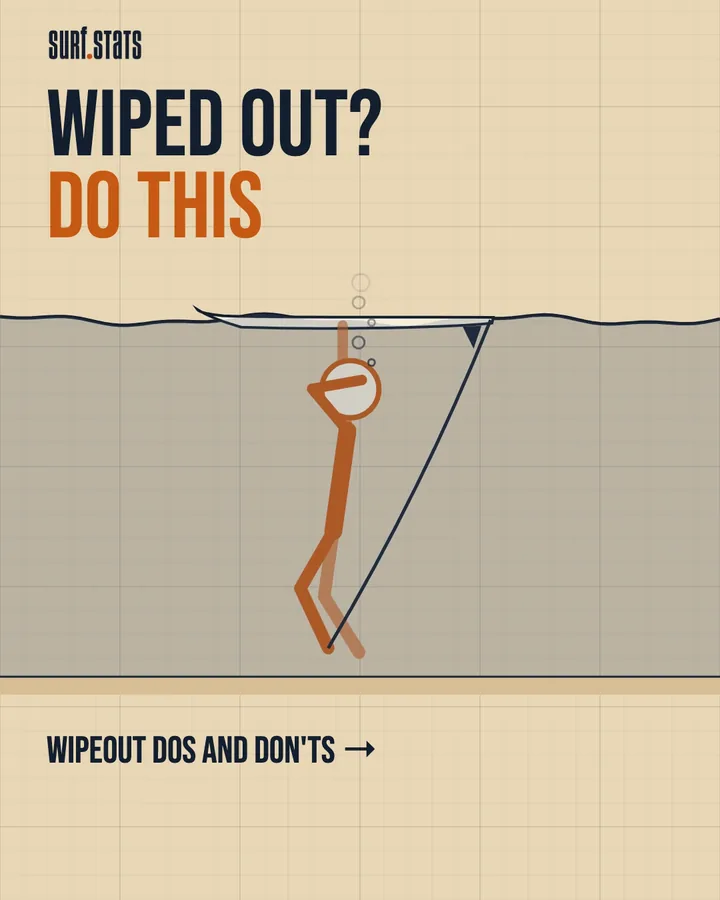
Spread out flat, like a starfish: flat and wide, you don't sink as deep. Then don't stand up. Keep your feet off the reef, because sharp coral and urchin spines can hurt your feet.
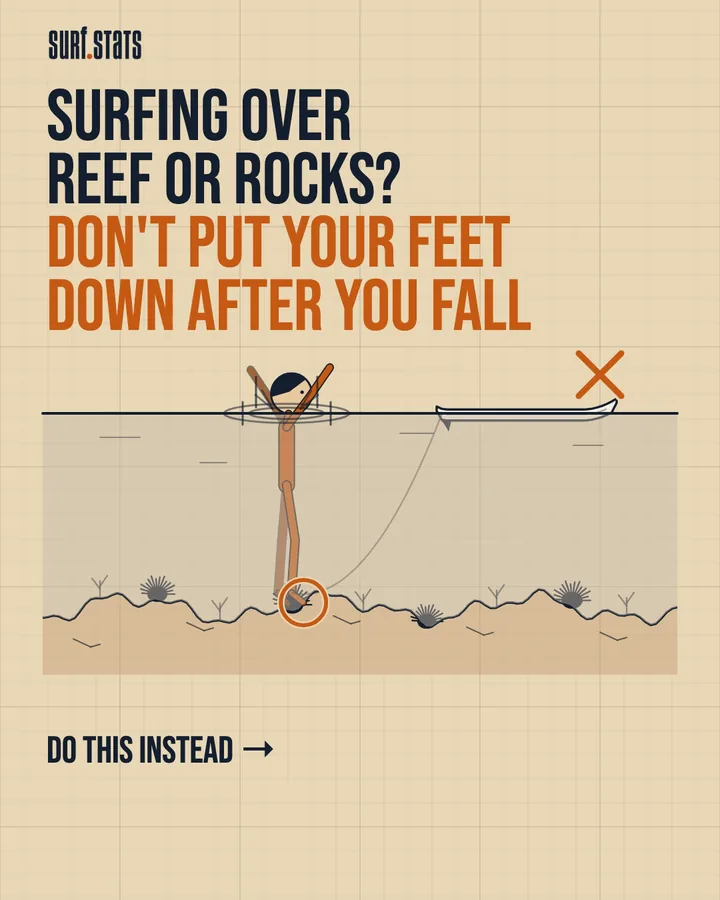
You come off the board over a shallow reef or a rock bottom, and your body does the obvious thing: it reaches down with your feet to find the bottom and stand up. Over reef or rocks, that is the move to unlearn.
This post covers the seconds after a fall over a shallow bottom: how to land in the water, and what to do with your feet. It comes from our reef fall reel. Each step is backed by at least two independent sources: surf media, a school surfing workbook, a coach's site and, for the feet, a state lifeguard service.
Why falling over reef is different
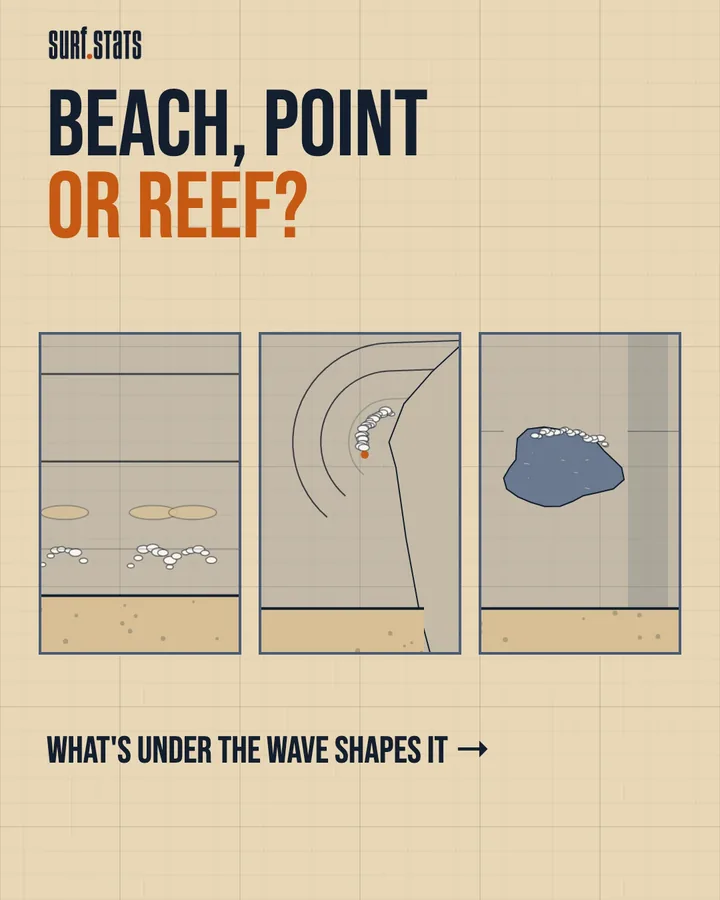
The Surfing Handbook warns that a wipeout onto the reef can cut and scrape you badly. Hawaii Ocean Safety, the state's lifeguard service, notes that at most Hawaii beaches sharp coral reefs sit close to shore. And Surfline and American Surf Magazine both describe surfers meeting sea urchins on reefs. If you want to know what makes a spot a reef break in the first place, read beach, point or reef break.
So after a fall over a shallow bottom you want two things: sink as little as you can, and keep your weight off the bottom.
1. Falling off over shallow reef or rocks?
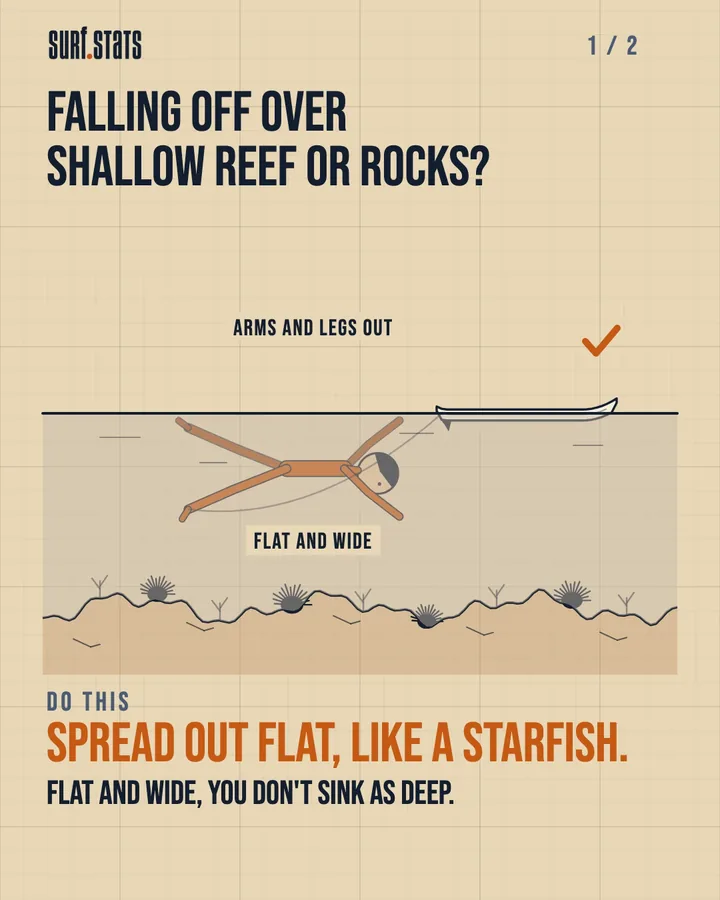
Try this: spread out flat, like a starfish.
Flat and wide, you don't sink as deep. The Safe Surf school workbook calls this the starfish: for a wipeout over shallow rocks or reef, you come off the board into the back of the wave and open your arms out flat, so the rocks or reef don't hurt you. The Surfing Handbook describes the same shape: fall away from the board and land on your back, flat, arms spread wide, to avoid hitting the bottom.
Why it works, in a coach's words (Eternal Surfer): spread more of your body across the water and you sink more slowly. Seabreeze also says to fall flat instead of going in head first, to spread the impact.
Two notes:
- This is for a shallow bottom. It is about how you land, not a promise that you will stay on top of the water.
- It is what to aim for, not something you can always pull off. The same coach's reef page says that once a powerful reef wave has hold of you, there is no time to think about body position.
For the rest of the fall, like getting off the back of the board, see how to wipe out safely.
2. Feet reaching for the reef?
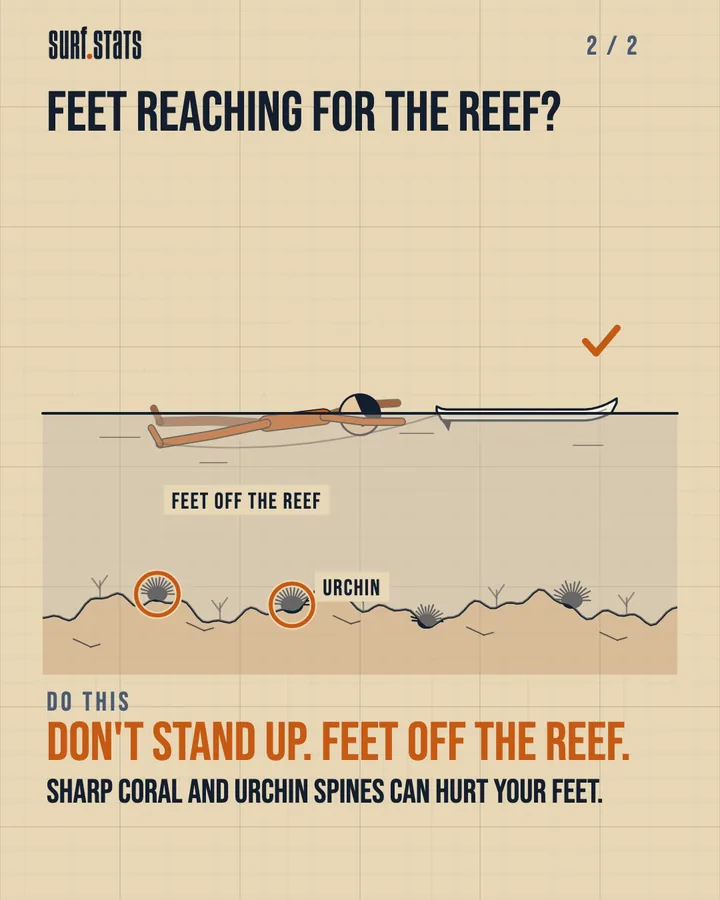
Try this: don't stand up. Keep your feet off the reef.
Sharp coral and urchin spines can hurt your feet. Surfline's advice, from a Surfrider Foundation scientist: if you're somewhere shallow, don't just put your feet down to stand up. Stay off the bottom and tread water.
American Surf Magazine describes how urchin injuries usually happen: someone tries to stand up on a shallow reef, brushes a sea urchin, and its spines end up in the foot. The Inertia's writer, from experience, says that if you surf enough, sooner or later an urchin leaves a few spines in your foot.
Coral is the other half. Hawaii Ocean Safety asks people not to touch, kick or stand on coral, for their own sake and the coral's. The Surfline scientist says the same about the reef: stepping on it risks an urchin and damages the reef. Keeping your feet up looks after both of you.
Don't rush back up, either. Eternal Surfer calls trying to stand up straight after a wipeout a mistake many surfers make: on a shallow reef or a break you don't know, you may not be sure where the bottom is. Its order is stay relaxed, get your bearings, then surface calmly.
Save it for your next reef surf
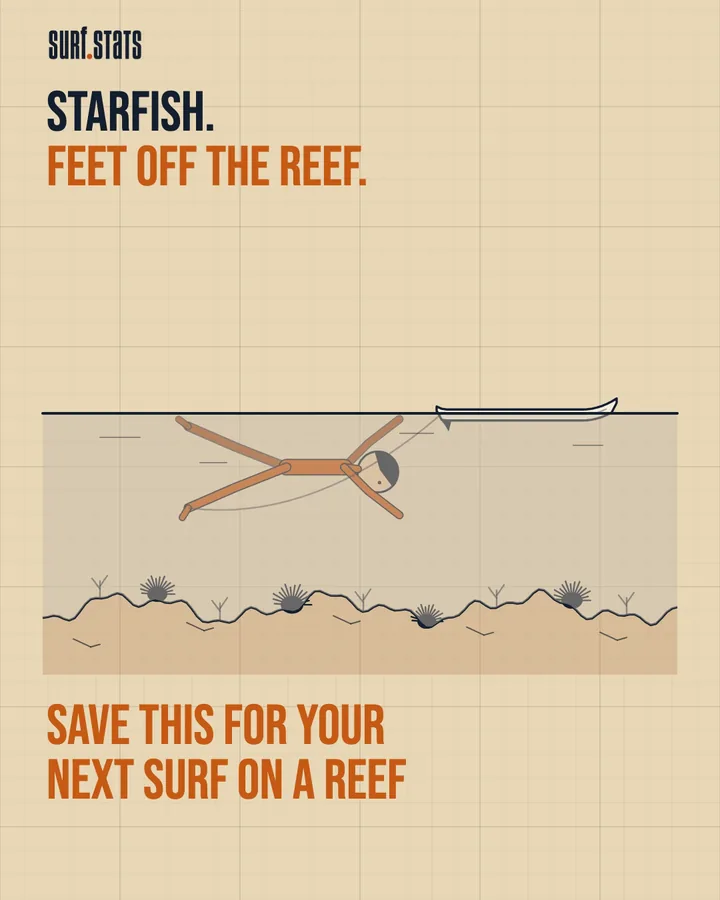
Two things to remember: starfish, and keep your feet off the reef.
Quick checklist
- Spread out flat, like a starfish. Flat and wide, you don't sink as deep.
- In a powerful reef wave there may be no time to set up. It is still the shape to aim for.
- Don't put your feet down to stand up.
- Stay off the bottom and tread water.
- Coral and urchin spines can hurt your feet, and standing on coral damages it.