How to wipe out safely
 Fin Selector: your fins in 1 minute
Fall off the back of your board, away from it, and land flat, butt first, never headfirst. Under water, relax and let the wave pass. Come up with your arms covering your head, hands first, then get your board back and keep it close.
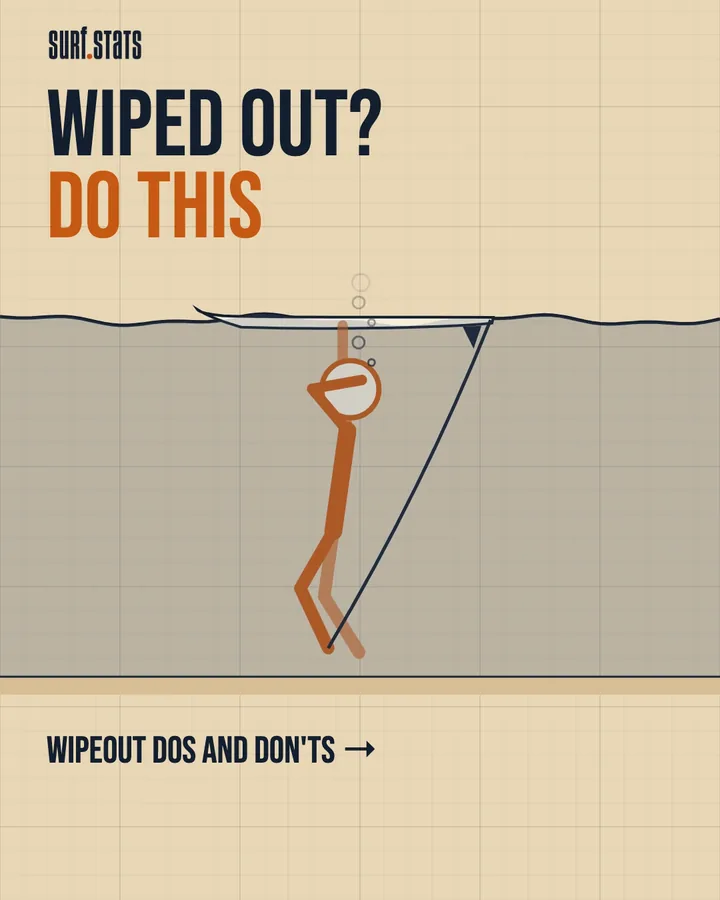
Every surfer wipes out. You can't stop it, but you can choose how you fall and what you do next. And keep an eye on your own board: in two injury studies, contact with your own board was the top cause of surf injuries. That's why three of the five tips below are about your board.
So how do you wipe out safely? Below are five dos and don'ts, in the order a wipeout happens: the fall, the time under water, the trip back up and the board. They come from our wipeout dos and don'ts reel, and every tip is backed by at least two independent sources: surf lifesaving and lifeguard services, a hospital injury programme, a school surf-safety workbook and surf magazines.
1. Falling off the front of your board?
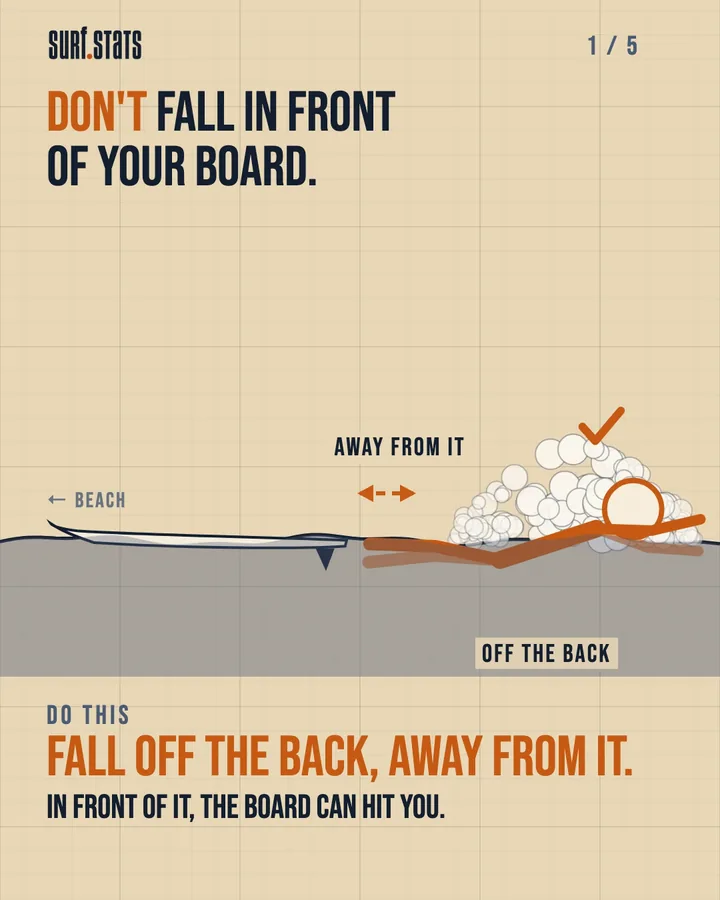
Try this: fall off the back, away from it.
Don't fall in front of your board. In front of it, the board can hit you. Surfer Today warns that if you land in front of it, you might hit your head.
So when you feel yourself going, aim for the back of the board and put as much space between you and it as you can. Surfer Today and the Safe Surf workbook both say to come off the back of the board.
2. About to hit the water headfirst?
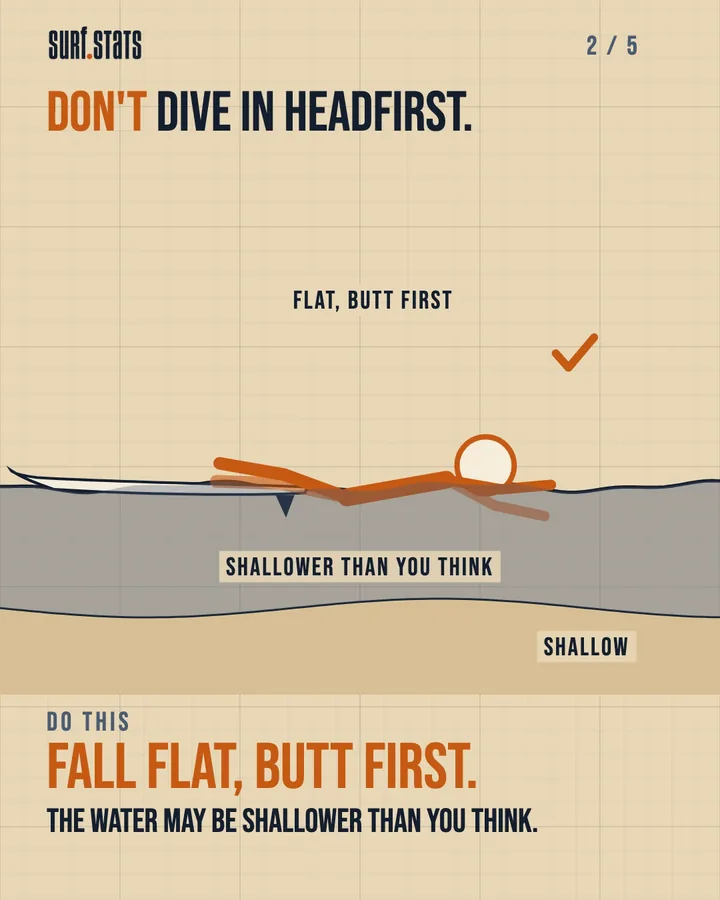
Try this: fall flat, butt first.
Don't dive in headfirst. The water may be shallower than you think. The Inertia warns that hitting the bottom headfirst can cause serious neck injuries. Surfer Today, The Inertia and Newport Beach lifeguards all say never to go in headfirst.
Instead, land flat and let your butt take the hit. Newport Beach lifeguards put it simply: when in doubt, don't dive.
3. Held under after a wipeout?
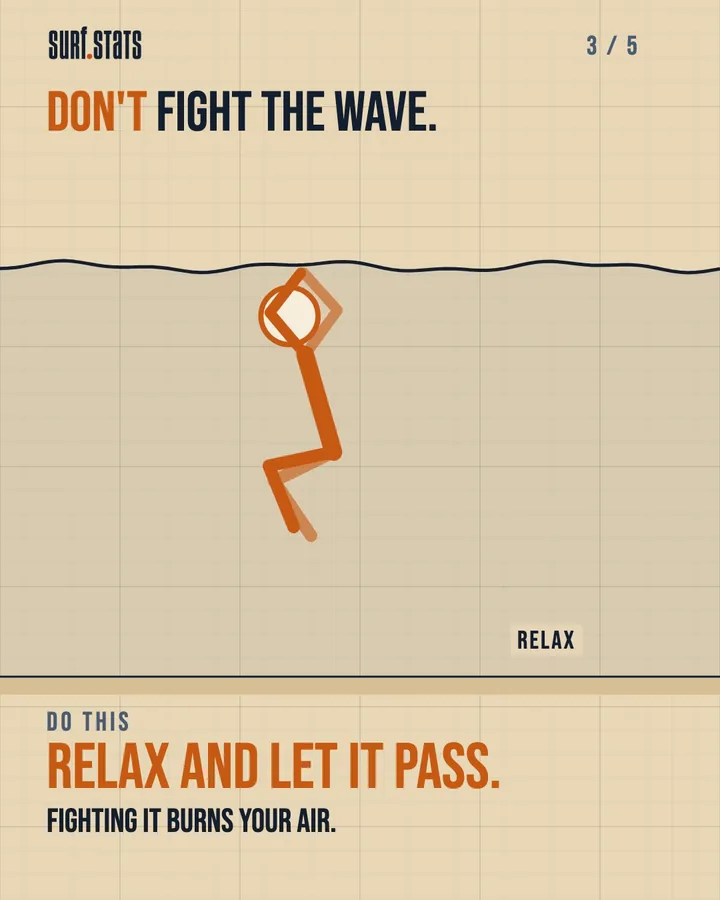
Try this: relax and let it pass.
Don't fight the wave, and don't thrash about or race for the surface. Fighting it burns your air: Surfer Today says stress and fighting the wave use up oxygen, and Surfline says the same about rushing to the surface.
Surfer Today, Surfline, Surfer and the Safe Surf workbook all say to stay calm and not fight it. Stay as calm as you can, go loose, and let the wave pass over you. Sources give different times for how long a hold-down lasts, so we don't give you a number.
4. Shooting straight up to the surface?
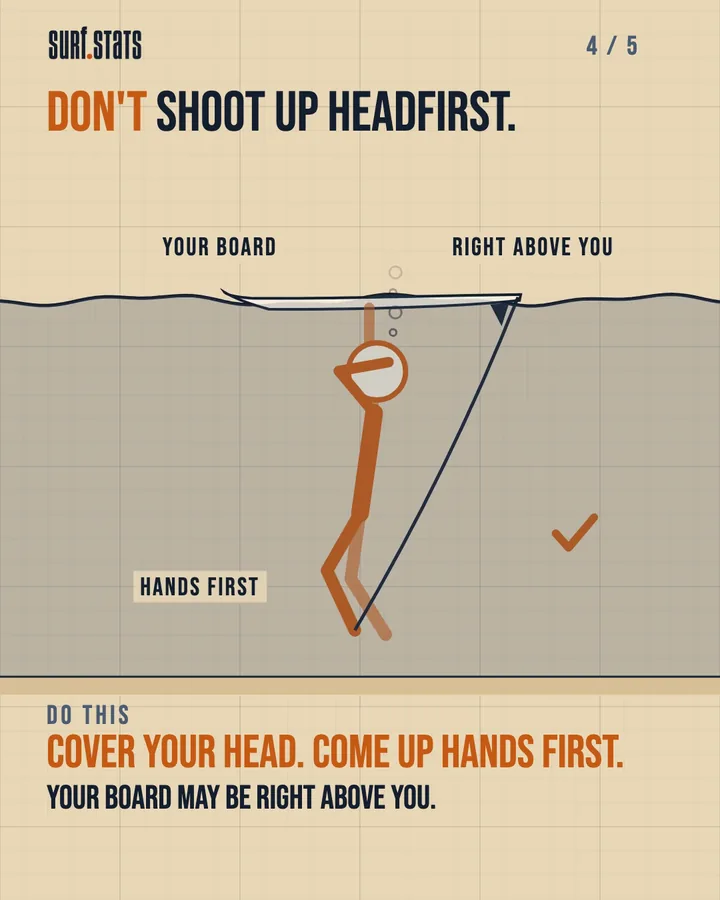
Try this: cover your head. Come up hands first.
Don't shoot up headfirst. Your board may be right above you. Come up with your arms covering your head and your hands leading the way, to protect your head from the board.
Surf Life Saving New Zealand, The Inertia, Surfer Today, Surfer and the Safe Surf workbook all say to cover or protect your head in a wipeout. The Inertia and Surfer Today say to do it as you come up.
5. Board floating away after a wipeout?
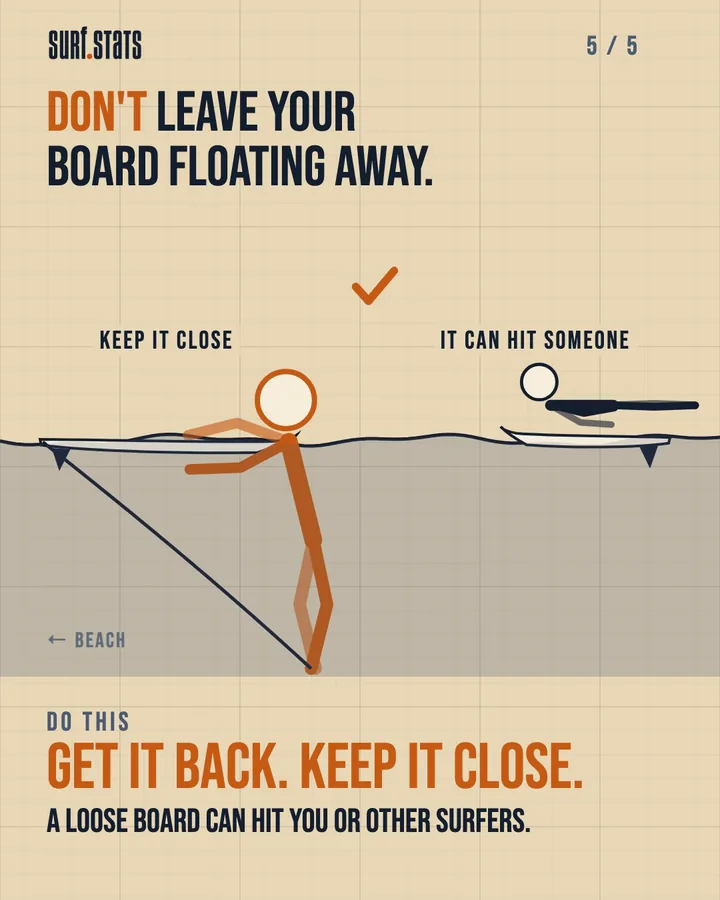
Try this: get it back. Keep it close.
Don't leave your board floating away at the end of your leash. A loose board can hit you, or other surfers. Once you're up, get your board back and keep it close. Surf Life Saving New Zealand says a runaway board can injure other surfers.
It's the same reason you never let go of your board when you duck dive on the way out. Surf Life Saving New Zealand, Hoag and Better Health Victoria also all say to wear a leash; for how to wear one, read how to use a surf leash.
Wipeouts are part of surfing
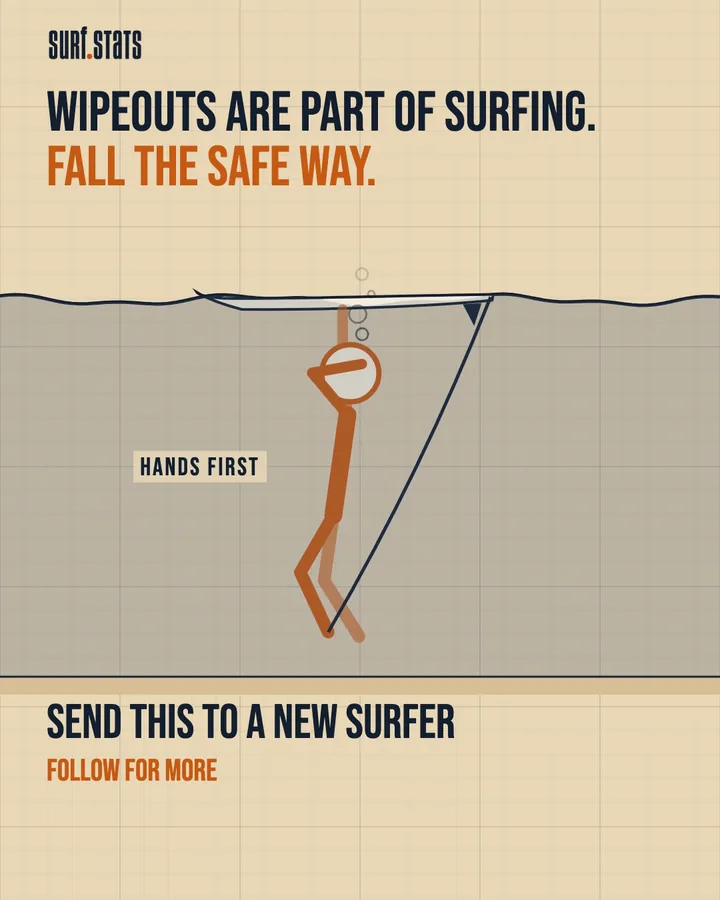
Even the best surfers wipe out, as Surf Life Saving New Zealand points out. You won't stop falling, so learn to fall the safe way. Know someone who is just starting? Send this to a new surfer.
Quick checklist
- Fall off the back of your board, away from it. Never in front.
- Fall flat, butt first. Never headfirst.
- Held under: relax and let it pass. Fighting burns your air.
- Coming up: cover your head, hands first.
- Get your board back and keep it close.