How to use a surf leash
 Fin Selector: your fins in 1 minute
Strap the leash around the ankle of your back foot, pick one about as long as your board, check the cord, swivel and string before you paddle out, grab the board instead of the cord, and store it rinsed, loose and out of the sun.
A surf leash keeps your board close after you fall. Use it wrong and it works against you: the board snaps back at you, hits someone else, or the leash breaks when you need it.
Below are five common leash mistakes, and the fix for each. They come from our leash dos and don'ts reel, and every tip is backed by at least two independent sources: a lifesaving charity, surf magazines, gear reviewers and medical papers on hand injuries.
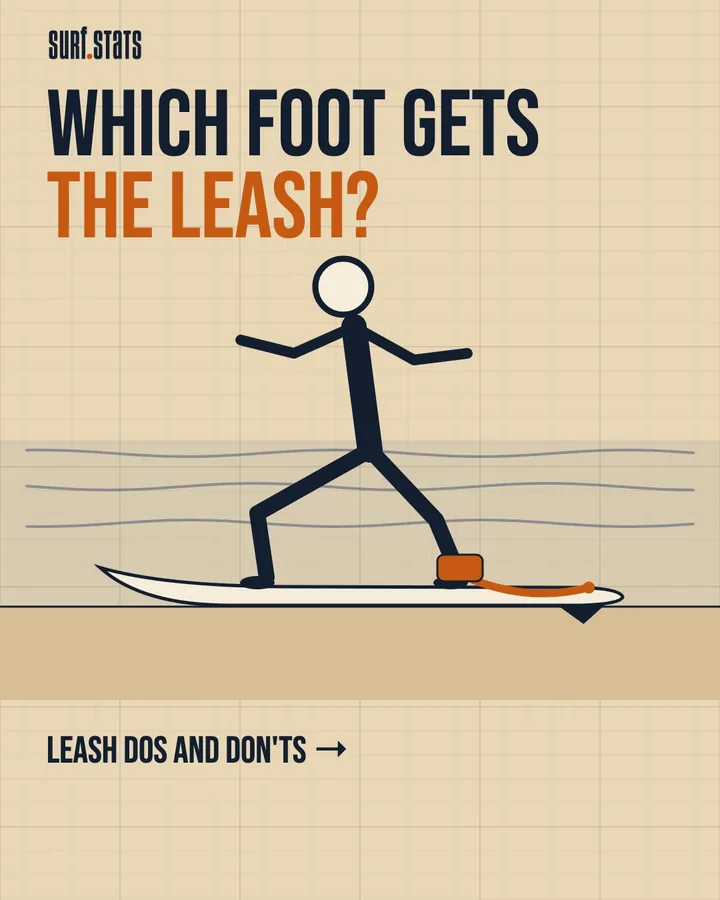
1. Which foot gets the leash?
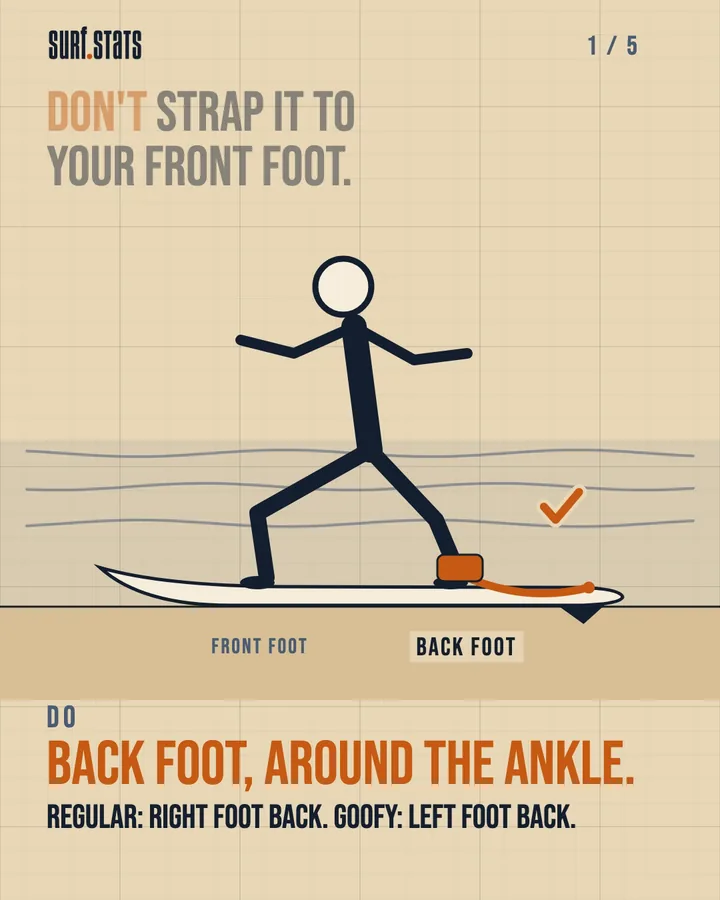
Try this: back foot, around the ankle.
Don't strap it to your front foot. The leash goes around the ankle of your back foot, the one nearest the tail, so the cord trails straight back from your ankle to the tail of the board.
Which foot is your back foot depends on your stance:
- Regular (left foot forward): the leash goes on your right foot.
- Goofy (right foot forward): the leash goes on your left foot.
2. How long should your leash be?
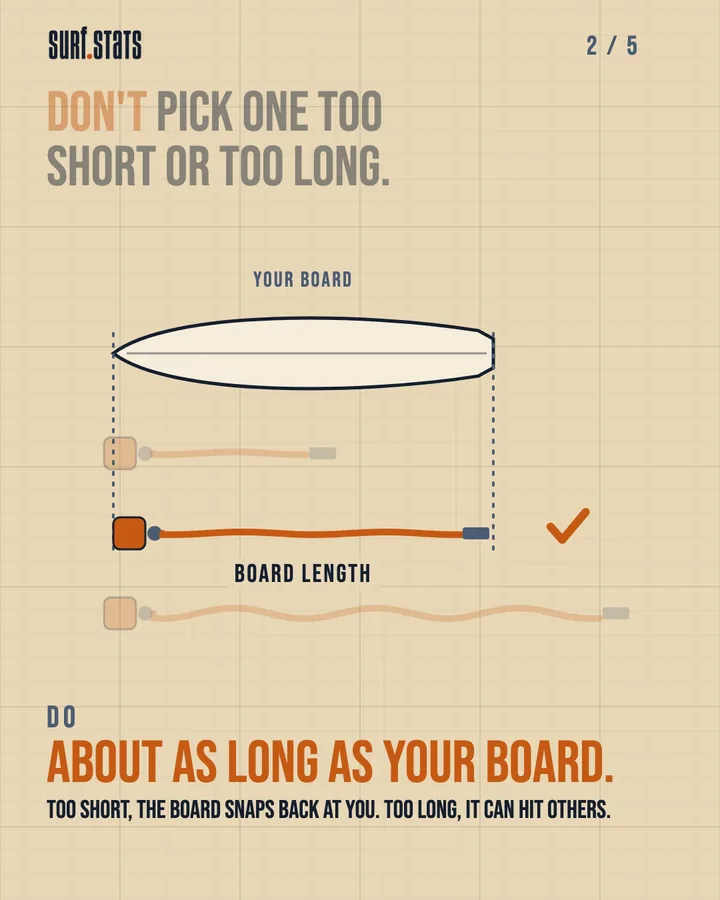
Try this: about as long as your board.
Don't pick one too short or too long. Get a leash about as long as the board you're riding. Guides differ a little on the exact length, so "about as long as your board" is the safe rule. If you're not sure what board you should be on in the first place, start with how to choose a surfboard.
Why it matters:
- Too short: when you fall, the board snaps back at you, faster and harder.
- Too long: the board can end up hitting other surfers.
3. When did you last check your leash?
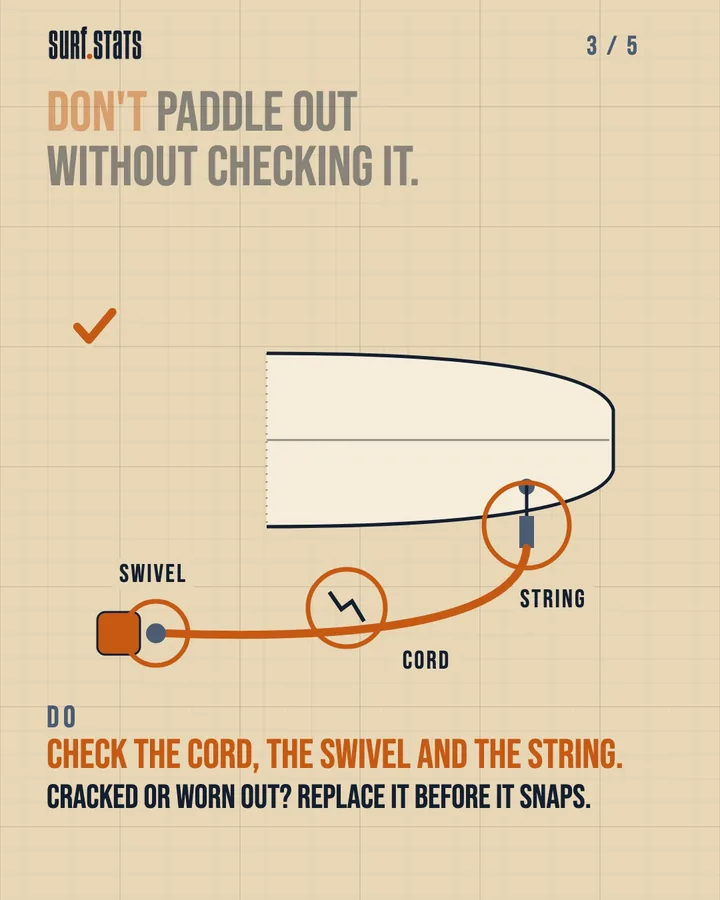
Try this: check the cord, the swivel and the string.
Don't paddle out without checking it. Before you go in, look at three parts:
- The cord. Look for small cuts, cracks and worn spots. Cracked or worn out? Replace it before it snaps. A leash that feels stretched out and has lost its spring is also due for a new one.
- The swivel. Check it along with the rest of the leash.
- The string. This is the short loop through the leash plug at the tail. Make sure it's sound, and keep it short.
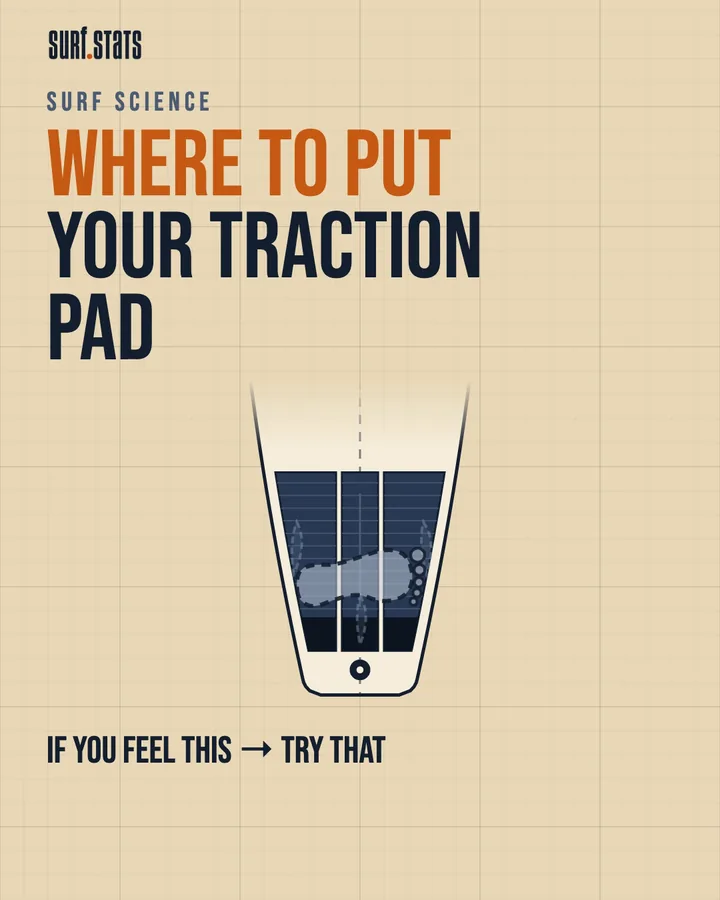
Why short? The wide, soft strap at the end of the leash (the rail saver) is meant to wrap around the edge of the board when the leash pulls tight. If the string is too long, the string itself reaches past the edge and can cut into your rail. For more on the tail of your board and the leash plug, see where to put your traction pad.
4. Pulling your board in by the leash?
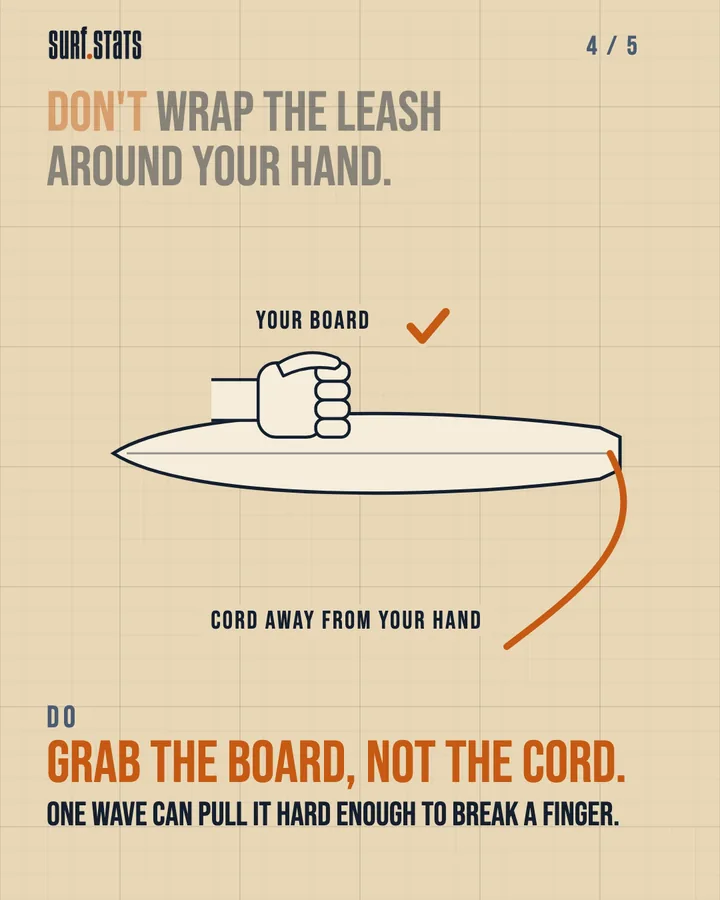
Try this: grab the board, not the cord.
Don't wrap the leash around your hand to pull your board in. One wave can pull it hard enough to break a finger. When a wave takes the board, the weight of the water pulls the leash tight, and whatever is wrapped in it takes that pull.
Doctors have written up finger fractures caused by exactly this: a leash wrapped around a finger, or grabbed, as it snaps to tension. So keep your hands off the cord. To get your board back, reach for the board itself.
5. Leash coiled around your tail?
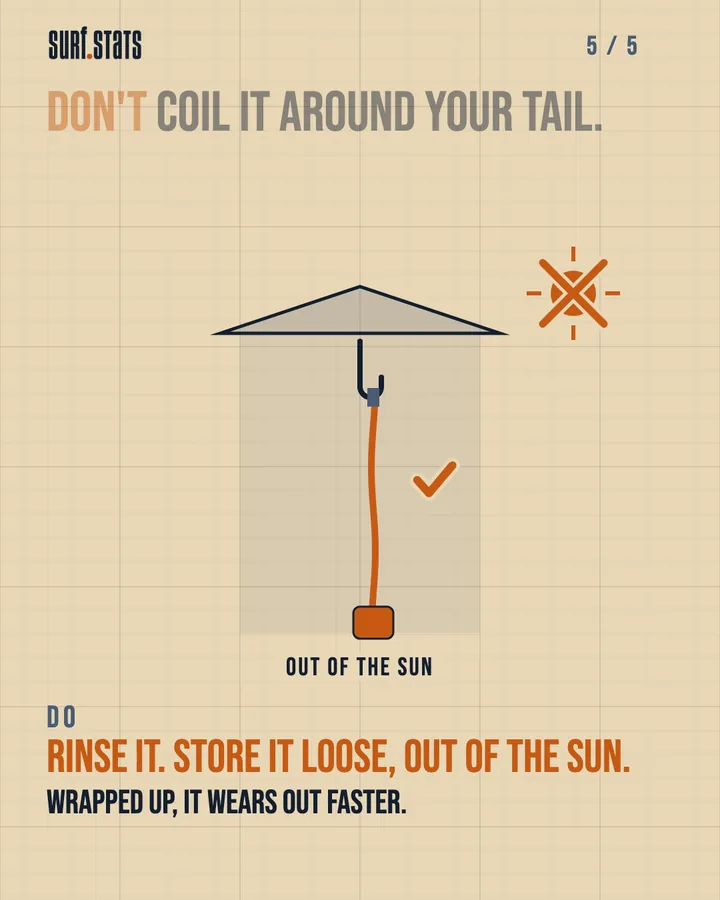
Try this: rinse it. Store it loose, out of the sun.
Don't coil it around your tail. Wrapped up, it wears out faster: winding it tight stresses the cord in the same place again and again. Surfer Today adds that a cord stored in a coil keeps that coil, and the coil can tangle around your feet.
After your session:
- Rinse the leash with fresh water.
- Take it off the board.
- Let it hang or lie loose, not rolled up tight.
- Keep it out of the sun.
The three to remember
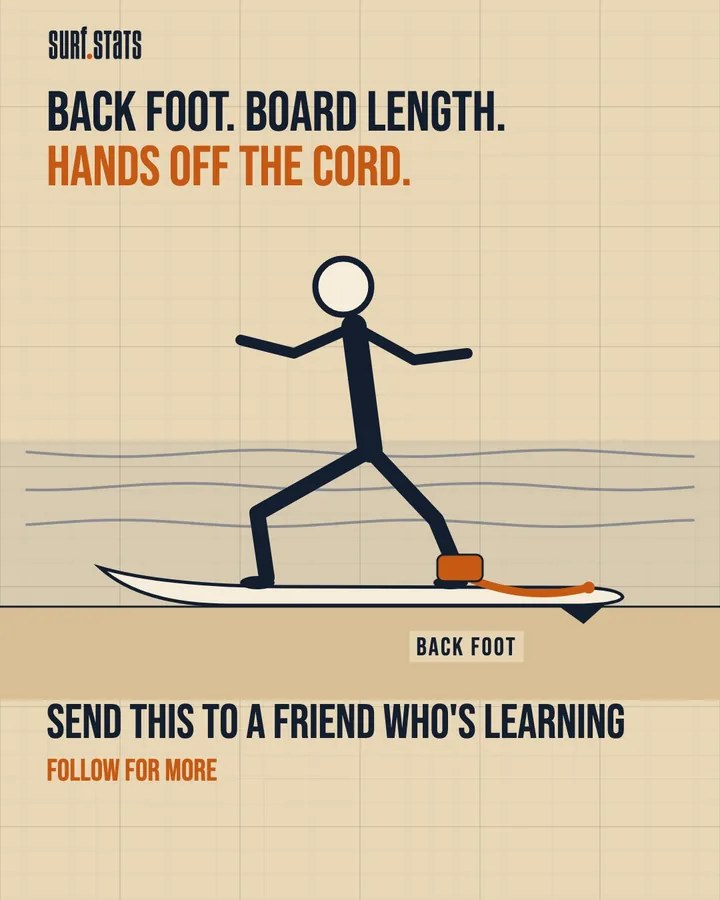
If you only keep three things from this, keep these: back foot, board length, and hands off the cord. And send this to a friend who's learning to surf.
Quick checklist
- Leash around the ankle of your back foot.
- Regular: right foot. Goofy: left foot.
- About as long as your board.
- Before you paddle out: check the cord, the swivel and the string.
- Cracked or worn out: replace it before it snaps.
- Keep the string short so it can't cut into your rail.
- Grab the board, never the cord.
- Rinse it, take it off, store it loose and out of the sun.