How to get off a wave that closes out
 Fin Selector: your fins in 1 minute
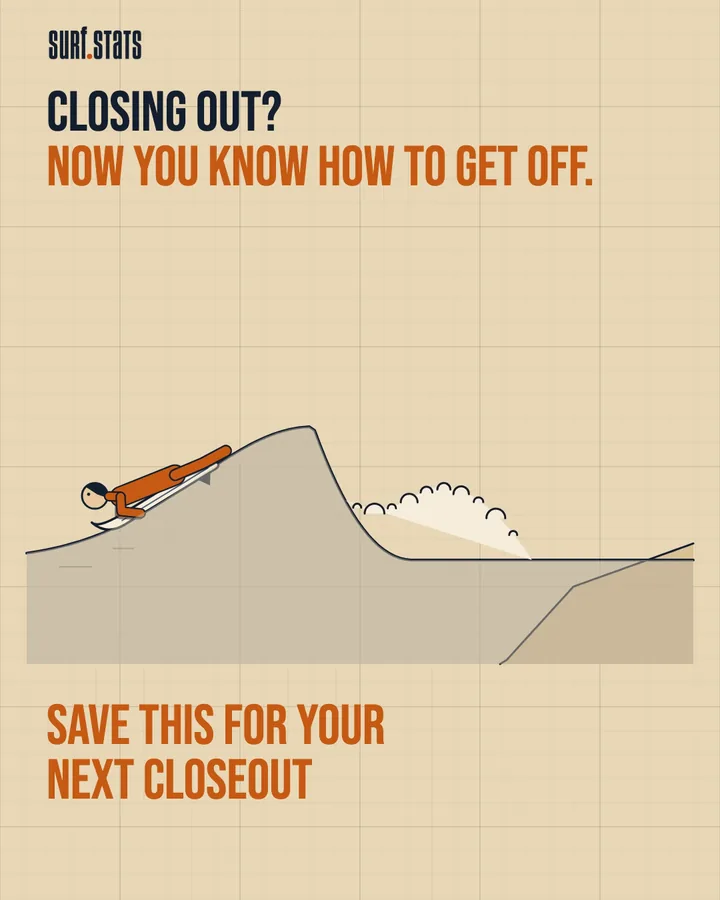
If there's still time, kick out: go up and over the back of the wave. If not, drop to your belly and grab both rails, hold on to your board if you're going to fall, and when it gets shallow, slow down and step off to the side instead of jumping.
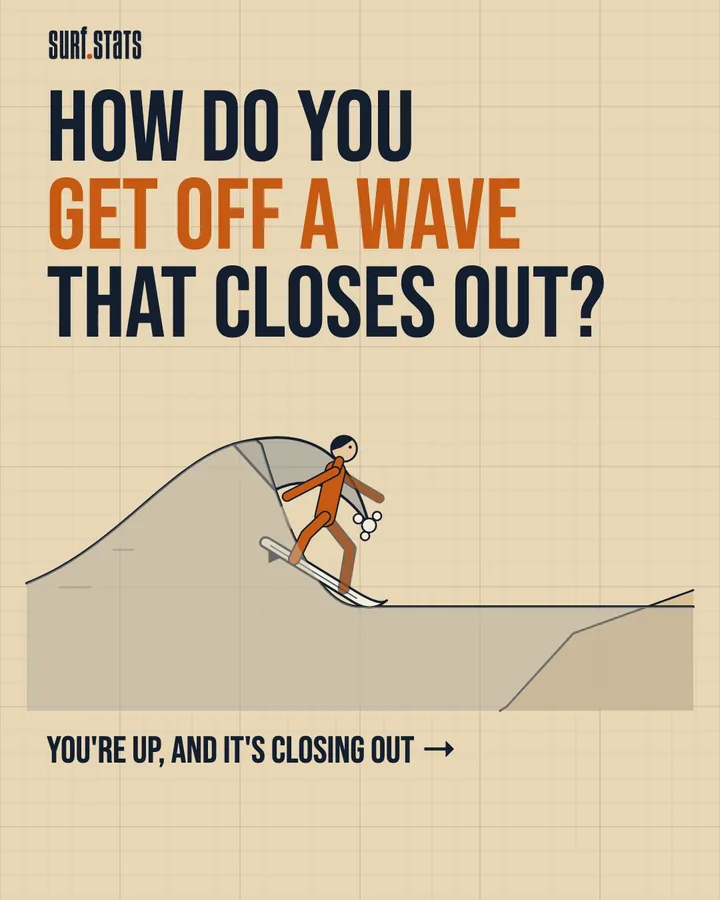
You're up and riding, and the wave starts closing out in front of you. What now? You need a way off the wave that keeps you, your board and the surfers around you safe.
This guide is about that moment, after you stand. Spotting a closeout before you paddle for it is a different skill: see how to read waves. Below are four exits, in the order a ride can go: over the back while there's still time, onto your belly when it's too late, holding your board when you're going to fall, and stepping off when it gets shallow. They come from our how to get off a wave that closes out reel. The sources are lifesaving bodies, public safety pages and surf media, listed at the end.
1. Is it closing out in front of you?
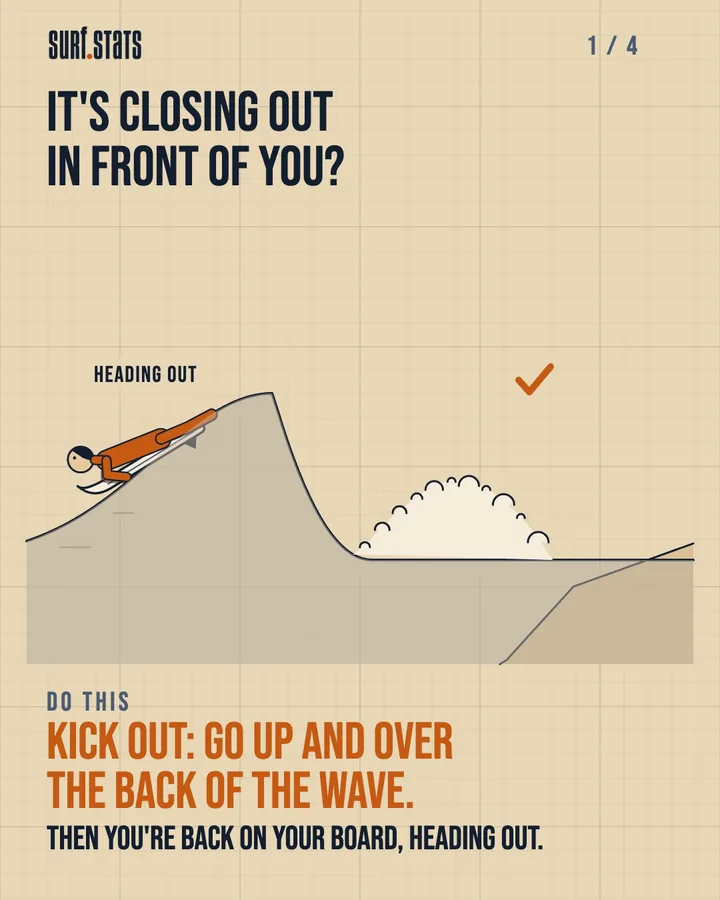
Try this: kick out. Go up and over the back of the wave.
A kick out means riding up the wave and over its back, leaving the wave behind you. It's the exit for when you still have time to get over the top.
Then you're back on your board, heading out. Kassia Meador tells The Inertia the kick out gets you back on the board and paddling out faster, and Surfer Today's guide to kicking out in big waves says that once you're over, you get back on the board and start paddling out right away.
As you kick out, don't push the board away with your feet. Surfer Today warns it can hit other surfers or come back at you (more on that in step 3).
2. Too late to get over it?
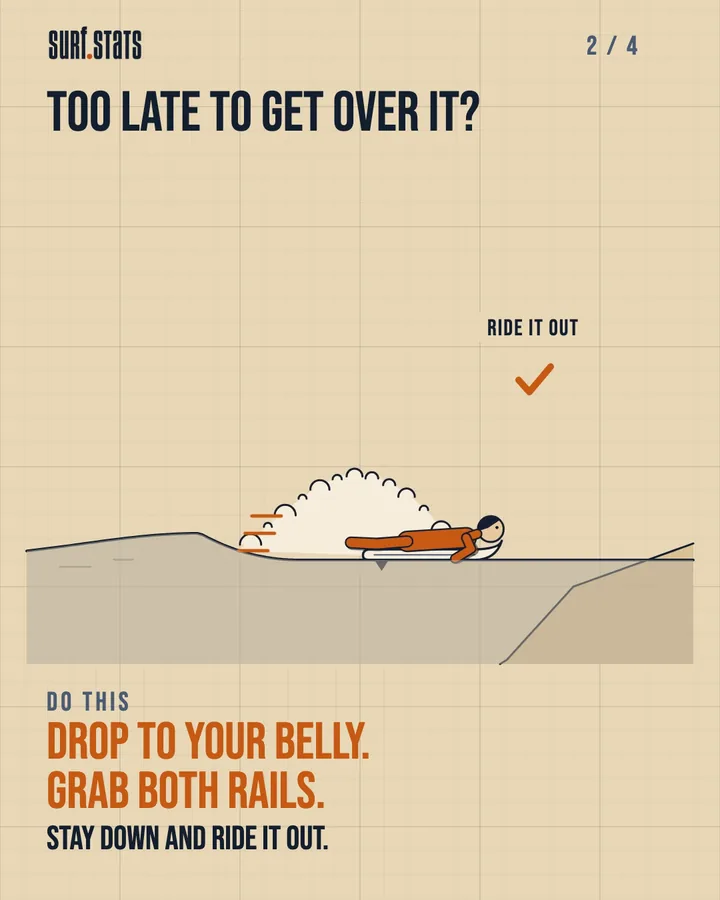
Try this: drop to your belly. Grab both rails.
If it's too late to get over the top, get low instead, then stay down and ride it out. Surfer Today's advice, if you're heading in and the wave closes out, is to go back to the lying, paddling position and ride the whitewater to the beach on your board.
3. Going to fall anyway?
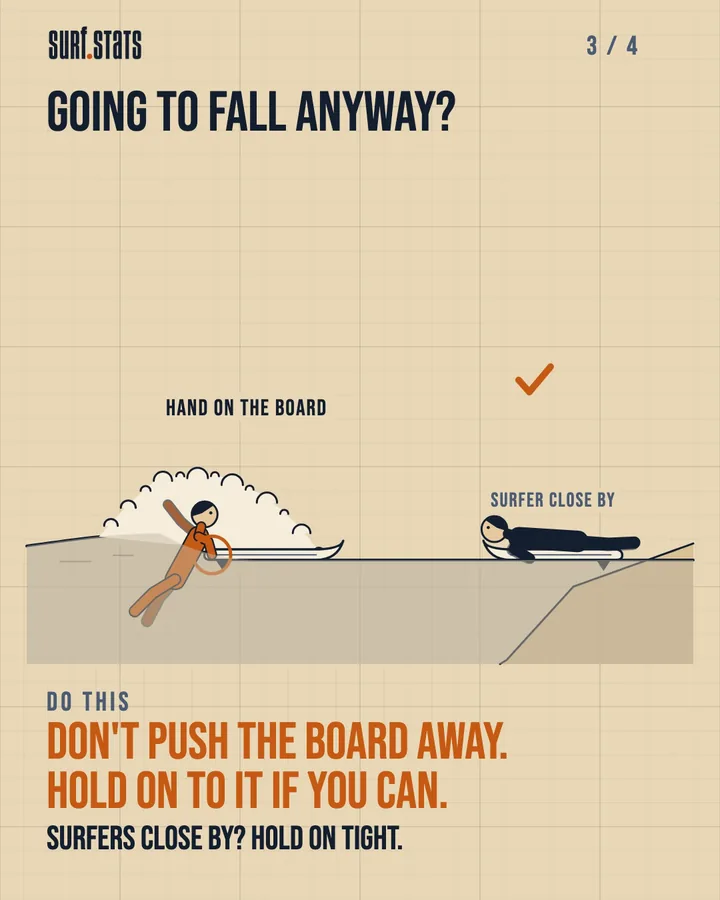
Try this: don't push the board away. Hold on to it if you can.
A board that shoots off can hit other surfers, or bounce back and hit you. Surfer Today warns about both when a board is pushed off with your feet.
Lifesaving bodies and a council surfer code say it plainly:
- Surf Life Saving New Zealand: hold on to your board, keep it close and always wear a leg rope (leash).
- RNLI: do not throw your board.
- Northern Beaches Council's surfer code: always hold on to your board.
There's a reason to care about your own safety too. Victoria's Better Health Channel says the main cause of surfing injury is contact with a board, your own or someone else's.
Surfers close by? Hold on tight. Surf Life Saving New Zealand gives the reason: a runaway board can injure other surfers.
How you land when you fall is its own topic. See how to wipe out safely.
4. Still standing as it gets shallow?
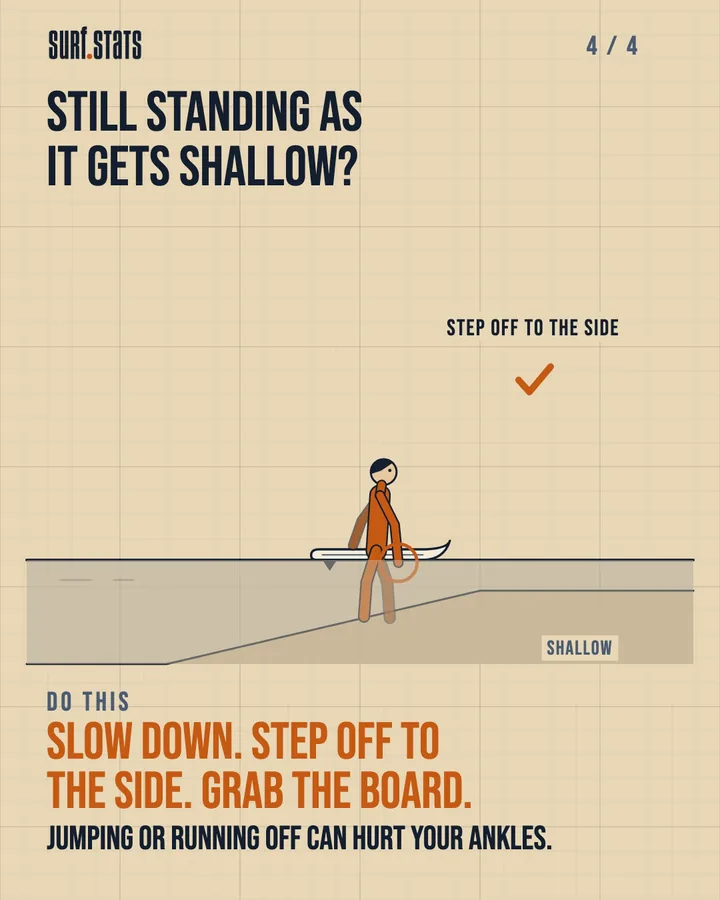
Try this: slow down. Step off to the side. Grab the board.
Sometimes you ride the whitewater standing up and the water gets shallow under you. Surfer Today's advice for the end of a ride, once the wave has run out of energy, is to step off into the water and then grab the board.
Jumping or running off can hurt your ankles. In The Inertia, Kassia Meador says not to run or jump off your board onto the sand, even when you know it's shallow, because anything can happen. She says she and many of her friends have jumped off onto the shore and tried to run it out, with a sprained ankle as one result. Surfer Today lists sprained ankles among the most common results of falling off a board, and the Better Health Channel lists the leg among the parts of the body surfers most often injure.
Quick checklist
- Still time? Kick out: up and over the back of the wave.
- Too late? Drop to your belly and grab both rails. Stay down and ride it out.
- Going to fall? Don't push the board away. Hold on to it if you can, tight if surfers are close by.
- Getting shallow? Slow down, step off to the side, grab the board. Don't jump or run off.