How to remove wax from a surfboard
 Fin Selector: your fins in 1 minute
Warm the wax for a few minutes in the sun or with a hairdryer on low, scrape it with the straight edge of a plastic comb, then wipe the sticky film off with a citrus wax remover on a rag. No thinner, no acetone.
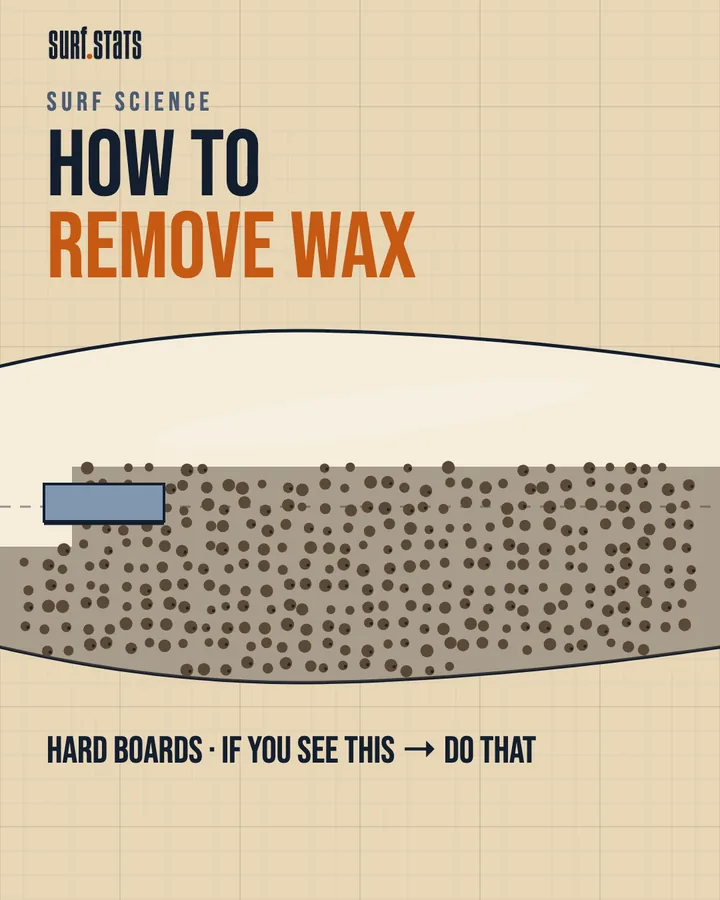
Taking the wax off a surfboard is a short job if you do it in order: soften the wax, scrape it off with the right edge of a plastic comb, then wipe away the sticky film that's left. Each step has its own small trap, and each one is below.
This guide is for hard boards: fiberglass or epoxy. Soft tops need different care (see step 3). Below are five common problems and the fix for each. The first three are the strip itself; the last two are times you'll need one. They come from our how to remove wax reel, and each fix rests on at least two independent sources: board makers, a wax maker, a surf brand's guide and surf magazines.
How do you know it's time? Wax that has gone dark, dry, cracked or flaky is old wax. So is a deck so slick that a fresh top coat won't stick to it.
1. Wax won't budge?
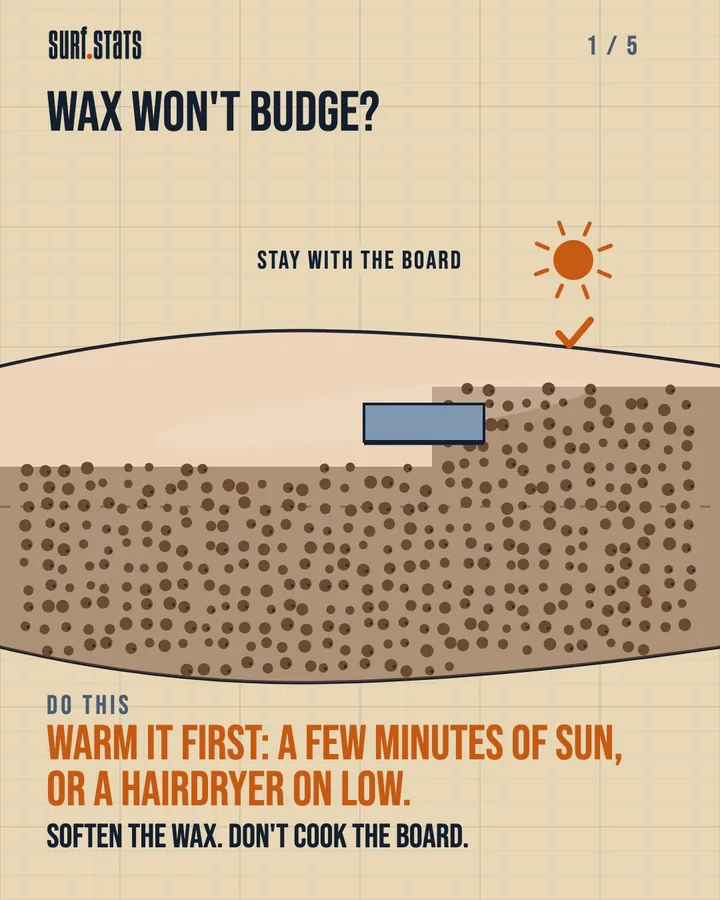
Try this: warm it first. A few minutes of sun, or a hairdryer on low.
Wax comes off more easily once it's soft, so warm it before you scrape.
- Sun: lay the board in the sun, deck up, for a few minutes.
- Hairdryer: set it on low, and don't hold it too close to the board.
- Stay with the board. Scrape as soon as the wax goes soft.
The rule on the card is: soften the wax, don't cook the board. Too much heat can make a board delaminate, which is why board makers warn against leaving a board in a hot car or out in the sun for long. Guides don't agree on how many minutes is right, so go by the wax, not the clock.
2. Comb just carving grooves?
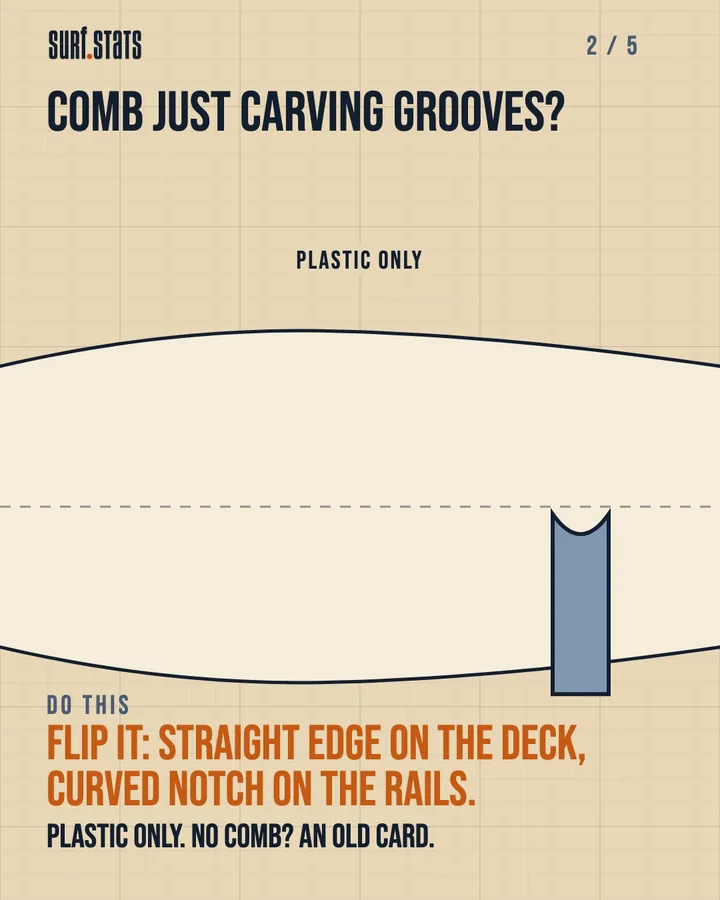
Try this: flip it. Straight edge on the deck, curved notch on the rails.
A wax comb has more than one edge, and each has a job. The teeth rough up worn wax before you add a fresh top coat. For stripping you want the other side: the straight, smooth edge lifts the old wax off. Drag the teeth across it and all you get is grooves.
- Run the straight edge over the deck.
- Use the curved notch on the rails, the rounded edges of the board.
- Plastic only. No comb? An old plastic card does the job.
Firewire, a board maker, says never to use metal tools to take wax off.
3. Still sticky after scraping?
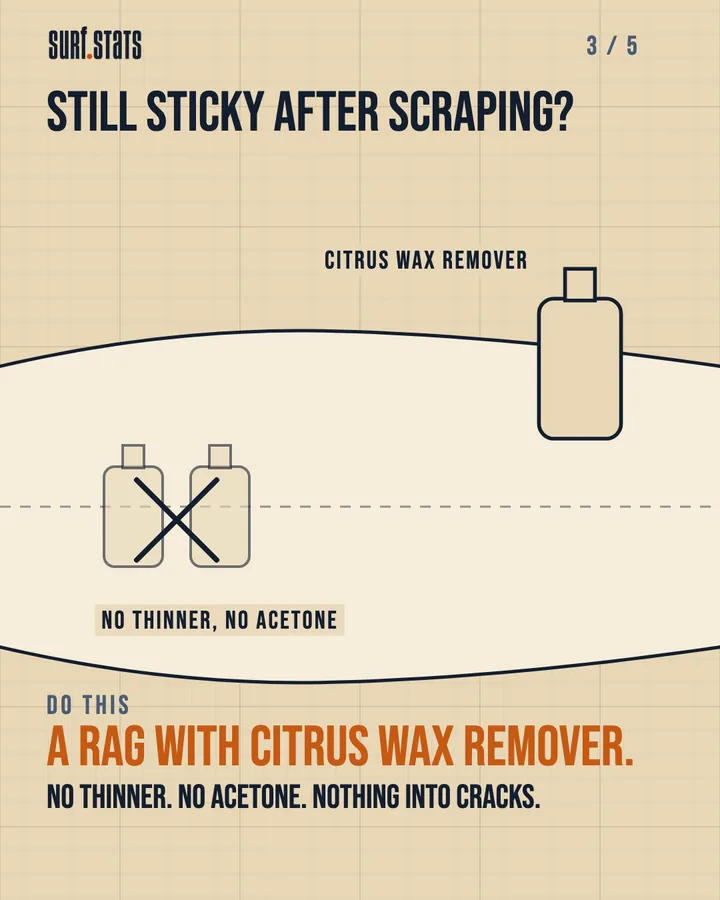
Try this: wipe it with a rag and a citrus wax remover.
Scraping leaves a thin, sticky film behind. Put some remover on a rag or an old cloth and wipe the deck clean. A little coconut oil on the rag works too. If you have neither, flour or a bit of beach sand rubbed over the film helps pick up the last bits.
The line on the card is: no thinner, no acetone, nothing into cracks. Some guides do use acetone, but board makers warn against harsh solvents. Firewire names paint thinner, turpentine and methylated spirits, and FCD says acetone melts EPS foam. FCD adds that many wax removers can melt EPS foam too, so keep the remover on the surface and out of any crack or ding.
Soft top? Skip the remover. Catch Surf, a soft-top maker, says not to use solvents or cleaners on its boards. And keep a soft top out of the sun.
4. Surf trip coming up?
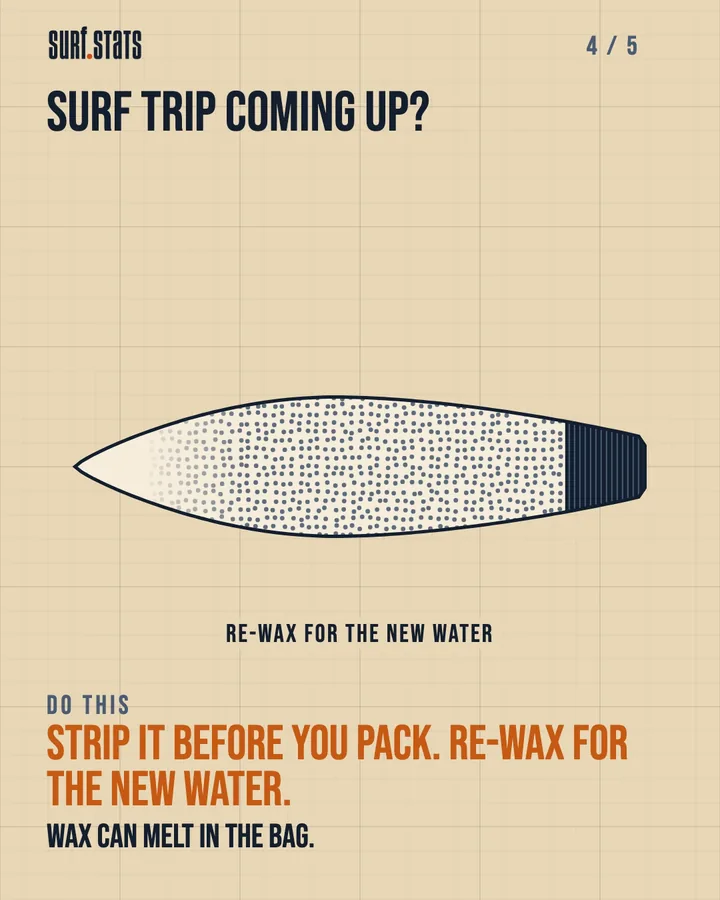
Try this: strip it before you pack, and re-wax for the new water.
There are two reasons. Wax can melt inside the board bag on the way. And the water where you're going may be warmer or colder than at home, which calls for a different wax. Strip the board, pack it clean, and re-wax it with the right wax for the water there.
The same goes when the seasons change and your own water warms up or cools down.
5. Plugged a ding with wax?
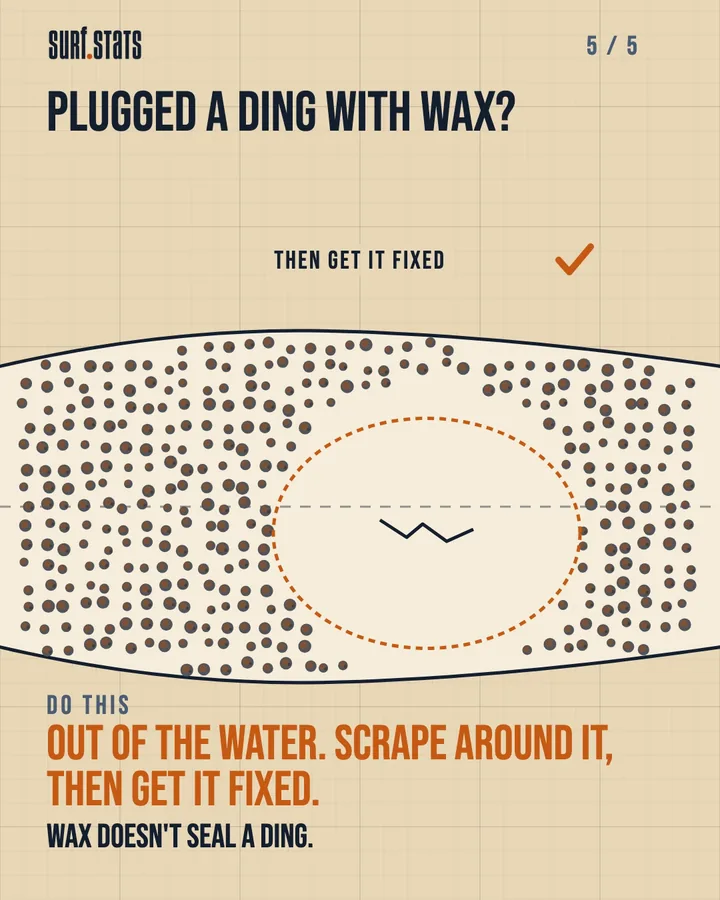
Try this: get out of the water. Scrape around the ding, then get it fixed.
Pressing wax into a ding is an old surfer habit, but wax doesn't seal a ding. A dinged board should come out of the water until it's repaired.
Any repair starts on a clean surface, so scrape the wax off around the ding with the comb. Use the comb only there: no remover and no acetone near a ding. Firewire, a board maker, warns that solvents do the most harm when they get into the board through cracks.
After the strip
Old wax? Bin it or recycle it.
Then wax the clean board from scratch: base coat first, then a top coat that suits your water. Our guide on how to wax a surfboard walks through it. Save this one for strip day.
Quick checklist: removing surfboard wax
- Hard boards only. Soft tops: no remover, and keep them out of the sun.
- Warm the wax: a few minutes of sun, or a hairdryer on low. Stay with the board.
- Straight edge on the deck, curved notch on the rails. Plastic only.
- Wipe the film with citrus wax remover on a rag. No thinner, no acetone, nothing into cracks.
- Strip before a trip, and re-wax for the new water.
- Wax doesn't seal a ding: out of the water, scrape around it, get it fixed.
- Bin or recycle the old wax. Base coat first.