How to sit on a surfboard
 Fin Selector: your fins in 1 minute
Sit centered with one leg in the water on each side and keep your legs moving. Slide forward or back until the board sits about level, nose just out of the water. To face the beach, slide back so the nose lifts, hold a rail, sweep the water with your other hand and circle your legs.
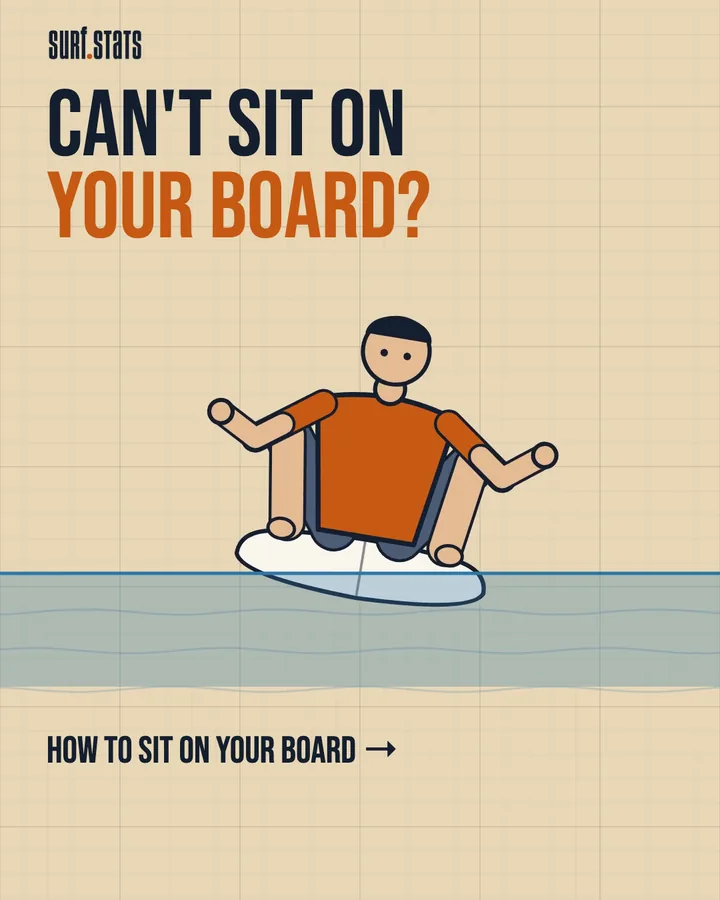
Sitting on a surfboard looks easy from the beach. Then you try it, and the board rolls you off to one side, or the nose shoots up and you slide off the back. Surfers sit on their boards to wait for waves, so learning how to sit on a surfboard, and how to turn it around from there, comes early.
Below are five problems and the fix for each. They come from our how to sit on your board reel, and every fix rests on at least two independent sources: surf schools, surf coaching sites and surf media. This post is about sitting. For lying down to paddle, read where to lie on a surfboard.
1. Tipping from side to side?
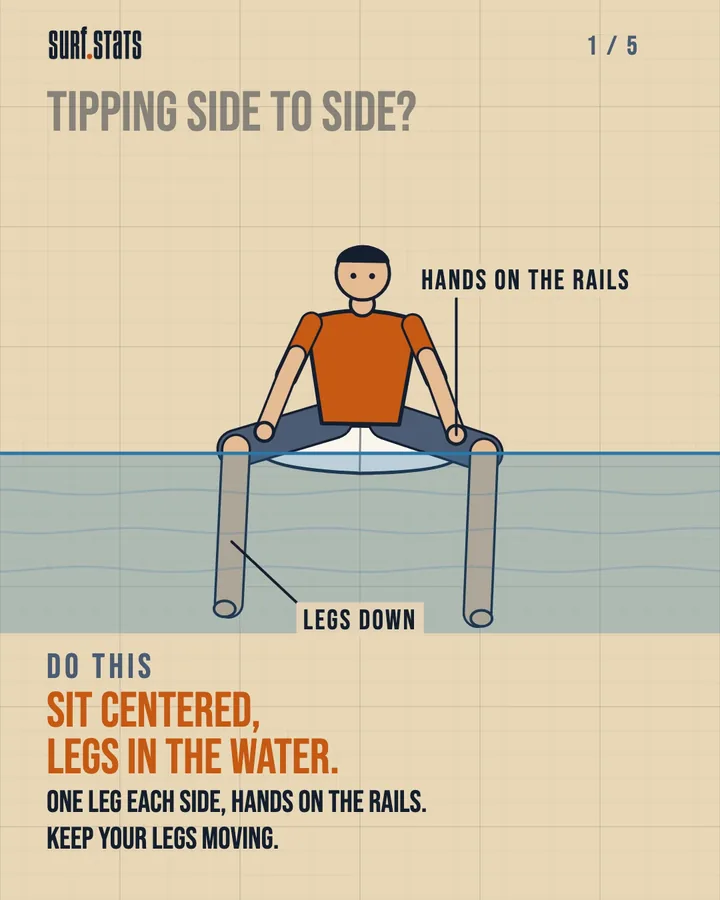
Try this: sit centered, legs in the water. One leg each side, hands on the rails, and keep your legs moving.
Four things help you stay steady from side to side:
- Sit in the middle, so the board is level from rail to rail, not tilted to either side.
- Let one leg hang in the water on each side. Rapture Camps likens your dangling legs to a canoe's outriggers.
- Hold the rails if you need them. Surfer Today treats this as a starting aid: hold them at first, then get used to sitting without grabbing them.
- Keep your legs moving. A gentle kick can catch a tip before it rolls you off, and Cornish Wave says to keep them moving even when you feel balanced.
Stay loose. Cornish Wave lists a rigid, tense body as a mistake and says to keep your shoulders and upper body relaxed. Surfer Today also tells you to find a relaxed balance.
2. Nose sticking up high?
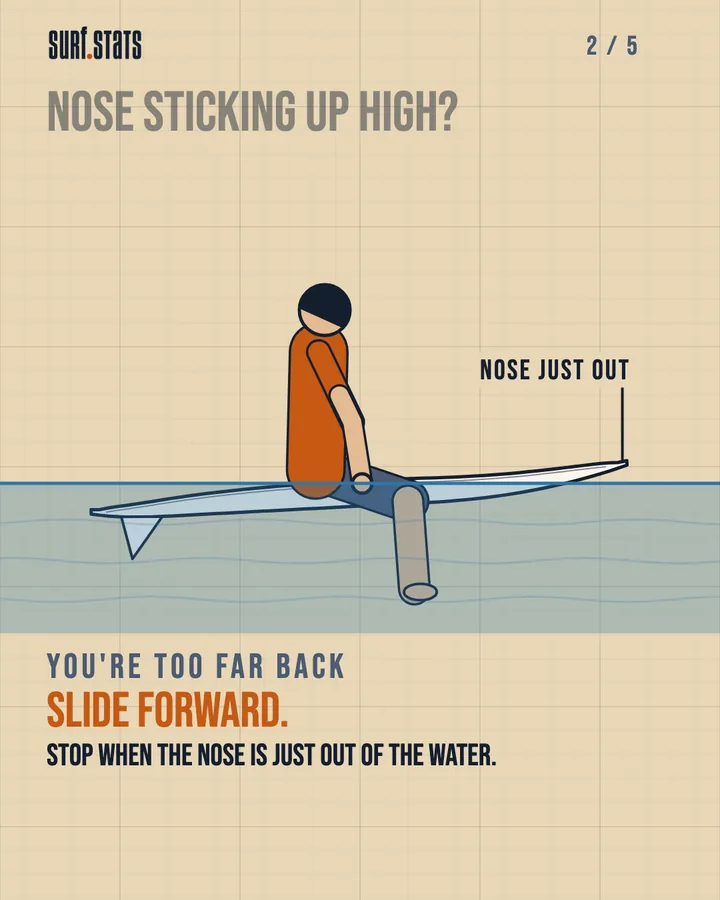
Try this: you're too far back. Slide forward until the nose is just out of the water.
If the nose points at the sky, your weight is too far toward the tail. The tail sinks deep, and Cornish Wave calls that position very unstable.
Slide forward until the board sits about level, with the nose just out of the water. That's the position to aim for.
3. Water washing over the nose?
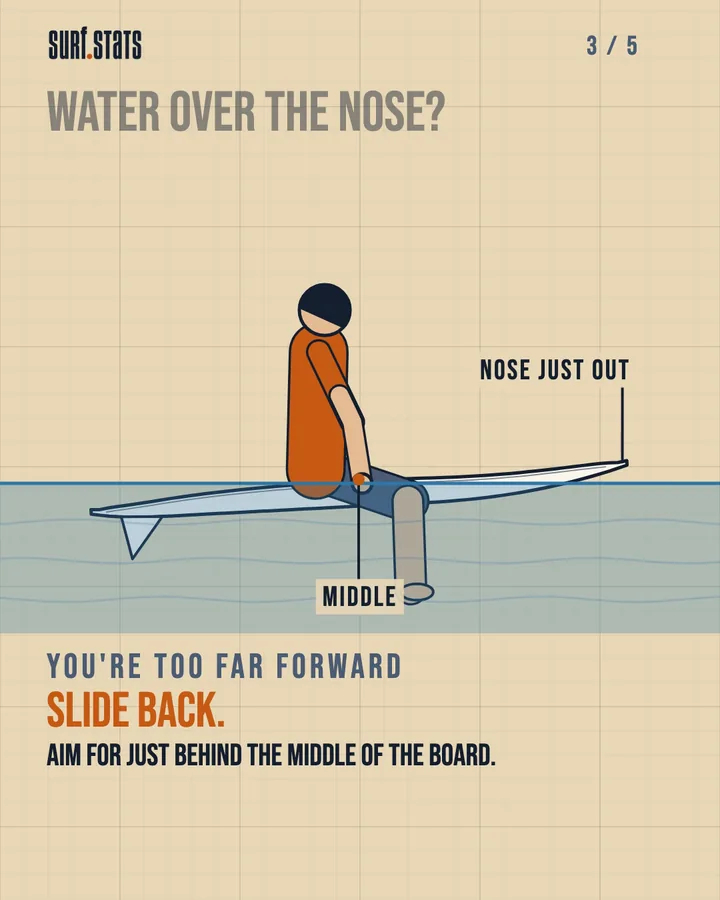
Try this: you're too far forward. Slide back. Aim for just behind the middle of the board.
Water washing over the nose is the opposite problem: your weight is too far forward, so the nose dips. Slide back until the nose comes up just out of the water.
A good place to start is just behind the middle of the board, a little toward the tail. From there, the nose tells you which way to adjust: nose high, slide forward; nose under, slide back.
4. Need to face the beach?
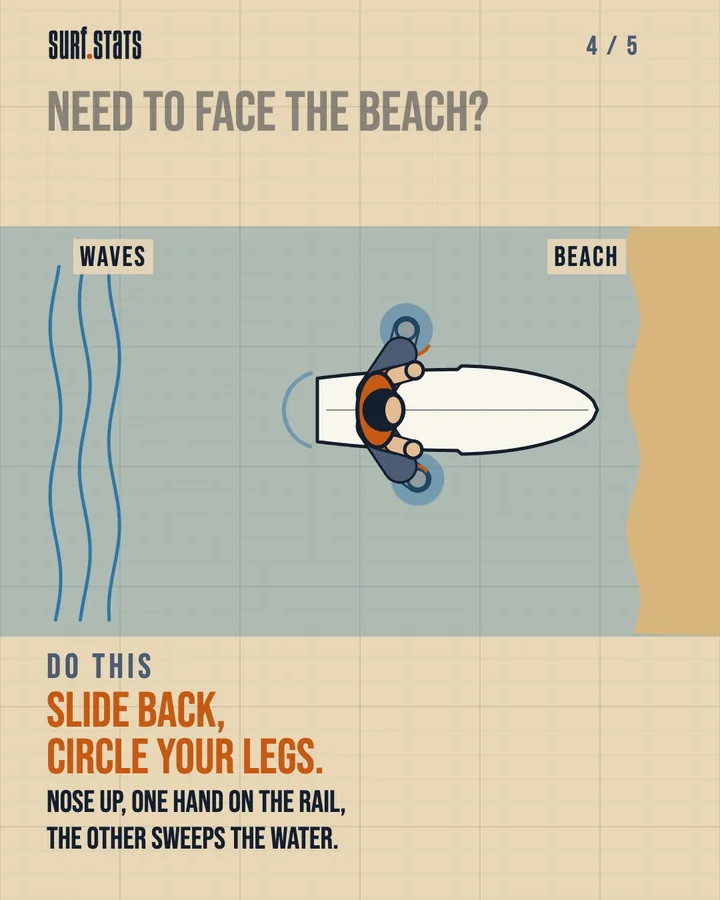
Try this: slide back, circle your legs. Nose up, one hand on the rail, the other sweeps the water.
You sit facing the waves, but you catch a wave facing the beach, so you need to turn around. Sitting helps here: Surfer Today and Bodhi Surf + Yoga both say you can turn quickly toward the beach from sitting. Here's how to turn a surfboard around:
- Slide back toward the tail until the tail sinks and the nose lifts. The board now turns around the sunken tail.
- Hold a rail with one hand.
- Sweep the water with your other hand to swing the nose around.
- Circle your legs under the water to help it spin.
- Facing the beach? Shift your weight forward to bring the nose back down, lie down and paddle.
Don't slide back further than you need. Cornish Wave says to stop as soon as the tail sinks and the nose lifts; go further and you can lose your balance and fall off the back.
Bigger boards, like longboards and foamies, can take longer to swing around.
5. Sit or lie down?
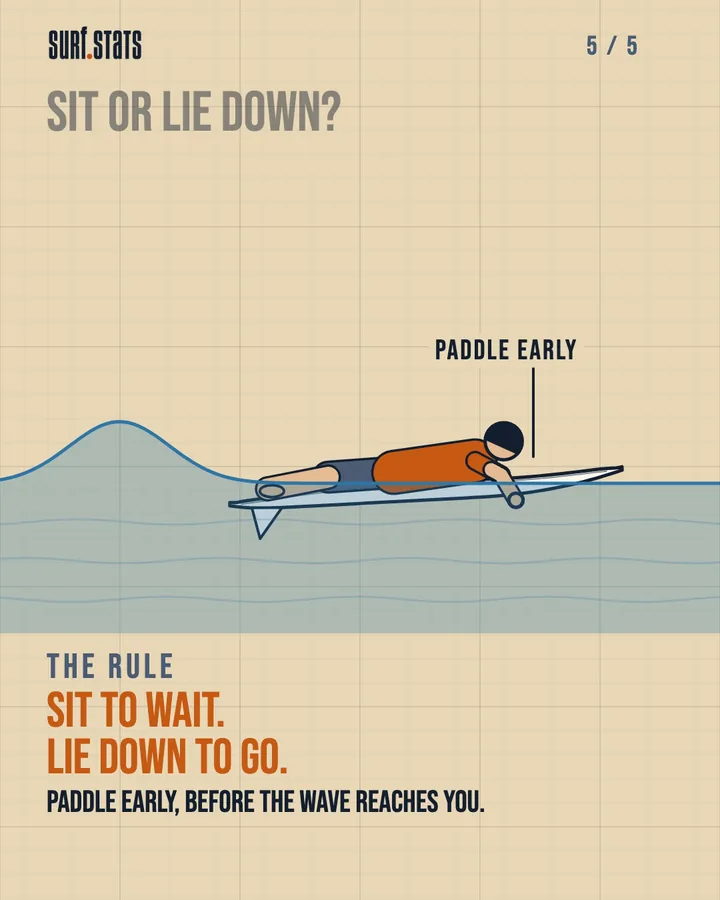
Try this: sit to wait, lie down to go. Paddle early, before the wave reaches you.
Sit while you wait. It lets you rest between waves, and sitting up gives you a higher view, so you can see the sets coming on the horizon.
When your wave comes, turn, lie down and start paddling before the wave reaches you, not once it's already on you. For the rest of catching it, read how to catch a wave.
Board level, legs moving
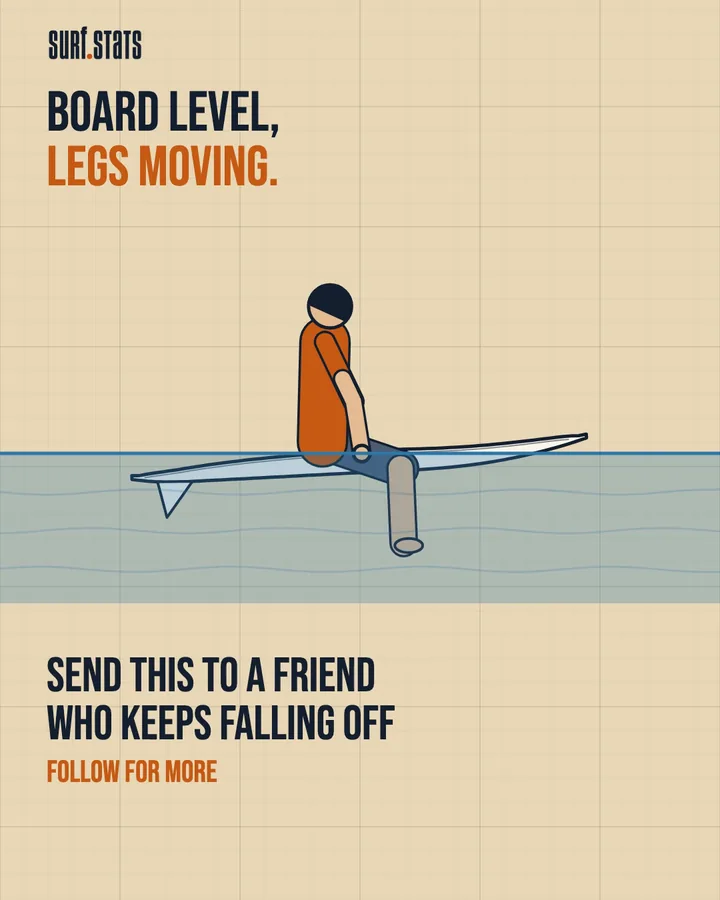
That's the whole skill in four words. Board about level, nose just out of the water, legs moving under you.
Practice sitting and turning in calm water first, before you try it in waves. Expect it to feel wobbly and awkward at first: Surfer Today says beginners usually struggle to find their balance.
Quick checklist
- Sit centered, level from rail to rail.
- One leg in the water on each side. Hands on the rails if you need them.
- Keep your legs moving. A gentle kick catches a tip.
- Nose high: slide forward. Water over the nose: slide back.
- Start just behind the middle of the board.
- To turn: slide back, hold a rail, sweep with the other hand, circle your legs.
- Sit to wait. Lie down and paddle early to go.