How to stay calm when panicking in the surf
 Fin Selector: your fins in 1 minute
Stay with your board and let it keep you afloat while you slow your breathing down. Face the sea and check for the next wave, paddle with long, steady strokes, and if the waves are too big for you today, paddle back to the beach.
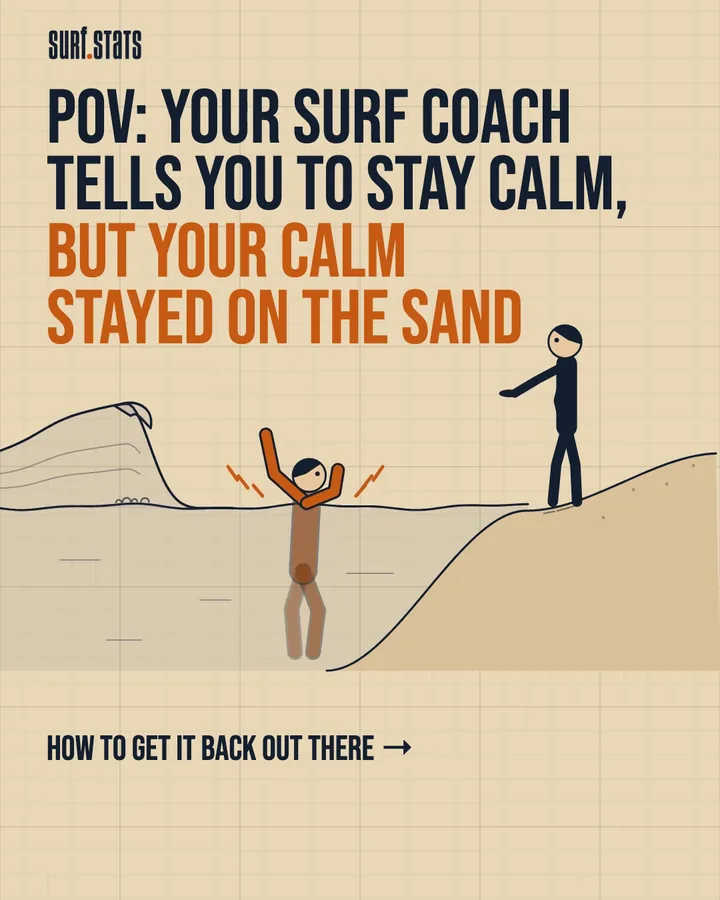
Your surf coach tells you to stay calm, but your calm stayed on the sand. It happens. A wipeout shakes you, the waves feel bigger than they looked from the beach, and suddenly your breathing is racing and your paddling turns into thrashing.
Swim England calls panic common, and dangerous in the water. Surf media say why: panic drains your energy fast. Lifesaving bodies and surf media alike tell you to stay calm: the RNLI, the Royal Life Saving Society, healthdirect Australia and Surfer Today all say it. So how do you stay calm when panicking in the surf? With a few simple things you can do right where you are.
Below are five moments when panic hits, and what to do in each. They come from our stay calm in the surf reel, and each card in it is backed by at least two independent sources: lifesaving charities, government water-safety services and surf media.
1. Panicking after a wipeout?
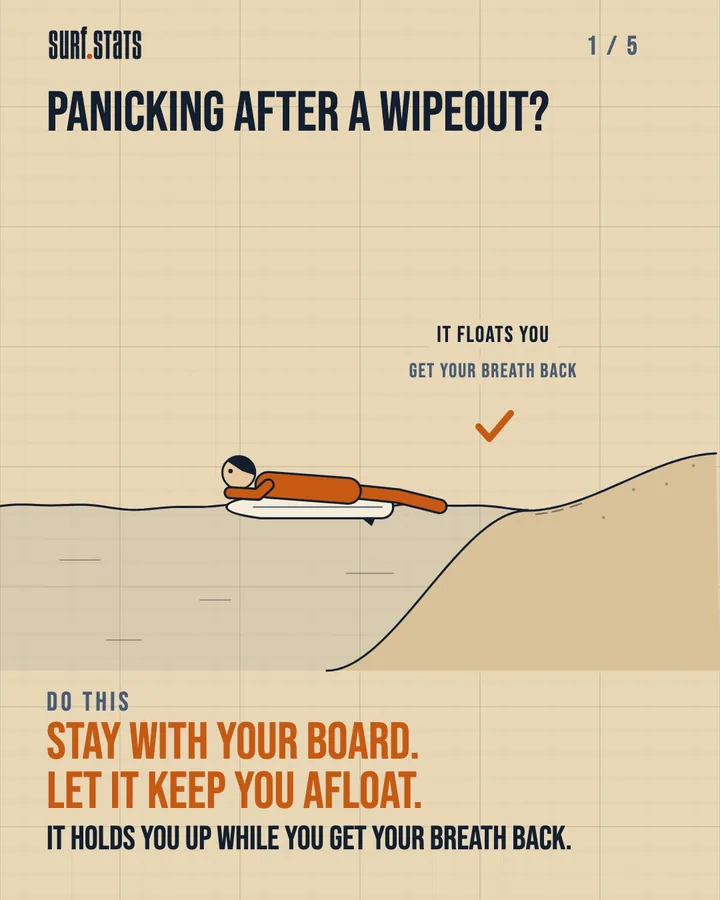
Try this: stay with your board. Let it keep you afloat.
UK lifesaving and coastguard advice for surfers is to stay with your board if you get into difficulty, because it keeps you afloat. Paddleboard safety advice points the same way: try to get back on top of your board.
It holds you up while you get your breath back. The RNLI says floating lets you rest and get your breathing back under control.
That doesn't mean sitting still until you feel better. The board keeps you up while you do the next things on this list: slow your breathing, face the sea, paddle steady.
2. Breathing fast and shallow?
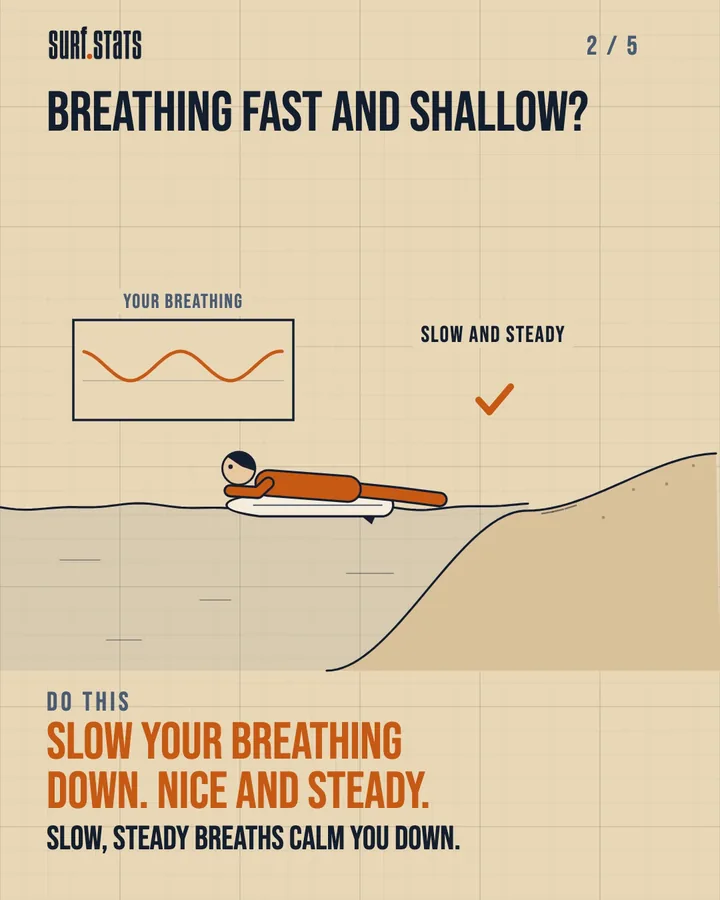
Try this: slow your breathing down. Nice and steady.
A surf writer in The Inertia describes breathing that turns quick and shallow when the waves get bigger than usual, and Swim England names shortness of breath or fast breathing as the main symptom of panic in open water.
The fix starts with your breath. The RNLI says to relax and control your breathing, Australia's Float to Survive campaign lists slow breaths among its steps, and Swim England says to slow it right down. Slow, steady breaths calm you down.
3. Back turned to the sea?
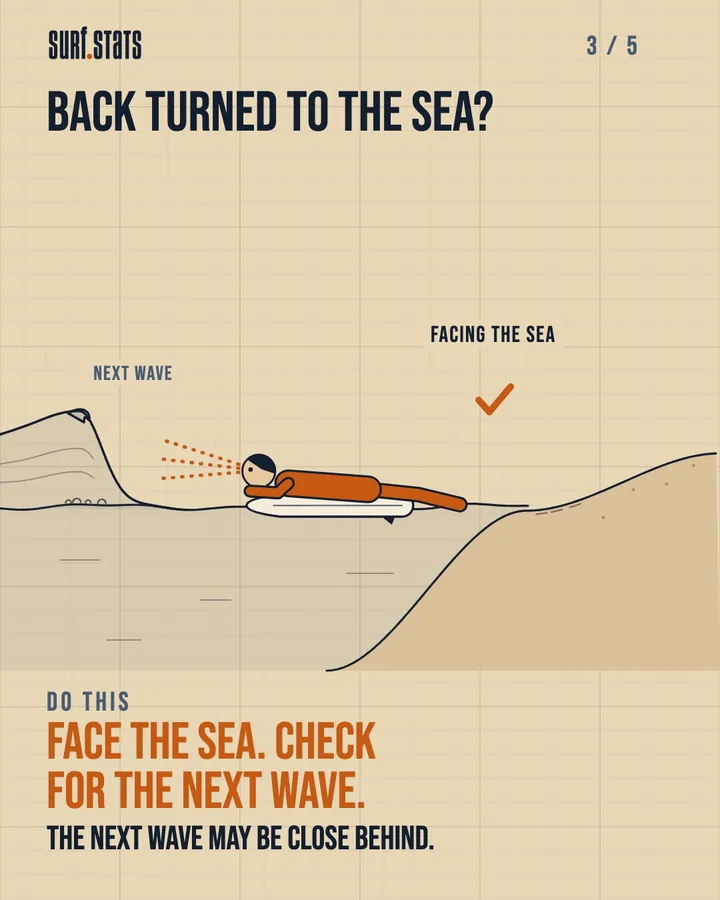
Try this: face the sea. Check for the next wave.
The next wave may be close behind. Seabreeze's advice for when you come up after a wipeout: get a breath and look behind you. Australia's government health service puts it simply: in the ocean, face the sea, so you can see big waves coming.
4. Paddling in a panic?
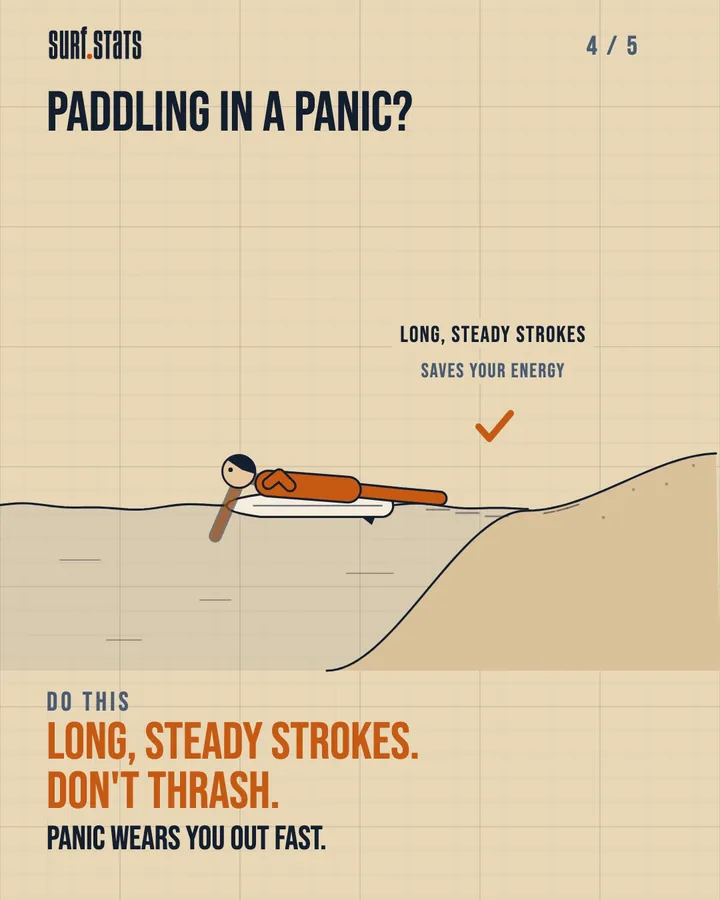
Try this: long, steady strokes. Don't thrash.
Panic wears you out fast. Surfer Today says panic drains your energy, and a surf-fitness coach in The Inertia says that when you panic, energy goes fast.
The stroke advice comes from swimming. Describing a swim drill, the same coach says that when panic makes you want to speed up your stroke, you keep it long, and Swim England's advice for a panicking swimmer is a slow, strong stroke. On a board, that means long, steady strokes.
5. Waves too big for you today?
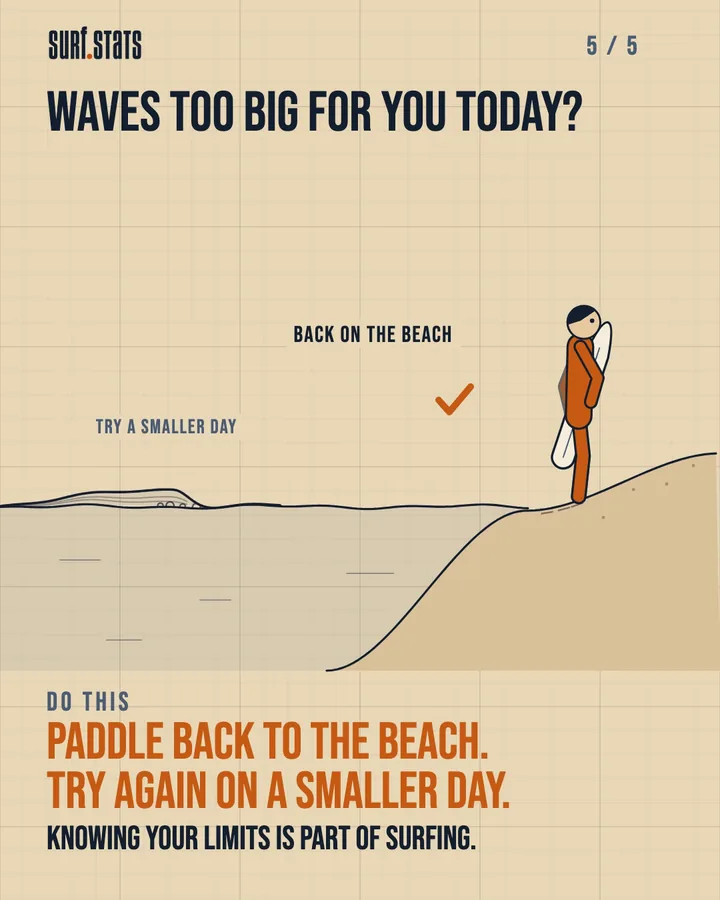
Try this: paddle back to the beach. Try again on a smaller day.
Knowing your limits is part of surfing. RNLI and HM Coastguard both tell surfers not to challenge themselves too early and to stay within their limits. Seabreeze says to always surf within your limits.
The Inertia's writer is blunt: if the swell is more than you can handle, the beach is the place to be. Seabreeze adds that a wipeout that shakes you is a reason to paddle in to the beach and sit a while, and to go back out only when you feel steady again.
The same writer says control over fear comes from working up in size patiently, and Seabreeze suggests going up a wave size only when wiping out on smaller waves feels relaxed.
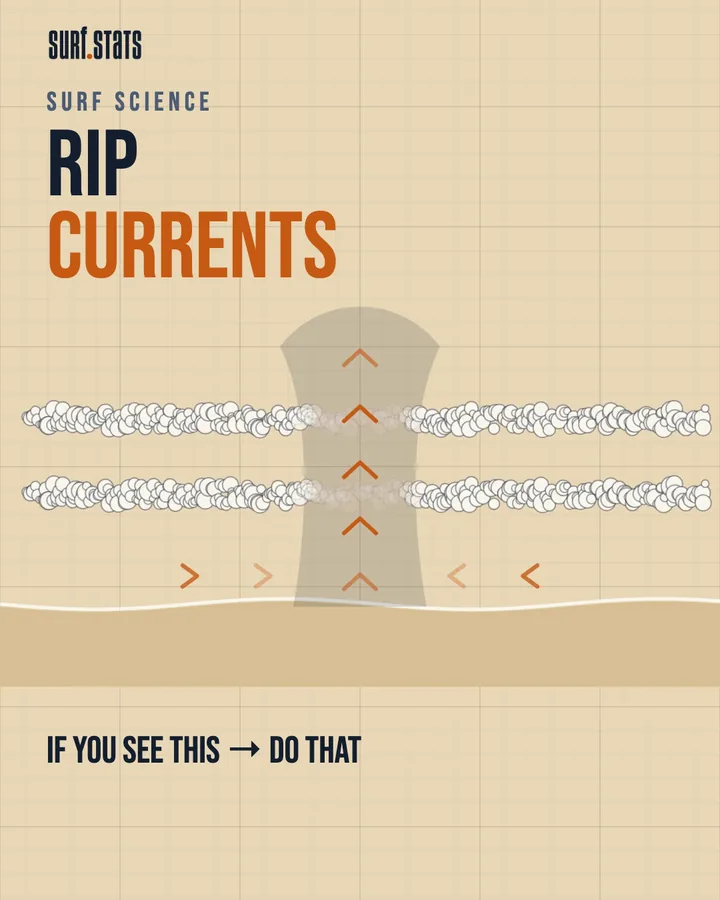
If the problem is not the waves but water pulling you away from the beach, that's a rip current, and it has its own rules: read what to do in a rip current.
Stay with your board. Slow your breathing.
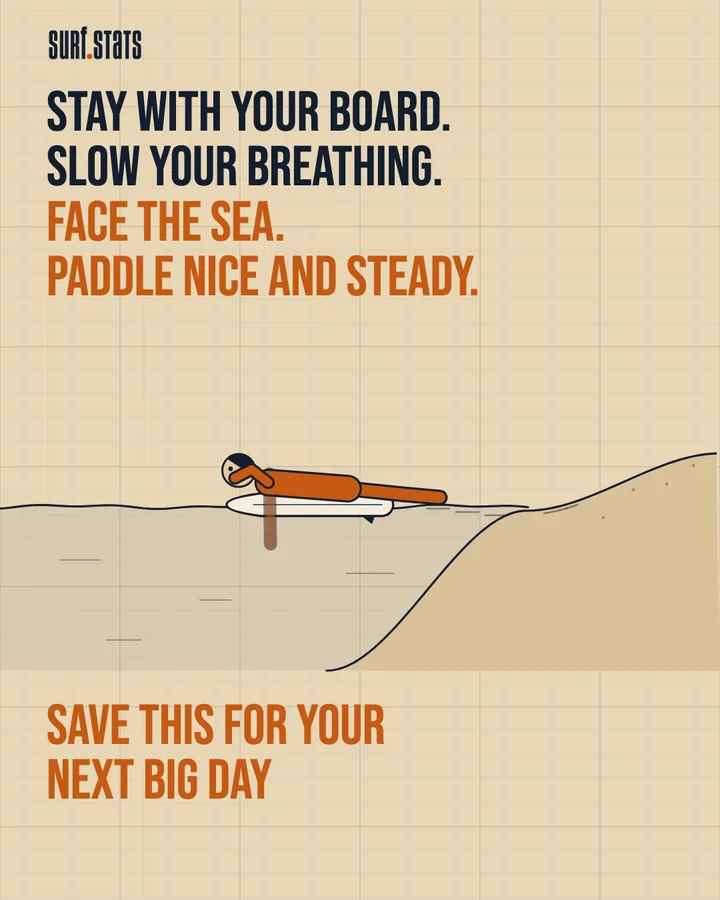
Face the sea, and paddle nice and steady. Save these for your next big day. If you want to know what to do while you're still under the water, that's in our post on how to wipe out safely.
Quick checklist
- Stay with your board. It keeps you afloat.
- Slow your breathing down, nice and steady.
- Face the sea and check for the next wave.
- Long, steady strokes. No thrashing.
- Waves too big for you today? Paddle back to the beach and try again on a smaller day.